


Where memory, landscape, and literature meet
By Bohemian Faisal
Jasimuddin, one of the most beloved voices of rural Bengal, was born on January 1, 1903, at his maternal home in Tambulkhana village in Faridpur. His full name was Mohammad Jasimuddin Mollah, though he is known simply as Jasimuddin to generations of readers. His paternal home was in Gobindpur village, also in Faridpur.
He was born into a modest yet culturally rich household. His father, Ansaruddin Mollah, was a school teacher, a profession that shaped the intellectual environment of the family. His mother, Amina Khatun, affectionately known as Rangachhut, played an equally significant role in nurturing the emotional and cultural sensibilities that would later define his writing.
The Homestead as Living Memory
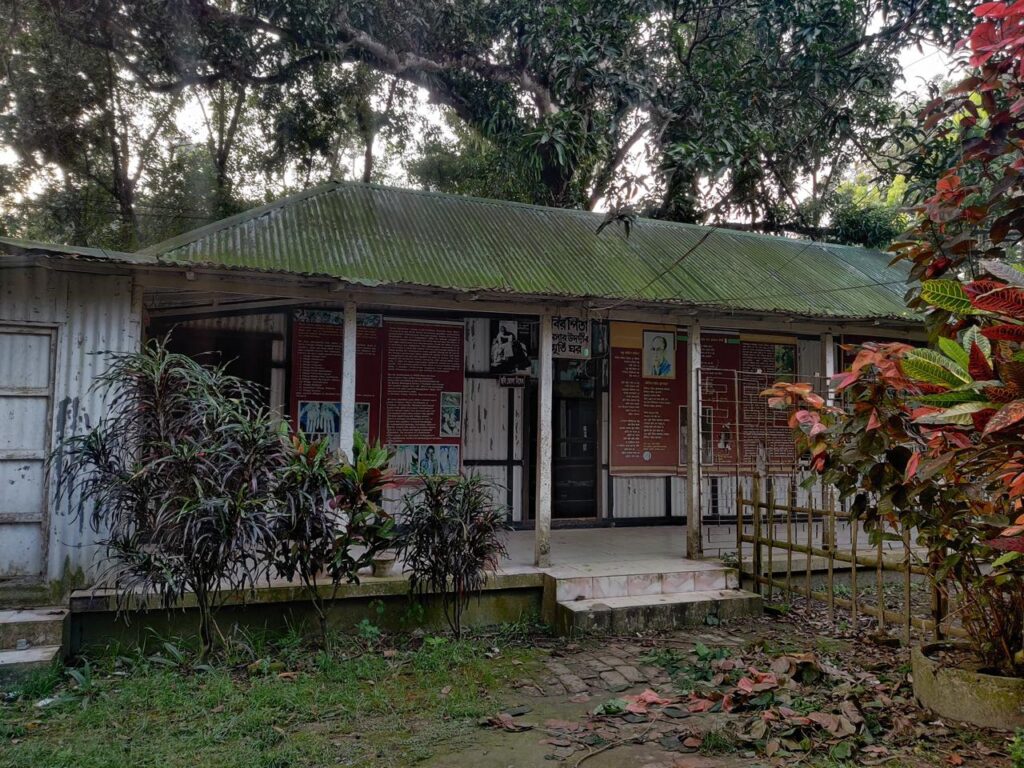
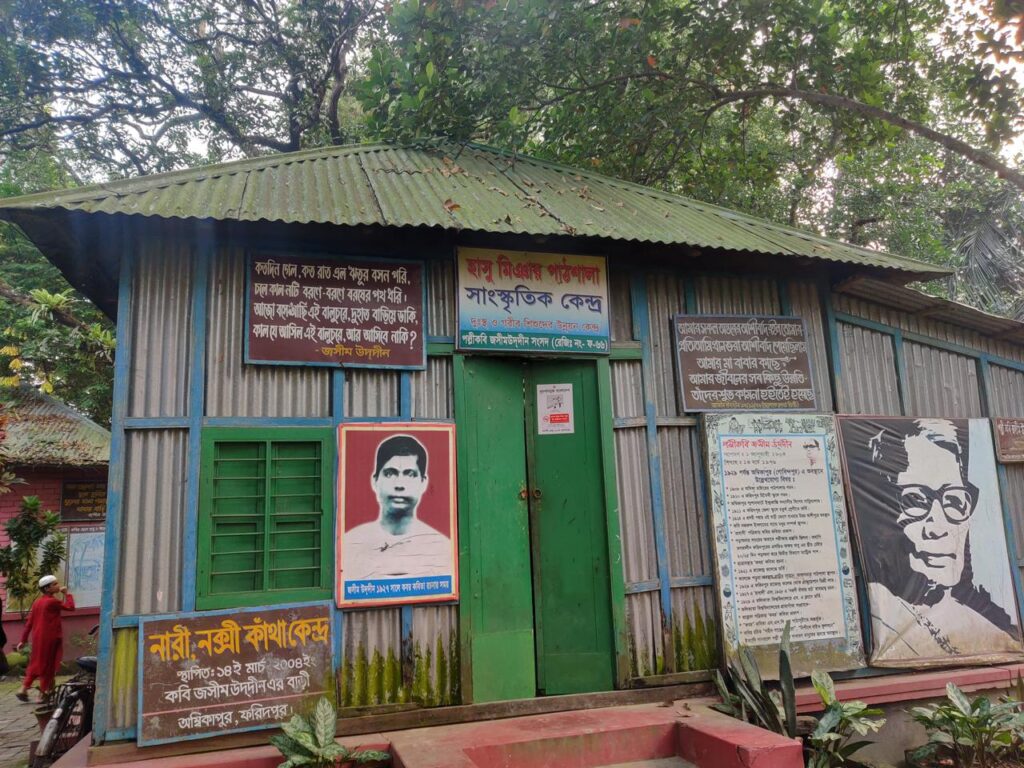
The ancestral home still stands as a quiet yet powerful archive of the poet’s life. The homestead is composed of four traditional char-chala houses, structures that reflect rural architectural heritage. One of these houses has been reinforced with cement, while the others remain tin-built, preserving their original character.
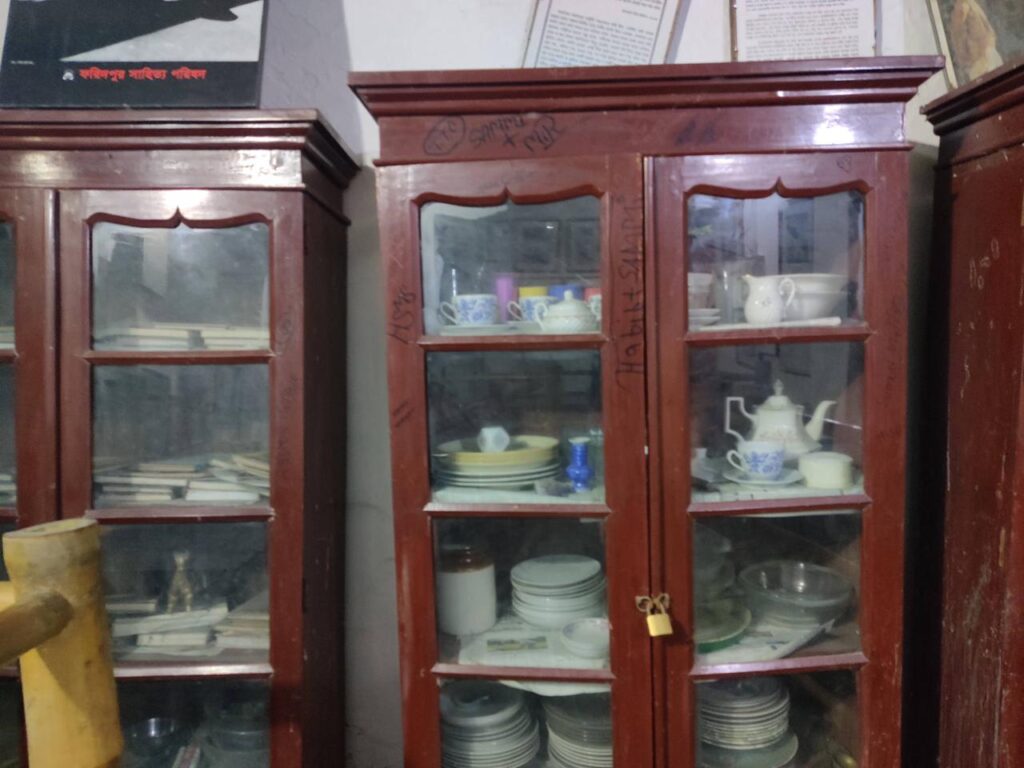
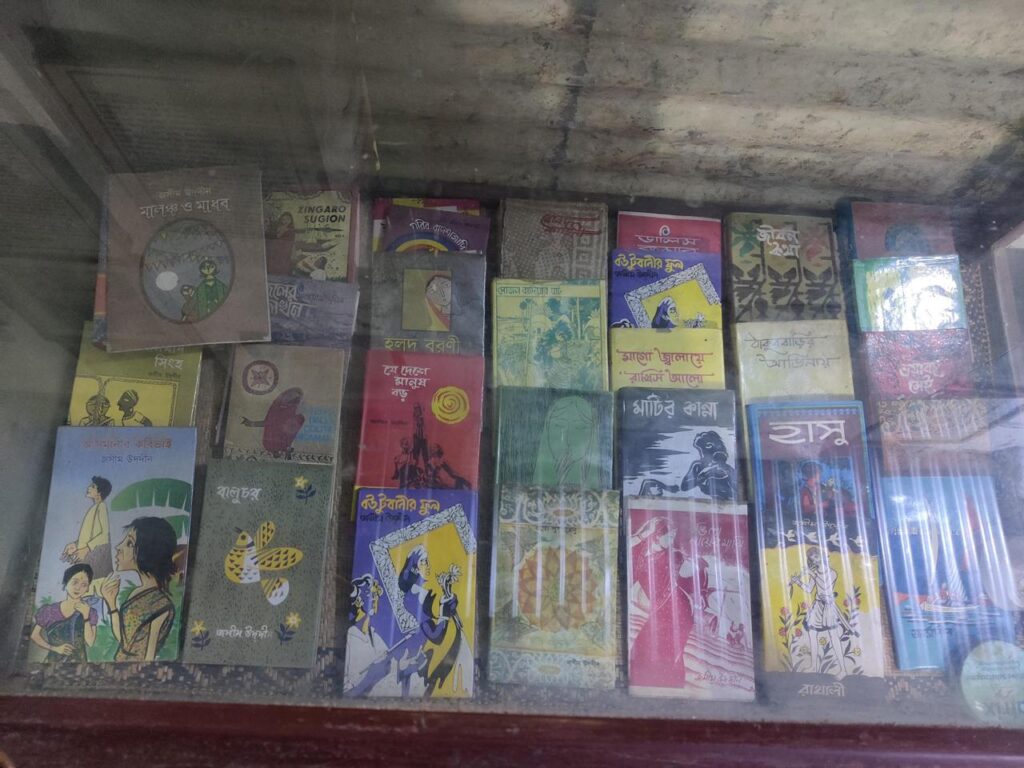
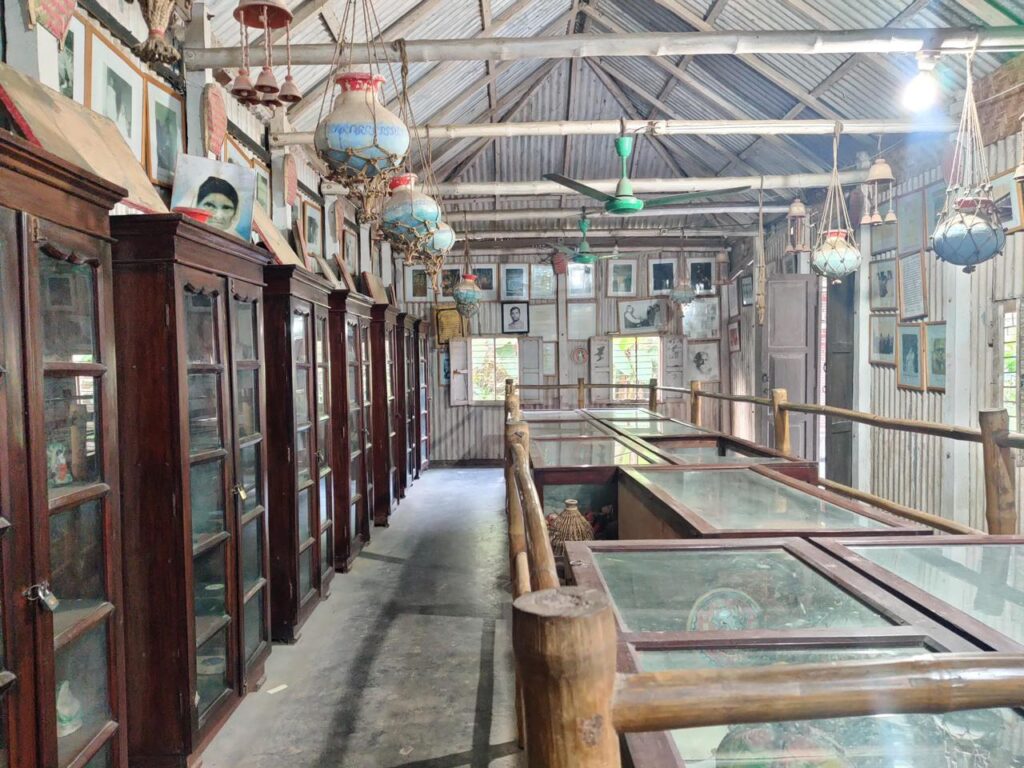
Each house is carefully maintained and functions almost like a museum. The interiors are arranged with aesthetic sensitivity, displaying items that once belonged to the poet. These are not just preserved objects but fragments of a lived life, placed in a way that allows visitors to sense his presence.
Adjacent to the main houses are spaces that reveal the rhythms of rural domestic life. A dheki-ghor, where rice was traditionally husked, stands beside one structure, while a kitchen sits next to another. These spaces reflect not only household routines but also the world that shaped Jasimuddin’s literary imagination.
Even today, the atmosphere of the house carries a quiet intensity. His memory does not feel distant. It feels embedded in the walls, the objects, and the open spaces.
Landscape and Spatial Memory
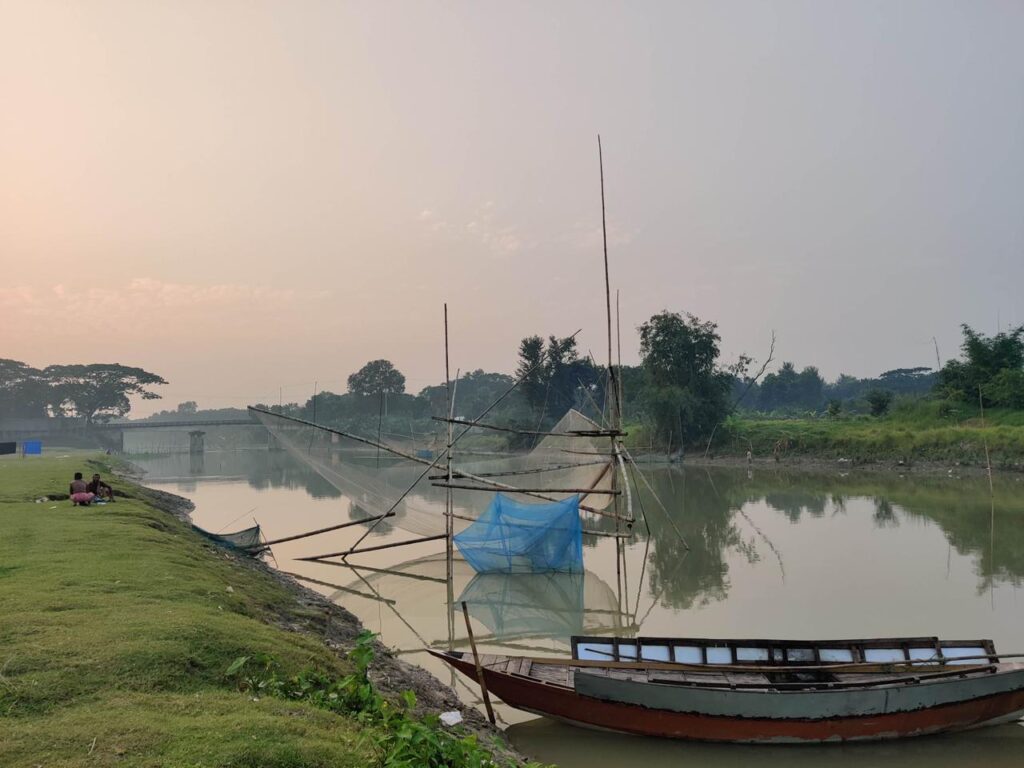
Moving beyond the courtyard, the landscape unfolds in a way that feels deeply connected to his poetry. There was once a small pond behind the house, now filled with soil, yet its absence itself feels like a trace of time passing.
The surrounding geography remains significant. To the east and west lie neighboring homes, grounding the house within a living community. To the south, there is a pond, adding to the sense of rural continuity. To the north lies perhaps the most powerful site of all: the poet’s grave.
The Poet’s Final Resting Place
Jasimuddin has been laid to rest under a pomegranate tree since March 14, 1976. The grave is slightly elevated, built with masonry, and enclosed by a simple grill fence.
There is something quietly fitting about this setting. The grave does not feel monumental or distant. It remains part of the landscape he wrote about, close to the soil, close to the river, close to everyday life.
Nearby flows the Kumar River, while a paved road runs alongside the graveyard. The coexistence of nature and movement, stillness and passage, reflects the duality often present in his work.
Extended Family Spaces
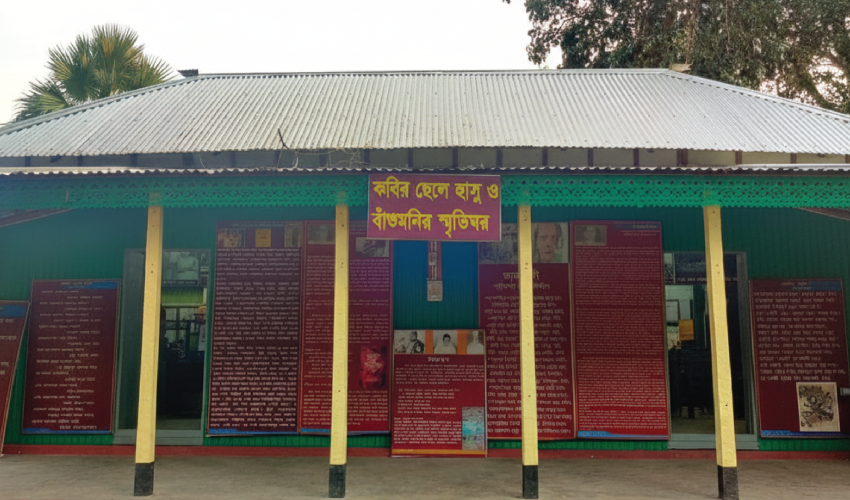
Close to the main homestead stands another house belonging to his son, Hasu. This house also contains various personal collections and memorabilia, offering another layer of insight into the poet’s life and legacy.
In front of this house stands a large tamarind tree, likely as old as the poet himself. The tree feels less like a natural feature and more like a witness, silently observing the passage of generations.
A short distance ahead lies another tin-shed structure near the graveyard. This space holds additional memorabilia and serves as a place for quiet reflection and prayer. In front of it, a bamboo treehouse has been constructed, adding a subtle element of simplicity and playfulness to the environment.
A Space Defined by Stillness
What defines the entire area is not just its historical value but its atmosphere. There is a sense of stillness that is difficult to ignore. The abundance of trees creates a shaded environment where light filters softly through leaves.
It is not a curated silence. It feels organic, almost inevitable.
Walking through the premises, one encounters lines from Jasimuddin’s poems displayed at different points. These fragments of text reconnect the physical space with the literary world he created.
The Poet and His World
Jasimuddin’s writing was deeply rooted in observation. He closely watched the seasonal rhythms of rural Bengal and the everyday lives of its people. These observations were not distant or romanticized. They were lived experiences.
That is why his poetry feels immediate. The rivers, fields, and human relationships he wrote about were part of his environment.
Beyond poetry, he contributed significantly through songs, novels, and other literary works. His writing consistently returned to the same source: the life of ordinary people.
Visiting the Site Today
The homestead is open to visitors and has been maintained in a way that balances accessibility with preservation. The entry fee is modest, only Tk 20, making it accessible to a wide range of visitors.
Near the entrance, there is a small shop, along with a room that houses family collections. The presence of swings and play areas for children adds a communal dimension, reminding visitors that this is not just a historical site but a living space.
How to Get There
Reaching the site is relatively straightforward. Buses from Dhaka’s Gabtoli and Gulistan regularly travel to Faridpur. Routes from Gulistan pass over the Padma Bridge, while those from Gabtoli cross via Daulatdia-Aricha.
Among the available services, Golden Line is considered one of the better options. Non-AC fares typically range from Tk 350 to 400, while AC buses cost around Tk 450 to 500. The journey usually takes about three hours.
From the Faridpur bus stand, the poet’s house is just two kilometers away. It can be reached easily by auto-rickshaw, with a fare between Tk 15 and 20.
More Than a Destination
What makes this place significant is not just that it belonged to Jasimuddin. It is that the environment still reflects the world he wrote about.
The house, the trees, the grave, the river, even the quiet pathways all seem to participate in a larger narrative. Visiting the site does not feel like stepping into history alone. It feels like entering a space where literature and life continue to overlap.
And perhaps that is the most accurate way to understand Jasimuddin himself. Not as a distant literary figure, but as someone whose world still exists, quietly, in the places he once called home.