



By MWB Desk
Boishakh celebrations in Dhaka often follow a familiar pattern. Large crowds, scattered stalls, and loosely organised activities tend to define the experience. Arka Boishakh 1433, held on April 13 and 14 at Aloki, took a different approach. Instead of replicating the typical mela format, it attempted to reorganise it.
The event was structured into defined zones, each serving a specific purpose. This separation created a more controlled environment and allowed visitors to move through the space without the congestion usually associated with Boishakh events.
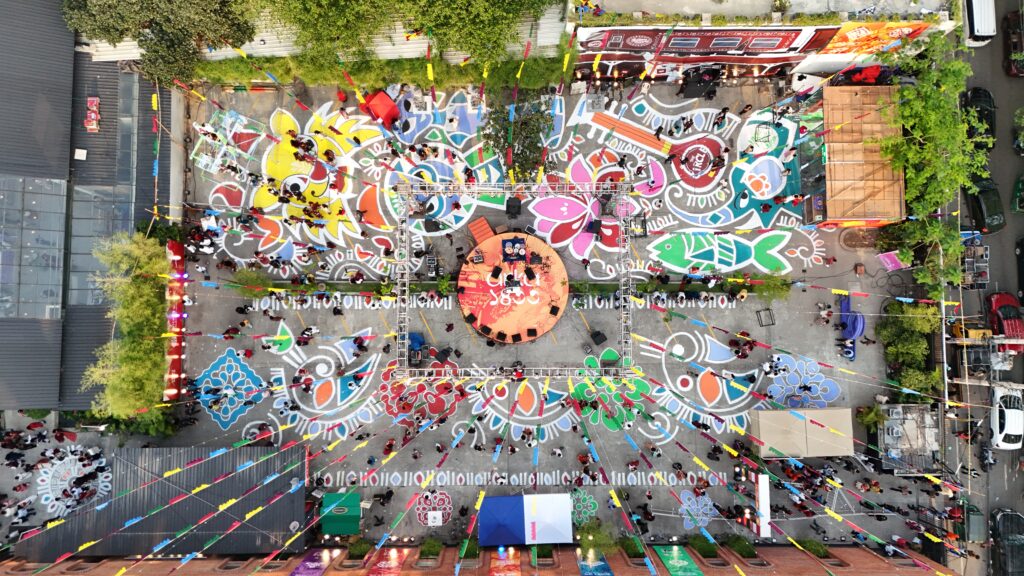
The intention, according to Arka Collective’s founder Asad Sattar, was to rethink how the festival is experienced today. He believes that while Boishakh remains culturally significant, its celebratory energy has reduced over time, especially for younger audiences.
His aim was to create a setting where this generation could reconnect with the festival, while still acknowledging changing expectations. Rather than recreating older formats, the focus was on finding a balance between tradition and a more contemporary experience.
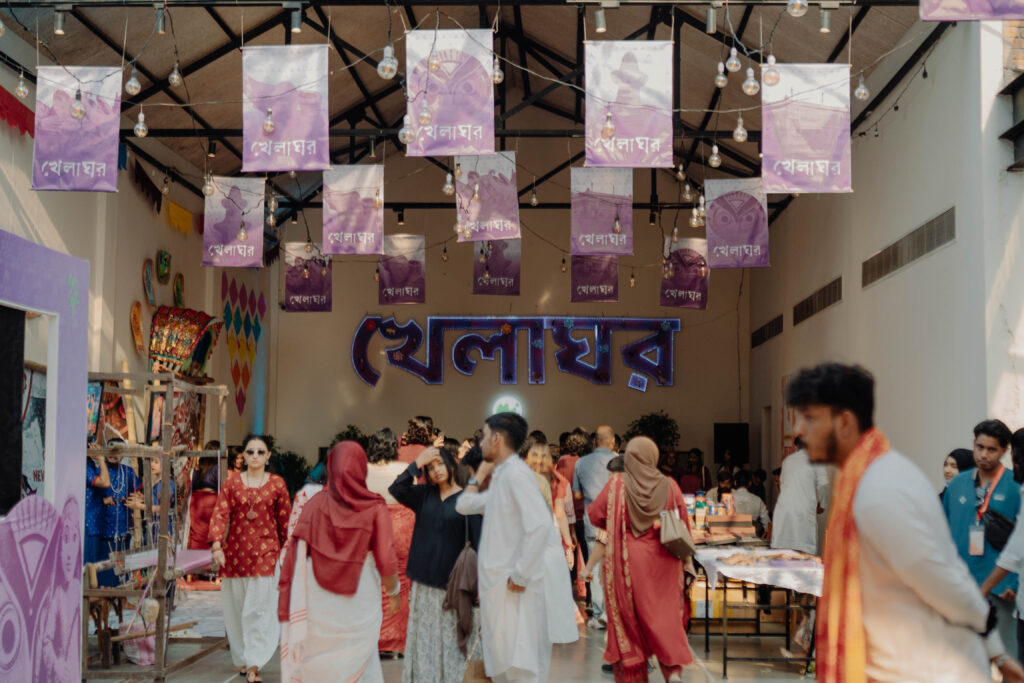
One of the central areas, Khelaghor, focused on interaction through games and small-scale activities. These were inspired by traditional mela elements but adapted for an urban setting. The emphasis was not on spectacle but on participation, encouraging visitors to engage directly instead of watching from a distance.
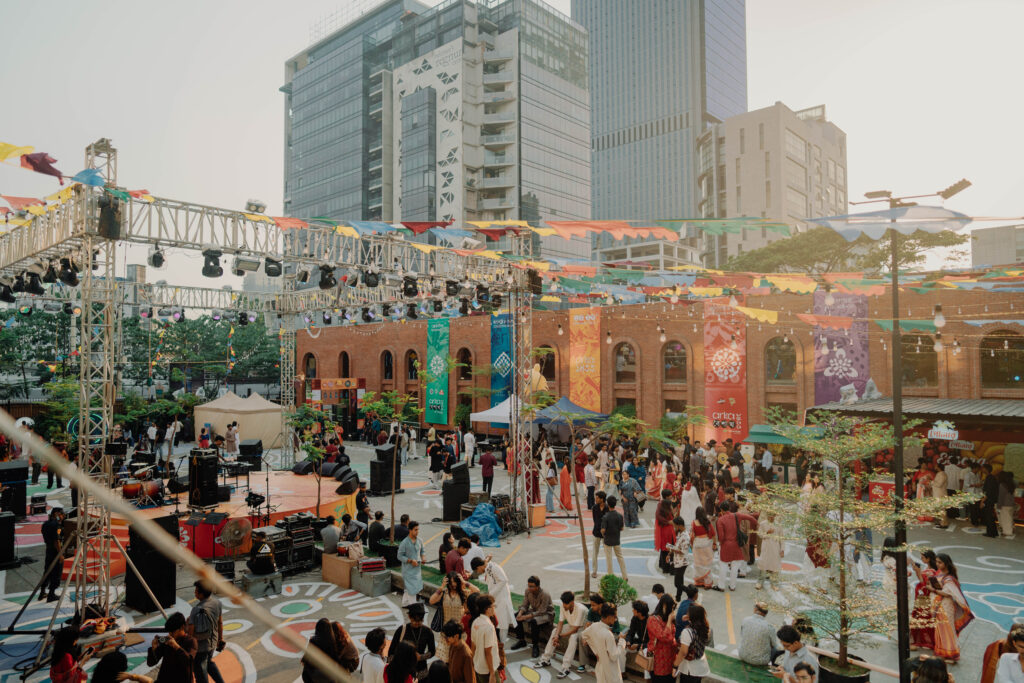
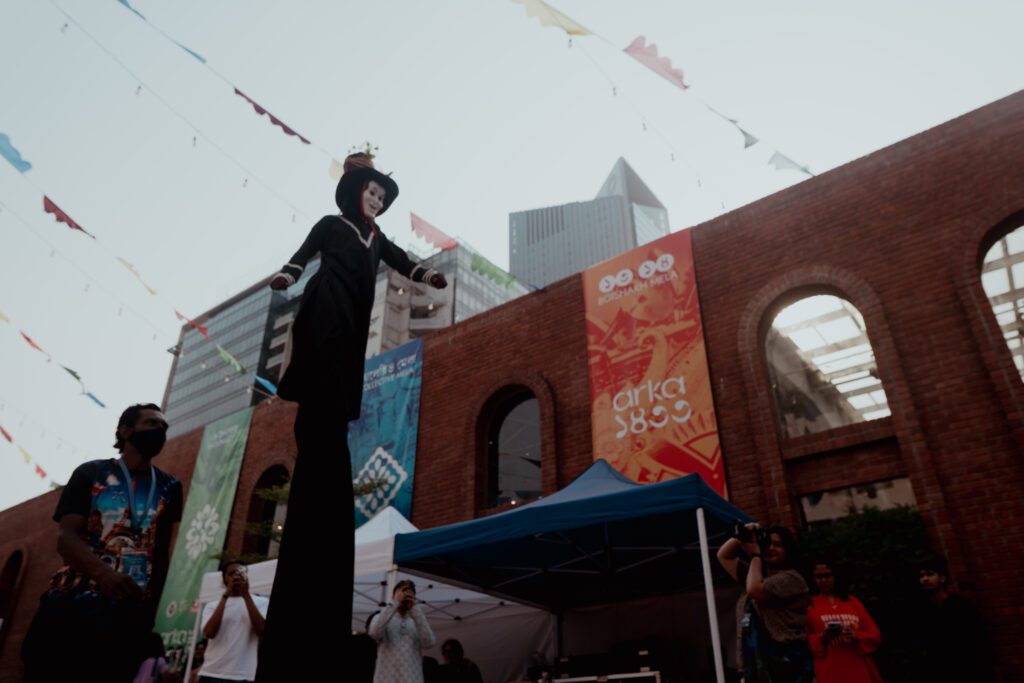
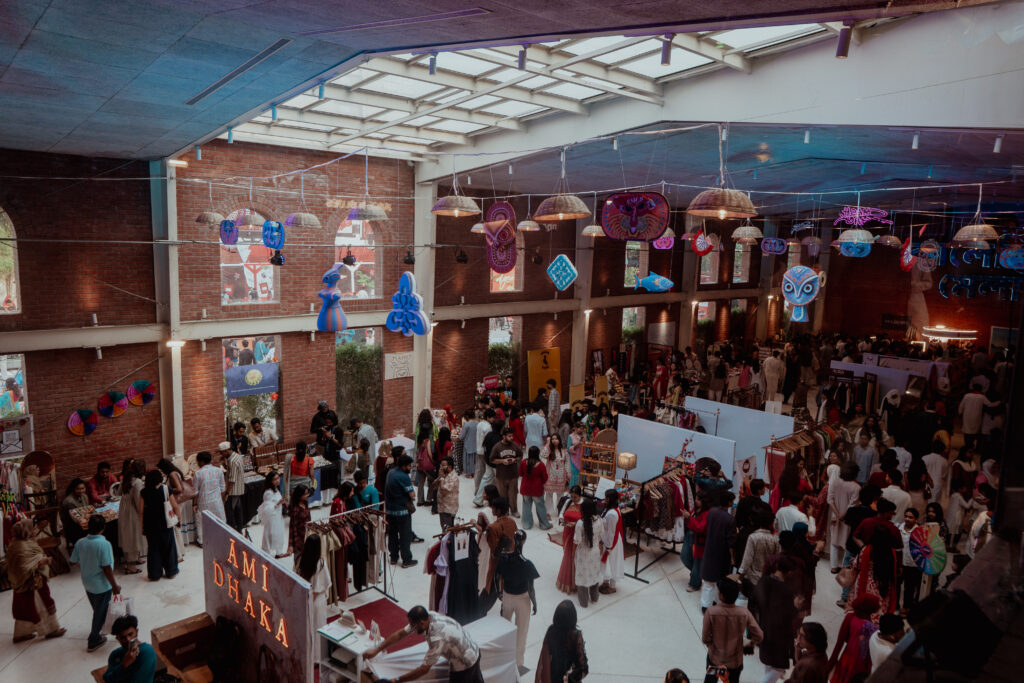
The Collective Mela functioned as a curated marketplace. Unlike conventional Boishakh fairs, where the number of stalls often defines the experience, this space was more selective. The arrangement allowed for slower browsing and more direct interaction with brands and creators. The commercial aspect was present, but it did not dominate the overall environment.
In terms of cultural expression, several participants used the platform to interpret identity through design. Some focused on national symbols, while others explored lesser-known artistic traditions. The emphasis was not on replication but on reinterpretation, reflecting a broader trend within Bangladesh’s emerging creative scene.
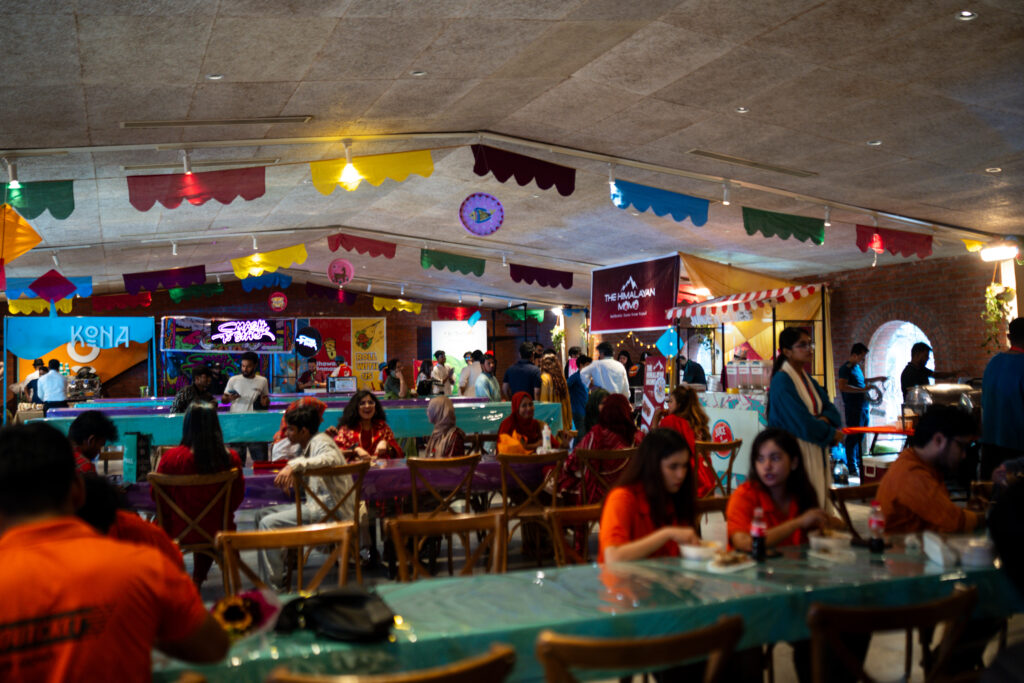
The food section, Bhojonaloy, remained grounded in familiarity. Instead of introducing experimental menus, it offered recognisable festive items such as snacks, sweets, and drinks commonly associated with Boishakh gatherings. The approach reinforced continuity rather than novelty and positioned food as an integral but understated part of the experience.
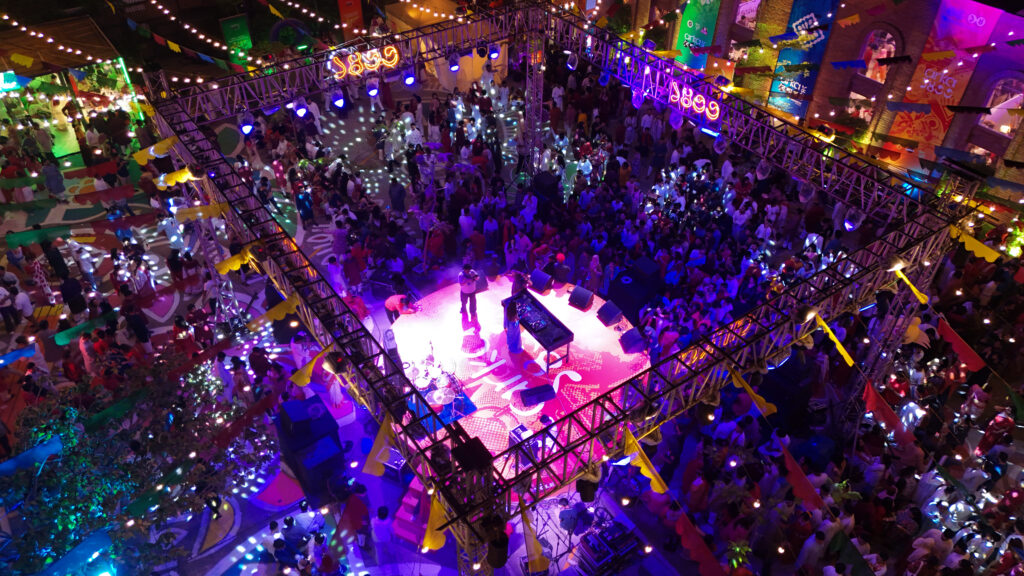
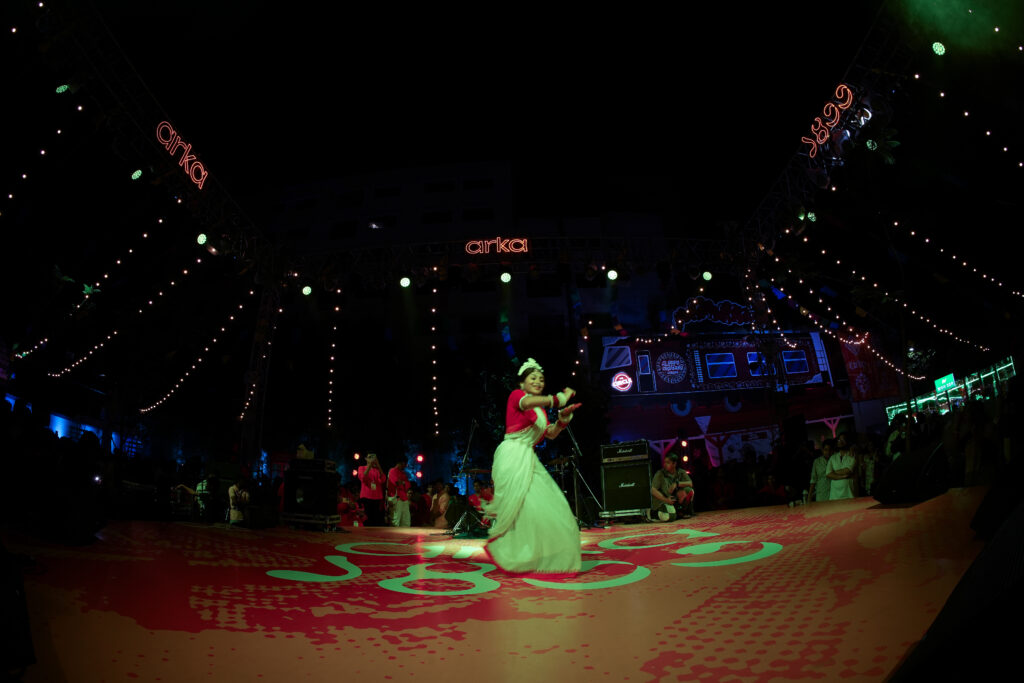
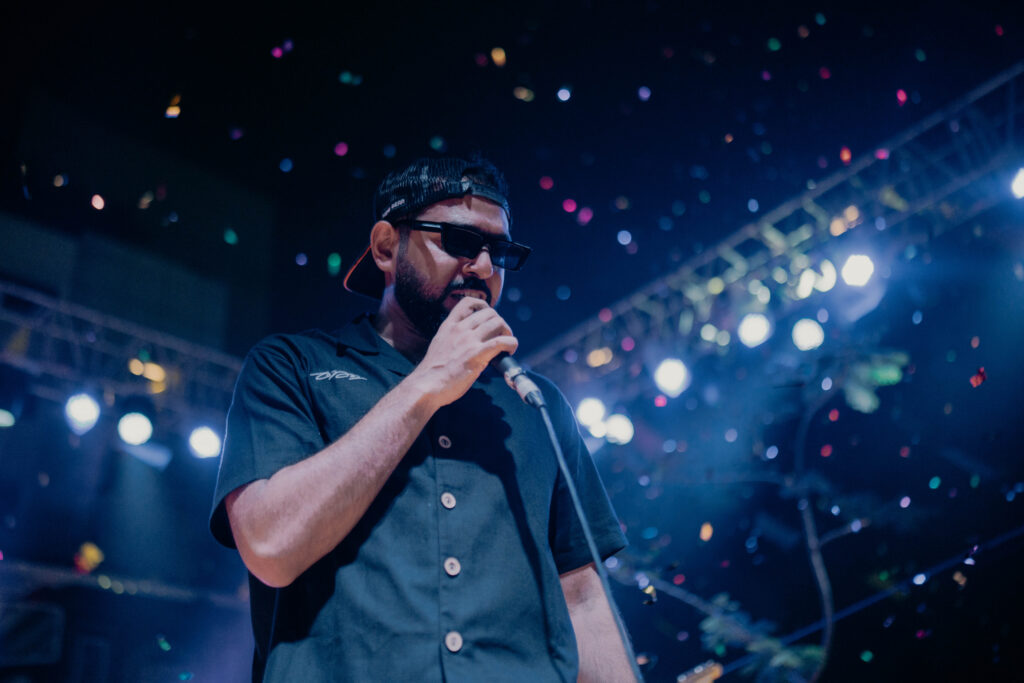
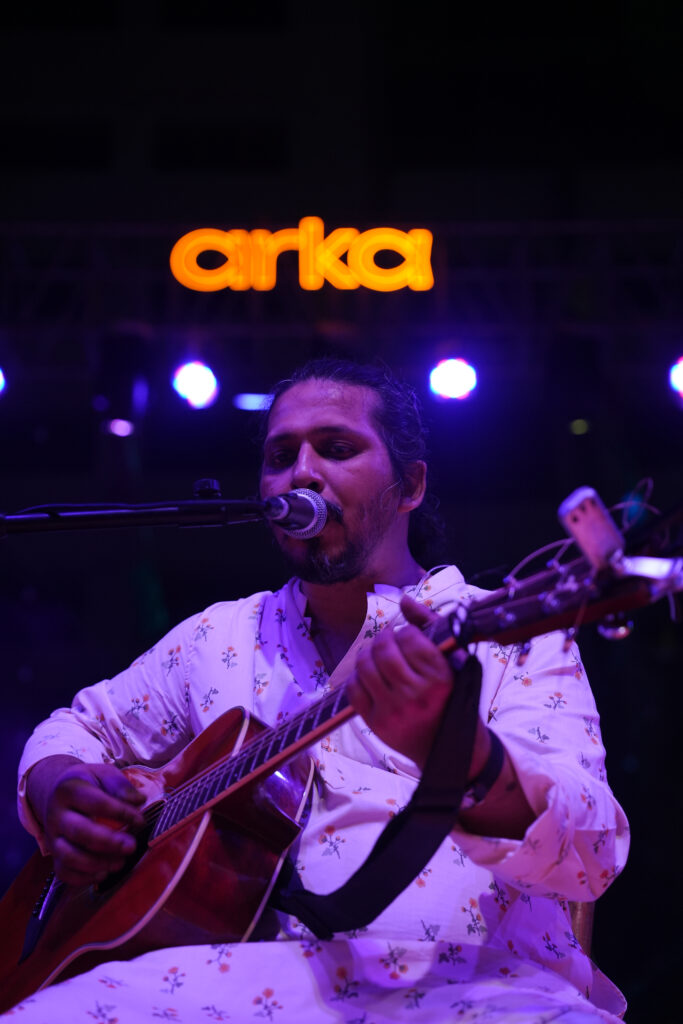
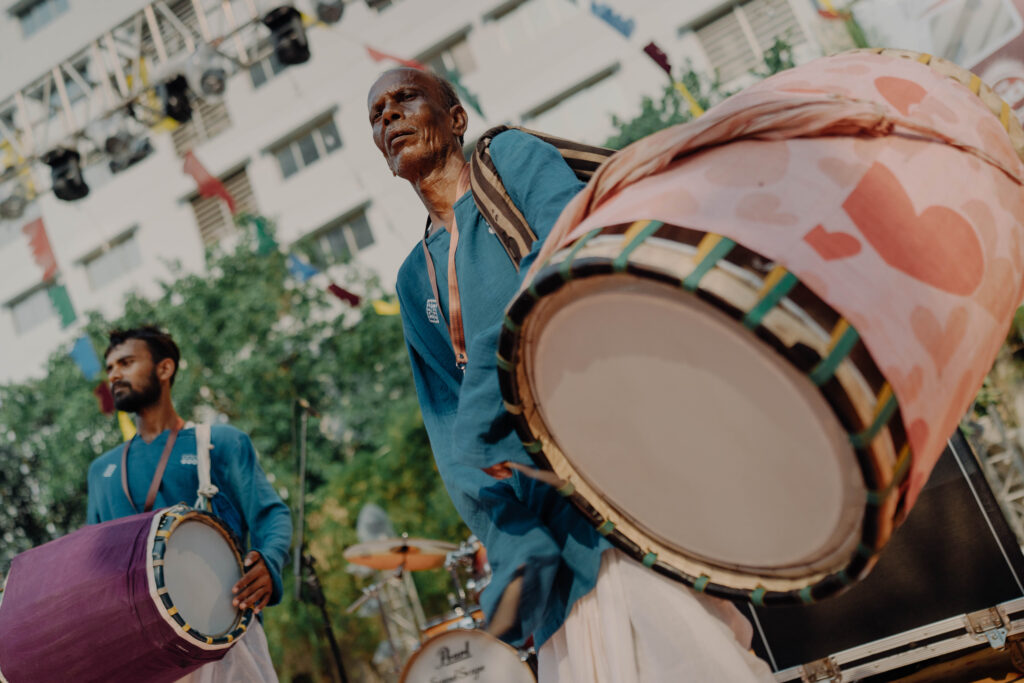
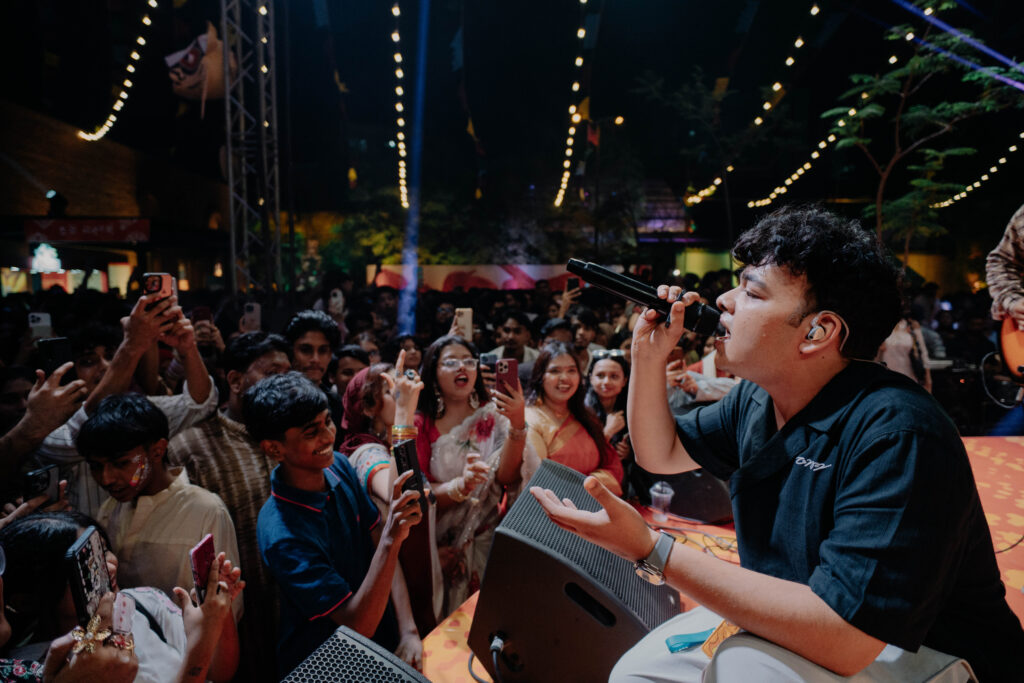
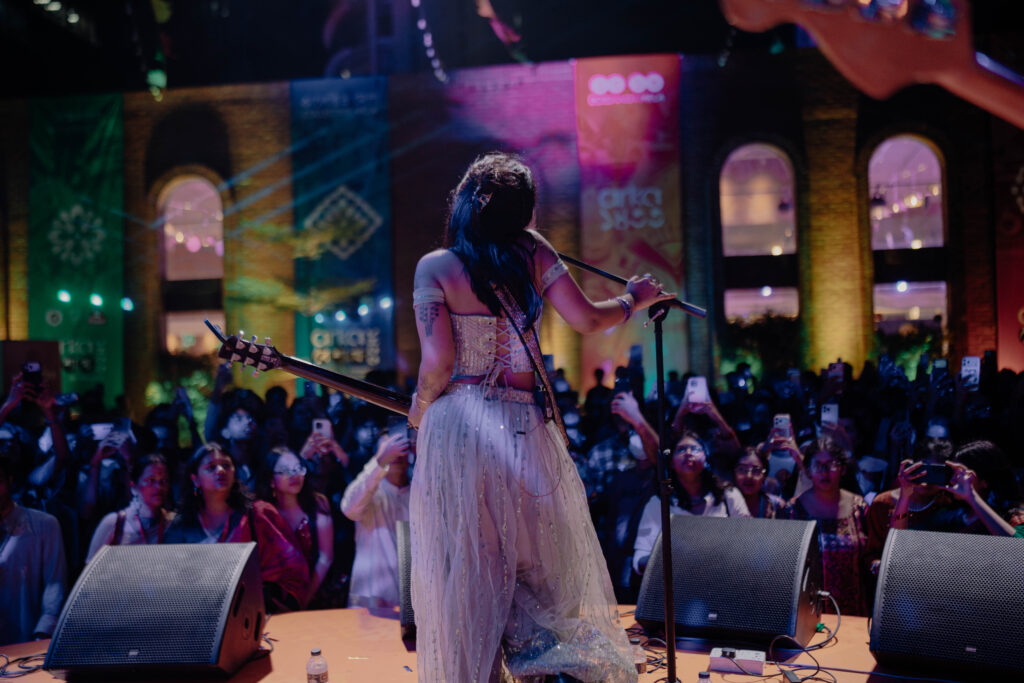
The performance area, Collective Moncho, followed a similar approach. Cultural performances were present but did not dominate the event. The stage did not act as a central attraction. Instead, it blended into the environment and allowed visitors to engage with it without interrupting their movement through the space.
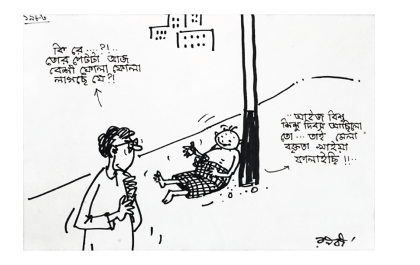
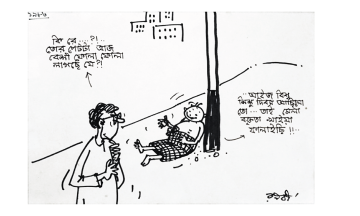
Smaller interactive elements were placed across the venue. Tattoo booths, henna stations, and caricature artists added informal points of engagement. These additions introduced contemporary forms of participation alongside traditional elements and expanded the scope of what a mela can include.
Arka Boishakh 1433 reflects a broader shift in how cultural events are being organised in Dhaka. There is a noticeable move towards curated and segmented experiences that prioritise structure over scale. This approach differs from traditional large-scale celebrations, which rely more on spontaneity and density.
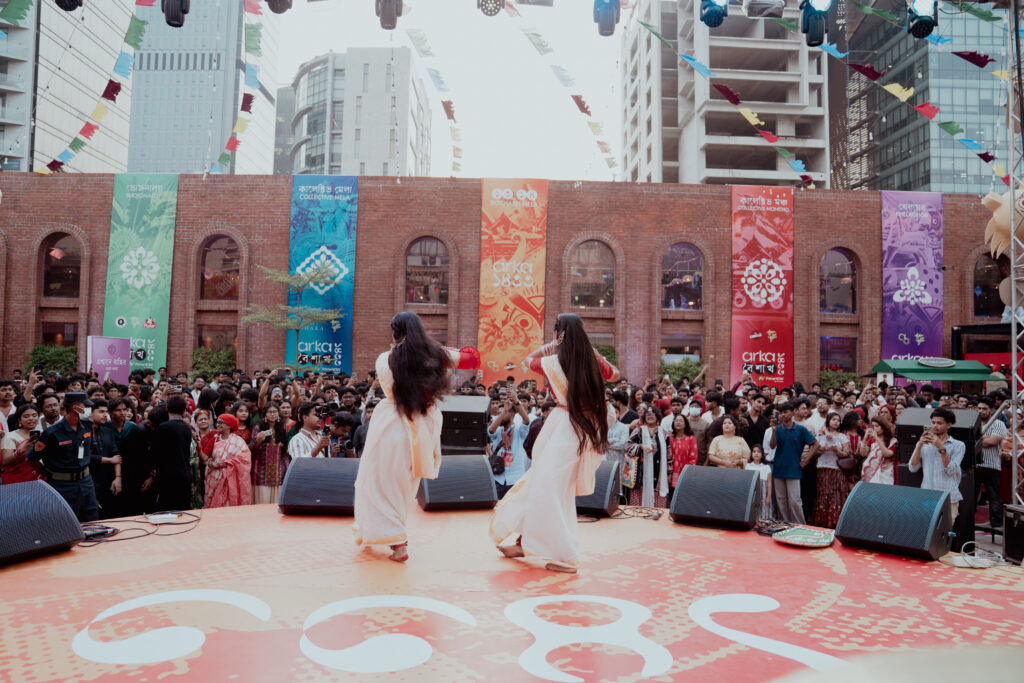
At the same time, the model raises questions about accessibility and reach. A controlled, venue-based format differs from open public celebrations in both scale and audience. Whether this type of event can extend beyond a limited demographic remains uncertain.
In essence, Arka Boishakh did not attempt to redefine the festival entirely. Instead, it presented an alternative framework by reorganising familiar elements into a more contained and managed experience. It reflects an ongoing experiment in how tradition can be adapted within changing urban contexts.
All the photos are provided by Arka Team.