



By Neha Shamim
Great architecture has the power to define a city. Beyond their striking forms, landmark buildings capture the history, culture and aspirations of the places they call home. Whether born from urban renewal, technological innovation or cultural preservation, these architectural masterpieces have become enduring symbols of their cities. The Tokyo International Forum in Japan, the Bridge of Peace in Georgia and the Guggenheim Museum Bilbao in Spain each tell a unique story of design, progress and identity.
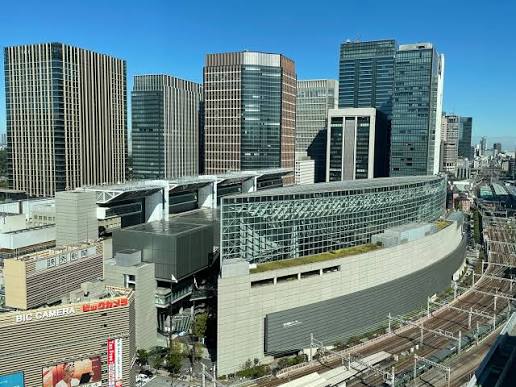
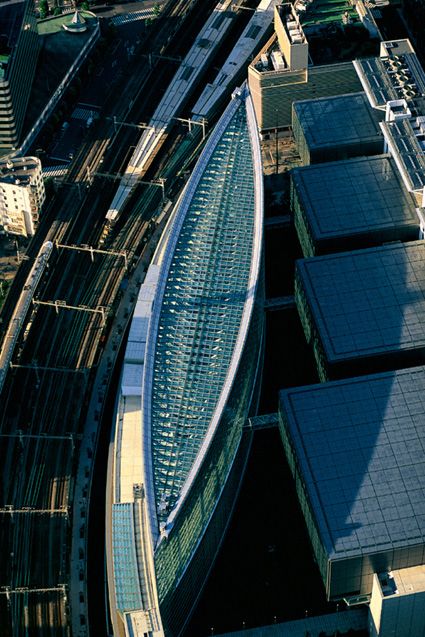
Tokyo International Forum, Tokyo, Japan
Located in Marunouchi, one of Tokyo’s premier business and cultural districts, the Tokyo International Forum is a striking symbol of Japan’s contemporary architectural vision. Designed by Uruguayan-American architect Rafael Viñoly and completed in 1996, the landmark was built on the site of the former Tokyo City Hall, marking the transformation of the area into one of the country’s leading centres for business, culture and the arts. Its breathtaking glass atrium, often compared to the hull of a giant ship, rises nearly 60 metres high and is supported by an intricate steel framework that fills the interior with natural light.
The Forum embodies Japan’s post-war architectural evolution, combining advanced engineering with the country’s enduring principles of openness, simplicity and functionality. More than an architectural spectacle, it serves as a vibrant civic hub, hosting international conferences, exhibitions, concerts and cultural events throughout the year. Today, the Tokyo International Forum stands as an enduring symbol of modern Japan, where innovation, sustainability and timeless design converge in one of the world’s most dynamic cities.
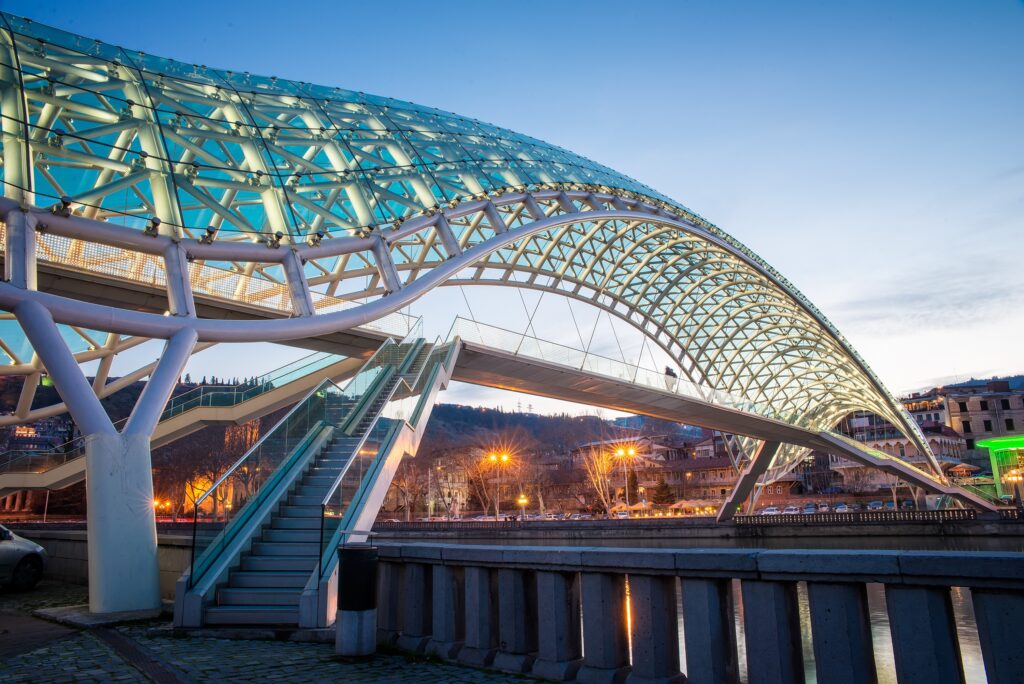
Bridge of Peace, Tbilisi, Georgia
Located in Tbilisi, the capital of Georgia, the Bridge of Peace spans the Kura River in the heart of the city’s historic district. Tbilisi is shaped by centuries of cultural exchange, with architecture reflecting Persian, Byzantine, Russian and European influences that create a cityscape where medieval churches, ornate balconies and contemporary structures exist side by side. Designed by Italian architect Michele De Lucchi and inaugurated in 2010, the Bridge of Peace has become one of Georgia’s most iconic modern landmarks.
Constructed as part of Tbilisi’s urban renewal initiative, the pedestrian bridge was envisioned as a symbol of unity, linking the historic Old Town with the city’s newer districts. Its sweeping steel structure and curved glass canopy create the illusion of a floating ribbon across the river, while thousands of LED lights illuminate the bridge each evening. Although initially controversial for its bold contemporary design, the Bridge of Peace has become one of Georgia’s most recognizable architectural icons, representing the country’s vision of embracing the future without losing sight of its rich cultural heritage.
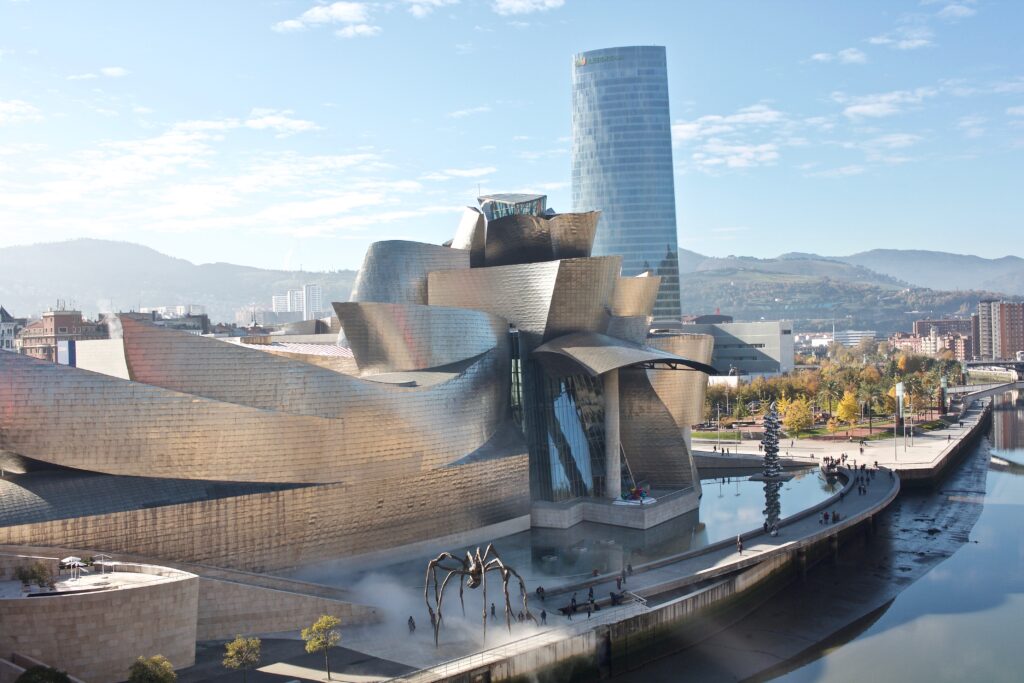
Guggenheim Museum Bilbao, Spain
Located in Bilbao, northern Spain, the Guggenheim Museum Bilbao stands as one of the country’s most celebrated architectural landmarks. Once known primarily as an industrial port city, Bilbao has transformed into one of Europe’s leading destinations for architecture and design. Designed by renowned Canadian-American architect Frank Gehry and inaugurated in 1997, the museum was commissioned as part of an ambitious urban regeneration project that redefined not only Bilbao’s skyline but also its global identity, demonstrating how architecture can drive cultural and economic renewal.
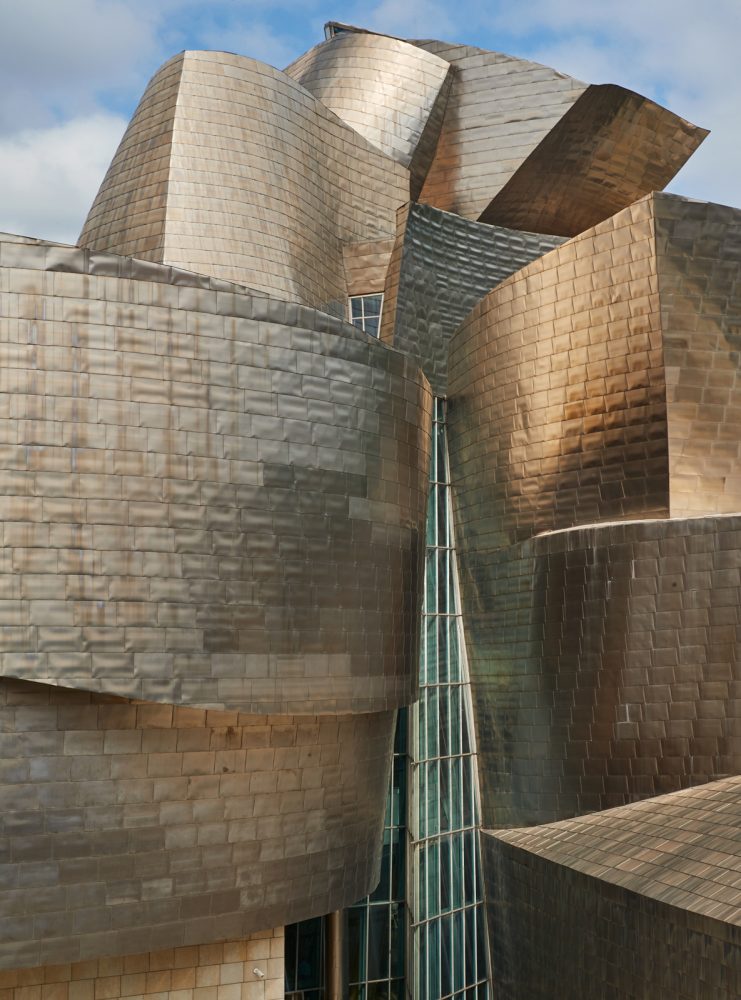
Clad in shimmering titanium panels that reflect the changing light of the Nervión River, the museum’s sculptural form appears to shift from every angle, embodying Gehry’s signature deconstructivist style. Flowing curves replace conventional geometric forms, creating a building that is as much a work of art as the collections it houses. The Guggenheim Museum Bilbao sparked what is now known as the “Bilbao Effect”, the phenomenon in which a single iconic building revitalizes an entire city through tourism, investment and cultural prestige. Today, it remains one of Spain’s most influential examples of contemporary architecture and a global symbol of visionary design, proving that exceptional architecture has the power to reshape not only skylines but the future of a city itself.