



Her latest debut album Visitor is red, hot and devilishly delicious. It is not just a musical album but a journey and at times, philosophy. She should be handed the next James Bond 007 theme before anyone else even auditions. She has already proved with Material Lover, which is an absolute earworm.
By Faizul Khan Tanim
British singer-songwriter Sienna Spiro is my current musical fixation. She has the husky voice of an impish angel – one Lilith would undoubtedly approve of. Her vocals are so dangerously good that, even with her heavenly wings hopelessly tangled in the clouds, she’d still nick a few starlit candles on her way down. So, ladies, guard your console tables… and while you’re at it, keep an eye on your men as well because this might get complicated. She’s a goddess on fire, but with blue flame instead of red!!!
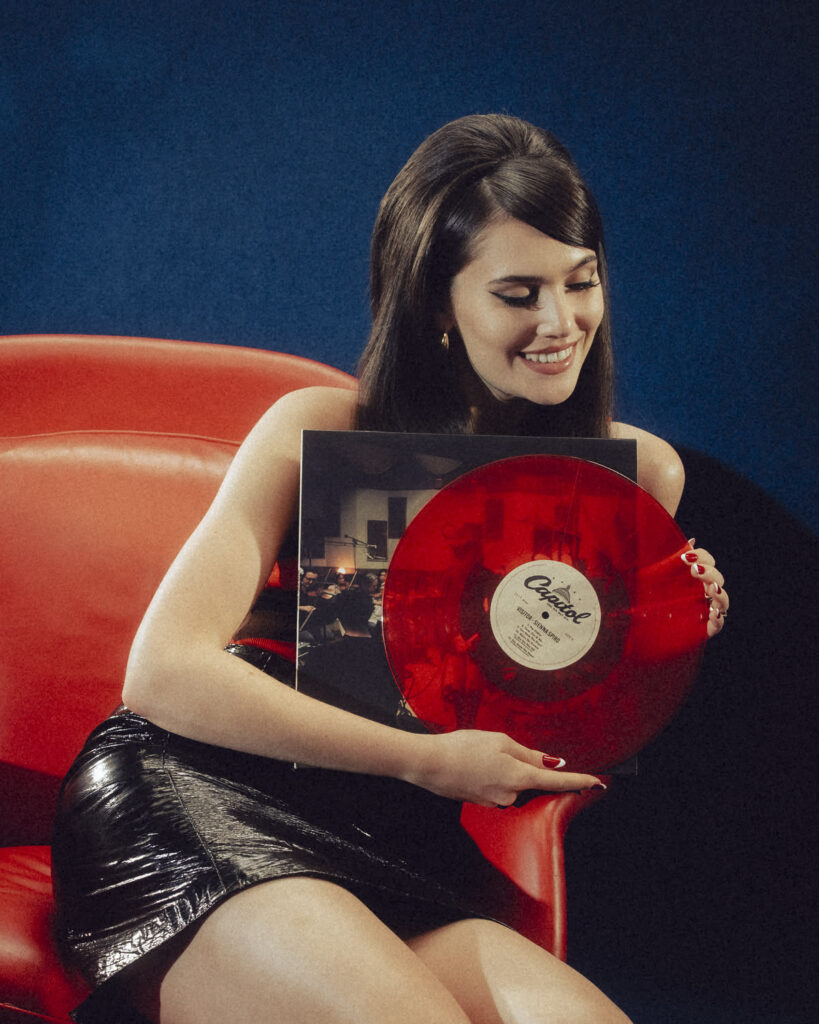
Photo Source: Universal Music Australia
I don’t know if she became a global sensation with Material Lover, which became the anthem of Devil Wears Prada 2 official soundtrack and one of the biggest hits of recent times or the emotional piano-and-string ballad Die on This Hill. Whichever way, it worked like Amortentia, instantly! But unlike love potions, which do not create genuine love, but rather a dangerous, powerful obsession or infatuation, Sienna Spiro’s music have become a global concoction to cure emotion sickness. She is the quintessential James Bond of contemporary jazz-pop-soul and an impression, an awareness, and a strange consciousness!
This extremely talented British singer-songwriter touched on every mortal feeling which can be immortalised. I agree, her words are nothing new but somehow, they reverberate like potent poetry, weaving stories and telling tales of heartbreak, the temporary nature of relationships, and the pain of holding onto unrequited love. Her songs frequently explore themes of vulnerability, self-doubt, and the desire for validation up to being materialistic for happiness. The way she pens it, I will gladly say, if she’s happy, I’m a happier fan.
And these would mean nothing if her voice didn’t transport us to surrealism. Her vocal work is often raw imperfection, comprising of jazzy mezzo-soprano range, a remarkably raspy and husky texture with organic depth and emotional delivery. And when that binds in to a fascinating marriage with her perfectly curated music style – 1960s and 70s inspired soul-jazz piano-driven arrangements to highlight her singing, the words and emotions, it’s a detonation of molten romance.
While we’re on the topic of song writing, she has hit a nonconformist and eccentric level while naming her tacks. Spiro’s track titled Material Lover feels like a subtle nod to Madonna’s Material Girl. Although both songs explore materialism and glitzy consumerist craving, they take different approaches. Madonna’s classic focuses on wealth and material gain through emotional manipulation, while Spiro contrasts a love of luxury with a desire for genuine romance. Despite their different perspectives, Material Lover comes across as a thoughtful tribute to Material Girl. It perfectly captures that sassy, high-fashion struggle between wanting a deep, genuine connection and being utterly obsessed with the finer, superficial things in life in the background of the most devilish beats and vocals.

Then comes Spiro’s breakthrough single, “Die on This Hill.” For some reason, I can’t help hearing it as an unusual companion to The Beatles’ “Fool on the Hill.” While Paul McCartney crafted the story of a misunderstood, solitary man who seems foolish to the outside world yet possesses a quiet, philosophical wisdom, Die on This Hill profoundly offers a striking contrast. It’s a jagged piano ballad about tenacious devotion and the painful urge to stay fiercely loyal to someone who doesn’t return that same love. It beautifully captures the emotional struggle of holding on, even when you know it’s time to let go.
What really amazes me is how she keeps on delivering one great track after another. Spiro’s atmospheric, bass-heavy production of “Dream Police” feels like an Inception-inspired journey through an eccentric obsession and the illusion of holding onto someone you can’t have in real life. It’s a strange temptation to write and compose a song of this magnitude. This fascinating dark pop is characterized by a sultry and raspy vocal delivery and harmonized with electronica flavoured composition.
Sienna openly shares the stories behind her songs, and that takes courage. In “He’s Not My Baby, I’m His,” her narrative-driven song explores a relationship with a disturbing age gap, emotional dependence, and the feeling of being chosen by someone much older as a lover. She wrote it after dating a man twice her age, describing it as a guilty pleasure moulded by youthful honesty rather than pretentious maturity and fake wisdom. It’s an intimate composition featuring moody string arrangements, turbulent drum beats and her usual vocal dynamics.
Arguably, the album’s final track may well be its standout moment within the 33 minutes 17 seconds total duration. “Mono No Aware” beautifully explores the Japanese concept of appreciating life’s fleeting beauty and the quiet sadness that comes with knowing nothing lasts forever. The song’s message is tender and profound: love and evocative experiences don’t need to be permanent for a lasting impact. With its moving chorus and heartfelt lyrics, the track offers a powerful reminder that it’s okay to embrace love, loss, and the moments in between. The chorus – How rivers dry and tears subside, Nights will end and come again, It’s okay to fall and turn to blue, It’s okay to love and okay to lose, But the beauty is you don’t have to choose – will leave you with inexplicable goose bumps.
Give the album a listen in a deeply atmospheric mood and an empty room, either sober or in a delightfully altered state. It doesn’t only get stuck in your head, it quietly returns when you least expect it.