


Abak Hussain
Which came first, tokai the word, or Tokai the character? In the heyday of the word’s usage, it hardly mattered: small t tokai and big T Tokai felt one and the same. Reality was mirrored in cartoons, and conversely, satire and art bled into the grim reality of our streets. Nowadays, although the relevance of the iconic character has not faded at all, the usage of the word has probably slipped a bit off the vernacular, or rather, is used more in some segments of society than others. Social media and algospeak have exploded our vocabularies, and words are constantly competing with other words in the world of colloquialism and slang. In spite of it all, tokai never left, because in spite of wondrous amounts of wealth creation our country has witnessed, systemic poverty and economic inequality have been constants throughout the decades.
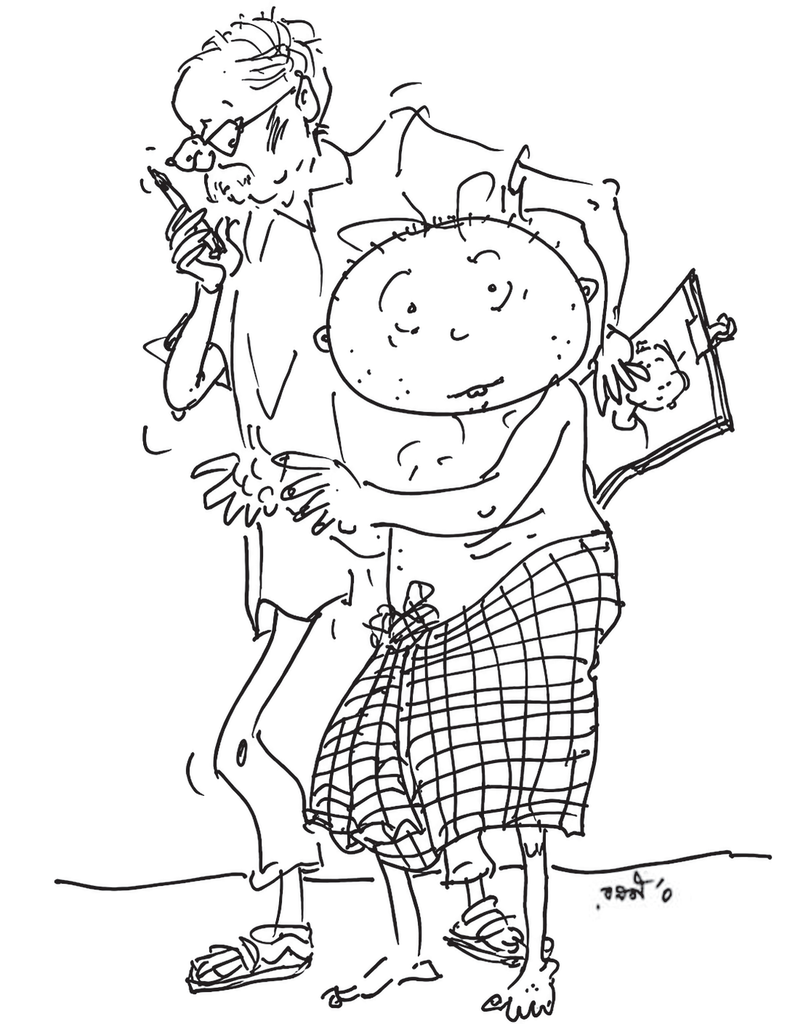
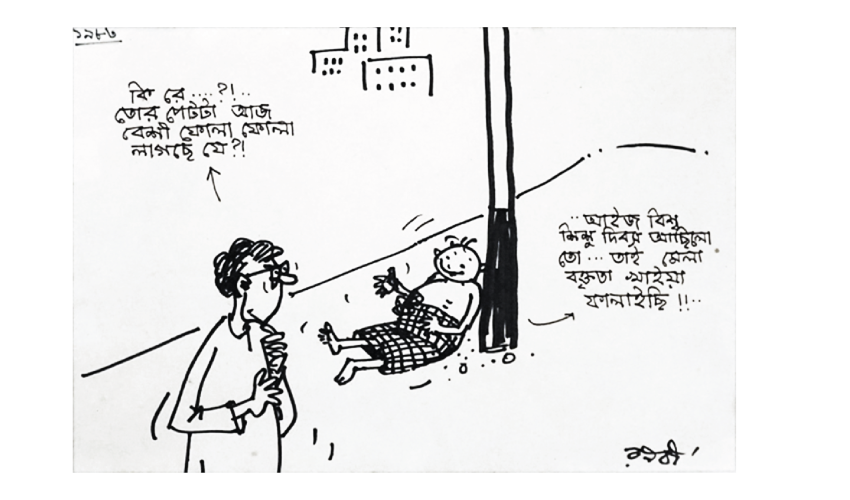
But to answer the question: the immortal character of Tokai, created by artist Rafiqun Nabi, came first. It was a character that was born out of the poverty and hardship that we have all witnessed around us in this country. Tokai’s first appearance was in Bichitra magazine back in 1977. Since then, this simply drawn — black ink on white paper generally — archetype has remained in our culture, appearing regularly, poking fun at society, income inequality, and social justice. Like other globally recognized characters, say Mickey Mouse, Charlie Brown, or Bart Simpson, Tokai is ageless. Tokai’s surroundings, circumstances, and wardrobe never change. Existing in a floating timeline, Tokai does not get older. But while Mickey Mouse has been known for the occasional melancholic mood, and Charlie Brown often lapses into existential musings, and Bart Simpson is a constant thorn in the side of authority, Tokai is the only one staring the stark reality of poverty in the face. Here is a beloved character who does not know where his next meal will come from. As readers we want to reach through the pages and save Tokai, after all he is so universally loved. But we cannot do that, because Tokai not an individual. Tokai is a collective, Tokai is everywhere, existing to mock our society’s catastrophic failure to protect children from poverty and harm.
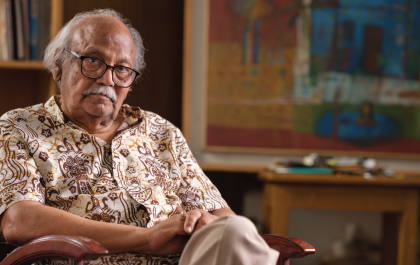
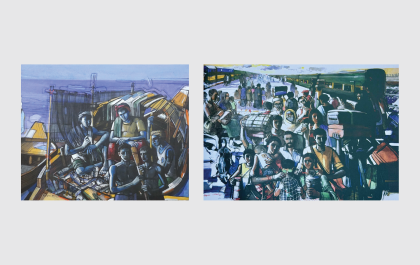
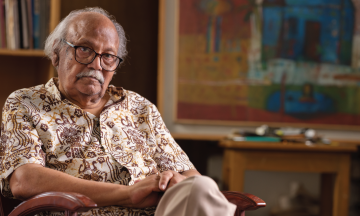
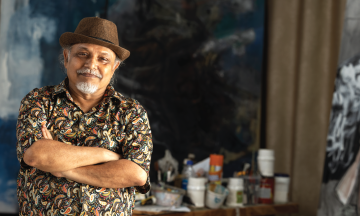
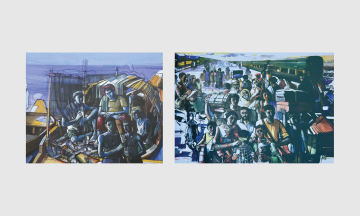
One almost feels a bit of sympathy for Rafiqun Nabi’s predicament and just how much his name has become associated with this one character, sometimes at the expense of his incredible body of work. Many, especially among the younger cohort, think of him specifically as a satirical cartoonist and connect his name exclusively to Tokai. But there is more to his journey. Born in 1943 in Chapainawabganj, he fell in love with art at an early age. Some of his early mentors were the likes of Zainul Abedin and Quamrul Hassan. The Zainul connection seems obvious when you hear about it. After all, both artists observed and depicted harsh poverty that they would rather not have. He traveled to Athens to study printmaking in the early 70s, and has worked extensively in that medium. He has painted on canvases big and small in a range of themes and styles. He has done the artwork for innumerable book covers. And then of course, there is his academic career as a faculty member at the Institute of Fine Arts in Dhaka University. All in all, it is fair to estimate that by now his artistic career has spanned something like 63 years. To think: the creator of a cultural fixture like Tokai is not only still among us, as of this writing, but still active.
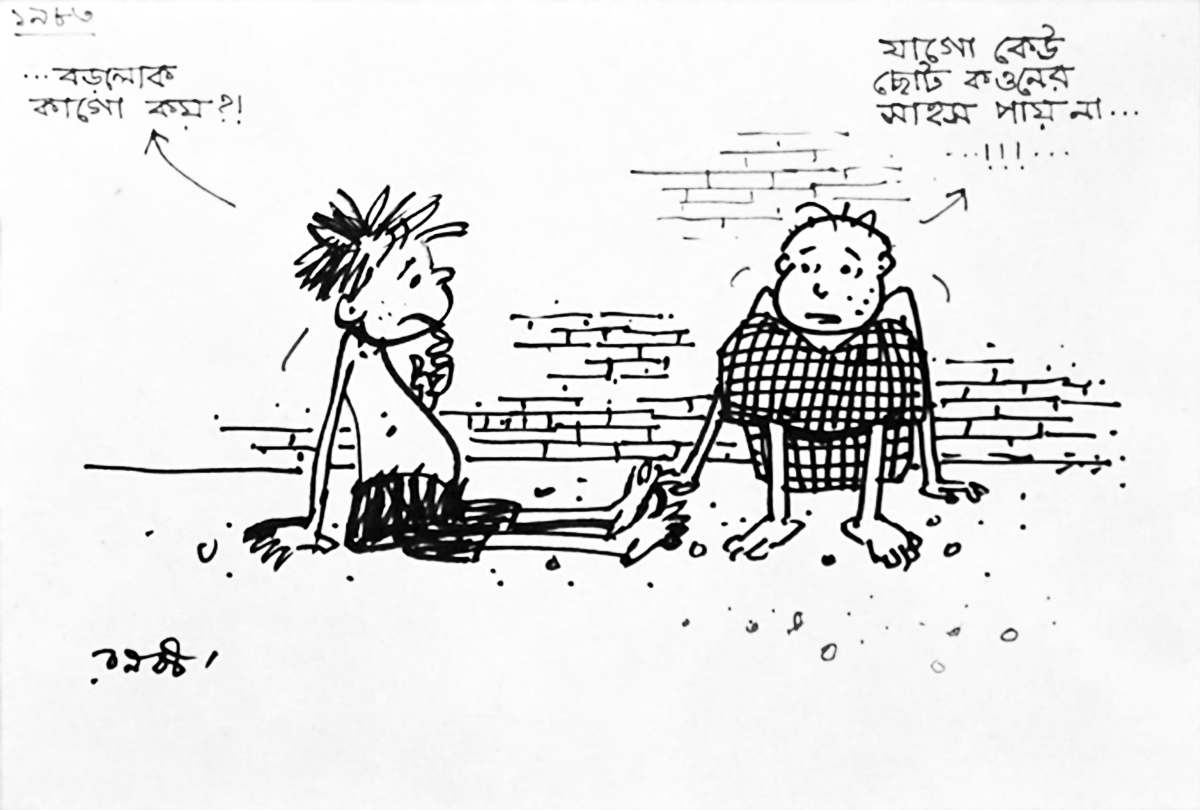
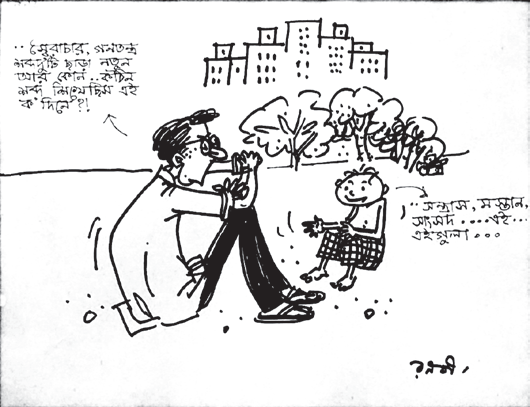
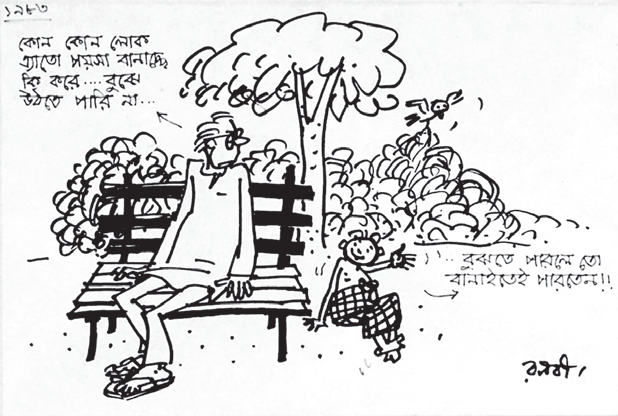
But back to Tokai. Whether this instantly recognizable street urchin is Ranabi’s crowning achievement is a matter for debate among critics, and really does not need to be settled. But for better or for worse, Rafiqun Nabi will be inextricably linked to his creative progeny Tokai. A child with a bald head, clad in nothing but a lungi, a distended belly indicating poor health, often smiling impishly — that is the picture of Tokai. Through all his trials, Tokai projects humor and resilience. He scavenges for food and lives with great uncertainty, but his true vocation is social critique. He is a collector, and hence the name Tokai: he picks up (toka) things.
Plato spoke of the philosopher-king, but here we have the philosopher-scavenger. He delivers brutal truths from which there is no clear escape. Though illiterate, it is clear that Tokai is witty, observant, and brimming with potential. He is not lacking in initiative or hard work. Rather, it is the system that has let him down. And this system continues to fail children in Bangladesh. The abuse of children in various forms is still rampant, and while our economy marches forward and big business booms, the poor keep getting the short end of the stick. Dhaka has become a city of imposing high-rises and overpriced services. Surely the upper echelons of society here are loaded enough to afford these glittering amenities. But existing side by side are the beggars and the homeless. The pie getting bigger has never ensured shares of the pie for all.
So now we have Tokai in a new world. Rafiqun Nabi’s original character, first published 49 years ago, would probably be gobsmacked by the world of today. It is a world of smartphones and algorithms, rideshares and apps, innovation and progress happening at an unprecedented scale. Words like ‘trillionaire’ have entered the lexicon and tech companies are stealing our art and our books without our consent. How much of this does Tokai understand? What does he have to say about it all? Tough to answer that, he is illiterate after all. Still, we shouldn’t underestimate his powers of observation. He will find a way to skewer the 1%.
Abak Hussain is Contributing Editor at MW Bangladesh.