


By MWB Desk
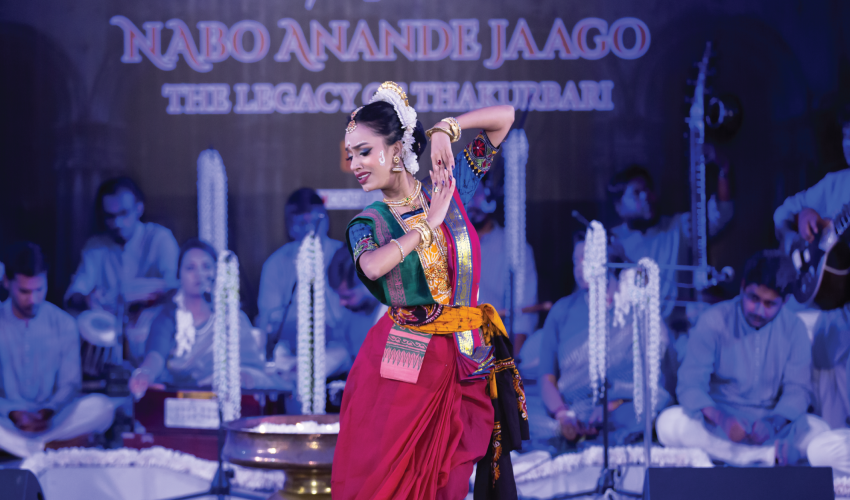
On 7 May, at La Vita Banquet Hall, Lakeshore Hotel, Dhaka, “Nabo Anande Jaago: The Legacy of Thakurbari” marked Rabindranath Tagore’s 165th birth anniversary with a programme that did not stop at the poet himself.
Arranged by the Indira Gandhi Cultural Centre, High Commission of India, Dhaka, in collaboration with the Fashion Design Council of Bangladesh, the event used music, recitation, archival references, and fashion to shift attention towards the wider world of Thakurbari, especially its women. That larger framing runs through the user-provided event notes.
That decision gave the evening its distinct character. Rabindra Jayanti events are plentiful in Dhaka. Songs are sung, poems are recited, and the expected reverence settles over the room. But “Nabo Anande Jaago” tried to do something more layered. It treated Tagore not only as an individual genius, but as part of a household that shaped a cultural climate.
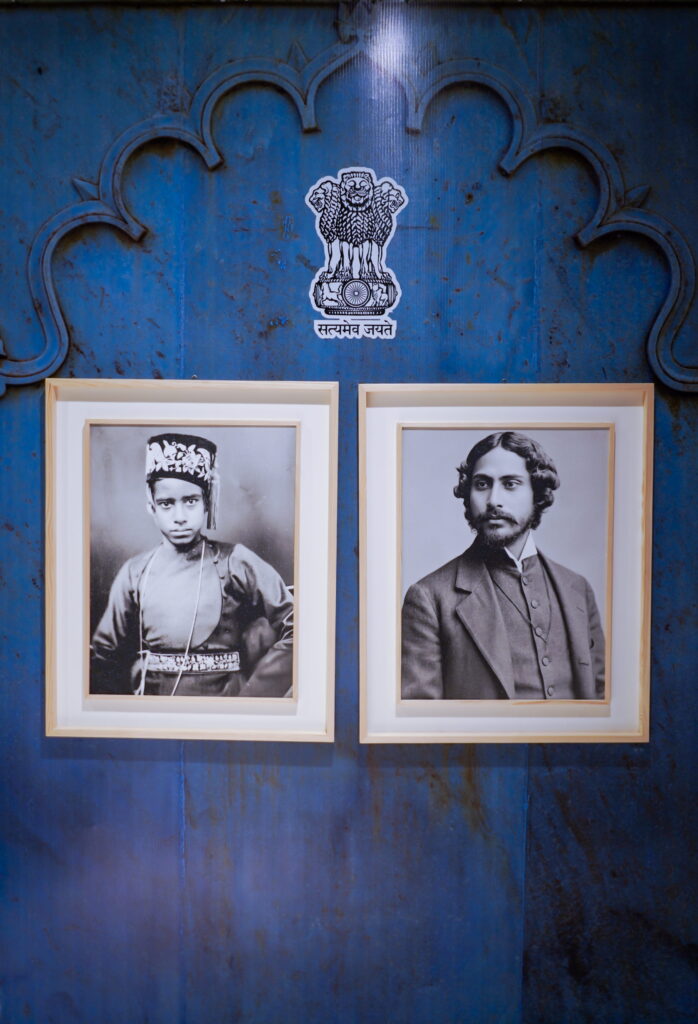
One of the event’s strongest visual gestures was the arrangement of framed photographs of the Tagore family. Rather than isolating Rabindranath as a singular icon, the display widened the lens, placing him within a family of reformers, intellectuals, artists, and influential women. It was a subtle but effective curatorial move. The evening’s fashion segment extended that same idea, bringing into view women of the Tagore family as well as female figures from Tagore’s literary imagination.
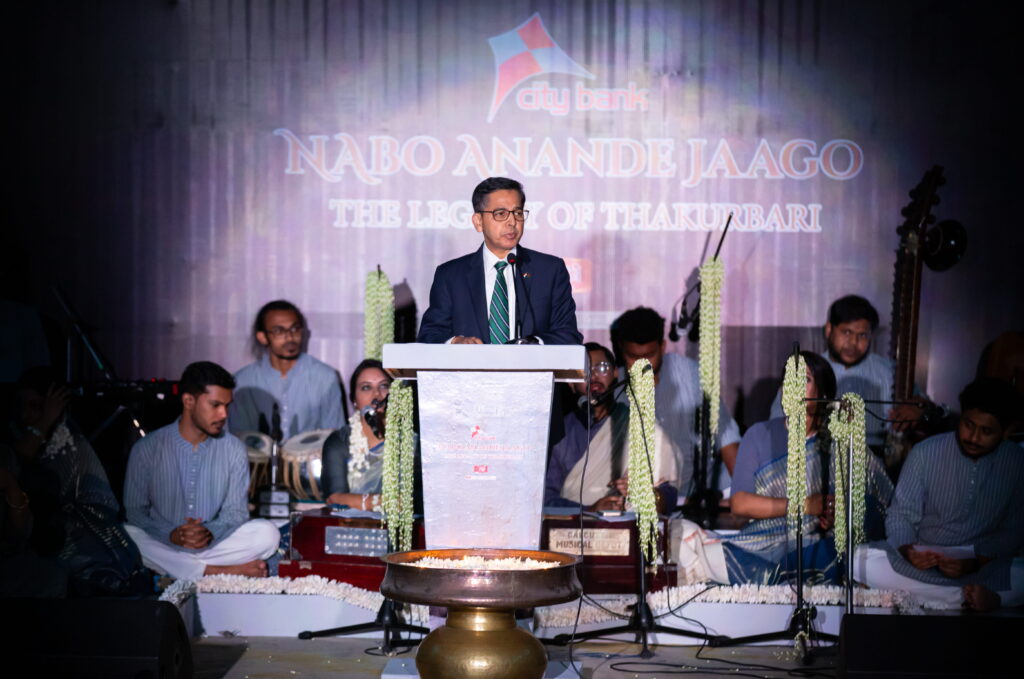
In his speech, Pranay Kumar Verma, High Commissioner of India to Bangladesh, emphasised why Tagore remains so central to both nations. He described Rabindranath Tagore as a figure deeply shared by India and Bangladesh, reminding the audience that he composed the national songs of both countries.
Verma also noted that the event revisited the women of the Tagore household who contributed to the Renaissance in the Indian subcontinent, and framed the programme as a reflection of a shared commitment to artistic and literary heritage, creativity, and humanity.
That emphasis on the women of Thakurbari was also central to Maheen Khan, founder and president of the Fashion Design Council of Bangladesh, whose own line was part of the showcase. For her, this was not an ornamental addition to a Tagore programme, but part of a longer effort to retrieve iconic women of Bengal from the margins of cultural memory.
As she put it, “For quite some time, for several years actually, we have been thinking about doing a project where we can bring the iconic women of Bengal to light.” She described the Tagore family as “the landed gentry” and “an intellectually profound family,” adding that their progressive lifestyle gave the women of the household a distinct place in Bengal’s social and cultural history.
The fashion show reflected that thinking. Rather than treating history as costume, it attempted to reconstruct character. Protima Devi and Devika Rani were among the women highlighted through Maheen Khan’s own line.
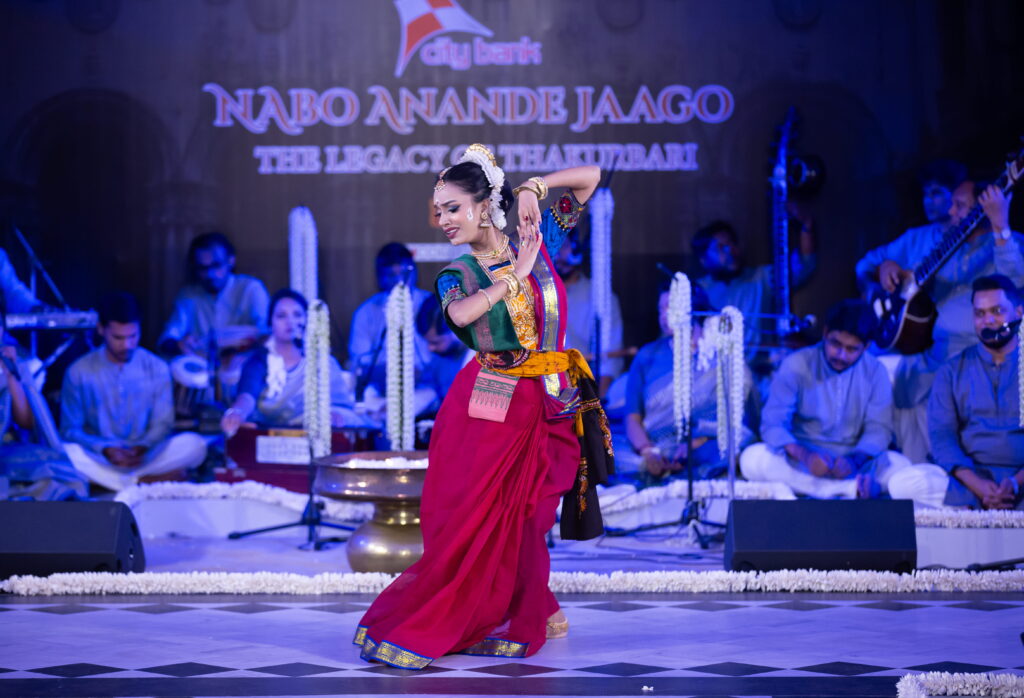
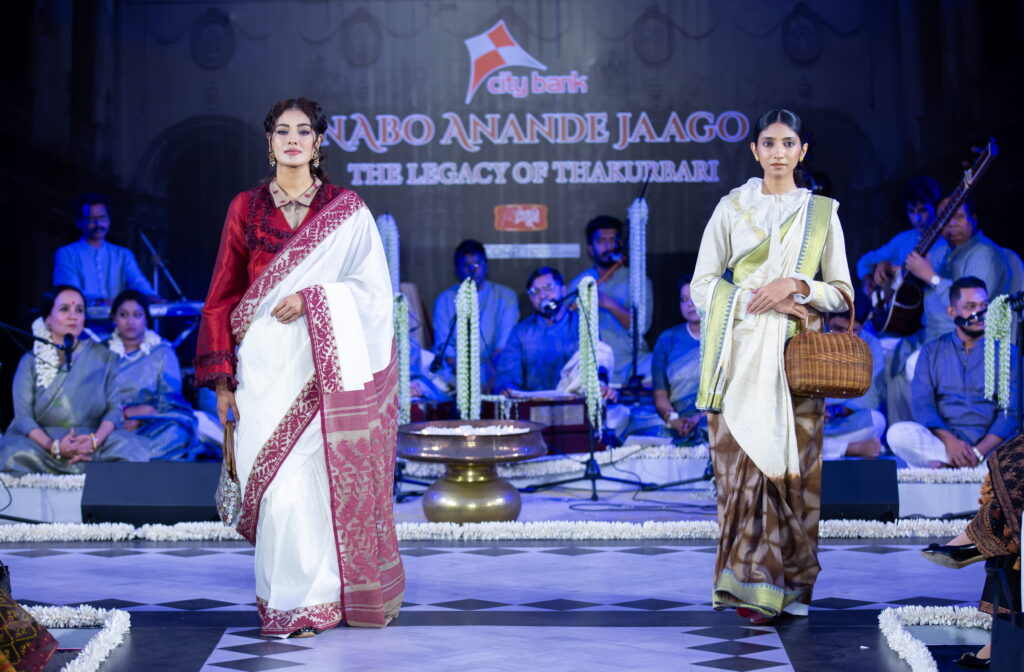
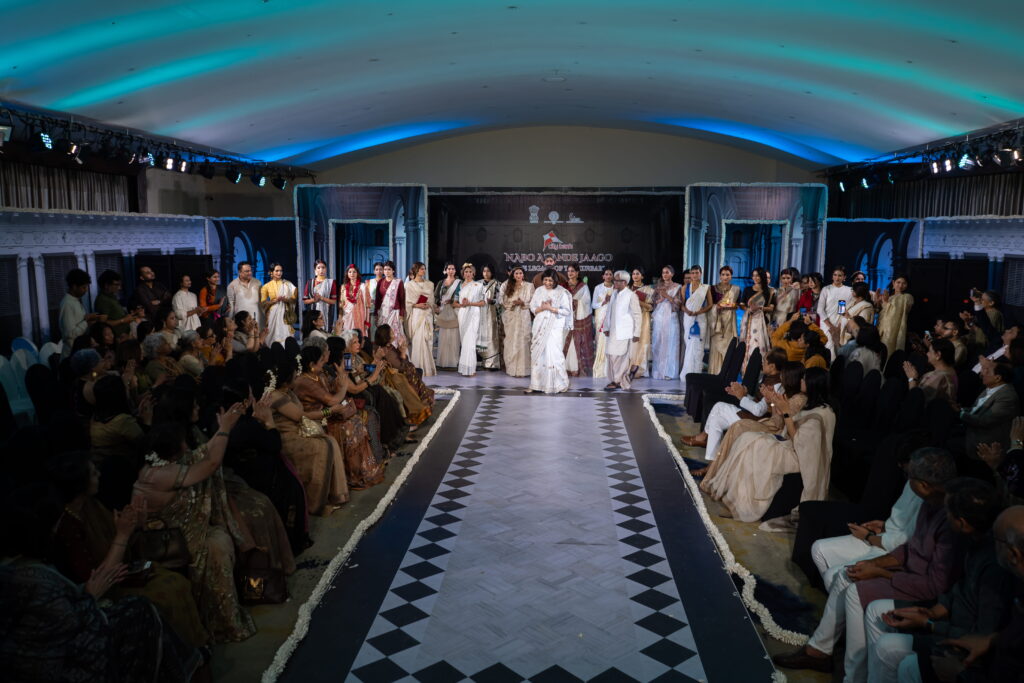
Protima Devi, often remembered only as a daughter-in-law of the family, was presented as a serious cultural worker who contributed to the art department at Visva-Bharati, worked with Nandalal Bose, and shaped dance dramas. Devika Rani, by contrast, represented a different route through modernity: trained in music, architecture, and textile design, later moving into cinema and co-founding Bombay Talkies. Together, they suggested that the women of the Tagore family were not merely part of a household but part of the making of a wider artistic language.
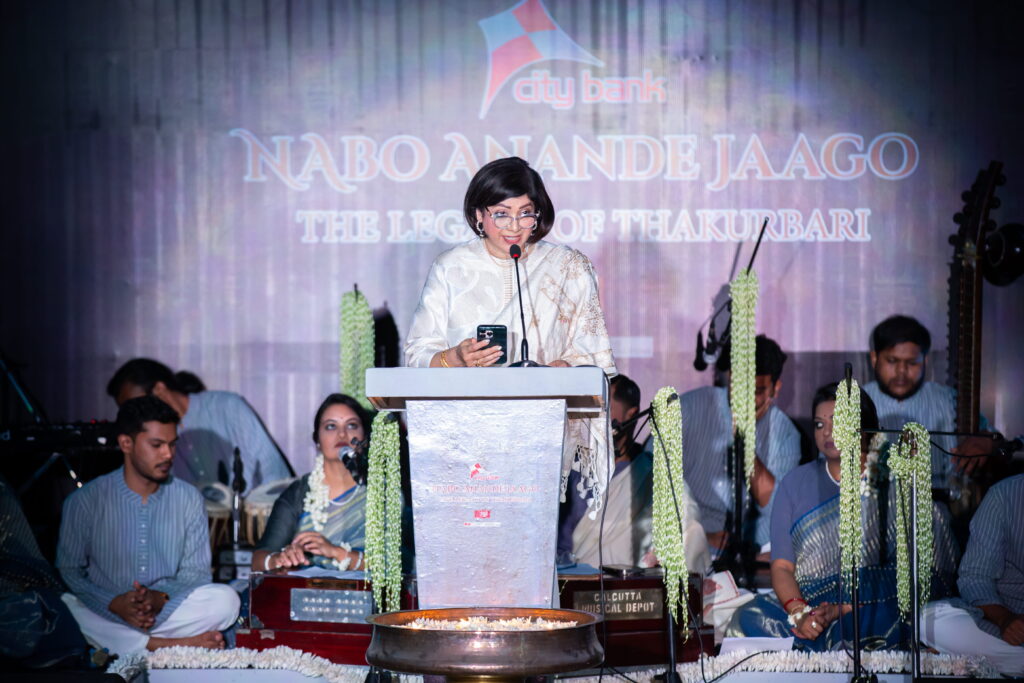
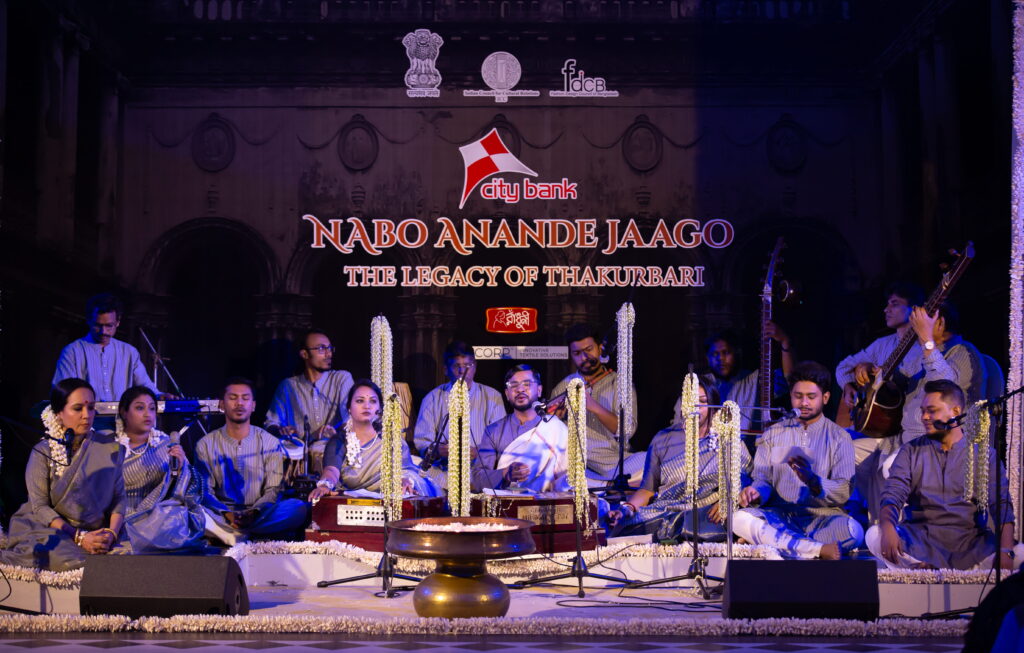
The event was presided over by renowned designer Shaibal Shaha, while Ashanur Rahman, Deputy Managing Director of City Bank, and Maheen Khan also addressed the audience. The cultural segment included performances by Rabindra Sangeet exponents, grounding the evening in the musical tradition most closely associated with Tagore.
What made the evening memorable, however, was not just its programme structure. It was the way it briefly repositioned the familiar. Instead of asking the audience to look only at Rabindranath, it asked them to look around him.
For one evening in Dhaka, Thakurbari was not remembered as a house occupied by a poet alone. It was remembered as a world.