


By Neha Shamim
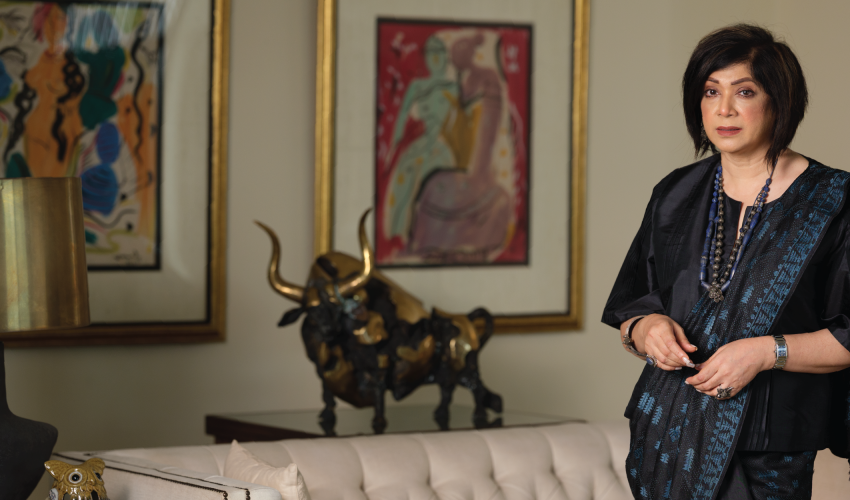
For nearly four decades, Maheen Khan has been one of the defining voices of Bangladesh’s fashion industry, creating a lasting connection between heritage craftsmanship and contemporary design. A pioneer in the country’s fashion movement, her work has been shaped by a deep respect for textiles, artisans, and the cultural stories preserved through craftsmanship.
From her early years at Aarong, where she joined in 1986 as a designer to head the fashion department and played an important role in bringing handloom textiles, indigenous techniques, and artisan-made creations into focus, to founding Mayasir by Maheen Khan in 2001, she has continuously worked towards building a stronger identity for Bangladeshi fashion.
A graduate of textile and fashion design from Otis Parsons School of Art and Design, Maheen developed a global perspective while remaining deeply connected to the traditions of Bengal. Through Mayasir, she transformed heritage fabrics such as muslin, jamdani, khadi, silk, and handwoven textiles into expressions of contemporary elegance, proving that traditional craftsmanship can evolve while preserving its essence.
Throughout her career, Maheen Khan has represented Bangladeshi fashion on both national and international platforms. Her journey includes Bangladesh Fashion Week and Dhaka Fashion Week, alongside international showcases such as Bridal Asia in New Delhi (1999, 2000, 2001, 2002, 2003, and 2008), one of South Asia’s major bridal fashion platforms, a Paris Fashion Pop-up during Paris Fashion Week in 2019, Mercedes-Benz Colombo Fashion Week, Berlin Fashion Week, New York NOW, and the Santa Fe International Folk Art Market. Beyond showcasing design, she has also contributed as a curator and cultural advocate, including curating New York NOW 2024 and presenting Majestic Silks of Bangladesh, a celebrated showcase highlighting the beauty, heritage, and craftsmanship of Bangladeshi silk. In 2025, she showcased her work at London Fashion Week and WEFT Malaysia, while also presenting a solo exhibition of her handmade slow collection during Baishakh 2025. Continuing her global journey, she is set to return to London Fashion Week in 2026.
Her commitment to preserving traditional arts extends beyond fashion shows. Through exhibitions such as the Baishakhi Festival exhibition at Bay’s Edge Gallery in Dhaka, where she celebrated handwoven silk garments and Nakshi Kantha craftsmanship, and her upcoming participation in the Sui Dhaga Global Exhibition, where she will revive old Kantha pieces, Maheen continues to bring renewed attention to Bangladesh’s living heritage.
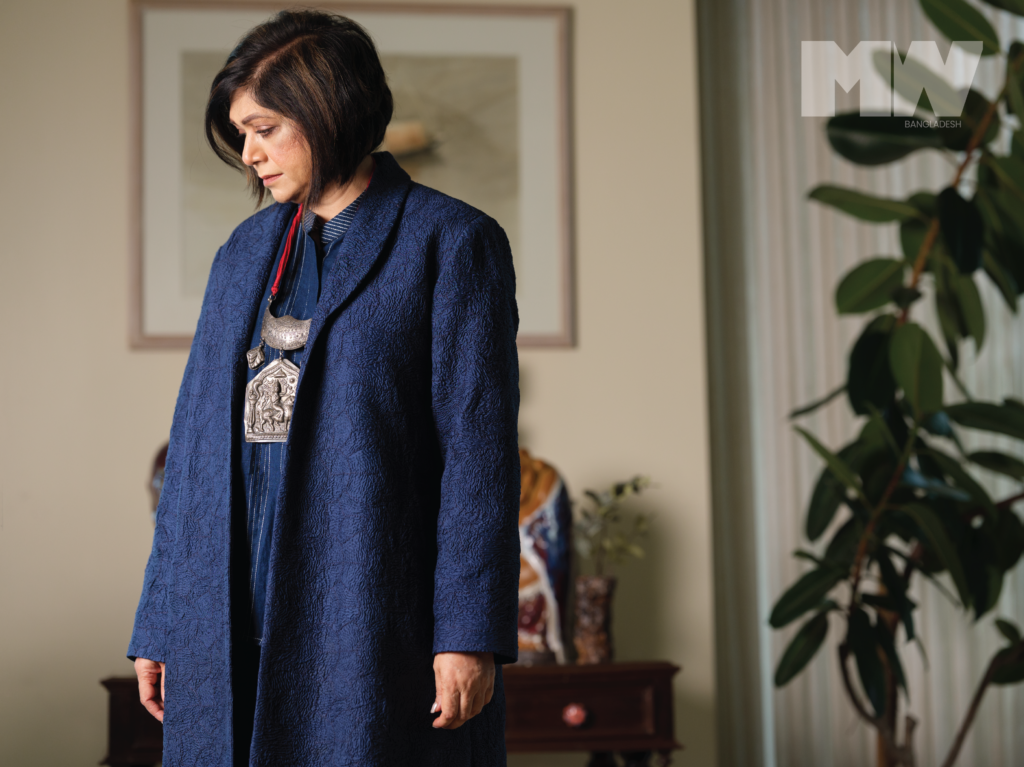
Her contributions to fashion and cultural preservation have been recognised through honours including the Eisenhower Fellowship (USA), Athena Global Leadership Award, Lifetime Achievement Award from the British Bangladesh Fashion Council, Dhaka Apparel Summit Award by BGMEA, Dhaka Fashion Week Lifetime Award, and other recognitions celebrating her influence in design and craftsmanship.
Could you begin by sharing a bit about your childhood and your upbringing? Were there any early influences that sparked your interest in the world of fashion?
I think my connection with design began very naturally. It was something I grew up around before I even understood what it meant. When I was around two years old, my mother started her independent store, Joya, and from a very young age I was surrounded by creativity, craftsmanship, and local industries.
My mother worked closely with the Bangladesh Small and Cottage Industries Corporation (BSCIC) and dedicated herself to developing and promoting Bangladeshi crafts and artisans. She never called herself a designer; she always described herself as a craft developer. She was also one of the founders of BanglaCraft and an advisor to Aarong during its early years. Watching her work gave me a deep appreciation for our heritage and craftsmanship, although she never encouraged me to follow the same path. It happened very organically.
Over the years, that early exposure evolved into my own journey of learning, experimentation, and design. My work has always been rooted in Bangladesh’s heritage, and I continue to believe that our textiles, crafts, and artisans are among the country’s greatest creative strengths.
Bangladesh has such a rich textile history. What does Bengali heritage personally mean to you as a designer today?
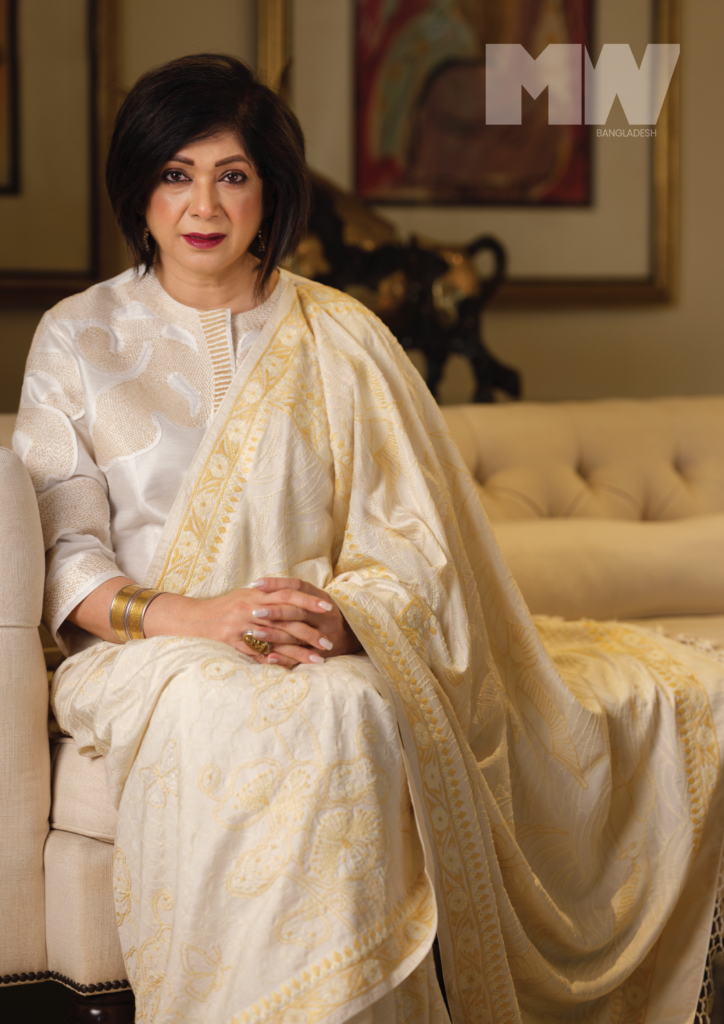
I think to truly understand Bengali heritage, we first have to understand where we come from. Bangladesh is a land shaped by the Brahmaputra and Ganges rivers, carrying thousands of years of creative expression. Our architecture, music, crafts, and textiles all tell stories that have been passed down through generations.
Over time, floods, climate challenges, and other hardships have caused us to lose parts of that heritage, but what has survived remains incredibly valuable. Our creative traditions,from terracotta and traditional crafts to our textiles,reflect the imagination, skill, and identity of our people. Our textile history is especially remarkable. Muslin, created around Kapasia and along the banks of the Shitalakshya River, was once celebrated across the world and treasured by royalty. Although we faced challenges preserving traditional materials and techniques, recent decades have seen a wonderful revival of crafts such as Nakshi Kantha and Jamdani.
I believe the possibilities for Bangladesh are endless. What we need is stronger support for our design industry, our young designers, and our artisan communities. Around the world, people are increasingly valuing handmade work, sustainability, and the stories behind what they wear because craftsmanship carries history, identity, and culture.
For me, design is about creating something timeless. A silhouette should go beyond trends, offering comfort, quality, and longevity. You cannot deceive your clients; you have to give them the very best. When textiles, motifs, and craftsmanship genuinely reflect the story of a culture, they have the power to connect with people anywhere in the world.
Cultural preservation is not about looking backwards; it is about ensuring that our heritage continues to live, evolve, and remain relevant for future generations.
Your work has taken Bangladeshi craftsmanship to platforms such as Bridal Asia, Berlin Fashion Week, Paris Fashion Showroom, New York NOW, and Santa Fe International Folk Art Market. How do you approach representing Bangladesh’s heritage on global platforms while making it relevant to an international audience?
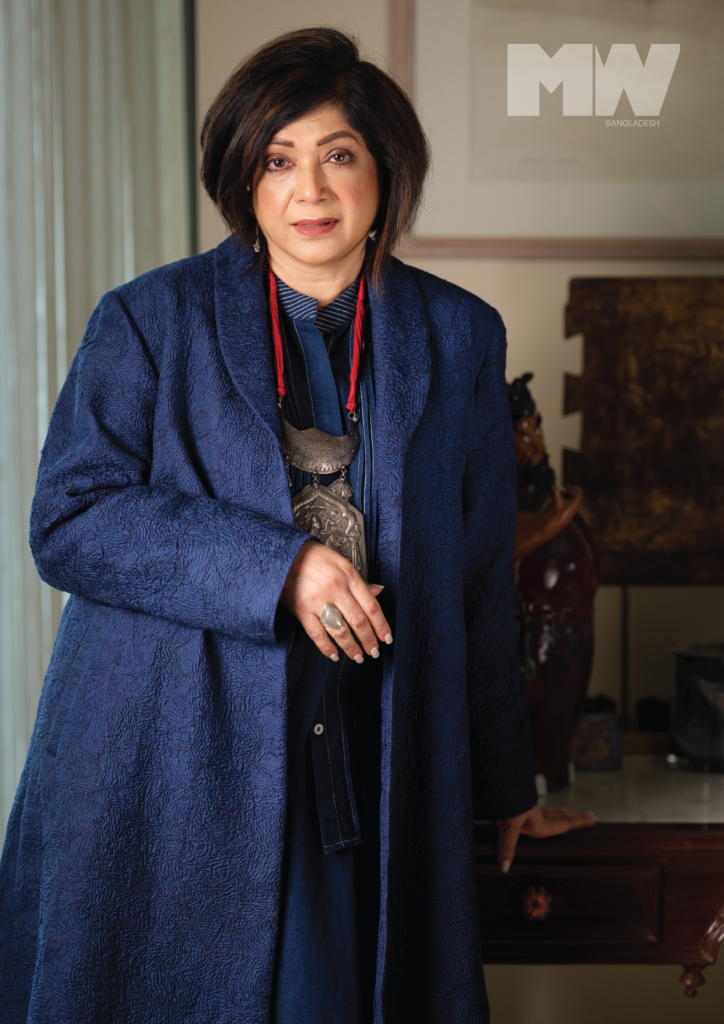
The vision behind my brand has always been rooted in Bangladesh. From the beginning, I wanted to take our local heritage and present it through silhouettes that feel contemporary and globally relevant without losing their identity. Whether I am showing in Dhaka or abroad, my design philosophy remains the same. I work with handloom textiles, and the fabric itself guides the silhouette. When I look at a fabric, I ask myself what it wants to become. Handloom naturally lends itself to comfort, movement, and ease, and I believe those qualities are universal. My aim has always been to create clothing that feels timeless while supporting our rural artisans and keeping handmade craftsmanship relevant.
Whenever I represent Bangladesh on an international platform, I carry that philosophy with me. Whether it is Bridal Asia, Bangkok Craft, or the Santa Fe International Folk Art Market, I feel incredibly proud to represent our weavers, embroiderers, dyers, and artisan communities. Every exhibition is an opportunity not only to showcase our textiles but also to learn from other countries, understand how they support their crafts, and continue evolving while staying true to my roots.
When I first started, many of the ideas we talk about today, sustainability, social business, and ethical fashion, were not part of our vocabulary. We were simply doing what felt natural: working with weavers, training artisans, and creating handmade products because we believed in their value. Looking back, I realise we were practising those principles long before they became global conversations. Today, people are increasingly drawn to products that carry authenticity, craftsmanship, and a meaningful story, and I believe that gives Bangladeshi heritage a truly global place.
Who has been your biggest supporters throughout your journey in the creative field?
Since my mother passed away when I was in the prime of my life, and my father passed away when I was very young, I think my friends and family have been my biggest sources of inspiration and support. I would especially like to mention Shaibal Saha, who I have worked closely with over the last 14 years through the Fashion Design Council of Bangladesh. Together, we have worked towards promoting slow fashion and local design. Whenever I am working on something, we brainstorm, exchange ideas, and find solutions together.
Design cannot exist in isolation. It has to be connected to history, geography, culture, and heritage.
I also cannot talk about my journey without mentioning my husband and children. Their support has been incredibly important because without family and the people who stand beside you, you cannot become who you are. I have always worked full-time and never really stopped. Recently, we completed a project on the legacy of Thakur Bari, focusing on the influential women of that family and their role in inspiring and empowering women of Bengal.
For me, the value of work is not only about business success. It is about what you contribute , whether you create change, inspire others, or add value to people’s lives. Ultimately, I believe everything comes back to storytelling. Fashion is not only about colours and forms; it is about what you are trying to communicate and the difference you are trying to make.
How do you balance honoring tradition while still keeping your designs contemporary and relevant for newer generations?
I think we are living in a very dierent world today. Our relationship with nature, culture, and even small everyday experiences has changed. Many children growing up in urban environments no longer have the same connection with nature that previous generations had, and that is something we have lost.
At the same time, every generation brings something new to culture. I believe we have to be globally aware and understand the world around us while staying connected to where we come from.
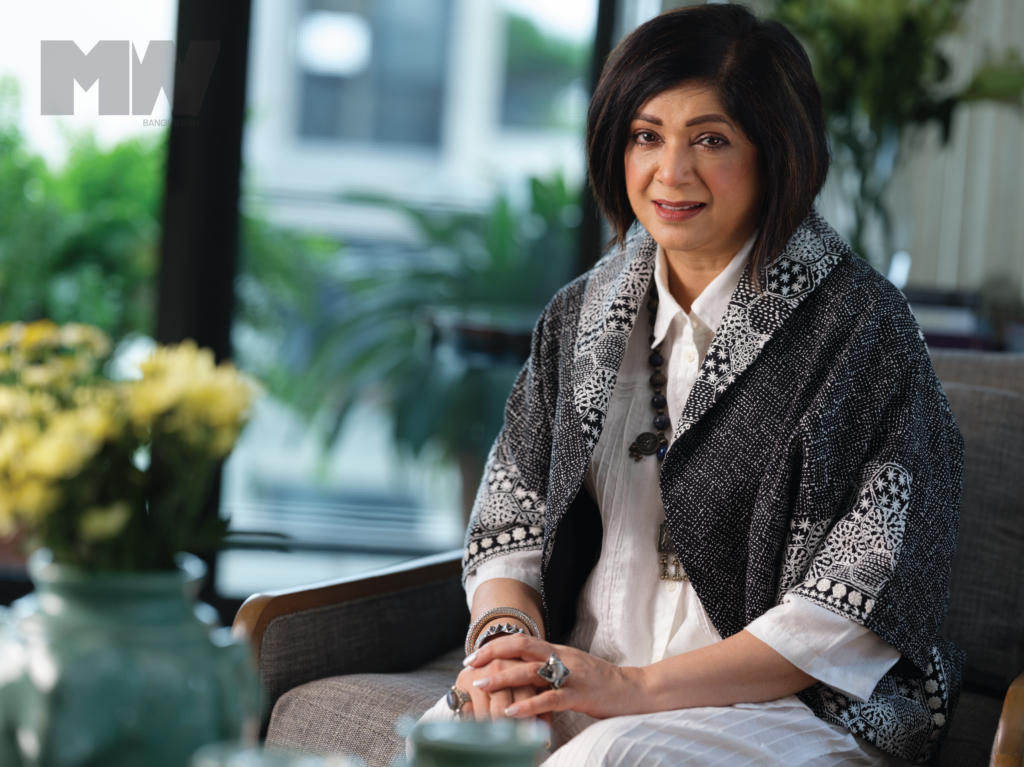
My own journey has always been shaped by curiosity. I like to stay aware of what is happening around me, from current affairs and politics to culture, entertainment, and global changes. Everything happening in the world affects us. A crisis or conflict thousands of miles away can impact our lives through the economy, energy, food prices, and even our mental well-being.
We live in a time where everything is interconnected. Within seconds, people connect with designs, music, cultures, and ideas from across the world. That is why I believe contemporary relevance is extremely important in design. For me, the goal is not to choose between tradition and modernity. It is about staying connected to our roots while understanding the lifestyle, needs, and emotions of the people today.
Tradition has to evolve. It has to speak to the people of its time. We need to understand what works for us, what represents us, and what can be carried forward. Ultimately, creativity comes from being able to think differently. Unless you are willing to look beyond what already exists, you cannot create something unique. The beauty lies in bringing together heritage, contemporary life, and new ideas to create something meaningful.
Tradition has to evolve. It has to speak to the people of its time.
Your work has consistently drawn from Bangladesh’s traditional crafts and heritage textiles. What has shaped your commitment to preserving these traditions while bringing them into a contemporary fashion?
From the very beginning of my journey, I was always looking at our heritage, trying to understand what existed before us and how we could bring those stories into the present. One of the earliest examples was jewellery. In the mid-1980s, many traditional silver jewellery makers had lost their patronage, and the craft was slowly disappearing. Working through BRAC and Aarong, we began asking ourselves how these traditions could be revived. We researched museum collections, old books, and historical references, studying traditional Nakshi Kantha motifs, Hater Bala, Hashuli, filigree work, anklets, bangles, and many other forms of Bengali jewellery.
That process taught me that design cannot exist in isolation. It has to be connected to history, geography, culture, and heritage. When you look at these objects, you realise how sophisticated our craftsmanship has always been. Our intangible cultural heritage, whether it is Jamdani, Muslin, or other traditional crafts, survives only when it remains a living practice rather than something preserved only in museums.
The same philosophy guides my work with textiles. Bangladesh has an incredibly rich handloom tradition, with every region offering something unique, from Rajshahi silk and the weaving belts of Sirajganj and Pabna to Tangail and the historic muslin heritage of Narsingdi. Even in the hill regions, communities continue to preserve their own weaving traditions. I believe we have a responsibility to nurture these crafts, help them evolve, and create opportunities for the artisans without compromising the integrity of their work.
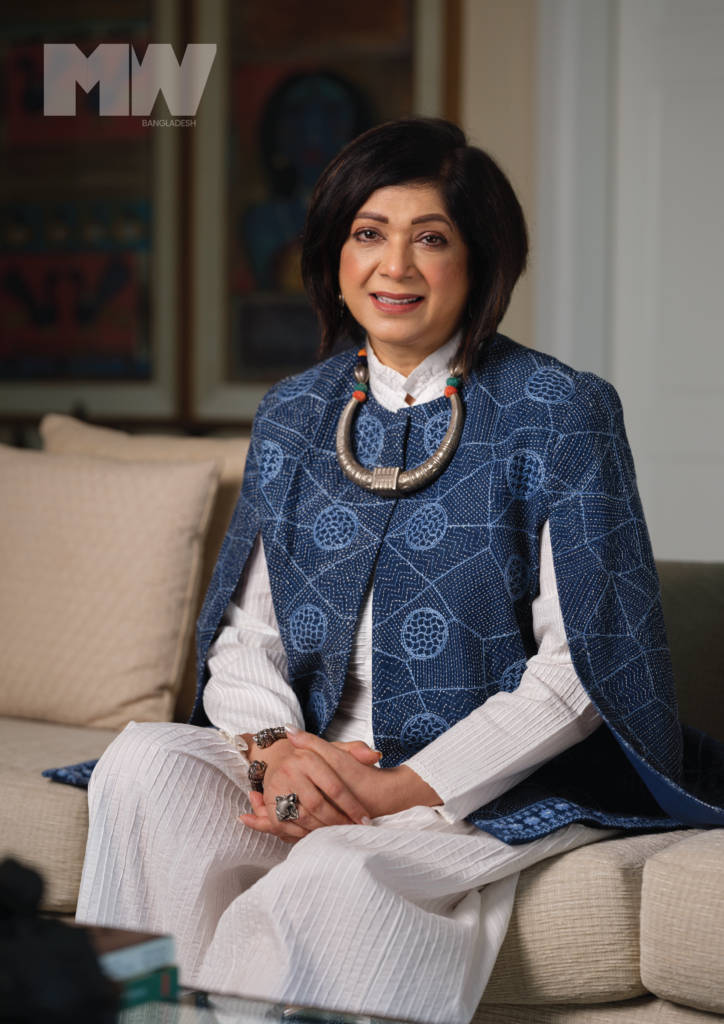
Everything I create begins with one question: Does this have a connection to Bangladesh? I may draw inspiration from many civilizations, but what resonates with me most are the stories, craftsmanship, and traditions that belong to this land. For me, cultural preservation is not about looking backwards, it is about ensuring that our heritage continues to live, evolve, and remain relevant for future generations.
Everything I create begins with one question: Does this have a connection to Bangladesh?
Over the years, you have received recognition including the Eisenhower Fellowship, Athena Global Leadership Award, Dhaka Fashion Week Lifetime Award and Lifetime Achievement Award from the British Bangladesh Fashion Council. How do these recognitions reflect the journey you have built in fashion and cultural preservation?
The Eisenhower Fellowship was probably the most knowledge-seeking experience of my career. It gave me the opportunity to meet researchers, academics, and highly accomplished people from the creative industries. I spent time studying different civilizations, particularly Native American communities, learning how they preserve their textiles, value the anthropology of design, and build institutions that protect their cultural heritage. It also gave me the opportunity to conduct my own research on preservation and understand the important role institutions play in supporting people, ideas, and culture.
That experience completely changed my perspective. Before the fellowship, I was quite shy, reserved, and somewhat isolated. But after meeting so many people with broad vision and different experiences, I realised that knowledge should never be kept to yourself. If you have something valuable to contribute, you should share it with others and help strengthen the industry you love. When people come together with a shared purpose, they become far more powerful and far more impactful than they ever could alone.
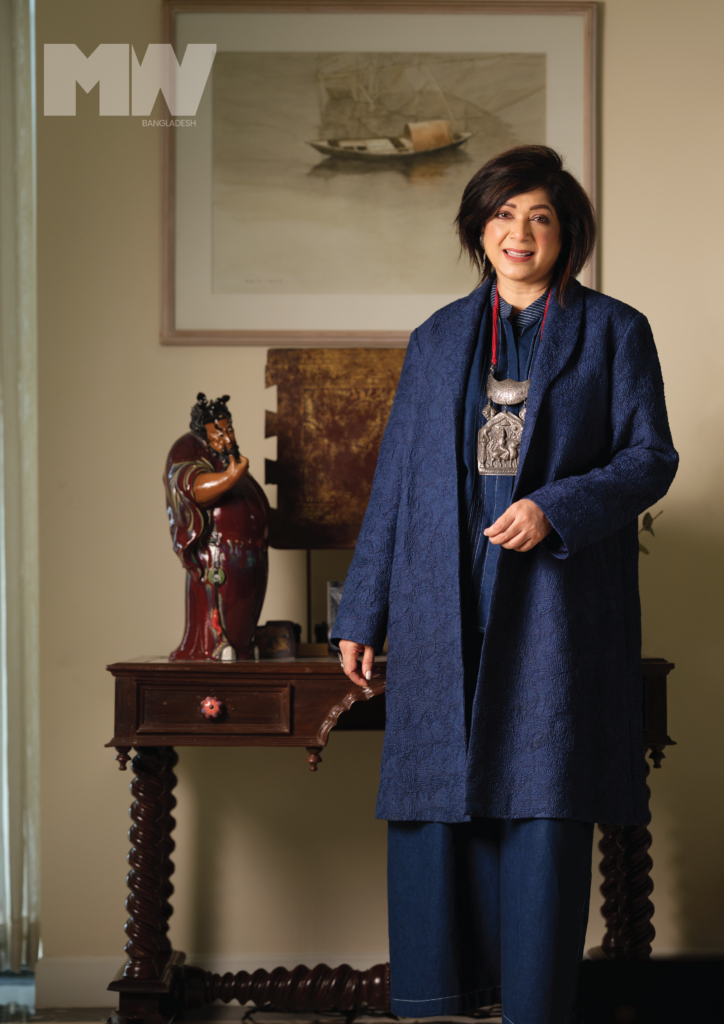
That was the thinking that eventually led to the Fashion Design Council of Bangladesh. I wanted to create a platform that could support creative ideas, promote our heritage, and advocate for handmade craftsmanship. Even after 12 years, the council continues to champion homegrown design, local materials, handcrafted products, and the idea of taking Bangladeshi creativity to a global audience. I believe it is an important institution because nearly half a million people are connected to our handmade sector. If we continue to strengthen the council and support our artisan communities, it has the potential to become a real changemaker for the future of Bangladesh’s fashion and craft industry.
While the Eisenhower Fellowship had a profound influence on my journey, every recognition I have received has been deeply meaningful. Whether it is the Athena Global Leadership Award, the Dhaka Fashion Week Lifetime Award, or the Lifetime Achievement Award from the British Bangladesh Fashion Council, I see each honour not as a destination but as an encouragement to continue preserving our heritage, supporting artisans, and contributing to Bangladesh’s creative industry. They remind me that the work matters and inspire me to keep learning, creating, and giving back.
Outside of fashion and work, what usually inspires or grounds you creatively in everyday life?
I think friendship inspires me. I really value being connected with people, but I have never been someone who needs to constantly be in social spaces. I am not a very social person in that way. I enjoy people, but I also value having my own time. Time to reflect, understand myself, and think about what truly matters.
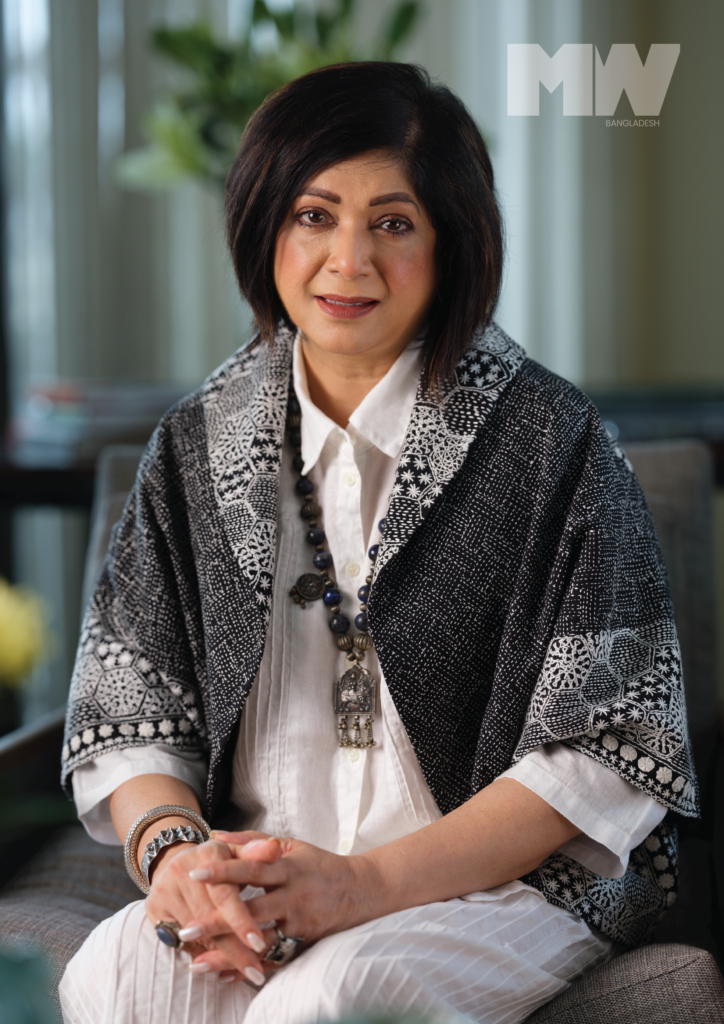
I think everyone needs their own space, a world of their own that allows them to grow as an individual. For me, that quiet time is where I reconnect with myself, my spirituality, and my gratitude. It is about connecting with the Almighty, connecting with your inner spirit, and appreciating where you are in life.
I believe grounding yourself is very important. You have to be able to look at your life and feel that you are where you want to be. That inner sense of peace and happiness gives you the strength to move forward.
Today, we live in a very competitive environment where people often measure life through how many events they attend, how many invitations they receive, or how visible they are. But I believe value comes from something deeper. Wasting time on things that do not add meaning to your life is something we should avoid.
For me, it is important to work hard, stay driven, and constantly nurture your skills and dreams. Dreaming is very important. I am a daydreamer myself, and I think dreams give you the energy and imagination to move towards the next stage of life. Ultimately, your state of mind matters. I try to stay positive, take care of my mental well-being, and continue finding purpose in the things I do. I believe that inner strength is what truly drives us forward.
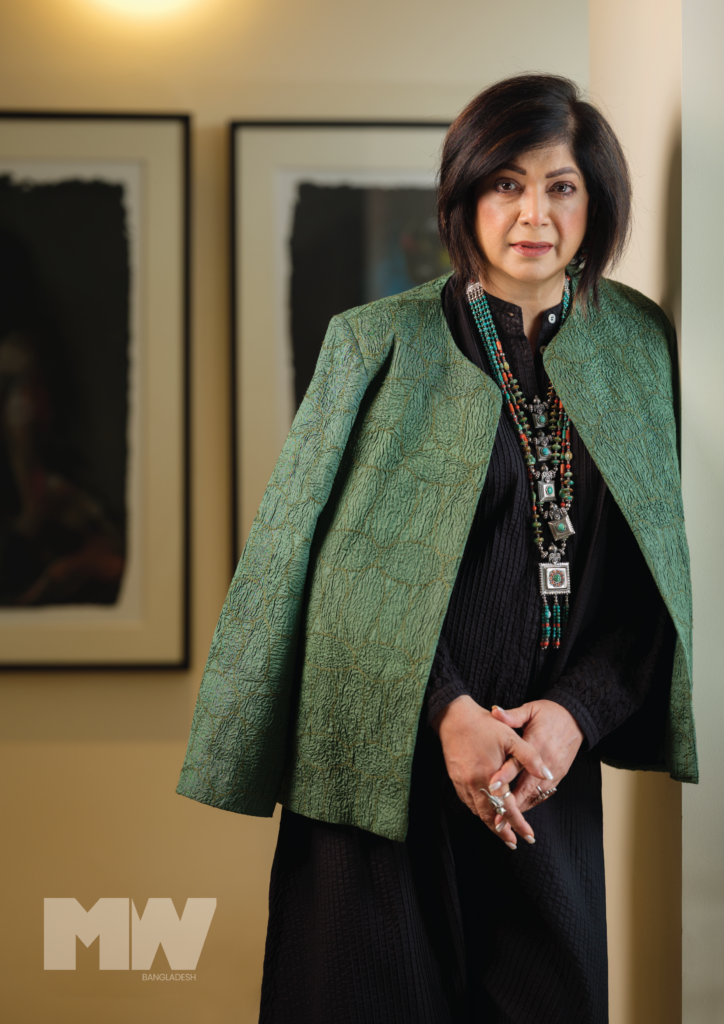
What responsibility do younger designers have when it comes to preserving culture and craftsmanship?
I think it is wonderful to see so many young designers taking interest in local design and working with artisan communities. But they also need to understand the historical relevance behind the crafts they work with: the stories, traditions, and people behind them. Consistency is very important. The quality, process, and vision behind a design are what shape the final product.
The younger generation has incredible opportunities today. They have the world at their fingertips through technology and digital platforms. They are smarter in many ways and are creating remarkable work through new forms of expression. However, patience is important. Ideas need time, effort, and care to grow. I believe the people who create a lasting impact in this industry are those who take the time to truly invest in their craft and continue nurturing their ideas.
Your work has always balanced creativity with craftsmanship, from developing artisan-based designs to curating platforms like New York NOW 2024. What is the vision behind creating spaces where Bangladeshi designers, artisans, and heritage can be recognised internationally?
The vision has always been to create spaces where Bangladeshi heritage is not only showcased but also understood and valued. Recognition should go beyond displaying beautiful products; people need to understand the stories, history, and communities behind them. That is how our crafts gain authenticity and lasting value.
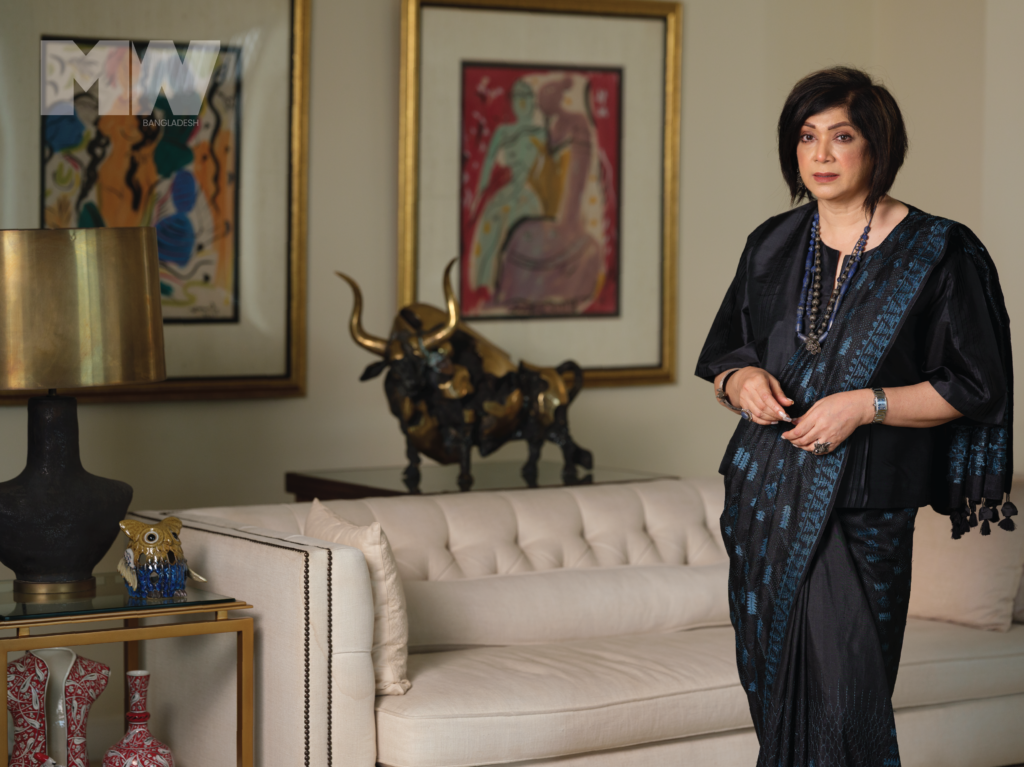
For me, designers alone cannot preserve culture. We also need researchers, writers, historians, and ethnographers who can document the evolution of our crafts and the lives of the communities behind them. Every handmade tradition carries generations of knowledge, and without proper documentation, it becomes difficult to truly understand or authenticate where that heritage comes from. That is why I believe exhibitions, research, and curatorial projects are just as important as design itself.
That philosophy continues to shape the work I do today. Alongside my design practice, I am currently researching my 500 Years of Dhaka project, which explores the city’s culture, lifestyles, and craft traditions. I am also looking forward to presenting my work at London Fashion Week alongside sustainable designers and participating in Sui Dhaga in Delhi, which celebrates the handmade journeys of communities connected through the Silk Route. For me, these projects are opportunities to create dialogue, celebrate craftsmanship, and ensure that Bangladeshi heritage continues to be recognised by new audiences around the world.
As one of the key figures behind the Fashion Design Council of Bangladesh, what motivated you to create a platform for Bangladeshi designers, and how do you see its role in shaping the future of our fashion industry?
The Fashion Design Council of Bangladesh was created to support creative ideas, advocate for our heritage, and promote handmade craftsmanship. I have always believed that someone needs to take on that responsibility, and the council has tried to do exactly that by championing homegrown design, local materials, and the idea of taking Bangladeshi creativity to a global audience.
Although it has been 12 years, the council continues to advocate for handmade craftsmanship, handcrafted products, and local ideas. I believe it is an important platform because there are hundreds of thousands of people engaged in our handmade industries, yet many artisan communities continue to struggle.
While NGOs have made valuable contributions over the years, we also need designers, entrepreneurs, and creative professionals who can create sustainable livelihoods through design. If the council can become even more active and bring people together with a shared vision, I believe it has the potential to become a real catalyst for our handmade sector and make a lasting difference to the future of Bangladesh’s fashion and craft industry.
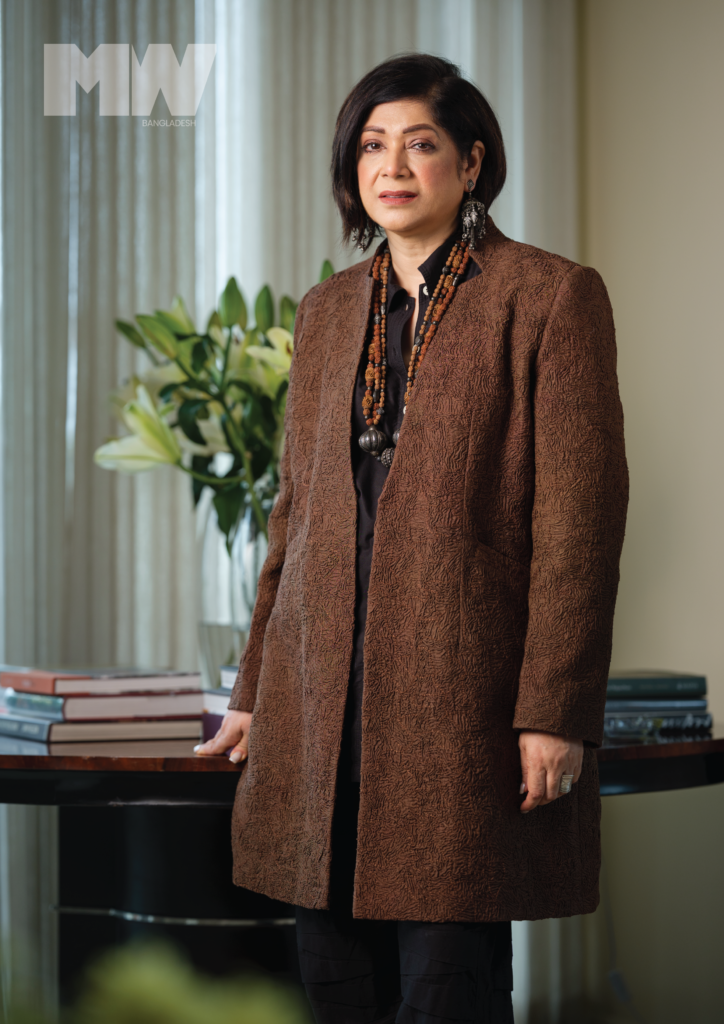
For me, the greatest achievement would be if my creations become something people pass down through generations, like heirlooms with stories of their own.
When people look back at your work years from now, what do you hope they remember most about your contribution to Bangladeshi fashion and heritage?
I hope people remember me as someone who was honest about her work and respected the creative process. I have always believed that every designer builds upon the generations that came before them. We are not creating in isolation; we are inspired by our history, our culture, and the people who came before us.
I would like my work to reflect the richness of Bangladesh’s heritage and the craftsmanship that has shaped it. For me, the greatest achievement would be if my creations become something people pass down through generations, like heirlooms with stories of their own.
Above all, I hope people remember that I worked with love, conviction, and respect for our culture, and that through my work I was able to contribute, in some small way, to preserving and celebrating the creative spirit of Bangladesh.
Fashion Direction & Styling: Mahmudul Hasan Mukul
Photographer: Kaushik Iqbal
Make-up & Hair Style: Ferdous Ahsan Orko