


By Neha Shamim
Some paintings become so famous that they almost stop being looked at. The Mona Lisa, The Starry Night and The Scream have become cultural shorthand, reproduced so often that their stories are familiar even to people who have never stepped inside a museum. But beyond these icons lies another world of extraordinary paintings, works that may not dominate souvenirs and social feeds, yet reward anyone willing to look a little longer.
These five belong to that quieter category. Each is a masterpiece in its own right, distinguished not simply by beauty but by an idea, technique or story that reveals itself slowly.
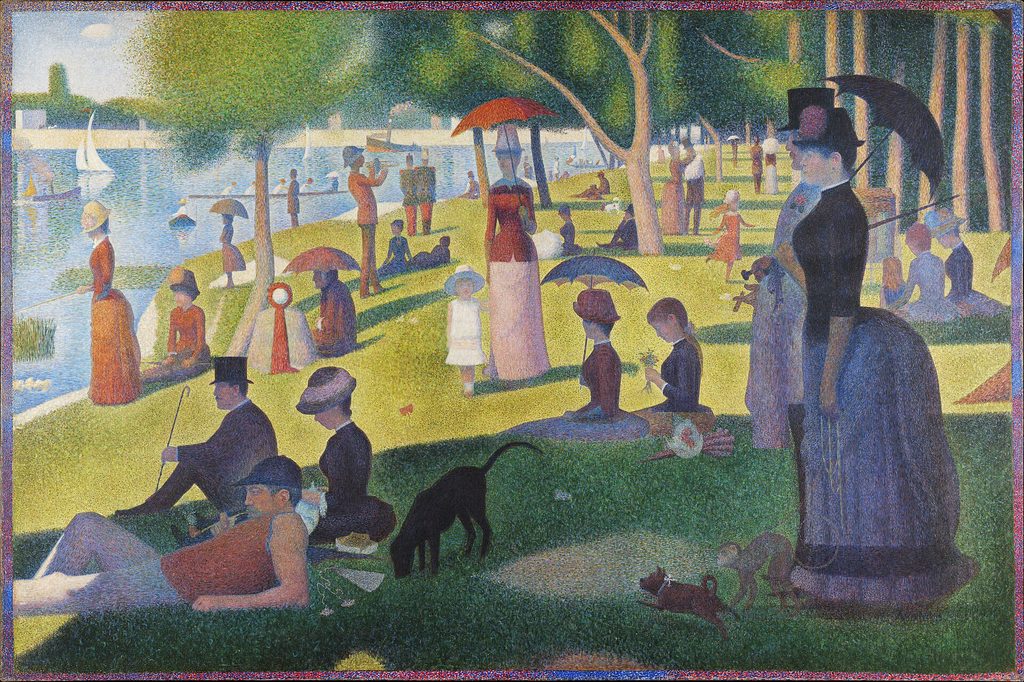
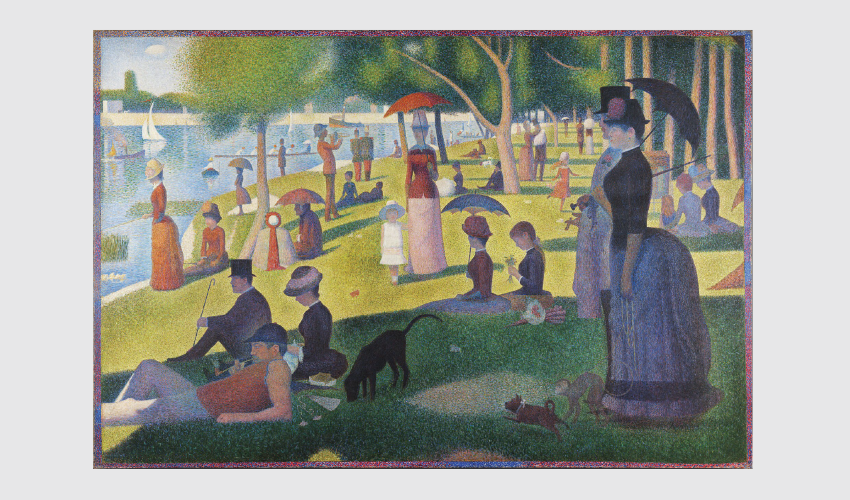
A Sunday on La Grande Jatte — 1884 — Georges Seurat, 1884–86
At first glance, Georges Seurat’s A Sunday on La Grande Jatte — 1884 appears to be an idyllic afternoon in Paris: elegantly dressed figures strolling, sitting and relaxing beside the Seine. Look closer, however, and the scene begins to dissolve into thousands of tiny marks.
Seurat painted the work using small, distinct touches of colour rather than blending pigments conventionally. The technique, associated with Neo-Impressionism and often called Pointillism, relied on the viewer’s eye to optically combine the colours. What appears solid from across the room becomes a constellation of individual dots up close.
The painting’s remarkable precision extends beyond its technique. The figures seem almost frozen, arranged with an unusual stillness that gives the leisurely scene an oddly theatrical quality. Seurat transformed an ordinary Sunday outing into something carefully constructed, almost mathematical.The result is both peaceful and strangely distant, a picture of modern leisure that feels as meticulously engineered as the city surrounding it.
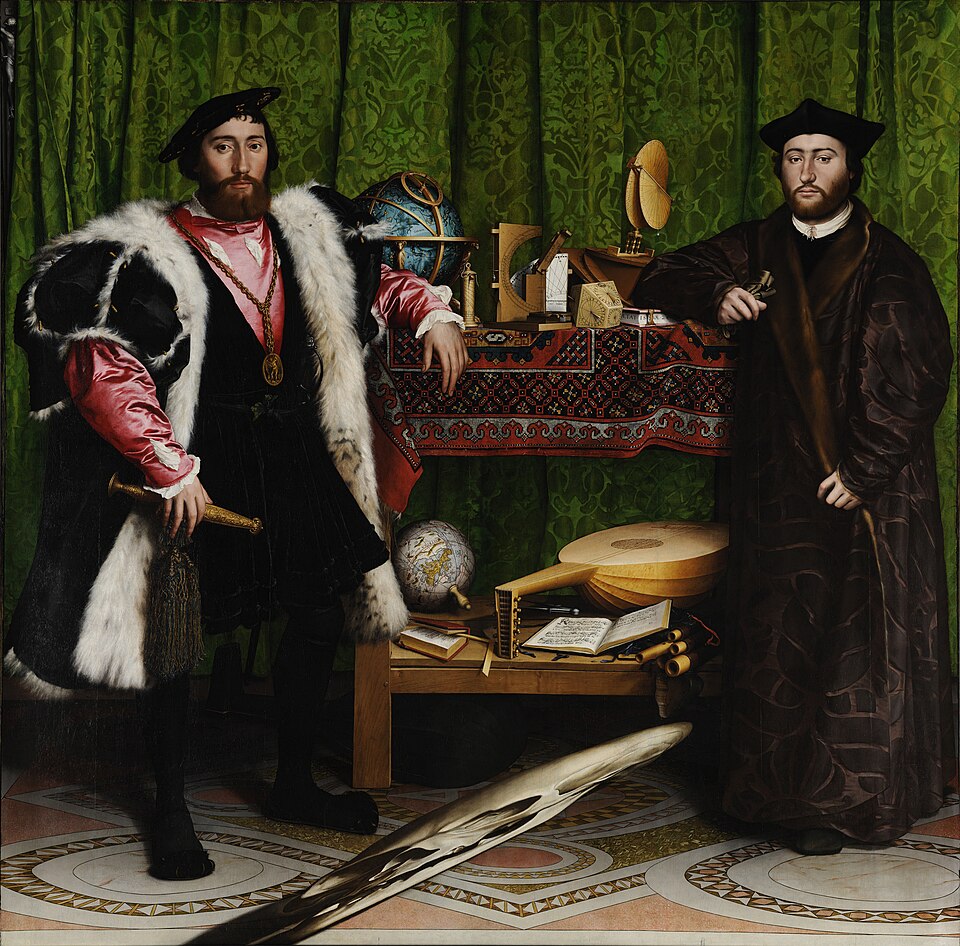
The Ambassadors — Hans Holbein the Younger, 1533
Hans Holbein the Younger’s The Ambassadors is the kind of painting that refuses to reveal everything at once. At its centre stand two richly dressed young men surrounded by objects representing the intellectual world of Renaissance Europe: books, scientific instruments, musical objects and globes. It is a portrait of wealth, education and worldly achievement.
Then there is the strange, elongated shape stretching across the foreground. Viewed straight on, it appears almost inexplicable. Move to the side, however, and it resolves into a human skull.
Holbein used a technique known as anamorphosis, deliberately distorting the skull so that it becomes visible only from a particular angle. The effect is more than an ingenious optical trick. Amid all the symbols of knowledge, wealth and accomplishment sits a reminder of mortality.
The message is almost unsettling in its simplicity: all the things these men possess, and all the knowledge they represent, cannot protect them from death.
More than five centuries later, the painting still feels like a visual puzzle disguised as a portrait.
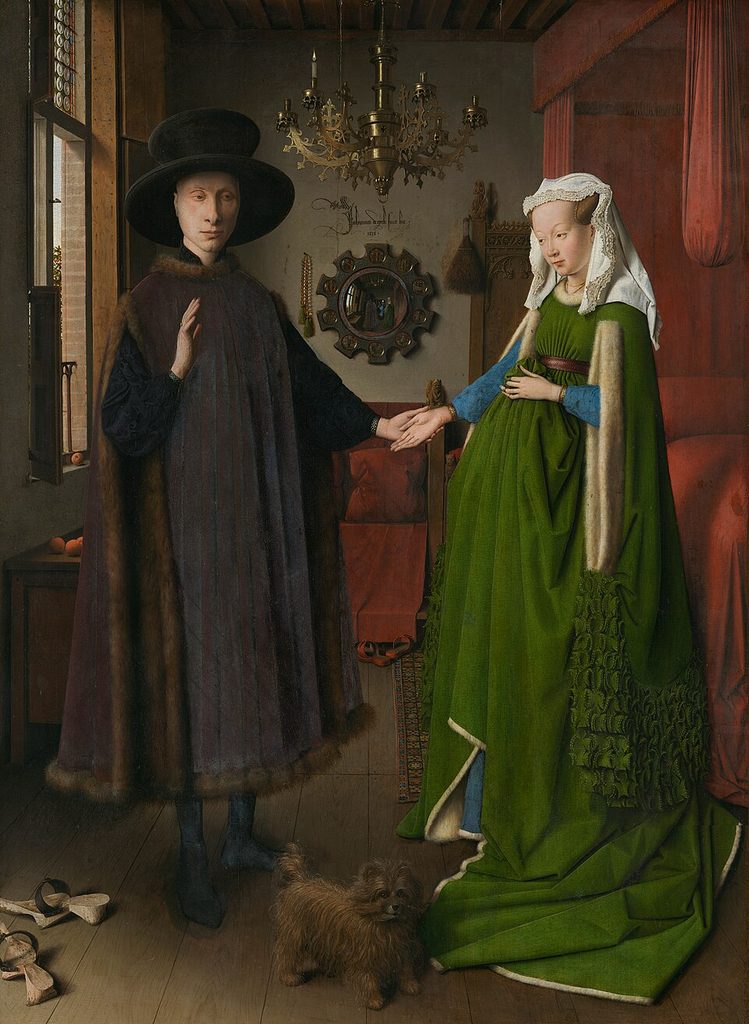
The Arnolfini Portrait — Jan van Eyck, 1434
Few paintings invite obsessive examination quite like Jan van Eyck’s The Arnolfini Portrait.
At first, it appears to be a straightforward portrait of an affluent couple standing inside a domestic interior. But practically every object seems to demand attention.
There is a small dog, a chandelier, oranges, clothing, shoes and a bed. At the centre of the composition is a tiny convex mirror, and inside it, reflected in miniature, are two additional figures standing in the room.
Van Eyck’s extraordinary attention to detail is part of what makes the painting so compelling. The polished surfaces, textures and fabrics are rendered with astonishing precision, making the interior feel almost tangible.
Yet the meaning of the scene remains debated. Who exactly are the couple? What is the significance of the objects surrounding them? What role does the mirror play?
The painting has generated centuries of interpretation, and that uncertainty is part of its enduring appeal. It does not simply ask you to admire it. It asks you to investigate it.
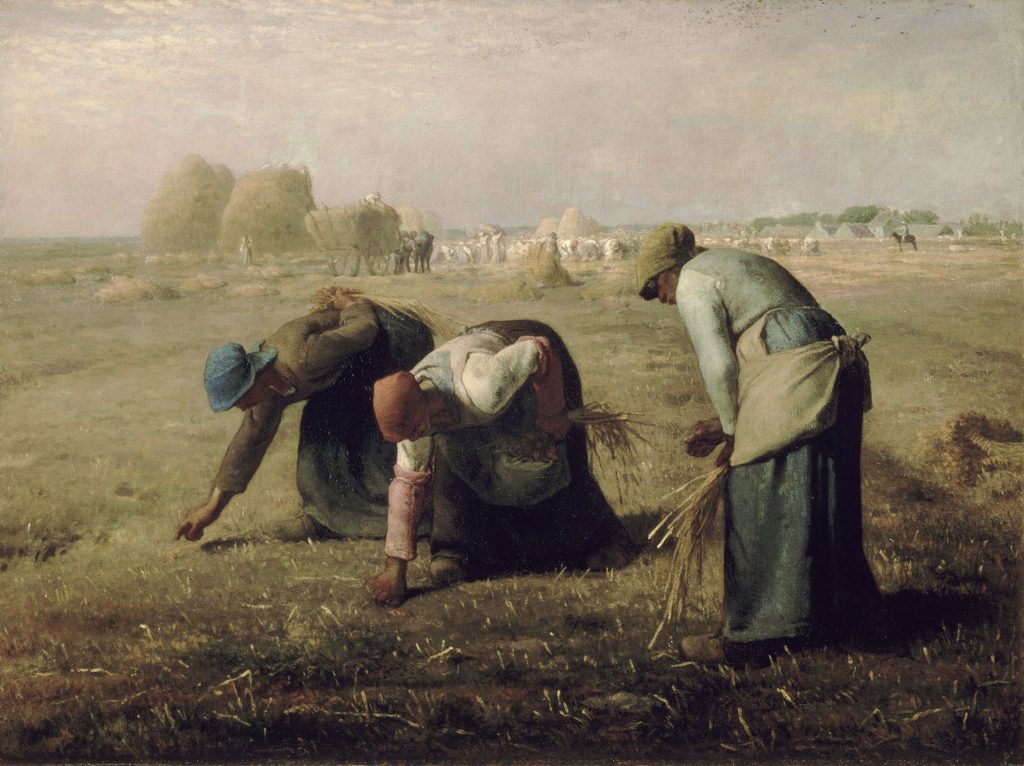
The Gleaners — Jean-François Millet, 1857
Jean-François Millet’s The Gleaners does not announce itself as a dramatic painting. Three women bend over a field, collecting the scraps of grain left behind after the harvest.
Yet the simplicity of the scene conceals a powerful social observation.
The women occupy the foreground, their bodies bent repeatedly toward the earth. Behind them, the landscape opens into a much larger and more prosperous harvest, filled with workers, haystacks and abundance. The contrast is unmistakable: those gathering what has been left behind stand apart from those who have produced and benefited from the harvest.
When Millet exhibited the painting in 1857, its subject was particularly significant in a France marked by deep economic and social divisions. The gleaners represented one of the poorest sections of rural society.
Millet does not turn the women into sentimental figures. Instead, he gives them scale and presence. Their anonymous faces disappear, but their physical labour dominates the foreground.
It is a quiet painting about poverty, dignity and inequality—and its restraint is precisely what gives it power.
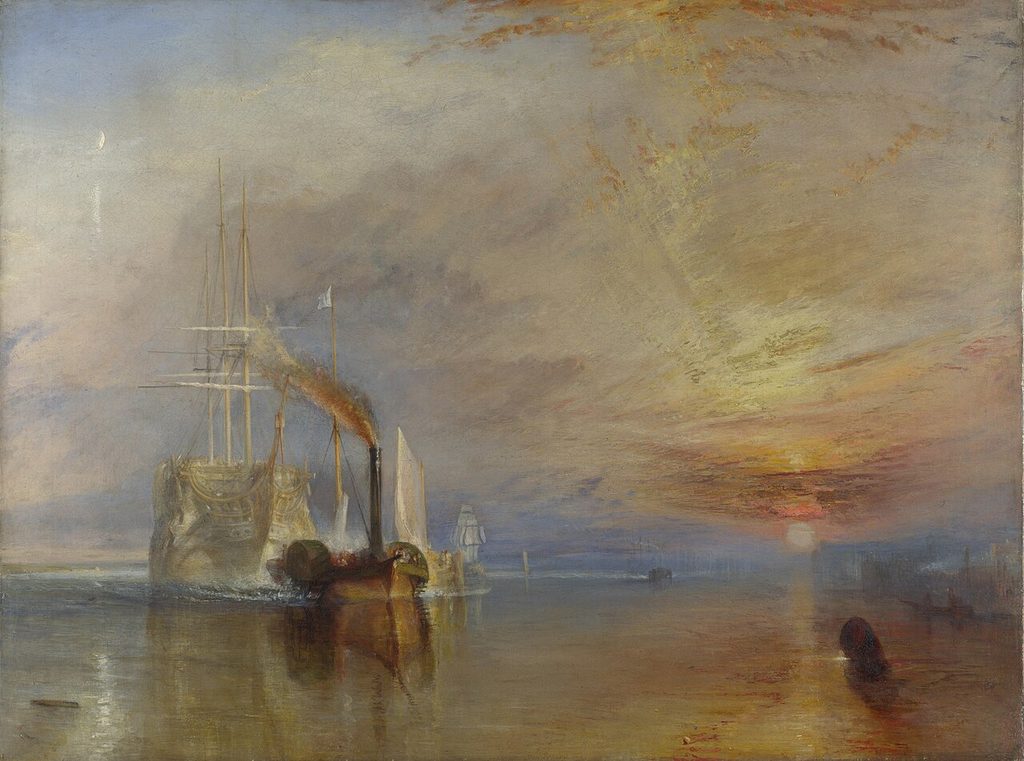
The Fighting Temeraire — J. M. W. Turner, 1839
J. M. W. Turner’s The Fighting Temeraire looks, at first, like a spectacular sunset.
The sky glows with gold, orange and pale blue as a small tugboat pulls a magnificent old warship along the River Thames. The contrast between the vessels is immediately striking: the tug is dark and industrial; the great ship is ghostly and luminous.
The ship is HMS Temeraire, a veteran of the Battle of Trafalgar. By the time Turner painted the work, the once-celebrated warship was being towed to its final destination to be dismantled. That knowledge changes the entire painting. The sunset is no longer simply beautiful. It becomes a farewell.
\The Temeraire represents an older age of sailing ships, naval glory and craftsmanship. The small steam-powered tug represents the industrial future that is replacing it. Turner captures the transition between the two without showing a battle or a historical event. Instead, he gives us a quiet procession toward the end. The painting is therefore as much about time as it is about history. Its beauty comes from the melancholy of watching something magnificent disappear.
Perhaps that is what makes these five paintings worth returning to. None depends solely on spectacle. Seurat asks us to reconsider colour and perception; Holbein turns a portrait into a meditation on mortality; Van Eyck hides mysteries inside an ordinary room; Millet transforms a harvest into a study of inequality; and Turner turns a sunset into a farewell to an entire era.
The greatest paintings do not necessarily become memorable because they are the most famous. Sometimes, they become memorable because the longer you look, the more they have to say.