



A conversation with Sumon Wahed
By Ayman Anika
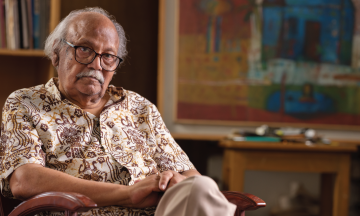
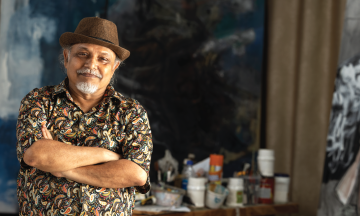
Sumon Wahed’s practice sits at an unusual intersection of art-making, research, and institutional memory. Trained at Dhaka University’s Faculty of Fine Art and later at Santiniketan on an ICCR scholarship, he has moved steadily between classrooms, archives, and exhibition floors. His work has appeared everywhere from the National Art Exhibition to the Venice Biennale, and his curatorial and editorial projects continue to examine how modernity, pedagogy, and cultural history shape Bangladeshi art. Alongside this, his writing, including essays on institutional history, Shilpacharya Zainul Abedin, social realism, and contemporary practices, forms a quiet but substantial body of published work.
When the soft-spoken researcher dropped by MWB’s office, he spoke less about accomplishments and more about the choices, doubts, and turning points that shaped his journey, a conversation that unfolded with both candour and clarity.
How did your journey with art begin, and what shaped your decision to pursue it seriously?
My journey with art began at a very early age. As a child, I was naturally drawn to drawing and painting. My elder brother also used to draw, and watching him was perhaps my first introduction to the world of art. I started by imitating his sketches, and soon enough, I was participating in children’s art competitions. I found immense joy and freedom in expressing myself visually.
One of the defining moments in my early years came when I received a prize from Japan. Mitsubishi used to organize an international art competition called the Festival of Asian Children’s Art, and I was fortunate enough to win the Grand Prix. I travelled to Japan to receive the award, and that experience was transformative. It opened my eyes to how far art could take someone, both literally and creatively. The international exposure at such a young age gave me a sense of purpose and confidence that art could be more than just a hobby.
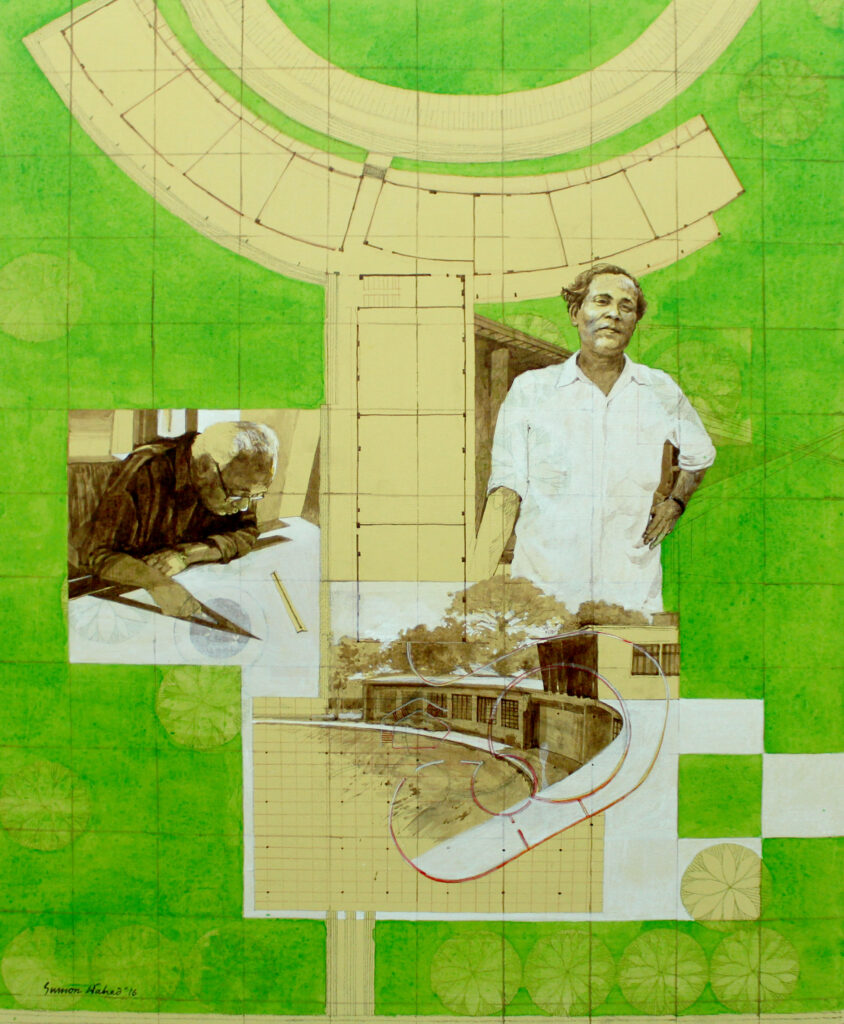
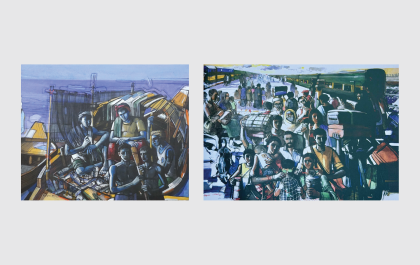
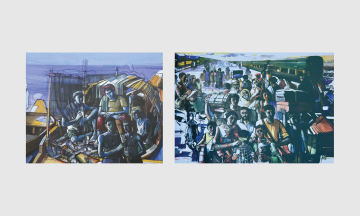
Title: The Artist and the Architect Media: Acrylic and pencil on canvas
Size: 91 x 76 cm Year: 2016 Collection: Mainul Abedin
After returning home, the recognition from the media and the various interviews I gave had a profound impact on me. They reinforced my belief that this was something meaningful, something worth continuing. I kept drawing, exploring my own style.
When I finished my HSC, I was a science student at Notre Dame College. My family hoped I would study architecture, as it seemed like the practical choice for someone who could draw. But during those years, surrounded by some of the brightest students in the country, I realised something essential: I didn’t enjoy science or mathematics the way my peers did. Many of them have gone on to work in places like NASA or Google, and I truly admired their passion. But my joy came from sketching and creating.
So, I made a very deliberate decision to follow my own path and study at Charukala, the Faculty of Fine Art at Dhaka University. It wasn’t the easiest choice, but it was the most authentic one for me. That decision defined not only my career but also my philosophy as an artist: to stay true to what genuinely inspires you.
After your studies, what key exhibitions or milestones influenced your artistic growth?
That came much later in my journey. Once I got into Charukala, I started practicing art with consistency and discipline. Because I was working regularly and experimenting with different techniques, I began to be recognized as a dedicated and capable student. I completed my Bachelor of Fine Arts (BFA) with record marks. That achievement was a great encouragement for me.
After that, I received an ICCR scholarship to study at Santiniketan, and that became a turning point in my artistic development. My years in Dhaka had primarily focused on mastering the craft, learning to draw with precision, honing technique, and developing skill through repetition and observation. But Santiniketan opened a completely different dimension for me.
There, I began to explore art from a historical and intellectual perspective, understanding not just how to create but why we create. The environment encouraged critical thinking and dialogue. Access to a vast library and exposure to visiting scholars allowed me to see how art was being discussed and exhibited globally. The Indian art scene, with its increased international visibility through biennales, art fairs, and organised exhibitions, provided me with a firsthand understanding of how interconnected the global art world had become.
Those experiences at Santiniketan helped me see my own work in a broader context, transforming my practice from technical skill-building to a more reflective, conceptual exploration of art.
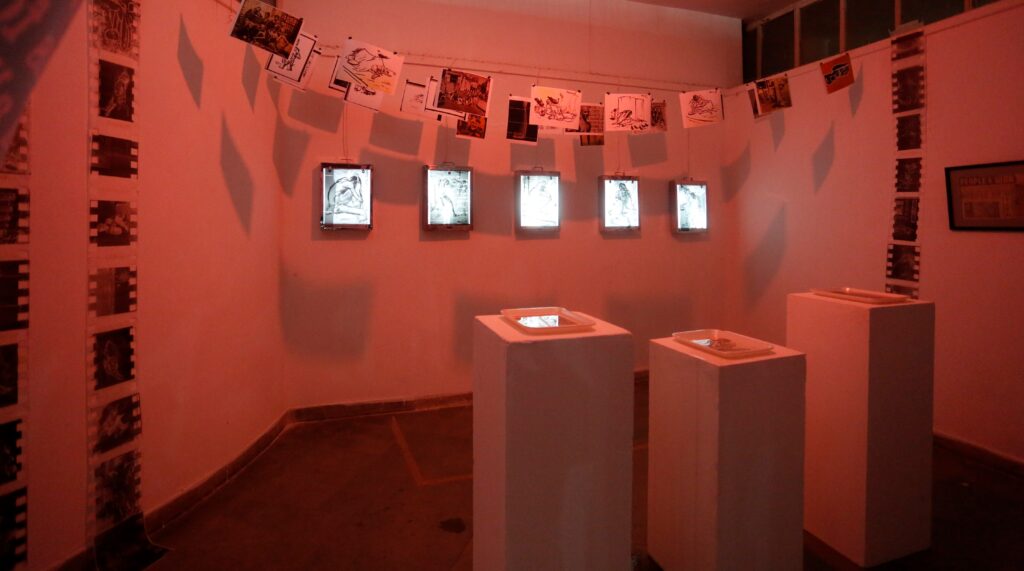
Title: Dark Room of History (Bengal Famine) Media: X-Ray view box, C-print on paper
PVC print, plastic tray Dimension variable Year: 2018
What were the major differences you observed between art education in Bangladesh and in Santiniketan?
There are quite a few differences between Bangladesh and India, especially when it comes to art education and the opportunities available for artists. In Bangladesh, we are a smaller country, and naturally, the scope and infrastructure for art are more limited. For young graduates or emerging freelancers, the professional space can feel quite constrained. There are fewer galleries, residencies, or patrons, and we often have to think practically before pursuing any artistic idea — questions like “Will this sell?”, “Will this sustain me financially?” or even “Will this create any trouble?” tend to shape our creative choices.
In contrast, India is vast and diverse, both geographically and culturally. If someone doesn’t find opportunities in one place, they can easily move to another. That mobility itself creates space for experimentation. This abundance of opportunities naturally brings variation and vibrancy to their art scene. Artists can take risks, form collectives, or engage with different schools of thought without feeling boxed in.
What struck me most in Santiniketan was this sense of freedom, which I would call breathing space. The society there, though rooted in similar political and cultural realities as ours, allows more room for the coexistence of multiple ideas. Differences in opinion don’t necessarily clash; they coexist. You can hold your own perspective and still find your audience or community.
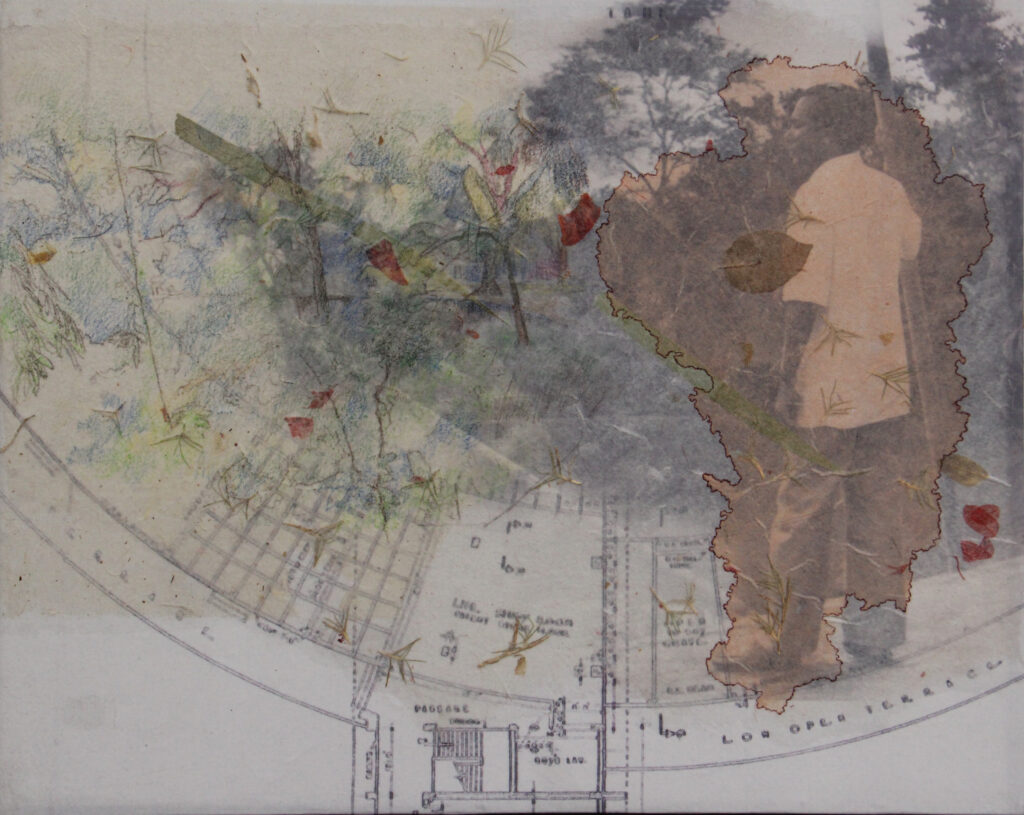
Title: The Map Media: Acrylic, glass marker pencil, Nepali paper on printed cloth
Size: 41 x 51 cm Year: 2018
Did your interest in researching Shilpacharya Zainul Abedin begin at Santiniketan or later in your academic career?
Not exactly. It wasn’t as if I went to Santiniketan with a clear plan that I had to work on Shilpacharya Abedin. My engagement with his work had already been ongoing for quite some time. But I should clarify something: I have never approached Shilpacharya Abedin with what I would call blind devotion. I have immense respect for him, of course, but I believe that for a researcher, unquestioning reverence can sometimes create a kind of barrier, a layer that prevents deeper analysis.
So, my approach has always been more about decoding rather than worshipping. I wanted to understand the evolution of academic art history in this region, how artistic education developed, what ideologies shaped it, and where Abedin’s contributions fit within that larger narrative. That line of inquiry began during my research work at Santiniketan.
After returning to Bangladesh and joining the Faculty of Fine Art as a teacher, the same institution where I had once studied, I felt a renewed responsibility to explore its academic lineage. Naturally, in that process, Shilpacharya Abedin emerged as a central figure, since he was the founder and the guiding force behind modern art education in Bangladesh.
My focused work on him began around 2014, which was his birth centenary year. The National Museum and the Faculty of Fine Art jointly organized an international seminar on the occasion, and I presented a paper that examined how perceptions of Abedin had shifted over time. One interesting debate I came across was from the 1950s, when some of Abedin’s own students who had studied in Europe returned home with new notions of modernity. Many of them felt that Abedin’s work did not align with what they considered “European modern standards.” This created a subtle tension, a kind of ideological coolness between Abedin and some of his students.
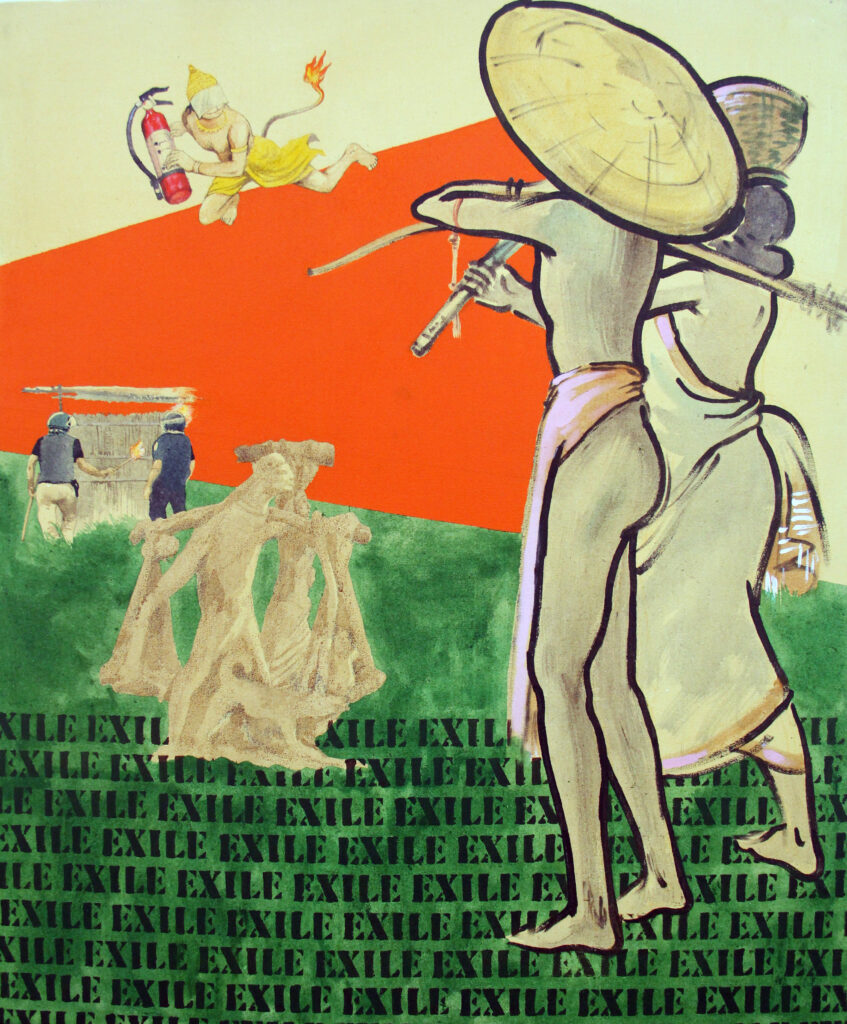
Title: Santal Media: Acrylic, wax pencil on canvas
Size: 90 x 75 cm Year: 2018
It made me question what exactly this conflict between tradition and modernity was, and where Abedin stood in that dialogue. These questions became the foundation of my research on him. Interestingly, at Santiniketan, my teacher R. Siva Kumar also explored similar tensions in the context of Indian modernism. That intellectual environment helped me see Abedin not just as a national icon, but as part of a much broader, regional conversation about modernity, pedagogy, and identity in South Asian art.
When you first studied Shilpacharya Abedin’s work, what aspect of him struck you the most?
What struck me most about Shilpacharya Abedin, from the very beginning, was his sacrifice, both personal and professional. He was already an established artist in Kolkata, a respected teacher at the Government School of Art, and he had a secure, comfortable life with recognition and stability. He didn’t have to leave that behind. Yet, he chose to walk away from that privileged position to come to what was then East Pakistan, a place with very little infrastructure for art, and even fewer guarantees of success.
When I think about it now, it’s remarkable. Here was a man who could have easily continued as a successful painter in India, where he already had a market and reputation. Instead, he came to a country that was politically and religiously divided, where bureaucracy was tangled, and where cultural initiatives were not exactly welcomed with open arms. I’ve heard stories, for instance, that he once had to write the name of an officer on an umbrella just to get a file approved by a government secretary. It’s both tragic and heroic, in a way.
When the Government Institute of Arts was established in 1948, Abedin wasn’t even in the country at that moment. Anwarul Huq served as the acting principal until he returned a few months later to take charge. From then on, Abedin poured his energy into building that institution from scratch. He set aside his artistic ego and took on the painstaking administrative work of developing an art school, convincing officials, securing funds, nurturing students, and most importantly, positioning art as part of the larger cultural and nationalist movement of the 1950s and 60s.
He wasn’t just painting anymore; he was building a foundation for an entire nation’s artistic identity. His tireless effort to collect folk art, travel to rural areas, and understand the visual language of ordinary people shows that his vision went far beyond the canvas.
There are many brilliant artists, but not all of them are builders; not all of them devote themselves to creating something that will outlive their own practice. That selfless urge to contribute, to use art as a means of empowerment and cultural awakening, is what moved me most deeply. Among so many celebrated figures, his spirit of giving, his humility, and his sense of responsibility toward society truly set him apart. It was that emotional and moral depth, more than his technical brilliance, that inspired me and continues to move me to this day.
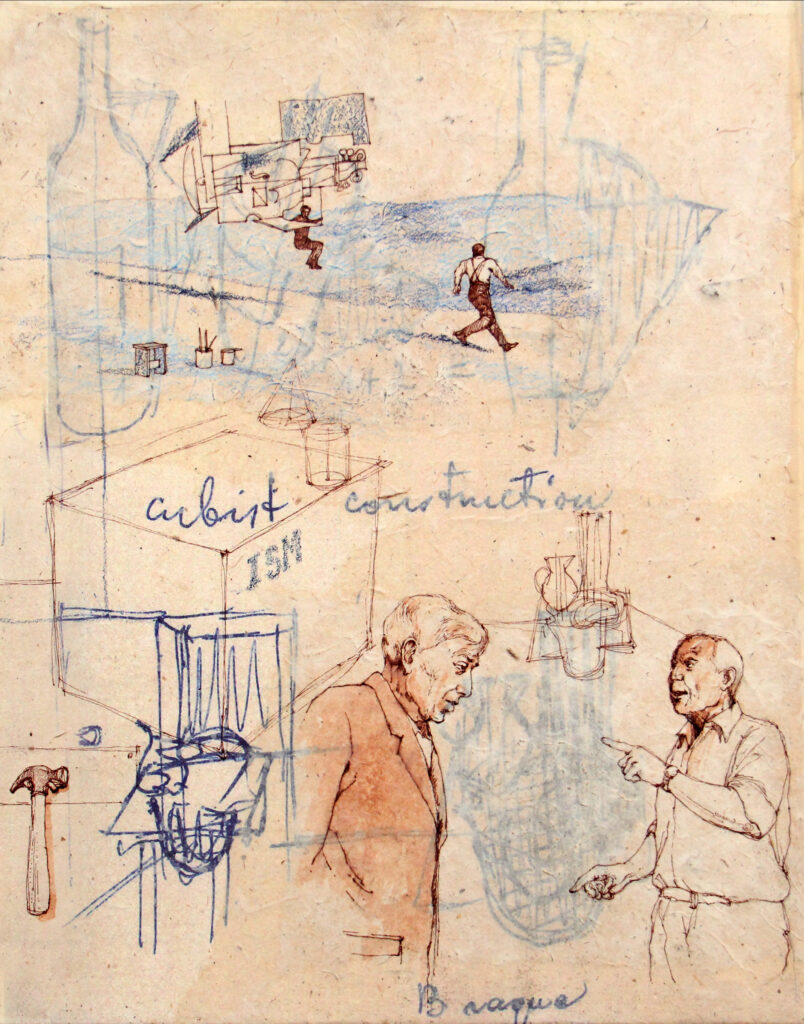
Title: Note Book of Modern Art (Cubism) Media: Acrylic, Nepali paper, pen on printed cloth
Size: 51 x 41 cm Year: 2018
How do you view the recent rise of graffiti, murals, and public art as forms of expression in Bangladesh?
I view this ongoing evolution with both appreciation and a degree of critical concern. What we witnessed in July, the rise of graffiti and murals across Dhaka, was undoubtedly a powerful moment. It showed how art could break out of galleries and classrooms to reclaim public spaces, to become a language of revolt and collective expression. For a brief time, the walls of the city became the people’s canvas, and that, to me, was deeply meaningful.
However, my concern is that such movements in Bangladesh often become event-based; they surge with emotion and urgency, but rarely sustain themselves as living, evolving practices. When art becomes something that only responds to a single event or political moment, it risks losing its continuity. The wave of graffiti we saw had tremendous potential to permanently reshape our urban visual landscape, to make people think differently about their surroundings, their power, their voices.
But after that initial wave, we didn’t see much institutional or social follow-up. Those who created these works weren’t widely recognized or given platforms to continue their practice. Instead, what happened was that images of the graffiti were photographed, digitally printed on cheap plastic banners, and displayed elsewhere, stripping away the raw, physical, and temporal power of the original.
As a result, what could have become a new artistic tradition, a community-based, participatory, living form of art, became more of a historical moment. It entered memory instead of maturing into movement. We need to nurture such creative revolutions beyond the excitement of the event. Otherwise, they remain symbolic flashes rather than sustained transformations.
What future projects, your PhD, new books, or exhibitions, are you planning to pursue next?
I’m in the final stretch of my PhD thesis. Broadly, it examines how our social reality is reflected in art, so politics, society, and related tensions naturally enter my work. That needs to be completed first. Alongside that, Mitu bhai (Mainul Abedin) has encouraged me to take on a few additional projects. Some of these may circle back to Shilpacharya Zainul Abedin.
I do have ideas developing there, but I’m also exploring directions that extend beyond him. Let’s see how and when those take shape; I prefer to let the research determine the form rather than force it.
At exhibitions, I maintain a regular practice: I participate in the National Exhibitions and the Asian Art Biennale. I’ve also shown in Italy, Poland, the Netherlands, Japan and India. Looking forward, I intend to keep exhibiting consistently; that rhythm is important for me. In 2022, I worked on the Bangladesh Pavilion at the Venice Biennale, as you know, it’s one of the world’s oldest and most significant biennales. Experiences like that reinforce the need to keep producing, showing, and staying in conversation, both locally and internationally.
All artworks and related information were provided by the artist.