


How Don Sumdany built a training ecosystem from zero
By Ayman Anika
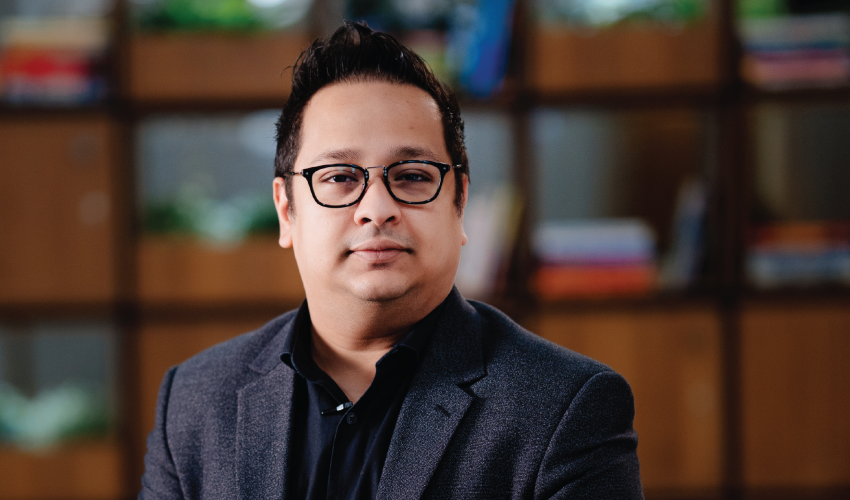
Ghulam Sumdany Don, better known as Don Sumdany, occupies an unusual position in Bangladesh’s learning and development landscape. He entered corporate training at a time when the profession barely existed in the local imagination, and built his career in an industry people didn’t fully understand.
Over the past decade, Don has built a reputation not simply as a motivational voice but as a trainer who treats learning as a craft. One that combines facilitation, design, psychology, and the ability to read a room in real time. His work sits at the intersection of communication, behavior, and performance, and much of it has been shaped by personal experiences with doubt, resistance, and the pressure to prove himself in a field that offered little guidance. His journey, from a one-man operation in a co-working space to leading one of the country’s most visible training platforms, reveals both the structural gaps in Bangladesh’s approach to learning and the deep personal grit required to navigate them.
And in this conversation with MWB, Don Sumdany shares the experiences and turning points that shaped the trainer he eventually became.
Growing up, were there any challenges or insecurities that you believe shaped your motivational philosophy today?
I grew up in Old Dhaka, and both my parents are Dhakaiyas. Growing up in those narrow lanes and a very close-knit community shaped me early on. You learn quickly how to communicate, how to treat people with humility, and how to build relationships. Even though my family is very religious, right next door, there were Hindus and Christians, so I grew up seeing different communities living side-by-side. That environment taught me respect and hospitality from a young age.
There’s also an interesting story behind my name. My parents met at a wedding, and when I was born as their first child, they wanted my name to reflect both of their names, Dastagir and Nasreen. So “D” and “N” became Don. At that time, my father didn’t realise that the name Don usually means a gangster. And ironically, I ended up working in teaching and learning. The complete opposite.
But the name did create issues. In childhood, I was short, fat, and very fair, and on top of that, I had a name that sounded unusual in Bangladesh. My full name, Ghulam Sumdany Don, also stood out. “Golam” felt odd to people, “Sumdany” rhymed with amdani, roptani, fuldani, and “Don” sounded like a nickname I gave myself. People rarely believed my parents had actually chosen it. So yes, I was teased and bullied for my name and appearance.
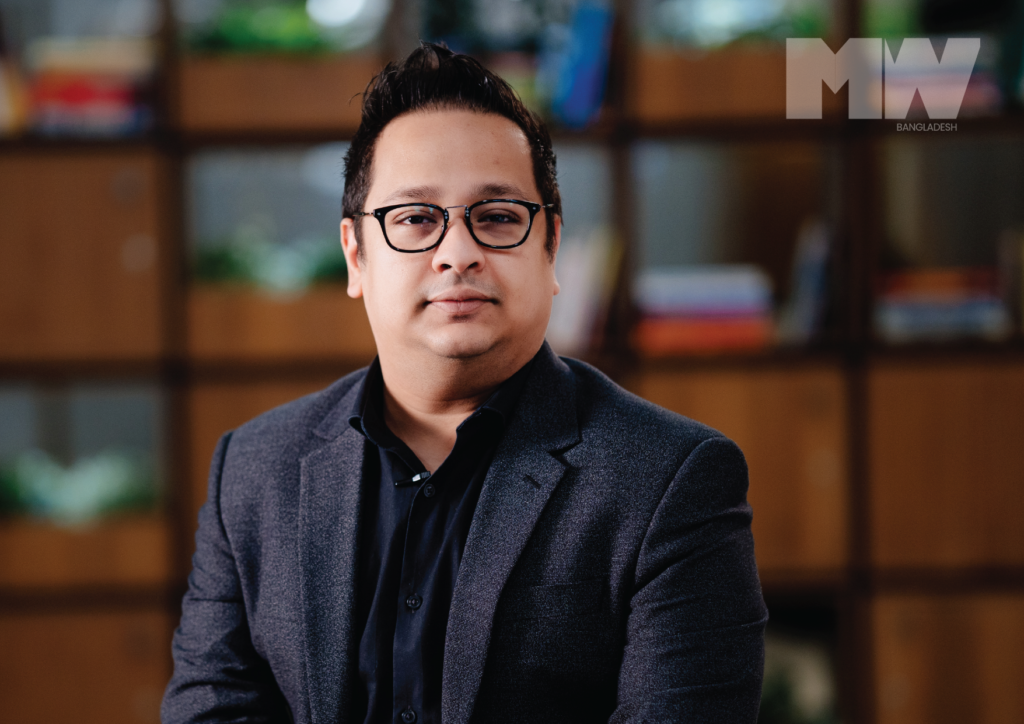
Later in life, the confusion around my name continued. Even now, because of how I look and what I do, people sometimes assume I’m Indian or not from here. Once, at a training session for a company, they spoke to me in English the whole time. When I finally replied in Bengali, they were shocked. They genuinely thought I was Indian because of my name, and because no Bangladeshi trainer had ever gone there before. When I started using Old Dhaka slang and talking about Haji Biriyani, they were even happier to see a Bangladeshi trainer working at that level.
Looking back, the mix of a unique name, being bullied, growing up in a diverse community, and constantly having to explain who I am shaped a lot of my philosophy today. These experiences pushed me to value communication, humility, and connecting with people. They also made me more aware of how identity affects confidence, and how important it is to help others rise above insecurities, because I went through those insecurities myself.
When people call you a “motivational speaker,” does that label feel limiting, empowering, or inaccurate?
I actually find the label a bit inaccurate. What I do, Corporate Training, is much bigger and more demanding than motivational speaking alone. A typical training session for me is sixteen hours spread over two days, or at a minimum, eight hours in a single day. Even shorter programs, like outdoor team-building or conference sessions, still run for four hours.
In those sessions, you are working with 40–50 participants, many of whom are older or more experienced. Across eight or sixteen hours, you have to run games, role plays, simulations, case studies, puzzles, group activities, and brainstorming, with constant facilitation that keeps people engaged and moving. A trainer has to hold everyone’s attention the entire day, which requires a very different level of skill.
Motivational speaking is only one tool within that process. A professional trainer actually uses around 28–29 tools: storytelling, humor, mystery, PowerPoint, activities, group dynamics, and many more. Motivation is just one of those tools, not the whole profession.
But because I intentionally built my brand through speeches and motivational content, many people know me only through that lens. And I understand why those talks are more visible. So yes, I am a motivational speaker to some extent, but that’s just one part of what I do. My full identity is that of a Corporate Trainer, and that’s how I prefer to be known.
Motivational speaking is only one tool. At the core, I am a Corporate Trainer, and that is the identity I prefer.
You entered corporate training when Bangladesh didn’t fully understand what that profession really was. What, in your view, is still most misunderstood about this industry today?
The biggest misunderstanding in Bangladesh is that people don’t see learning as essential. From childhood onward, everything we do, riding a bicycle, swimming, cooking, tying shoelaces, is training. But as a country, we ignore learning. Abroad, people read books on public transport, attend large seminars, and consume educational content. Here, book reading is declining, and anything related to learning is taken lightly.
This mindset shows up in corporate culture, too. Companies will invest heavily in machines, buildings, or expensive equipment, but hesitate to invest in their people. As a result, many employees lack basic grooming, communication skills, presentation skills, or etiquette. Organizations prefer hiring low-cost, untrained staff instead of developing them. The fear is always: “What if we train him and he leaves?” But the real problem is when untrained people stay.
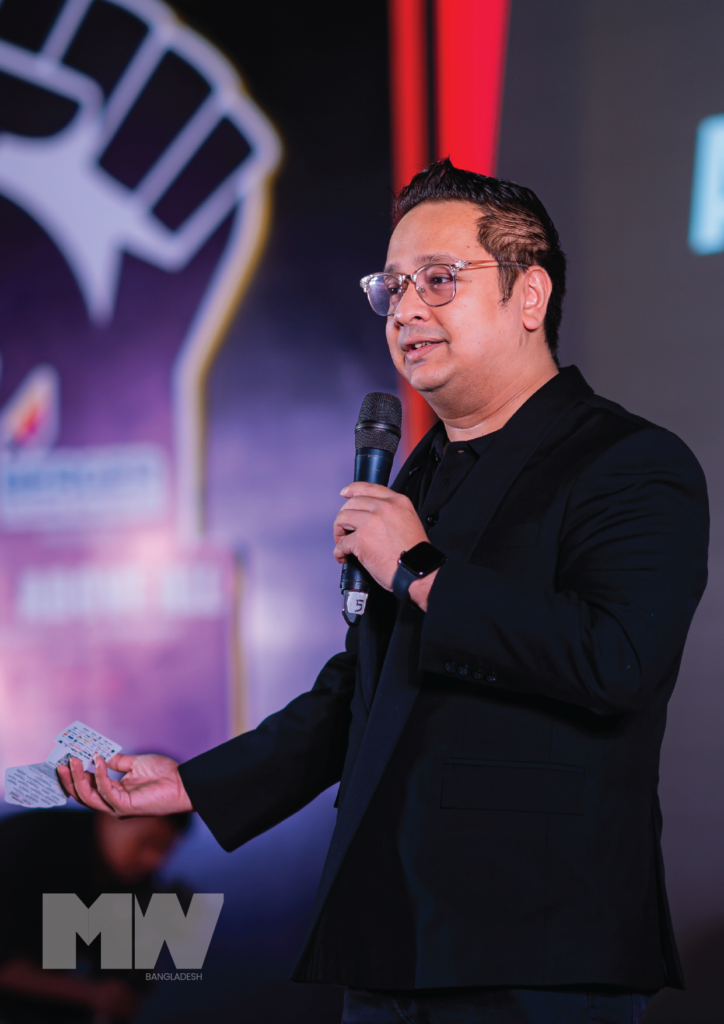
Nothing improves unless people improve. If you develop your people, they develop your business. That message still hasn’t been fully understood.
Over the last eleven years, I’ve worked to build a training culture in local banks, garments, and companies, places where training barely existed before. Another issue was the large amount of money going out of Bangladesh to foreign trainers who had no credible background and didn’t pay tax. By developing local trainers, we helped reduce that.
So, the core misunderstanding remains: people underestimate the value of training, when in reality, without investing in people, no organization or country can progress.
You need ten stallions, not fifty untrained people. Developing people is not a cost; it’s the only way a business can grow.
With AI making soft-skill simulations more advanced, how do you envision the future of human trainers?
AI will definitely take over the repetitive parts of training, things like pre-training surveys, making PPT slides, analyzing feedback, or generating performance metrics. Those tasks can easily be automated. But the core of training is human intelligence and creativity, and AI cannot replace that anytime soon.
In a real training room, a trainer reads emotions, energy levels, and group dynamics. You sense when people are drowsy after lunch, when a heavy theory has exhausted them, or when the room needs a joke, an activity, or even an unscheduled break. You adjust on the spot. You engage people through storytelling, humor, games, puzzles, and emotional connection. That level of human judgment cannot be replicated so quickly by AI.
We saw a similar fear earlier that online learning would replace physical training. It didn’t happen. In fact, physical training increased. “10 Minute School” is opening physical centers. Because the impact of an in-person training day, working in groups, solving puzzles, arguing, learning, and having lunch together, cannot be recreated online. Training reduces office politics, builds bonding, and reveals hidden talent. You suddenly notice someone’s leadership or communication skills in a way you never would in a virtual setting. And globally, 95 percent of people don’t finish online courses.
So, AI will improve our work quality, speed up research, and remove confusion, just like how one quick prompt helped me decide whether Taekwondo or Karate was better for my child. But replacing human trainers is not happening soon. In fact, AI will make trainers more efficient and effective, not unnecessary.

You’ve worked extensively with university students. What fundamental skill or habit do you believe is missing from Bangladeshi youth today?
Among Bangladeshi university students, I notice two major gaps. The first is a lack of drive. I don’t see the fire to achieve something meaningful, to break barriers, to grow, and to avoid a life that is average. Many students appear to be low-energy, unmotivated, and sit around without developing skills or choosing the right peer groups. That seriousness, focus, and hunger to succeed are missing, and I’m not sure whether it’s because of the education system or something else.
The second gap is a lack of polish. By polish, I mean looking clean, presentable, and focused, not in terms of height, weight, or complexion, which we don’t control, but in grooming, hygiene, body language, communication, and how you talk about your future. A person should give off a bright, driven, “ready” vibe. That shine is missing in many students today.
Because of this, we fall behind other developed countries. Their students present themselves well, communicate confidently, and polish their grooming and presentation skills. Our raw talent is often higher, but without drive, communication skills, and grooming, we struggle to compete.
What practices help you sustain your emotional energy when your profession requires relentless positivity?
To sustain emotional energy in a profession that demands constant positivity, I follow a simple principle: I don’t compete with anyone except myself. You can’t control other people: their opinions, their behavior, and their criticism. The only thing you can truly control is your own growth.
So, I focus on improving my skills, my mindset, my income, and the small circle of people who genuinely matter, parents, spouse, or close loved ones.
One thing that helps is what I call an “invisible headphone.” I block out other people’s negativity, opinions, gossip, and backbiting. You will feel bad at times; everyone does, but you can reduce how long that feeling stays. Maybe earlier you would dwell on something for three hours; now you shake it off in a few minutes. When you stop considering anyone your competition, their negativity loses power.
If you study people like Shah Rukh Khan, Tom Cruise, or John Cena, they all say the same thing: they’re too busy working on their own goals to think about what others say. That mindset helps you stay stable even when you interact with hundreds of people a day.
So, for me, emotional sustainability comes from focusing on my own work and cutting out noise. I avoid toxic people, negative conversations, and circles that pull me down. Life is short. We don’t have time to get stuck in negativity. The more you invest in yourself, your skills, your grooming, your habits, your environment, the easier it becomes to stay positive without forcing it.
You must wear an invisible headphone and cancel out all the negativity, gossip, and opinions that pull you down.
Over the years, how have the aims of Don Sumdany Facilitation & Consultancy evolved?
In the beginning, when I left my multinational job at Philip Morris at 29, most people laughed at the idea that I could build a training company. They questioned my age, my background, my degree, everything. Their negativity pushed me into a “burn the boats” mindset. I had no option but to succeed. I knew that if I failed and went back to corporate, the same people would mock me again. That pressure made me work day and night and stay completely focused.
I started with no money, no loans, no outside investment; just one training, then two, then three. Slowly, the aims of the company grew. What began as a one-person effort in a co-working space became something bigger. “Rise Above All” started as a 50-person event with one sponsor; after 11 years, it became a 5,000-person event with around 40 partner brands. I also expanded into new areas, a Teenage Life Skill Academy and an HR company, alongside corporate training.
Today, we have about 350 clients and a 3,000 sq ft office in Banani housing four small companies. But everything came from zero. I didn’t know whether I had a parachute when I jumped into this field; I built the plane while I was falling. Over the years, the aim evolved from simply surviving to building a full ecosystem of learning, training, and personal development in Bangladesh.
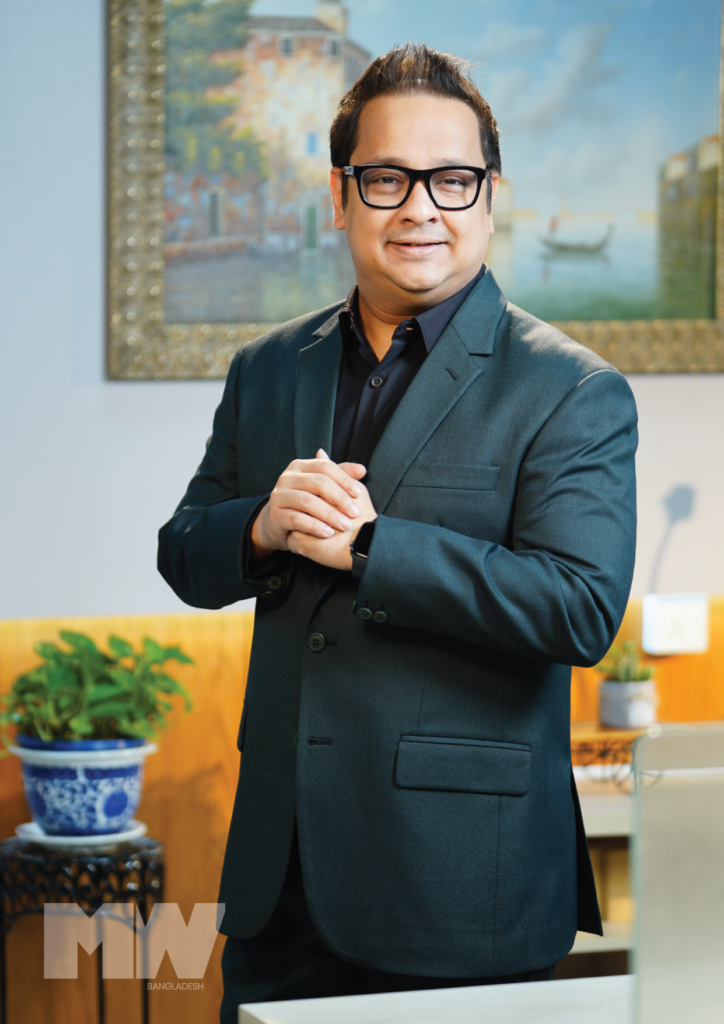
Are there hobbies, such as reading, journaling, walking, music, exercise, that help reset your mind?
To be honest, my work itself is what resets me. My work is my meditation, my passion, and what gives me energy. Through work, I get respect, opportunities, access, and the chance to meet incredible people. So, I’ve become a workaholic in a way. My day and night revolve around it, and even when I sleep, I’m thinking about work.
My life is complicated because I balance three roles at once: running a business, managing operations, and being a trainer, which is like being a stage performer. When I’m training or shooting a podcast, I can’t do anything else. So, blending all of this is difficult, but I’ve accepted it.
For me, personal life and professional life are now connected. My family is involved in my work, and my work is part of my family life. My younger daughter visits my office and walks around; she enjoys being part of it. I don’t believe in strict work-life balance. In my view, greatness doesn’t come with balance, and I’ve seen that through my own life.
Outside of work, small things give me joy, such as watching Netflix at night, watching wrestling since I’m a big fan, and eating together with my family. I don’t have fixed weekends because my work often falls on Fridays and Saturdays, so I give myself breaks whenever I can. It’s an abnormal lifestyle, but I genuinely enjoy it.
Is there a dream project that you haven’t had the time or space to pursue yet but want to?
My long-term professional dream has always been very clear: I want to build the biggest and most impactful soft-skill training company in Bangladesh. I don’t want to dilute my focus by entering industries that have nothing to do with learning or human development.
Everything I do, whether it’s corporate training, public events, podcasts, books, our HR services, or kids’ programs, is tied to the same core purpose: helping people grow. Even when we expand into technical or hard-skill training next year, it will still be within the broader mission of developing people in a structured, meaningful way. My ambition is simple: I want our company to be the best and, ideally, the greatest in this field.
But if you ask about a dream project that carries emotional weight for me, then it has to be our Teenage Life Skill Academy. I’ve always believed that Bangladeshi children are extremely bright, but they don’t get the life-skills support they need. Our education system focuses on grades, not confidence, communication, emotional intelligence, or personal development.
My wife kept telling me for years, “You train thousands of adults; why don’t you create something for kids?” At first, I brushed it aside, but after our daughter turned four and I saw how easily she got absorbed in screens and how different the new generation’s needs were, I realised she was right.
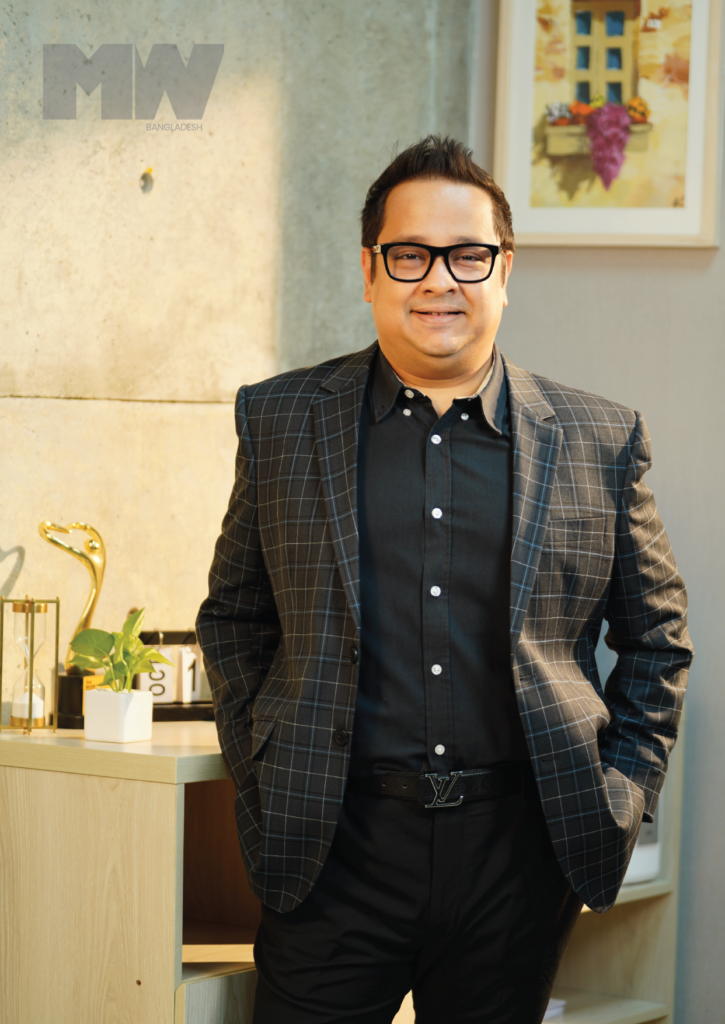
That’s how the Teenage Life Skill Academy began. It’s now two years old, with a group of 70–80 teenagers, and my wife leads it as CEO. It isn’t a profit-driven initiative at all, but the kind of impact it creates is deeply fulfilling. Working with kids, seeing their confidence shift, and connecting with parents has given me a different kind of meaning in my work.
We also try to introduce formats that don’t exist in Bangladesh’s educational culture. For example, our “Parenting Adda” brings together leading psychiatrists, parenting experts, and school principals to have open conversations with parents. Around a hundred parents attend, and sessions like this help families understand what their children actually need. These are the kinds of contributions that matter but often go unnoticed.
So, when I think about dream projects, the Teenage Life Skill Academy isn’t something I hope to do someday; it’s something I’m already living. The next phase is expansion: reaching hundreds more children, building stronger programming, and filling the gaps that our formal education system leaves behind. If we can change even a fraction of how children in Bangladesh grow up understanding confidence, communication, and self-awareness, that will be one of the most meaningful achievements of my career.
Bangladeshi kids are brilliant, but they lack life skills. I wanted to change that.