


Rockstar Puts Shakib Khan on a Different Stage
By MWB Desk
There is a particular pleasure in watching a star walk into a genre that asks him to rearrange his screen habits. Rockstar is built on that pleasure. Directed by Azman Rusho, written by Nusrat Mati, and led by megastar Shakib Khan, the film takes the familiar architecture of a star vehicle and tunes it toward music, mood, and spectacle.
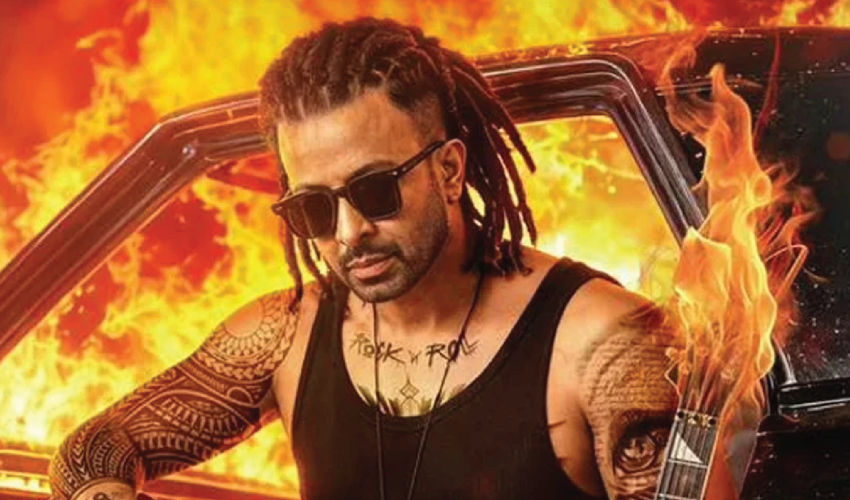
At 2 hours and 27 minutes, what makes Rockstar interesting is not simply that Shakib Khan plays a singer named Agun. It is that the film treats performance itself as identity. Agun is not just a man who sings songs.
He is someone being constantly assembled in front of other people: by lights, by fans, by sound, by longing, and by memory. In that sense, Rockstar is less about fame in the abstract and more about the labor of becoming visible. Even when the film moves through romance and family drama, it keeps returning to the question of how a public figure is made, and what gets spent in the process.
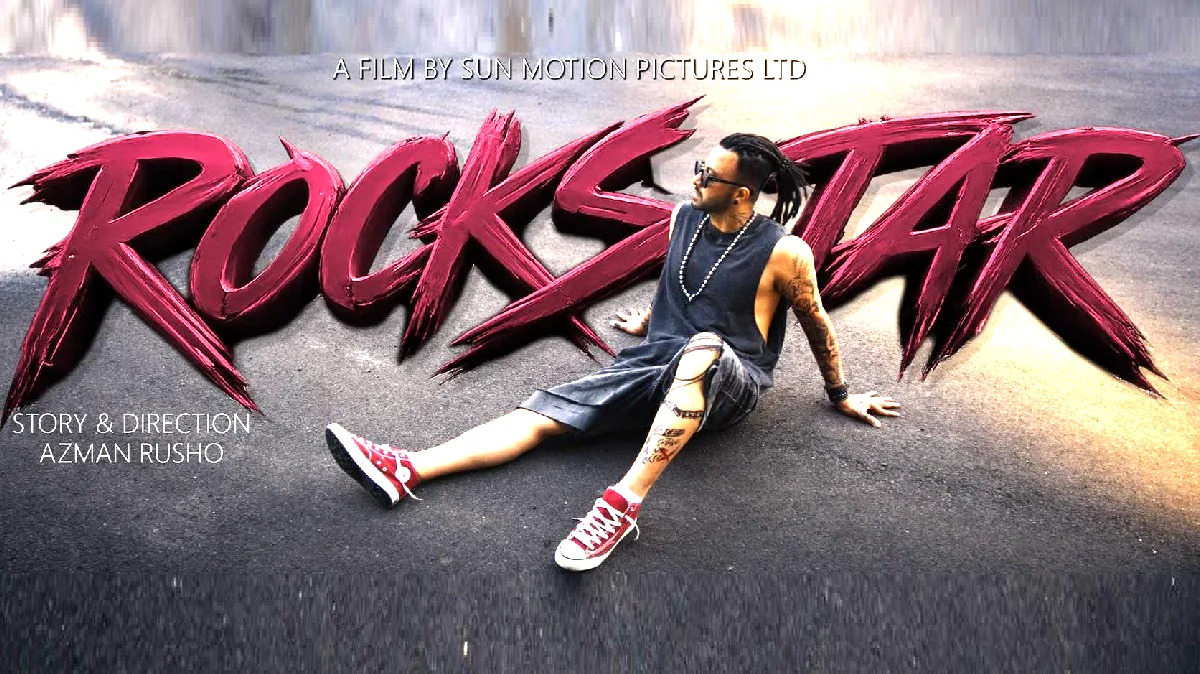
A New Shakib Khan
Shakib Khan has spent years carrying films through sheer command of frame and rhythm, but Rockstar gives him a slightly different playground.
Here, the familiar confidence remains, yet the look and mood are fresher. The styling, the stage persona, the body language of a performer under lights all help create a version of Khan that feels a little less like the untouchable hero and a little more like a man with a soundtrack attached to him.
That shift matters.
It lets the film sell not just celebrity, but transformation. The teaser campaign leaned heavily into that transformation, first through the “Warm Up” promo and later through “Flowers,” which introduced the female leads and framed the film as glossy, music-driven, and emotionally charged.
The casting around him supports that design. Sabila Nur, Tangia Zaman Methila, and Sunidhi Nayak were all positioned as distinct presences in the promotional material, each adding a different shade to Agun’s world.
Sabila Nur, as Meera, especially gives the film its most grounded emotional current. Her chemistry with Shakib Khan has been widely noticed in the pre-release conversation, and onscreen, it helps the film breathe between its larger performance beats. Tangia Zaman Methila as Alena contributes contrast and glamour, while Tariq Anam Khan, Rosy Siddiqui, and Dilara Zaman, strengthen the film’s family and support network.
Quazi Sabir deserves a special mention for bringing warmth and steadiness to Rockstar as Aslam, Agun’s friend and manager. In a film filled with performance, lights, and emotional swings, Sabir plays the kind of character who quietly holds things together.
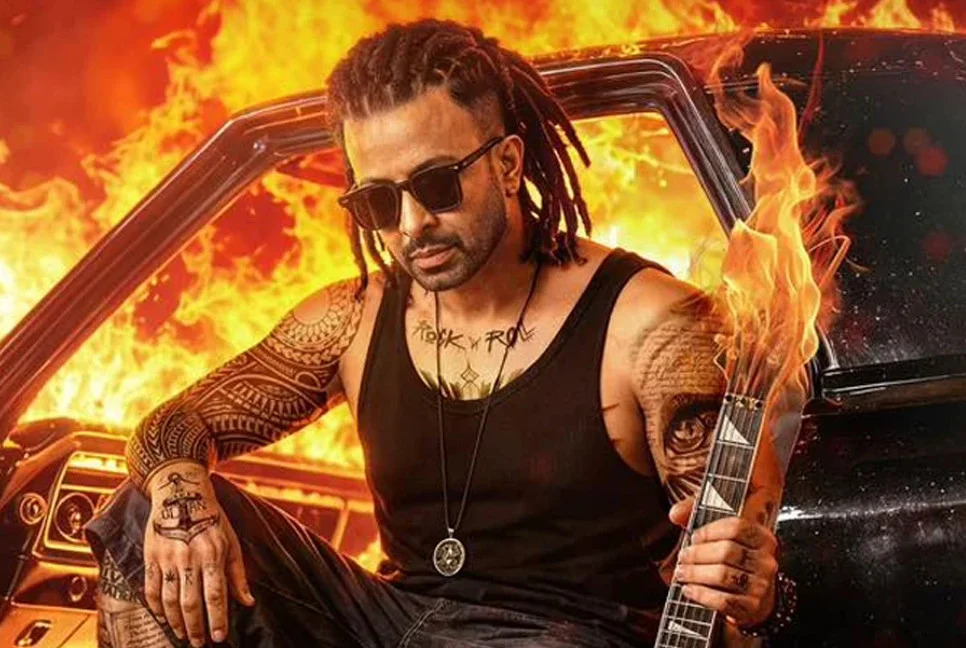
The Real Showstopper
If Rockstar has one immediately undeniable strength, it is its visual confidence. Abdul Mamun’s cinematography and the film’s premium color palette deserve praise. This is a film that wants to look composed, polished, and stage-ready.
Whether in concert scenes or quieter moments, Rockstar carries itself like a production determined to look larger than routine Bangla commercial fare. That polish extends to the VFX and overall production design.
This matters because Rockstar is trying to sell a world of amplified emotion and heightened public spectacle. Without technical credibility, that world would collapse. Instead, the film usually keeps it intact.
A Musical That Understands the Pull of Songs
For a film called Rockstar, the music has to do more than decorate.
It has to create atmosphere, carry feeling, and justify the title. And the soundtrack is one of the film’s richer assets. Ahmed Hasan Sunny wrote and voiced the songs, Zahid Nirob handled the music direction, and the result is an album with variety across styles and moods. For example, numbers like “Besh Kishudin” and “Ami Jabo Hariye” are especially memorable.
There is also something refreshing about how seriously the film takes concert energy. The crowd scenes are designed not merely as filler, but as proof of Agun’s magnetism. A rockstar film needs the audience inside the film to believe before the audience outside the film can. Rockstar seems aware of that contract. It wants the stage to feel busy, feverish, and just slightly larger than life. That ambition gives the film much of its immediate entertainment value.
Where the Film Finds Its Personality
The best way to approach Rockstar is not as a strict realism exercise, but as a star-text experiment dressed as a musical drama. Azman Rusho comes from advertising, and you can feel that background in the film’s instinct for image, tempo, and striking fragments.
The short-form promotional campaign was especially effective in building excitement, and the final film often retains that eye for memorable moments. When Rockstar settles into emotion, performance, and musical release, it becomes most itself.
For some viewers, that may make the journey feel expansive rather than streamlined. For others, it simply means the film is committed to giving its world room to echo.
The Final Note
In the end, Rockstar is worth seeing not because it perfects every beat, but because it dares to aim for a different register within mainstream Bangla cinema. It gives Shakib Khan a fresh arena, packages him with visual style, builds around music with conviction, and proves once again that local commercial cinema is becoming more ambitious in texture and presentation.
This is a film of glow, gesture, melody, and star power. And sometimes that is exactly the right combination for a night at the movies.