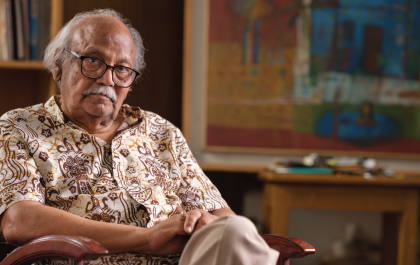




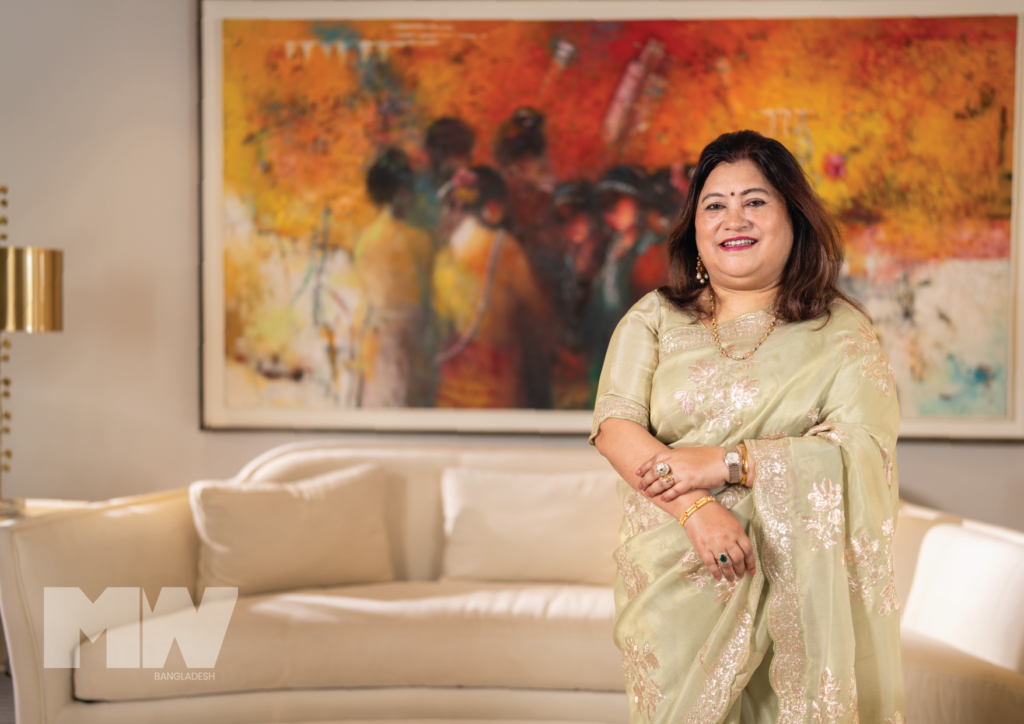
Rupali Haque Chowdhury describes her career as a practice of discipline. Of showing up, learning the system, and doing the work even when it feels routine. That philosophy took shape long before boardrooms and balance sheets, in Patiya, a culturally active upazila town in post-Liberation Bangladesh, where community life, music, and responsibility moved together.
By Ayman Anika
Trained in Chemistry and later in business at IBA, she entered the corporate world at twenty-four with one clear goal: financial independence. She built her credibility across functions, learned the logic behind numbers and systems, and rose through performance rather than projection. In 2008, she became Managing Director of Berger Paints Bangladesh Limited, leading the company through technological integration and multiple economic cycles.
Her leadership extends beyond Berger. As a board member at LafargeHolcim Bangladesh and British American Tobacco Bangladesh, and as President of the Foreign Investors’ Chamber of Commerce and Industry from 2026, she operates in spaces where influence depends on coordination, not hierarchy.
In conversation with MWB, Rupali Haque Chowdhury reflects on leadership shaped by patience, consistency, and lived experience.
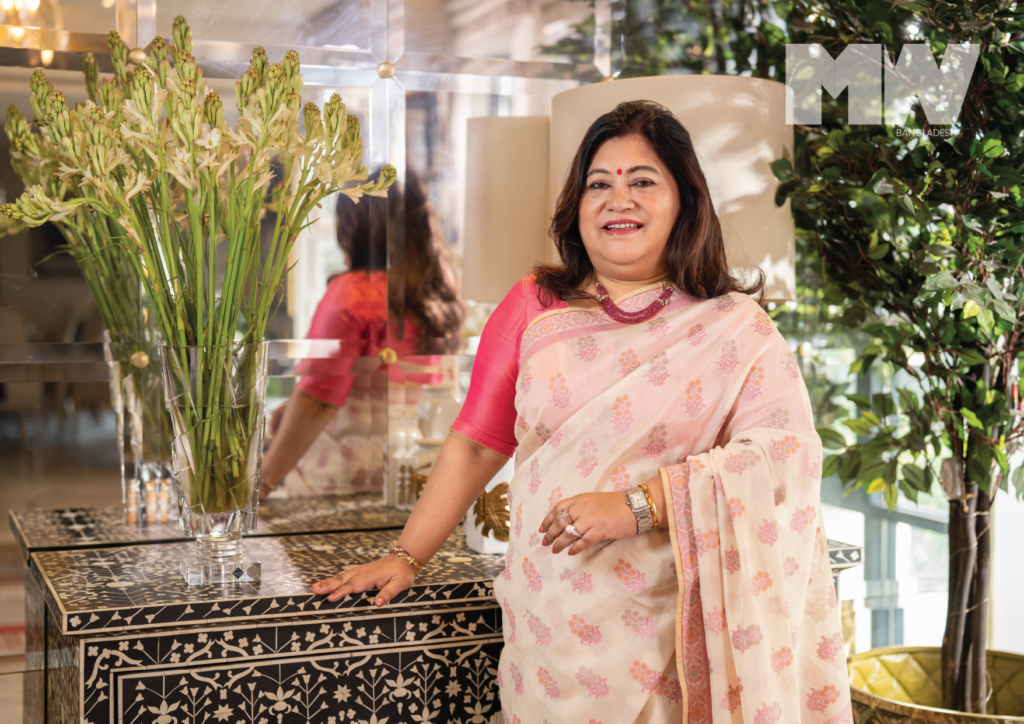
You often speak about your parents with deep respect. In what ways did your parents influence how you think about discipline and empathy?
My fond memories of childhood are deeply tied to the place where we grew up. We lived in Patiya, a small upazila town, but it was incredibly rich culturally. There were singing schools and dancing schools, and every month the Patiya Club would organise programmes where we learned music and dance. There was always something happening.
This was just after the Liberation War, and the country itself was going through a kind of cultural renaissance. Going to school felt joyful. There was not much pressure around studies. School life was full of songs, dances, and cultural programmes, and learning happened alongside all of that. It never felt burdensome.
My parents were very liberal. Our home was always full of people. There were four or five families, many of them doctors’ families, and everyone was culturally involved. We did not have cars, so we walked everywhere, experiencing nature and the town around us. It was a simple life, but it was very full. I would say I had a very good childhood.
As for discipline, my father was an extremely disciplined person. But like most children, we did not consciously follow discipline at that age. No child really wants to. Discipline became meaningful later in life. In the corporate world, discipline is essential. Without it, you simply cannot sustain a regular working life.
I joined the corporate world when I was only twenty-four. My exams ended, I completed my internship, and from the very next month, I started working. There was almost no gap. I had to train myself to be disciplined, because daily life at work is not always exciting. Most days are routine, repetitive, even monotonous. Every day is not a celebration.
To go through that routine and still remain motivated, happy, and curious about work requires conscious effort. It does not come naturally. What motivated me internally was the need to be financially independent. That mattered deeply to me. I did not grow up thinking about owning a business. Even though my grandfather in Burma was a successful businessman, in our family, the idea was always to work, to have a job, to be self-reliant.
Earning my own money meant independence, and that kept me going. I learned to endure the routine and gradually turn it into something meaningful. I think this is something everyone has to learn. Many people from the current generation struggle with this and express frustration with monotony. But learning how to stay committed, even on ordinary days, is an important part of growth.
Earning my own money meant independence, and that kept me going. I learned to endure the routine and gradually turn it into something meaningful.
You began your career at a time when both the market and workplace culture were still evolving. Looking back, what personal challenges did you face as a young professional, and how did you navigate them?
What happens to most women also happened to me. One of the first challenges is internal. If you constantly think of yourself as “a woman” at work, then gender becomes a barrier in your own mind. But when you see yourself simply as a person doing a job, it becomes easier to build genuine professional relationships across genders.
In the workplace, I also consciously stayed away from love and romance. That helps in earning respect. People begin to see you as serious about your work. Your supervisors see you as someone sincere and dependable. You slowly move away from the stereotype that a woman will stay quiet. But that shift does not happen automatically. You have to speak up.
Initially, like many young professionals, I doubted myself. I would think, maybe I know less than others, so what should I say? That fear is common. But if you listen carefully, you start realising that you often have ideas that are just as good, sometimes even better. At that point, you cannot keep quiet. If you have something valuable to contribute, you have to voice it. You also have to make it clear that you are willing to work and take responsibility.
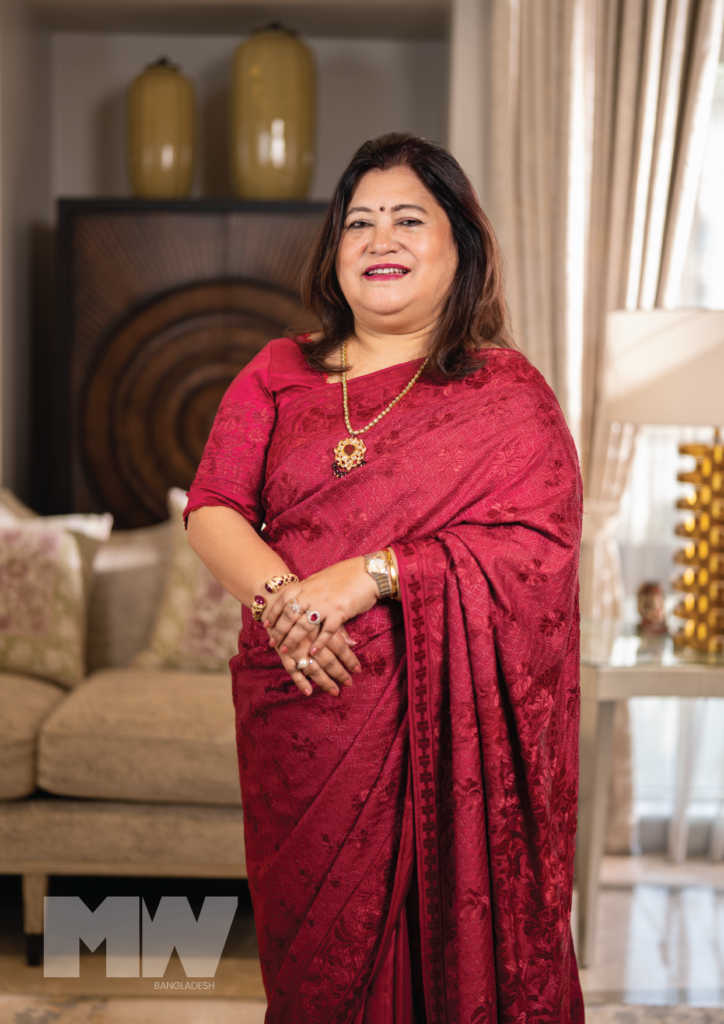
For me, this was more a battle with myself than with the environment. The environment will always have its challenges. The real question is whether you are prepared internally to deal with them.
I also never started out with the ambition of reaching the top. I did not plan to become a Managing Director. My goal was simply to do my work well. If I could reach a CXO level or feel fulfilled by what I was doing, that was enough. Leadership, in my experience, comes naturally when you perform consistently. People then trust you with more responsibility because they see your ability to contribute.
In the private sector, especially, meritocracy matters. If you deliver results, if you are innovative, hardworking, have the right attitude, and work well in a team, you are accepted.
The most difficult personal phase came after having children. Every working woman faces that moment of uncertainty, whether to continue or step back. I chose to continue, but I did not do it alone. I involved my family. My sister, my sister-in-law, and professional help all played a role. I often tell young women to invest in good childcare. Even if it means spending half of your salary, it is worth it. You are leaving your most precious responsibility with someone else, so that person needs to feel valued and trusted.
Finding the right support takes time. You do not always succeed at the first attempt. I was fortunate to find someone who stayed with us for ten years. She helped raise my son and later my daughter. That stability gave me peace of mind.
Life during that period was intense. I would drop my children at school, go to the office, sometimes return home in the afternoon to check on them, and then go back to work. My boss was supportive and understood the situation. Those days felt like a whirlwind, but at that age, I also had the physical strength to manage it.
I was lucky in other ways, too. My home was close to my office, within walking distance. I was in Chattogram then, and the city was smaller. Commuting was not difficult. These practical factors also made a difference. So, it was a combination of personal resolve, family support, workplace understanding, and a bit of luck that helped me continue.
I never started out with the ambition of reaching the top. My goal was simply to do my work well.
Were there expectations placed on you when you were in your 20s, or were you encouraged to find your own path?
When you join an organisation at a junior position, there are prescribed tasks you are expected to do. Beyond that, the question becomes what else you can show. For me, that meant small initiatives. If there was a training programme happening in another department, I would say I wanted to participate. If someone needed help, I would express interest in getting involved. These were small things, but they mattered.
Beyond that, I would not say I did anything extraordinary. My first role was in planning, specifically planning and information control. I was responsible for preparing monthly and quarterly financial reports for the Managing Director. That meant a lot of work with numbers. But it was not just about compiling figures. It was also about understanding and explaining the story behind those numbers.
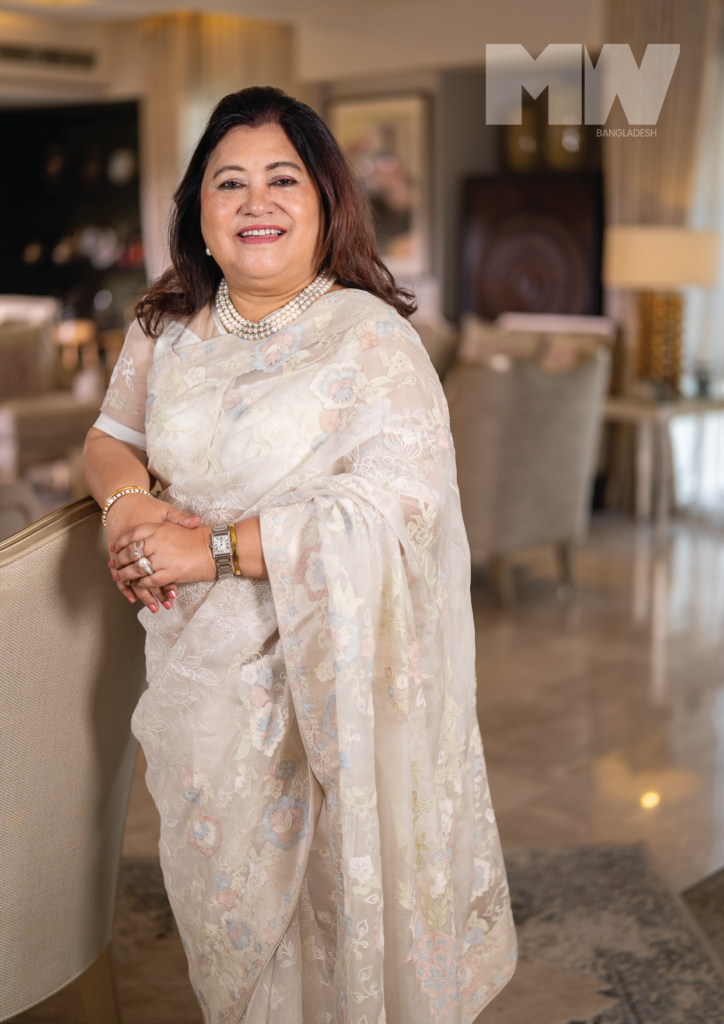
Many people might find that kind of work monotonous, but for me, it became the foundation of my career. It gave me exposure to finance, MIS, and the idea of how a management information system works. While the work itself was routine, the interesting part was uncovering what the figures actually meant. To do that, I had to sit with different departmental heads, whom we now call CXOs, and understand their perspectives. That process taught me how organisations really function.
At the same time, there was a lighter side to that phase of life. Many of my colleagues were also from IBA and had joined different departments. We were a group of young people starting out together. We would go out for lunch, spend time together, and enjoy those small moments. That sense of camaraderie kept us going.
Even today, I see the same thing with young professionals. The joy of going out to eat together, pooling money, and sharing experiences. These things matter. Many of my colleagues from that time are still my friends. That human connection made the early years meaningful, even when the work itself was demanding or routine.
After studying Chemistry, you chose to pursue an MBA and enter the corporate world. What motivated that transition, especially when a more conventional path could have led you into research or laboratory work?
There were two main reasons behind that decision. The first was my elder brother. He used to ask me, what will you really do as a chemist? He would say you will give BCS, or follow a very predictable path. He felt that I should not limit myself and encouraged me to pursue an MBA instead. My brother himself was an engineer and a BUET graduate, so education and career choices were always discussed seriously at home.
The second reason was my husband, who was my close friend at that time. We come from different religions, which was a significant issue back then. But we were very deeply in love. He had initially studied medicine but had left it and moved into other fields because he felt he could not focus. He once told me that if I did not continue my studies, he would not study either.
I remember telling him that I had already completed my Honours in Chemistry, while he had only completed Intermediate and had not finished a degree yet, despite being a very brilliant student. Eventually, we decided together that doing an MBA could be a gateway for both of us.
At that age, around nineteen to twenty-two, emotions and idealism were strong, and everything seemed intense. What my brother said and what my friend, who later became my husband, said came together at that point.
My brother did not know at the time that I was bringing home someone he would later call my husband. We both sat for the admission test, got accepted, and moved to Dhaka to study for our MBAs together. After that, our careers began to take shape.
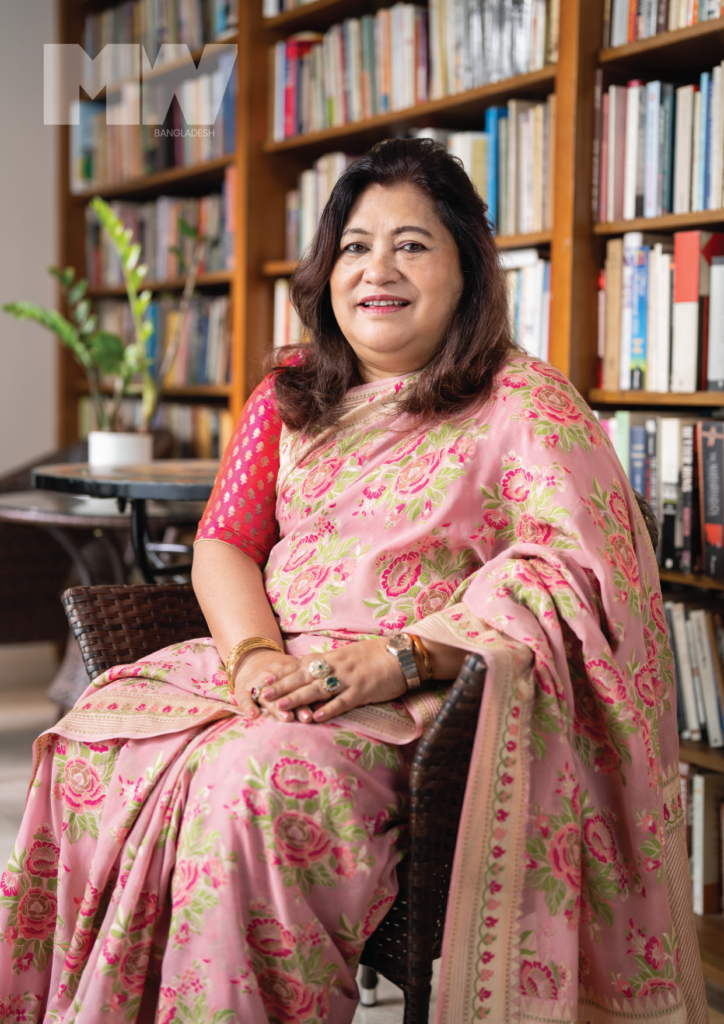
We did not get married immediately. Our families did not agree because interfaith marriages were not easily accepted then. It was not that they disapproved of either of us as individuals. They would say the girl is good, the boy is good, but this cannot happen. So, we waited for many years. Eventually, we decided to get married on our own. After our son was born, both families accepted the marriage, and from then on, there were no more barriers.
You have led Berger through multiple economic cycles and now stepped into the Foreign Investors’ Chamber of Commerce and Industry (FICCI) as its president at a time of global uncertainty. How has your understanding of “leadership” changed over the years?
I see leadership for a CEO as having two broad dimensions. One is leadership within the business itself, and the other is leadership beyond the organisation.
Within the business, leadership is about creating the right vision and bringing all functions together to achieve that vision. A company like Berger depends on many departments working in sync. Production, supply chain, R&D, which I prefer to call the innovation centre, sales and marketing, and IT. As Managing Director, your responsibility is to design the right organisational structure around that vision and to enable people to take timely and informed decisions.
When I became Managing Director in 2008, one of my priorities was integration. Until then, our systems were operating in silos. Departments were not connected, and much of the work depended on separate spreadsheets.
In 2009, we implemented SAP and brought the entire company under an Enterprise Resource Planning system. That changed how we operated. Today, with more than 4,000 SKUs, manual planning or inventory management is simply not possible. An integrated system became essential.
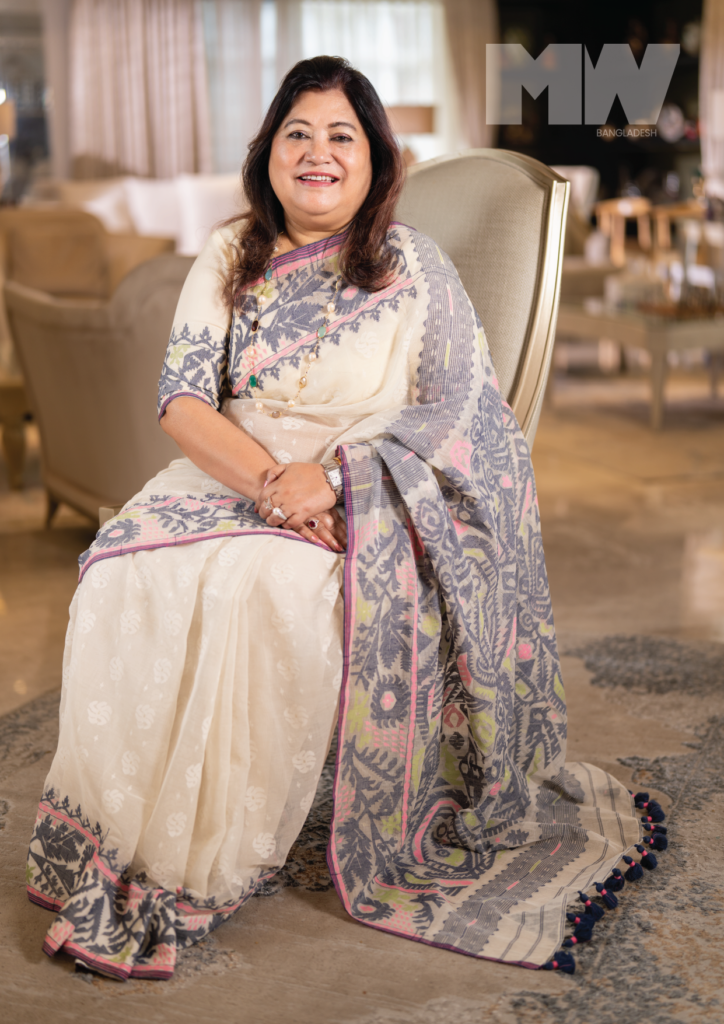
Because I had grown within the company and worked across many departments, I had a deep understanding of all functional aspects. In that sense, I was very much an operational manager, even as Managing Director. But as the company grew, it became impossible for one person to oversee everything in detail.
Over time, we built strong leadership teams and placed specialists, CXOs, in charge of individual functions. That allowed me to move away from day-to-day operations and focus on strategic expansion.
This included growing the business through joint ventures and backward integration, particularly where technology was critical. In auto refinish, we partnered with PPG. In marine paints, we worked with Chugoku Marine Paints (CMP). These partnerships helped us strengthen our capabilities beyond the core business.
The second dimension of leadership is external engagement. When I started my career, my family did not come from a business background, and I had no personal connections within the bureaucracy. Over time, I realised that engaging with regulators and policymakers was not optional. Many laws and regulations directly affect business operations, and unless you engage consistently, your concerns remain unheard.
Initially, I did not have the larger picture. That understanding developed gradually, which is why I became involved with FICCI. I joined first as a member, then took on leadership roles over time, eventually serving multiple terms. FICCI evolved significantly during those years. It became a platform where businesses could collectively engage with regulatory bodies and raise issues that affected the investment climate.
Individually, companies often struggle to get attention. Whether it is Berger, BAT, or any other organisation, going alone rarely works. But when you approach regulators as a collective body, they are more likely to listen. Whether action follows is a different matter, but dialogue at least becomes possible.
Leadership at FICCI also taught me something very important. In a company, the Managing Director sits at the top of the hierarchy. At FICCI, you are leading among equals. Everyone at the table is a Managing Director or CEO in their own organisation. That requires a very different leadership style. You have to learn how to lead without authority, how to build consensus, and how to work with equally strong, capable leaders.
Over the years, my understanding of leadership has evolved through these different contexts. Leadership is not one fixed approach. It has many facets, and it changes depending on the situation, the people involved, and the responsibility you are carrying at that moment.
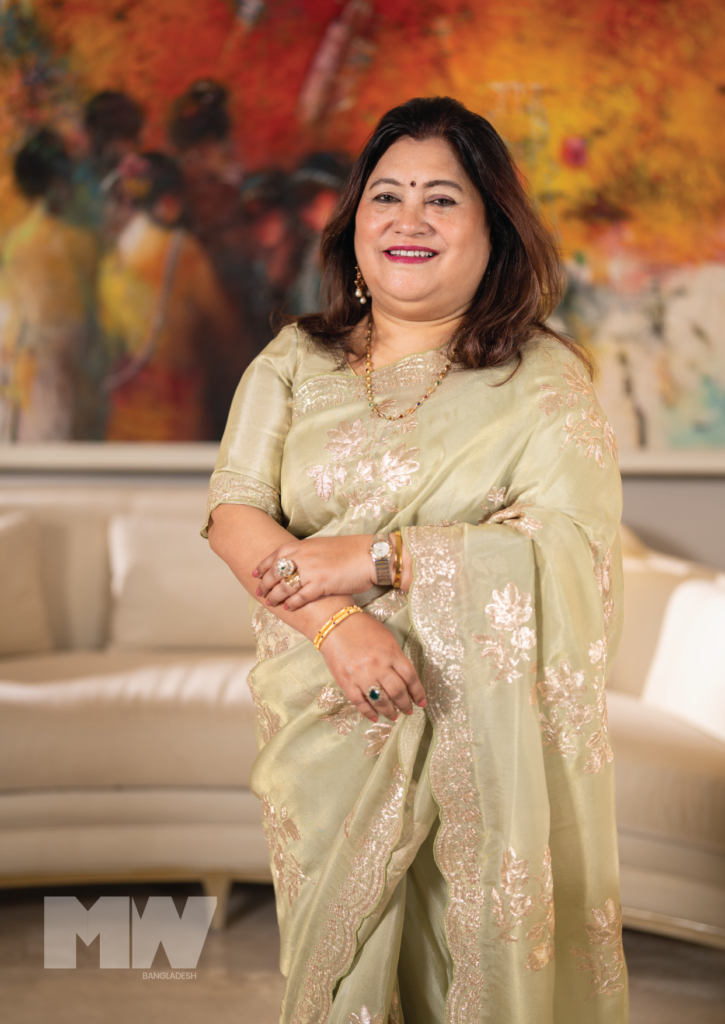
At FICCI, you are not leading from the top. You are leading among equals.
Bangladesh is often described as a “promising destination” for foreign investment. From an investor’s perspective, what is the least discussed structural risk (policy inconsistency, institutional weakness, skills mismatch, governance and coordination gaps, etc.) that deserves more honest conversation?
There have been many honest conversations on foreign investment over the years, including with BIDA and the Ministry of Commerce. Media platforms such as Prothom Alo have also raised these issues, particularly around export diversification. So, the discussion exists, but the structural challenges remain.
One of the most critical issues lies within the bureaucracy. Our system still works in silos. Ministries often do not coordinate with one another, even when decisions taken by one directly affect another. Regulatory bodies are meant to act as facilitators for industry, but effective inter-ministerial coordination is still weak. BIDA’s role as an ombudsman has not fully materialised, and automation and structured inter-ministerial mechanisms are urgently needed.
Infrastructure is another major constraint. Compared to countries like Vietnam, our port efficiency and turnaround times are much lower. For export-driven sectors such as garments, shorter lead times are crucial, especially in fast fashion. Delays increase inventory costs and reduce competitiveness.
Energy is also a concern, particularly for energy-intensive industries like textiles. Bangladesh remains heavily dependent on gas, yet LNG infrastructure can currently meet only a fraction of demand. Without reliable and affordable energy, many industries struggle to remain viable.
Fiscal policy adds another layer of uncertainty. Incentives are limited, export processing zones are often underdeveloped, and policies change frequently. Investors value predictability, which is why countries like Vietnam, Indonesia, and India are seen as more investor-friendly.
That said, Bangladesh has a major advantage in its large labour force. With serious investment in skill development and closer alignment between education and industry needs, the country can attract higher-quality foreign investment, create employment, and strengthen its overall economic ecosystem.
In your view, what systemic barriers faced by professional women in Bangladesh still remain unaddressed?
I would not necessarily call it a purely systemic barrier. From my experience, the challenges are often practical and social rather than policy-driven.
In our company, most employment opportunities are in production and sales. Production is becoming increasingly automated, so employment there is limited and capital-intensive. Sales, however, requires a large workforce.
That is where the real challenge lies for women. Sales roles involve being on the streets, moving around towns, and often working late. Our office hours may start at nine, but sales teams begin later because shops open around eleven, and they often work beyond six or seven in the evening, coordinating with painters and retailers.
While we follow labour laws, the difficulty is sending women into such environments, especially to smaller or remote towns. Sending someone to a place like Dinajpur and expecting them to work late hours raises concerns. Even if an incident may not actually occur, the feeling of insecurity is real.
Safety is not just about whether something happens, but whether people feel safe. Given the broader situation, if ordinary citizens do not feel secure on the streets at night, it becomes difficult for companies to confidently place women in such roles. That is where we often feel stuck.
In office-based roles such as finance or supply chain, women’s employment has increased significantly, and there are far fewer barriers. I do not see male colleagues facing structural disadvantages there. For women, maternity leave is often perceived as a barrier, even though it is limited to a small period in their lives.
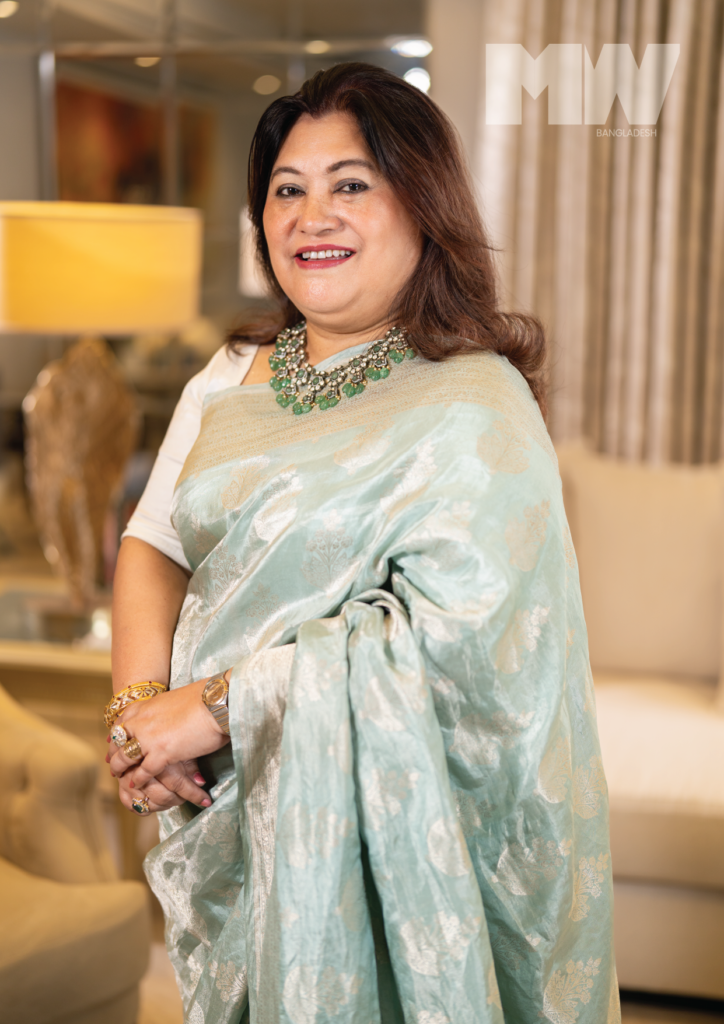
This concern usually exists at middle management or supervisory levels, where people worry about how work will be managed during that time. At the top management level, there is much greater acceptance today. Companies now recognise that women are sincere, focused, and deliver strong output.
However, mindsets still need to change at the family and social level. If men grow up studying and working alongside women, there should be no discomfort collaborating with them professionally. That acceptance needs to start early.
From a leadership perspective, the biggest concern remains safety and security. As decision-makers, we ask ourselves how much additional risk we can responsibly take on. Beyond that, I have not personally seen strong gender stereotyping in multinational companies, and even many local companies are actively hiring women. The challenge is not unwillingness, but the realities of safety, perception, and support systems.
If you keep thinking of yourself as ‘a woman’ at work, gender becomes a barrier in your own mind.
Are there individuals whose values or conduct you deeply admire?
I deeply admire Nelson Mandela, particularly for his capacity to forgive. After spending 28 years in prison, he emerged without bitterness. One moment that stays with me is when he addressed white officials who had served the previous regime and were preparing to leave. He told them he wanted their experience, that they were welcome to stay, and that the country needed them. That act of forgiveness and inclusiveness is extraordinary.
I also hold Sheikh Mujibur Rahman in the highest regard. If he had not been there, this land would not exist as Bangladesh. Without that, someone like me could not have come from Patiya and become the Managing Director of a multinational company. Many people suffered and contributed, but history needs a leader around whom everyone gathers, and that leader was Bangabandhu.
Another figure I admire greatly is Lee Kuan Yew. He transformed Singapore from a small fishing village into a first-world country through sheer vision and determination. Many call him authoritarian, but I see him as a benevolent disciplinarian who understood that Western models of democracy would not automatically work in an Asian context. His ability to balance authority with long-term public welfare offers important lessons.
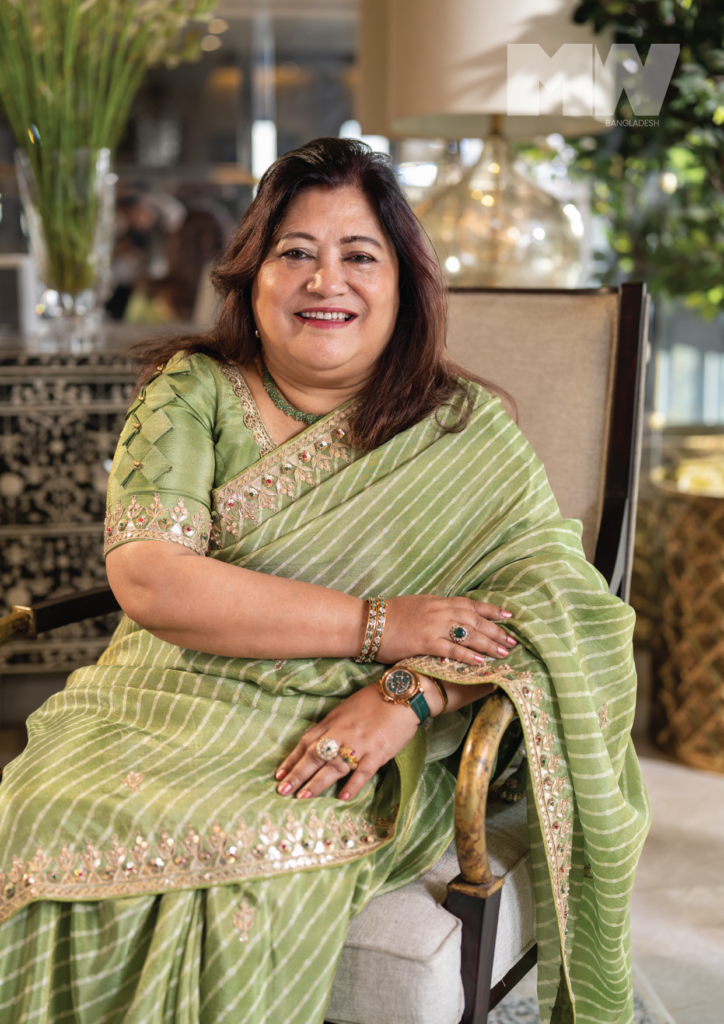
What connects all these leaders is their focus on improving the lives of ordinary people. The most dangerous divide in any society is economic disparity. Without employment, dignity, and stability, no country can remain peaceful. These leaders understood that creating opportunity and a shared vision is essential for social and national stability.
What does rest look like for you?
For me, rest has never meant perfect balance. I have always felt that if the knowledge and experience I have gained can be used meaningfully, then I have a responsibility to give back to society.
Family time matters to me, especially my daughter. I hope that when she becomes a mother, I can support her in ways I could not earlier. But that cannot be full-time. Everyone has their own life and space. So, rest, for me, is about staying engaged with purpose while being present when it truly matters.
What qualities do you look for most when engaging with young professionals?
The quality I value most is patience. I tell this to young professionals, and I tell my daughter the same thing. Impatience does not really lead anywhere. We live in an age of instant results, instant information, instant solutions. But real learning does not happen instantly.
Young people today have access to knowledge at their fingertips, and their learning speed can be much faster than ours was. But learning still needs a solid foundation. Information has to be absorbed, reflected on, and then applied.
We are also in a period of transition, where the traditional ways of working are being challenged by new ideas. Many young people feel the older methods are a waste of time. But transformation takes time, and you have to be part of that process. To truly change systems, you eventually have to step into leadership roles. For that, patience is essential.
If you had to leave young people with one piece of advice, what would it be?
If I had to give just one piece of advice, it would be this: sincerity matters more than passion. Today, passion is given a lot of importance. In our time, we did not have so many choices. You have many options now, and that is a privilege. But even if you do not find your passion immediately, whatever work you are given, do it sincerely.
You may feel that the work is not your calling, but it helps you earn a living. Start with what you have. Give your best to it. Through that process, you will eventually find direction and purpose. Success often comes from commitment, not excitement.
Most importantly, do not give up hope too early. Try sincerely first. Only then will you find your way forward.
Do not give up hope too early. Try sincerely first.
Fashion Direction & Styling: Mahmudul Hasan Mukul
Photographer: Mobarak Faisal
Assistant Stylist: Arbin Topu