



Hopping onto an invitation from the Four Seasons group sheds perspective on the contrasting personalities of Southeast Asia’s urban siblings—Singapore and Vietnam
By MW Desk
As an auto journalist, you get to travel a lot. The same crowded security lines, the same cramped aeroplane seats, the same suspicious-tasting airline food, and the same crying baby that seems to haunt you like Chucky on every flight. At 32,000 feet, clouds look the same everywhere. But as you make your descent, the sunset outside your window starts to look a little different, perhaps a touch more tangerine. The hills appear oddly shaped, maybe a bit more asymmetric. The fields, strangely structured, might be growing something, you’ve never seen before.
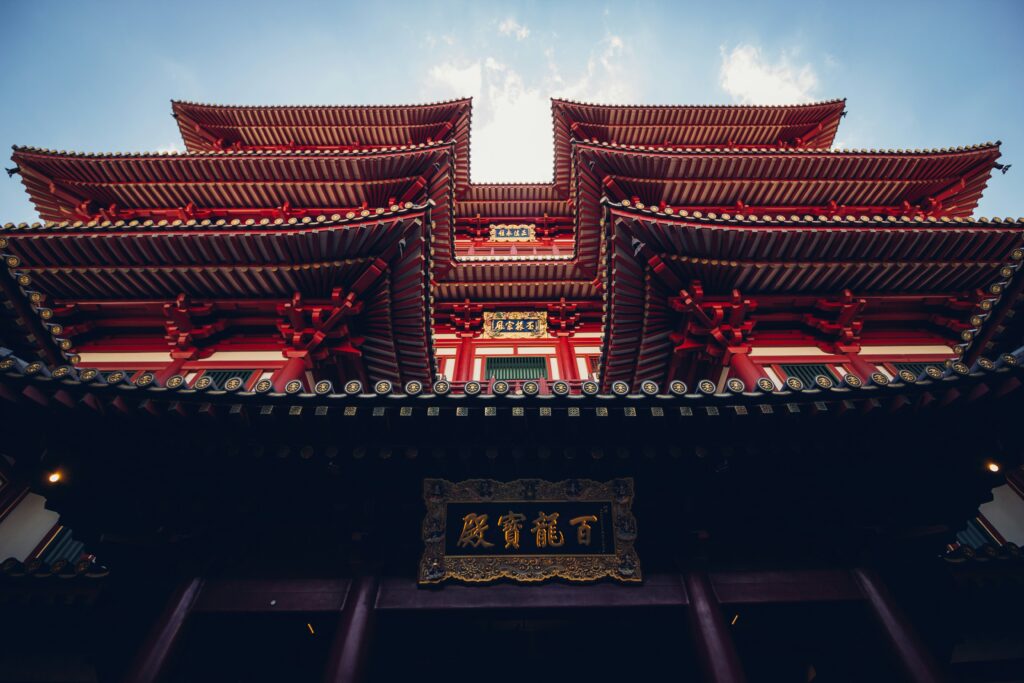
When you approach the tarmac, things change quite drastically. The traffic looks different, and so do the people. You soon realise that places reflect their people, and people reflect their places. Americans are loud and boisterous, like their cities and their capitalism. Scandinavians are cold and reserved, like their fjords. On an invitation from the Four Seasons group, I realized that major cities in Southeast Asia resemble a pair of siblings from South Asia: Singapore, the polished elder; and Vietnam, the youngest and kindred spirit.
An overwhelming sense of authority hits you as you wait at Changi’s baggage claim, partly due to the grumpy-looking staff and partly due to someone waiting for their Tumi bag, decked in Balmain sweats and retro Jordans. It almost makes you want to tuck in your raggedy travel t-shirt and tie the laces of your slip-on sneakers. The entire airport feels like it has its act together, like a multicultural convention of older siblings, where the last thing you want to do is disappoint. This sense of orderliness follows you as you make your way through almost pin-drop-quiet traffic, ferrying you to perfectly manicured streets and equally discerning pedestrians gracing them. The evidence is ever-present—Singapore wants to put Asia’s best foot forward.
The city feels meticulously designed, with everything located precisely where it should be. Craving local cuisine? Visit a designated hawker centre. Fancy a Michelin- starred meal? There are 52 restaurants to choose from. Need a smoke break? There are designated areas. Seeking luxury? Orchard Street, home to the Four Seasons Hotel Singapore, features Hermès and Louis Vuitton stores just a short walk away, once again in a designated area.
Speaking of which, the Four Seasons property itself lies in the heart of Orchard Street, showcasing tastefully done interiors. Nothing feels out of place, from the lobby to its two in-house restaurants. The Chinese restaurant, Jiang-Nan Chun serves a delicious traditional Chinese meal, while Nobu offers a Japanese-Peruvian semi-buffet brunch for lunch. Pro tip: we highly recommend the Japanese F1 Steak, especially if you’re in town for the Singapore GP weekend.
An overwhelming sense of authority hits you as you wait at Changi’s baggage claim, partly due to the grumpy-looking staff and partly due to someone waiting for their Tumi bag, decked in Balmain sweats and retro Jordans.
The rooms are designed with the multicultural spirit of the country in mind. My 13th-floor window offered a gorgeous view of the street, with the lush Botanical Garden right beside it. If you get tired running between meetings and meals, the property offers a unique Peranakan massage at The Spa that will squeeze the stress out of your shoulders.
You can spend hours at the property itself, but the heart of the city lies in its curated tourist attractions, which are organised and pristine. Just a 10-minute drive away, you’ll find Singapore hawker fare, home to around 100 stalls a few of which also featured in Crazy Rich Asians. Must-try dishes include BBQ Sambal Stingray, Chilli Crab, and Satay (Honey-glazed Chargrilled Meat Skewers). Then there are Gardens By The Bay, resembling what I imagine the hanging gardens of Babylon looked like.
The Cloud Dome offers a stark contrast to Singapore’s humid air, where you’ll breathe the crispest, most high-definition air you’ve ever experienced. The Flower Dome, adorned with countless flowers, occasionally hosts events like the unveiling of the world’s most expensive car. Out on the road, you encounter what looks like an Asian catalogue of J Crew models. The luxury here feels comfortable, not flashy. Unlike the sea of branded sweatshirts in Mumbai’s humid weather, you see a lot of linen, cotton, and other staples of ‘quiet luxury’. Contrary to what movies might tell us, the Asians here seem rich, not crazy.
The best way to explore those streets is by booking a Vespa sidecar tour through Four Seasons. I was assigned a vintage red model, which had previously hosted the behinds of Formula One legend Damon Hill and Bollywood actor Ananya Pandey. Pro tip: if you’re above 5’8”, the experience could be a little uncomfortable.
Organised by Simon, a former Londoner, through his company Singapore Sidecars, the tour takes you across different districts and landmarks in a uniquely grounded way. Not because you are humbled by sitting in a sidecar, but because you are so close to the ground. All the humbling washes away as the sidecar, at least on our ride, pulls onto a part of the Singapore street circuit, perhaps giving me a taste of what Damon Hill would’ve felt, albeit in a much different and faster vehicle.
Yet, amidst these pockets of efficiency, Singapore lets its hair down a bit. I found myself wandering into a hawker street, the aroma of satay and laksa wafting through the air. Standing in the Cloud Dome, a serene calm washed over me, a stark contrast to the bustling streets outside. A shopkeeper at Mustafa Market greeted me with a smile, “Looking for something special today?” My conversation with the Vespa rider, whom I almost convinced to ride in the Himalayas someday. There’s a touch of humanity everywhere. The staff, the servers, and even the massage therapist who, in between small talk, advised me to only take flights at night to escape the wrath of screaming babies. You hear about Asian hospitality a lot, but experiencing it is something else altogether.
And between the fancy meals and sanitized attractions, you also see the people behind them. Singapore remains a boiling pot of different cultures—Chinese, Malay, Tamil, and many more—all perhaps older siblings of the family, working together on something grander, which is again so evident. This feeling is only heightened when you do the Intan private museum tour, shedding light on the country’s Peranakan culture, formed through marriages between Chinese immigrants and local Malay women in the early colonial 1800s. But don’t expect a listening tour here;
Alvin Yapp, the owner and curator of Singapore’s first home museum, will tell you the tales of Peranakan traditions and the accompanying artefacts he so proudly showcases, before ending it with a seven-course meal and a piano performance where you have no choice but to sing.
Nothing contrasts quite like the sharp- suited Asians being replaced by Australians in shorts on a flight from Singapore to Da Nang, Vietnam. The contrast continues at Four Seasons Resort The Nam Hai, where electric buggies and bicycles replace Maybachs and Rolls-Royces. If Singapore feels like a part of a well-oiled machine, Vietnam is more like a carefree younger sibling with dreadlocks. The trip from Da Nang International Airport takes nearly 40 minutes by road, and the contrast hits you as soon as you hit the highway. Well- manicured streets and fashionable folks are replaced by a laid-back vibe. There’s a certain chaos to Vietnam, a far cry from Singapore, but eerily similar to coastal towns in India like Goa and Pondicherry.
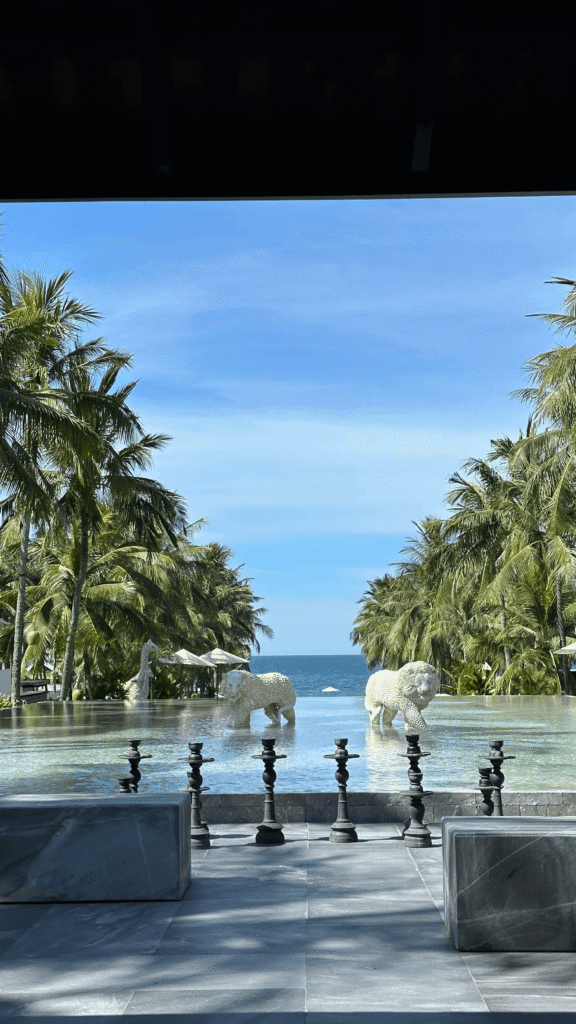
From the start, Vietnam feels different, looks different, and, as I soon discovered, tastes remarkably different—if you muster the courage to leave the resort grounds. Spanning 56 acres, Four Seasons Resort The Nam Hai offers what I’d liken to Medusa’s lair—not because it petrifies, but because its rooms cocoon you in comfort, trapping you. And rightfully so. Whether it’s the balcony views that beckon countless photos, that look straight out of a coffee table book. Coconut trees on one side, the pristine white sand beaches on the other, it’s hard to leave.
Once you do step out or ride out (there are bicycles parked outside every villa), the view from the lobby area looks like something straight out of a painting. A large pool in the middle is flanked by beautifully done architecture housing different amenities. Step a bit further, and you’re welcomed by a white sand beach, reminiscent of all superlatives rolled into one very tasty Vietnamese spring roll.
Speaking of which, you can try your hand at making one of these through one of the resort’s recommended activities: a session at the Nam Hai Cooking Academy. Even your own poorly made rice paper rolls can be salvaged into something edible here.
Unlike Singapore, where you always feel the need to be on your best behaviour, here, it’s clear from the chef’s polite suggestion that I should stay a few more weeks, judging by the state of the rice rolls I made. Unlike Singapore, with its designated areas of fun, Vietnam feels more relaxed. You can choose to stay in and engage in activities like visiting the Dior pop-up or the massages in the resort’s floating rooms. Alternatively, you can opt for the Omakase menu at its in-house Japanese restaurant, Nayuu, or simply stroll around the property, which honestly looks like something out of a calendar backdrop.
The soul of the country, though, lies in its streets, its food, and its people—all accessible through different experiences offered by the resort. Yet, nothing compares to seeing the ancient town of Hoi An. This UNESCO World Heritage site looks like a town from ancient paintings. Situated on the north bank near the mouth of the Thu Bon River, the town is within a small buffer zone, inaccessible to motorized vehicles, and you soon understand why. Stretching as far as the eye can see, the town reflects a fusion of indigenous and foreign cultures—primarily Chinese and Japanese with later European influences—preserved in a complex of 1,107 timber-frame buildings. These include architectural monuments, commercial and domestic structures, an open market, a ferry quay, and religious buildings like pagodas and family cult houses. The houses are tiled, and their wooden components feature traditional motifs carved with intricate detail. It almost feels like you’re walking through the pages of history.
Places truly reflect their people. Just as in Singapore, where meticulousness and hospitality reign supreme, Vietnam too shines with its brand of Asian warmth. My Vespa rider would hilariously anchor the scooter firmly, ensuring I could embark and disembark effortlessly as we toured Hoi An, sampling local delicacies and cocktails along the way. Amid these adventures, I encountered microcosms of Vietnamese life: a grandmother passing down three decades of Chè-making [Vietnamese sweet dessert soup] wisdom to her granddaughter, a dumpling restaurant adorned with a photo of its hostess learning from her father two decades ago, and a Trung Chiên spot reminiscent of scenes Anthony Bourdain would have relished.
But the pinnacle of my journey came on the Hoai River, where we boarded a boat and lit lanterns. As these lanterns drifted downstream, each carrying hopes and dreams written on their paper surfaces, the sight of the riverbank illuminated by flickering lights became a profoundly moving communal ritual—a moment more soul- stirring than any yoga or meditation session I’ve ever been forced into.
Reflecting on my travels, I’ve realised that it’s not just about snapping selfies, nor is it about judging those who do. It’s about connecting. We all share the same stories, the same grandmothers, and the same siblings, just wrapped in different cultures and languages, which makes the world a little less hostile. Returning to Mumbai, the monotony of grey skies metaphorically gave way to splashes of colour. Observing ferries, boats, and apartments from the plane window, each with its own story, has now reinforced my belief that the world is inherently compassionate— a sentiment I’ll carry on every journey, despite the inevitable crying children on flights.
Reproduced with permission from Mansworldindia.com