



Azman Rusho explains why a story needs time to grow
By Ayman Anika
For many filmmakers, the first lessons in storytelling come through short films or television dramas. For Azman Rusho, they came through music and advertising. Long before directing his first feature, Rockstar, he had already spent years composing songs, releasing his audio album Ashole Ki, and directing more than 200 television commercials. Each commercial demanded the same challenge: communicate an emotion, build a world, and leave a lasting impression within seconds. That discipline would eventually shape the filmmaker he became.
In this conversation with MWB, Azman Rusho reflects on the childhood that shaped his creative instincts, the lessons advertising taught him about cinema, the philosophy behind Rockstar, and the stories he still hopes to bring to the screen.
When you look back at your childhood, what kind of child were you?
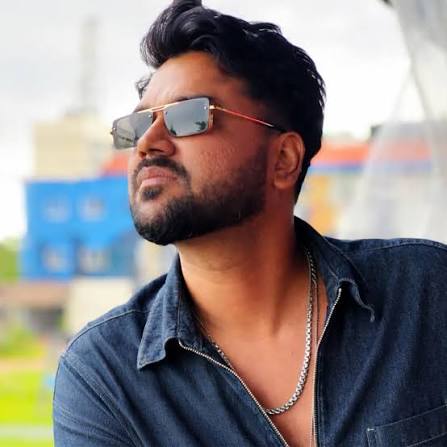
As a child, I was always drawn to creative expression. Music came into my life long before filmmaking, and that journey really started with my audio album Ashole Ki. Looking back now, I feel that music became the first medium through which I learned to express myself. Eventually, that curiosity expanded into visual storytelling, filmmaking, and advertising.
I grew up surrounded by family’s love and encouragement, and I think that shaped me more than anything else. My parents have always been my biggest supporters. Even after Rockstar was released, my mother watched the film three times and kept praising my work. Moments like that mean more to me than any professional recognition because they remind me where everything began.
You spent years working in advertising before becoming known for narrative work. How did advertising shape your understanding of storytelling?
Advertising is storytelling in its own right. The difference is largely one of scale. A commercial tells a story in seconds, while a feature film has the luxury of time. But beyond shaping my understanding of storytelling, advertising shaped me as both a filmmaker and a person.
Over the years, I have directed more than 200 television commercials. That experience became my film school. In Bangladesh, most directors transition into feature films after working in fiction, where they become familiar with long-form narratives through television dramas or telefilms. They already understand how to sustain characters and stories over 40 or 45 minutes before moving into two-hour films.
My journey was different. I came from advertising, and that path is relatively uncommon. Internationally, one of the best-known examples is Ridley Scott, who also began his career directing commercials before becoming a feature filmmaker.
What advertising gave me was a complete understanding of the filmmaking process. As a director, you cannot think only about the story. You have to understand the camera, lenses, screenplay, storyboard, casting, costume, production design, locations, editing, and how every department works together to create a single visual language. Advertising trained me to think about all those elements simultaneously, often under tight deadlines and with very limited running time.
That foundation gave me the confidence to move into feature filmmaking. I genuinely believe advertising prepared me for cinema in ways that nothing else could have. Even today, after making films, I don’t see advertising as something I have left behind. It’s my bread and butter, my foundation, and a place I genuinely love. No matter how many feature films I make, I will continue directing commercials because advertising not only taught me how to tell stories but also shaped me entirely as a filmmaker.
“A director has to understand everything, from the camera and lenses to casting, costumes, and locations. Filmmaking is about seeing the whole picture.”
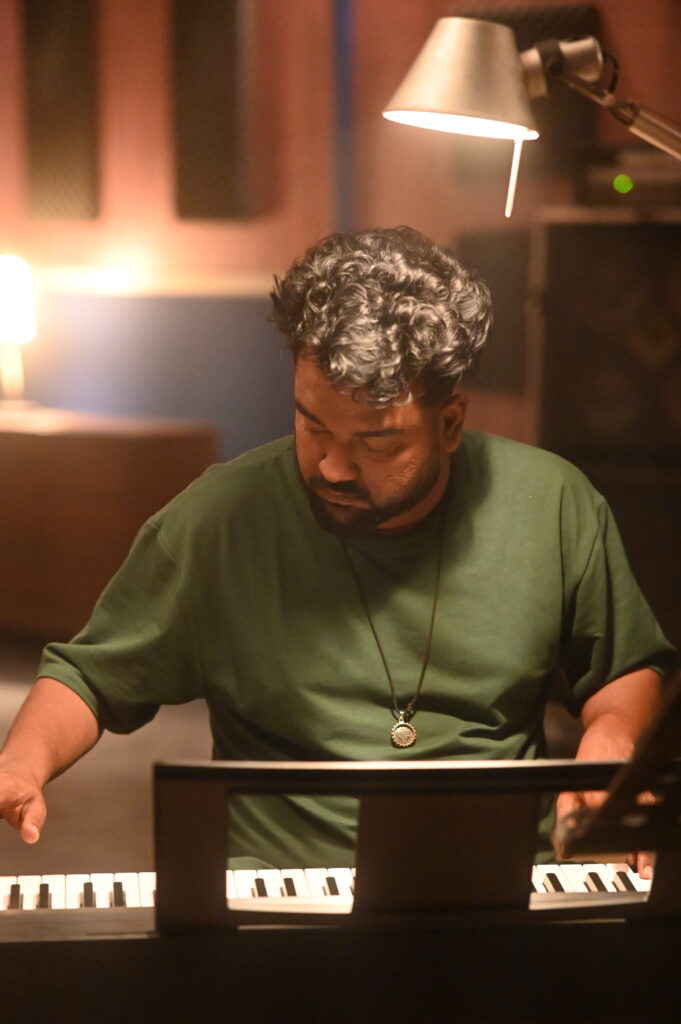
Around the same period, I was also deeply involved in music. I released my own audio album, Ashole Ki, while composing music for television commercials. The album itself was an independent musical project, separate from my advertising work, but both experiences expanded my understanding of rhythm, emotion, and audiovisual storytelling.
Music plays a significant role in Rockstar. How did you approach using music not just as entertainment but as a storytelling device?
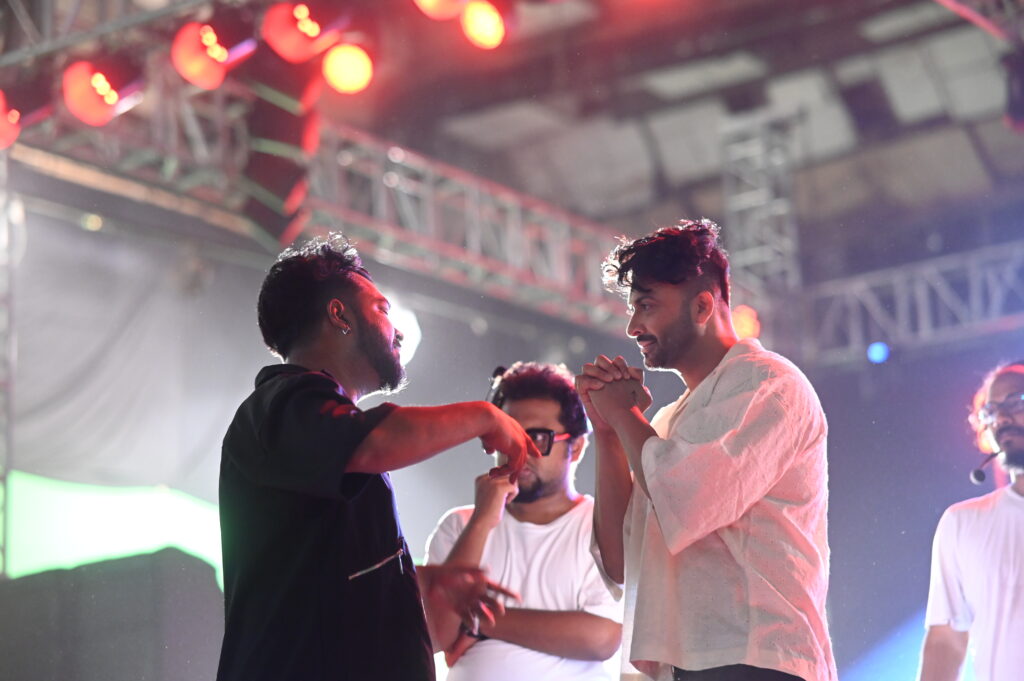
From the very beginning, I had a clear vision for the film’s soundtrack. I didn’t want songs that became instant chartbusters simply because they were easy to remember. There is nothing wrong with those songs, but that wasn’t the kind of musical journey I wanted to create.
I often think about the difference between a song that becomes popular overnight and one that stays with people for years. For Rockstar, I wanted every song to have a deeper thought, a philosophy, and a soul.
The lyrics weren’t written to be understood after a single listen. They were written to invite people back again and again. For example, lines like “Bojho ki gacher bhasha, shono ki hawar gaan? Tomar bhetore pakhi, tumi tar nishan,” are not meant to reveal themselves immediately. I wanted listeners to pause, reflect, and gradually discover their meaning.
The soundtrack also mirrors the emotional journey of the protagonist. Each song represents a different phase of his life. In his youth, the lyrics revolved around love and hope. As he grows older and experiences heartbreak, loss, and grief, the songs become more introspective, asking questions about identity, loneliness, and purpose.
By the final act, after profound personal loss, the music reflects acceptance and remembrance. Every song is intended to capture the emotional state of that particular stage of his life.
As a songwriter, I have also evolved over the years. When I first started writing music more than a decade ago, my lyrics were inspired by everyday observations such as street life, traffic, and the city around me. With time, my writing matured alongside my own experiences. That evolution naturally found its way into Rockstar.
Equally important was how the songs functioned within the film. I never wanted the narrative to pause simply because a song had begun. In many films, the story stops for a musical sequence and then resumes where it left off. I deliberately avoided that structure.
Instead, every song had to propel the story forward. By the time a song ends, the characters have changed, their relationship has deepened, broken apart, or reached a new emotional destination. Each musical sequence becomes a narrative bridge rather than a detour.
That was always my intention: to use music not simply as entertainment, but as another language of storytelling.
Do you think contemporary Bangladeshi cinema is becoming more willing to tell unconventional stories?
Yes, I believe Bangladeshi cinema is gradually becoming more open to unconventional storytelling, and a great deal of that credit belongs to producers who are willing to take creative risks.
At the end of the day, the producer is the one investing the money and carrying the biggest responsibility. Unless they are willing to back an unfamiliar idea, films like these simply cannot be made.
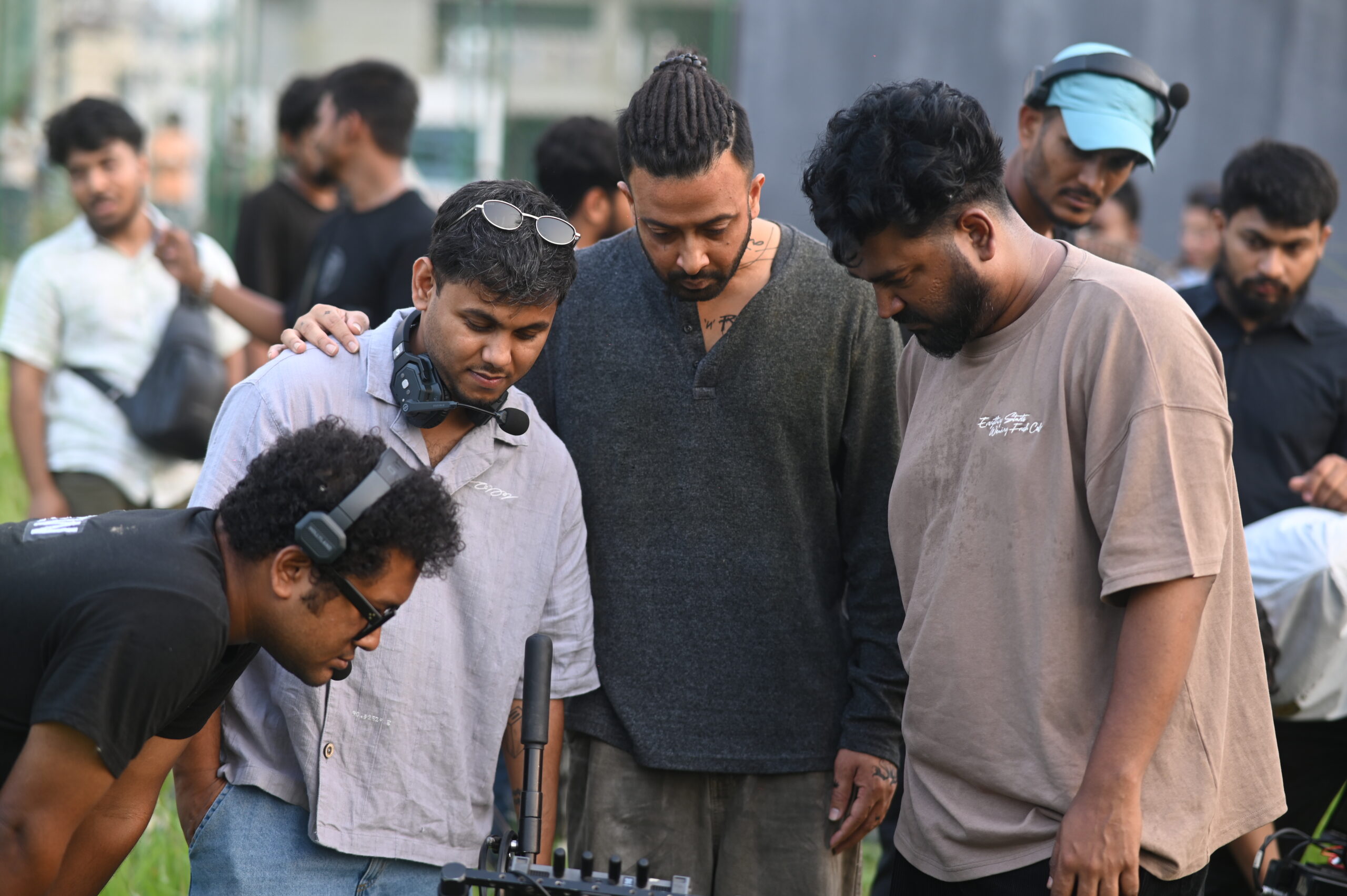
I consider myself fortunate that, for my very first feature film, my producers, Anjan Chowdhury Pintu and Ajoy Kumar Kundu, placed that kind of trust in me. They never asked me to follow conventional formulas or insisted on adding item songs, oversized action sequences, or other commercial elements simply to make the film more marketable. Instead, they gave me complete creative freedom. Their only message was, “Make the film you want to make.”
That trust made Rockstar possible.
“When producers trust filmmakers and give them creative freedom, the entire industry benefits.”
I also think we are beginning to see encouraging signs across the industry. Films with distinctive voices and unconventional narratives are finding space. For me, that is the most promising change. When producers trust filmmakers and give them the confidence to tell honest, original stories, the entire industry benefits.
If you could adapt any novel, short story, or literary work, which one would you choose and why?
To be honest, I’ve never really thought about adapting a novel or a literary work. For the past three or four years, my mind has been occupied by stories I’ve witnessed, experienced, or heard while growing up. Those real-life memories have become much more compelling to me than fictional narratives.
Several incidents from my own life left a deep impression on me, and I feel those stories deserve to be told on screen. They carry an authenticity that I connect with as a filmmaker.
One story I’ve wanted to explore for a long time goes back to the mid-1990s. As a teenager growing up, I witnessed the gang culture and violent turf wars that existed in Old Dhaka. Those events fascinated and shocked me at the same time.
There were so many human stories behind that world: about power, survival, fear, loyalty, and the social realities of the time. I think there is tremendous cinematic potential in that setting, and it’s something I would love to explore in the future.
So, at this moment, I don’t have a particular novel in mind that I want to adapt. I’m more interested in telling stories rooted in real people, real places, and experiences that have stayed with me over the years.
Are there any projects currently in development that excite you particularly, even if you can’t reveal too many details yet?
At the moment, my immediate focus is on advertising. I’m currently in Cox’s Bazar after spending the last several days scouting locations across Sylhet, Sirajganj, Bandarban, and Cox’s Bazar for an upcoming commercial. That’s where most of my attention is right now.
As for my next feature film, I do have a few ideas that I’m developing, but it’s still too early to talk about them. I’m taking my time with the writing because I don’t want to rush into another film. I believe a story needs time to grow before it reaches the screen.
So yes, there are projects I’m excited about, and I’m actively writing and exploring them. But they’re still in the development stage, not yet in pre-production. Once I feel they’re ready, I’ll be happy to share more. For now, I’d rather let the ideas mature before talking about them publicly.
“I don’t want to rush into another film. A story needs time to grow before it reaches the screen.”
Image Source: Courtesy