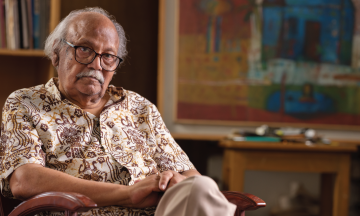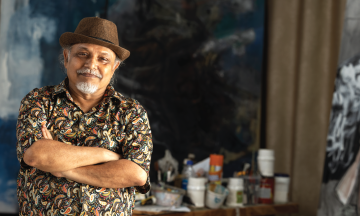



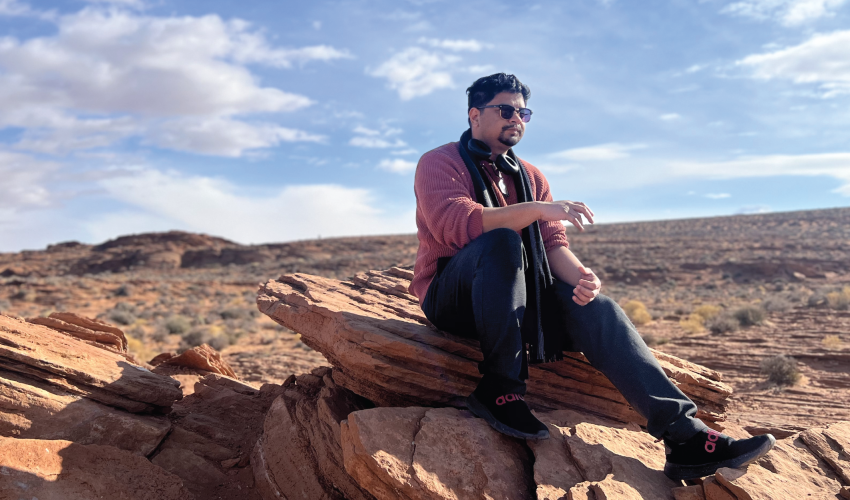
Nuhash Humayun, a talented Bangladeshi writer and director, is redefining South Asian story-telling with his innovative vision. As a member of the Writers Guild of America, Nuhash’s work resonates beyond borders, reflecting his global mindset. His short film Moshari gained international acclaim, winning the SXSW Jury Award for Best Midnight Short and capturing audiences with its unique blend of horror and cultural depth. Nuhash continues to elevate Bangladeshi cinema, creating thought-provoking narratives that resonate deeply with both local and global audiences.
By Neha Shamim
In an exclusive interview with Man’s World Bangladesh, Nuhash Humayun discusses his latest release, Dui Shaw, now streaming on Chorki. The gripping series delves into themes of human resilience and societal challenges, showcasing Nuhash’s signature story-telling. He shares insights into the creative process and the journey behind this compelling series.
What inspired you to create Dui Shaw? Was there a particular theme or message you wanted to explore in this sequel?
The reception to Pett Kata Shaw was incredible, especially for a modest-budget project inspired by local folk tales. Initially, people were confused because it didn’t follow traditional horror conventions, but over time, they embraced its uniqueness.
I even saw a group in India create a PDF eBook analyzing each episode, which was amazing. One memorable moment was when a group of guys stopped me late at night. Initially, I thought I was about to get mugged, but they just wanted to know about my projects. When I mentioned the possibility of a sequel to Pett Kata Shaw, they got so excited – it really showed how much the series resonated with people.
Can you share your thought process behind the title, Pett Kata Shaw, Dui Shaw? Does it hold any special meaning in the context of the story?
Pett Kata Shaw’s exploration of folktales and their origins felt complete to me. I didn’t want to repeat the same formula for the second season. Why not push boundaries and challenge audiences instead?
The inspiration for Dui Shaw came from reflecting on the state of the world. Over the past few years, we’ve faced so much upheaval – wars, natural disasters, and glaring inequalities – not just in Bangladesh but globally. I’ve already explored ghosts and folklore, but what about the horrors created by society?
Nowadays, when you hear something in the middle of the night, your first thought isn’t, “What if it’s a ghost?” It’s, “What if it’s a person?” That’s a reality in Bangladesh and many parts of the world. What if it’s a mob? What if it’s a riot? Human beings and societal issues have become scarier than any supernatural monster we could imagine.
As for the titles, I’m often asked about the name Pett Kata Shaw, especially internationally. I try to preserve the Bangla title for my projects. When Moshari won awards at festivals, we didn’t call it The Net; it remained Moshari. Similarly, Pett Kata Shaw wasn’t renamed for international recognition. Even when it won Best Film at Raindance, the title remained the same.
In season one, Pett Kata Shaw referred to the Bangla alphabet rhyme that everyone in Bangladesh knows as “Pett Kata Shaw.” What’s fascinating is that there’s no written history of it being called that. Yet every child in Bangladesh – whether they’re in an English-medium school, a Bangla-medium school, or a madrasa – knows it as “Pett Kata Shaw.” The name is passed through word of mouth.
This oral tradition mirrors how folktales are passed from one generation to the next – through word of mouth. That’s why season one was named Pett Kata Shaw.
For season two, I intentionally named it Dui Shaw rather than Pett Kata Shaw 2. The tone is very different. While season one was rooted in folklore and supernatural horror, Dui Shaw focuses on the horrors of modern
society.
What challenges did you face in expanding the universe of Dui Shaw? Was it always planned as a series, or did the idea for a sequel come
later?
When I first started working on Pett Kata Shaw, I casually mentioned it was a horror series, and people immediately began sharing ideas. After it became a hit, I even got voice messages from strangers telling me their paranormal experiences and asking me to include them in my stories. Horror is a big part of Bengali culture – ghost stories are deeply rooted in our traditions. Growing up, we all heard ghost stories from grandparents or cousins, especially in the winter. These stories connect people to their roots and carry a rich cultural history.
With Dui Shaw, the challenge was expanding this universe. For example, in the Mishti Kichu episode, Nawshaba’s character, Antara, had a small but pivotal role. Years ago, she asked me what might happen to her character in a sequel. At the end of Mishti Kichu, Antara is approached by the devil at her husband’s funeral, hinting at a larger story. That idea stuck with me, and in Dui Shaw, I built an episode around her, reversing the themes. While Mishti Kichu explored the burden of remembering too much, Antara’s story delves into the escapism of forgetting. This universe keeps expanding naturally because there are so many supernatural stories to tell, and I love exploring them.
What was your inspiration on writing each episode of Dui Shaw?
For “Waqt,” I’ve always loved slashers, and this gave me the chance to explore the genre. Slashers, like I Know What You Did Last Summer or Final Destination, follow a known formula where characters die one by one, and the fun lies in how it happens. The story revolves around sin and accountability, with five people committing a crime and avoiding responsibility – a perfect setup for a slasher.
In “Bhaggo Bhalo,” I explored the concept of luck and its interconnectedness. Inspired by the Bengali saying “ek joner poush maash, arek joner shorbonaash,” the story follows a man who improves his fortune by stealing others’ luck, reflecting on power, corruption, and survival in a broken system.
“Antara” builds on the Mishti Kichu episode from season one. It explores a toxic relationship between Antara and the devil, who traps her in a cycle of forgetting. This story draws on Bengali folklore where humans marry jinn, turning it into a metaphor for emotional confinement and the pain caused by our own choices.
Finally, “Beshura” is a folk horror musical inspired by Goopy Gyne Bagha Byne and my love for musicals. Set in a village where everyone is creatively gifted, it focuses on an outcast child who cannot sing and is saved by a witch, both outcasts themselves. The story celebrates creativity and explores themes of exclusion and identity.
My mother, an incredible poet, co-wrote several episodes, including “Antara” and “Beshura.” Her contributions ensured these stories, especially the women-centric ones, had an authentic female perspective.
As both a writer and a director, which role do you enjoy more?
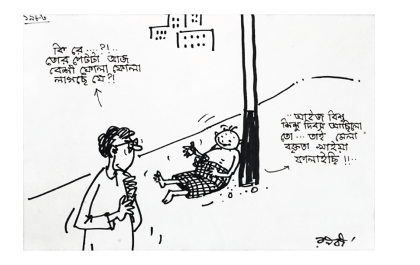
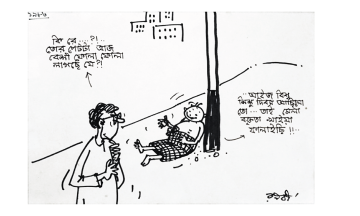
I think they’re very different processes. Am I a writer who directs, or a director who writes? I think I’m both. I’m a writer-director; it’s its own breed. When I come up with an idea, I’m both visualizing it and writing it simultaneously. I think in visuals and words at the same time. Before I became a filmmaker, I was a comic artist, and even in comics, it’s the same. I’ve always loved blending words and visuals together.
Do you feel Dui Shaw successfully brought your vision and writing to life on screen? How did the transition from script to film align with your expectations?
As a director, it’s impossible to always be completely satisfied, especially with the limitations of time, and resources. When writing Dui Shaw in 2023, many themes turned out to be incredibly relevant during filming in 2024. For instance, while shooting “Bhaggo Bhalo” in Korail Bosti, the July revolution was unfolding around us. Helicopters hovered, people were being shot, and we even incorporated real events, like the smoke from Shethu Bhobon set on fire, into the film.
“Waqt,” which deals with religion and sin, presented challenges as its themes mirrored real-life horrors, forcing us to censor certain elements to avoid triggering audiences. Similarly, “Beshura” faced logistical issues due to a thunderstorm and flooding in Sitakunda. Ultimately, many elements had to be adjusted during production, but that’s part of the creative process.
What’s one story or project you’ve always dreamed of creating but haven’t had the chance to work on yet?
I have notebooks full of ideas I’ve had since I was a teenager. For example, Moshari, one of my most internationally acclaimed works, came to me when I was 18. I made the film when I was 30. It took time to develop the skill set, resources, and opportunity to bring it to life. I have at least 50 other ideas I want to pursue, including a sci-fi movie and a larger-scale horror film. I also want to make films all over the world – not just in Bangladesh, but in Hollywood, the Middle East, and beyond. My only competition is time, and I’m racing against it to create as much as I can in this life.
What upcoming projects or themes are you most excited to explore? Will you continue with horror and suspense, or do you plan to experiment with other genres?
I am working on film scripts, some of which are Bangladesh-based and others are Hollywood-based, as I’ve recently joined the Writers Guild of America. I want to focus on Bangladeshi films while also exploring international projects. While I want to delve into drama – more character-driven and less genre-specific – I’m not done with horror just yet. There are still many supernatural, spooky stories I want to explore.
Starting with horror challenged me as a filmmaker and story-teller pushing me to improve how I use music, sound, and visuals. Horror has helped me grow both as a writer and director.