



A celebration to recreate the rural essence with a mix fashion
By Mahjabin Rahman
On December 13th morning, I headed to Gulshan Society Lake Park, thinking that it was another event, but reaching there I was awed by seeing the entire park transform into a canvas of rural Bengal. The usual hum of the city softened under the melodies of folk songs and the rhythmic beat of traditional dances.
Poush Utshab, organized jointly by the Gulshan Society and the Fashion Design Council of Bangladesh (FDCB), brought together craft, culture, and cuisine, offering a rare glimpse of village life in the heart of the capital.
From the moment the festival opened at 11 am, visitors were greeted with a sensory celebration. The scent of freshly made dudh-chitoi and Nakshi pitha, the vibrant hues of handwoven textiles, and the intricate designs of wooden and clay toys. Artisans from Sonargaon, Rajshahi, Sylhet, and Tangail showcased their heritage crafts, from Jamdani and Tangail weaves to wooden figurines and traditional pottery.
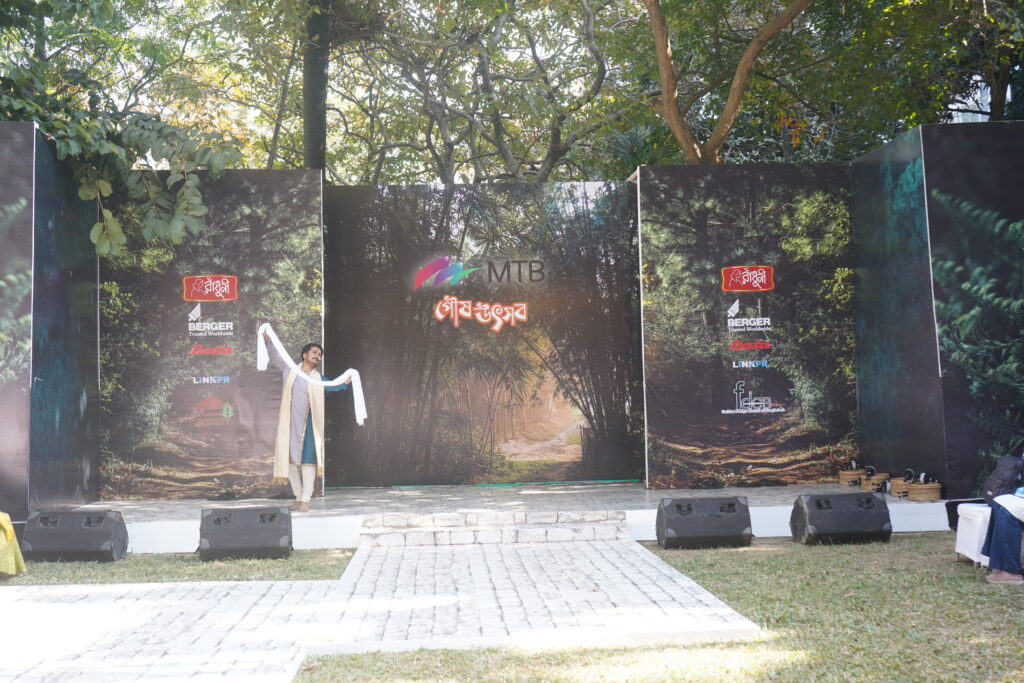
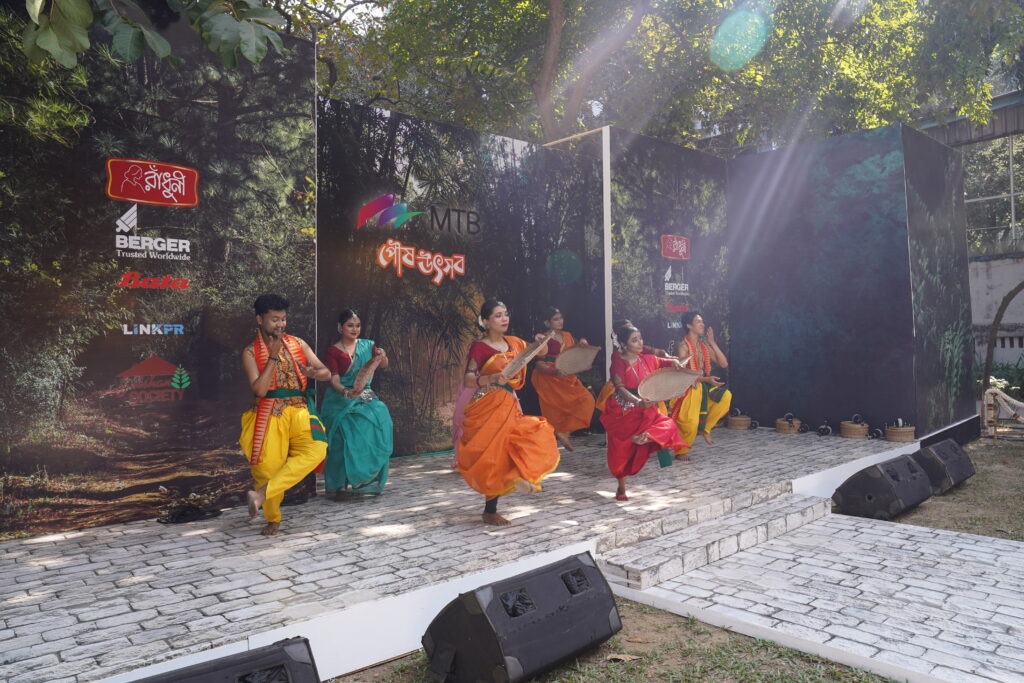
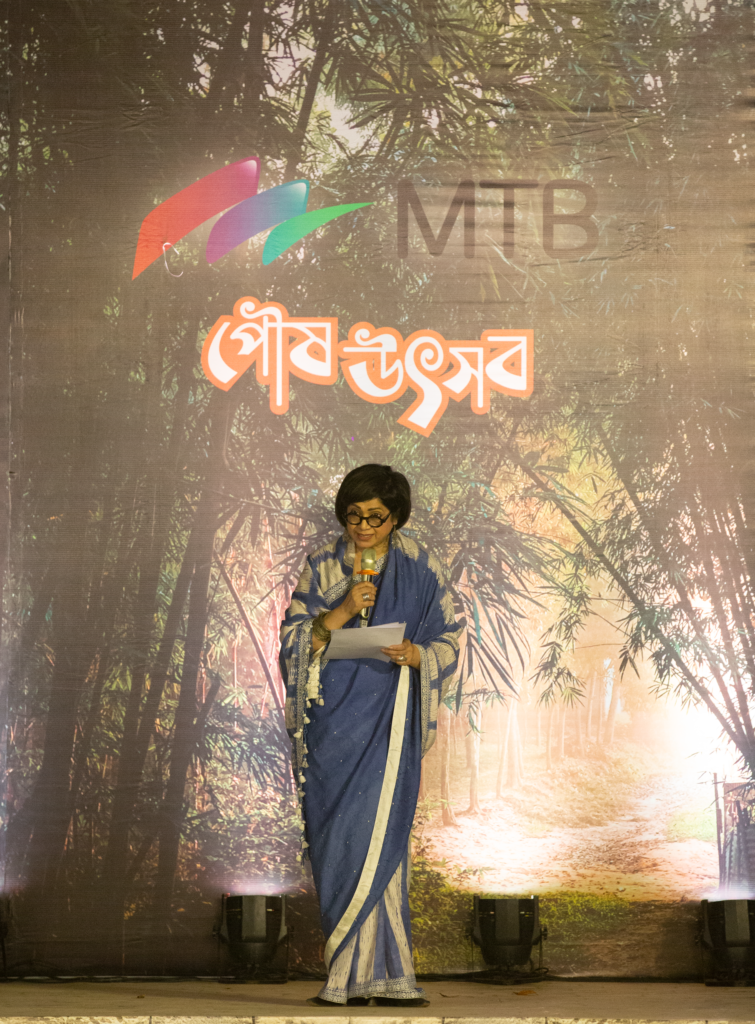
In the very first half of the event, an evocative dance performance opened the celebration, gently drawing the audience into the spirit of the festival. This was followed by welcoming remarks from the President of the Gulshan Society and a festival address by the President of the Fashion Design Council of Bangladesh, articulating the vision behind the celebration. The opening segment concluded with vibrant folk songs that brought out the cultural rhythms of rural Bengal.
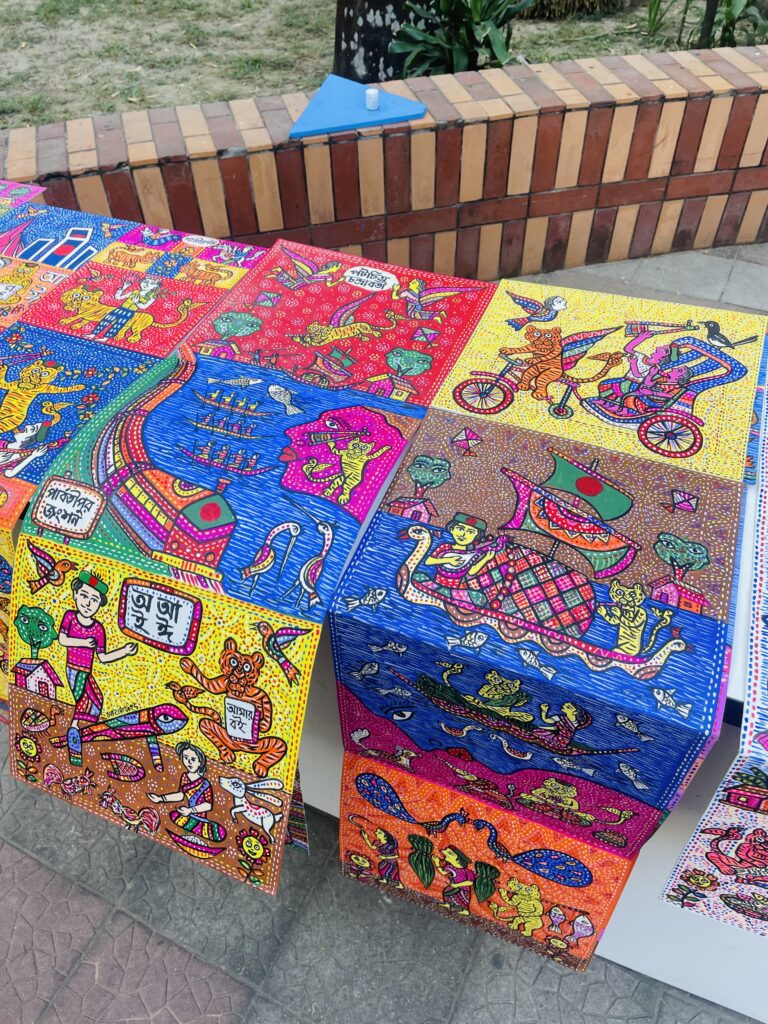
Multiple stalls across the venue showcased artworks and crafts that once defined our cultural pride, yet over time have nearly faded from everyday life. Each stall held a piece of Bengal’s artistic inheritance. One of the most interesting spaces was Potua, curated by Potua Nazir Hossain, who focused on reviving the nearly extinct 4,000-year-old tradition of Potchitro. Reflecting on his work, he said, “I am from this generation, and I wanted to show my roots, my tradition, my Bangladesh, and my Bengali culture to everyone through my Potchitro.” Another stall titled Potchitro echoed similar visual narratives, using traditional techniques to depict stories deeply embedded in our cultural landscape.
Textiles formed a significant presence at the festival. A stall named Tangail displayed finely handcrafted pieces on tussar fabric, highlighting the elegance and patience of handloom weaving. Kantha Rajshahi presented intricately stitched nakshi kantha, each piece reflecting both skill and storytelling passed down through generations.
The diversity of crafts was expansive and deeply engaging. Stalls such as Kather Putul, Shola, Haat Pankha, Kasha Pital, and Joot each reflected materials and techniques once central to rural life. Terracotta, a stall, showcased pieces of Pora Mati and it stood out for its earthy textures and expressive forms, while Kaath Khodai displayed an impressive collection of wooden utensils and decorative pieces shaped through traditional carving techniques. An especially charming stall, Shankher Haari, showcased small clay toys that evoked memories of village fairs. Tepa Putul, another highlight, presented the iconic molded clay figures that have long been part of Bengal’s folk tradition. Completing the journey was the Shital Pati stall, displaying handwoven mats that were once a staple in nearly every household, now increasingly rare and precious reminders of a slower, more grounded way of living.
The fashion segment at Poush Utshab stood out as one of the most compelling intersections of tradition and contemporary creativity. Organized in two distinct showcases, the fashion shows brought together the work of 18 designers under the banner of the Fashion Design Council of Bangladesh, each presenting garments that celebrated the depth and diversity of Bangladesh’s textile heritage. What made these presentations captivating was the way designers wove stories of rural craft into modern silhouettes. From handloom jamdani and natural dyes to screen prints and kantha-inspired motifs, the collections highlighted how traditional materials can be reinvented with contemporary sensibilities, reminding audiences that heritage and innovation can coexist beautifully.
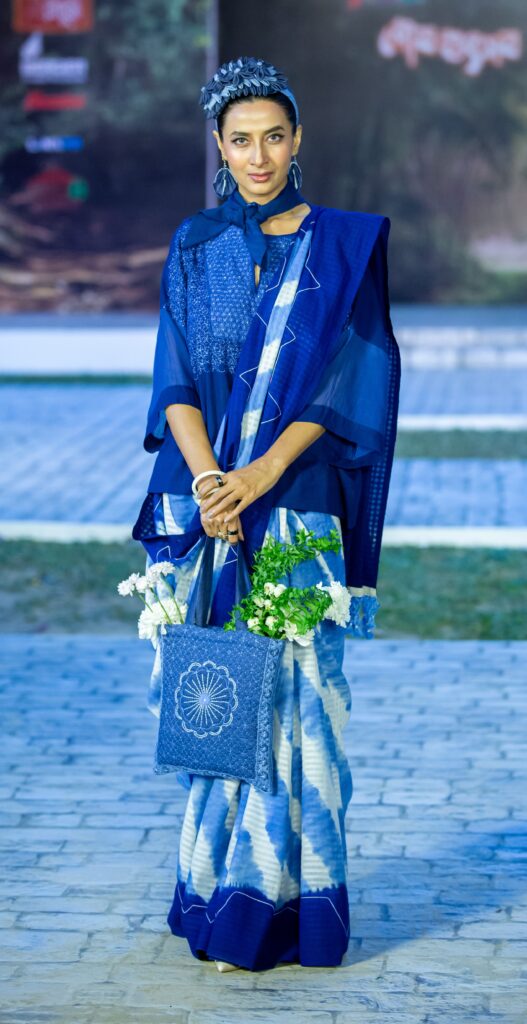
Blue tides flow in a handcrafted embrace, a masterwork of dyed threads
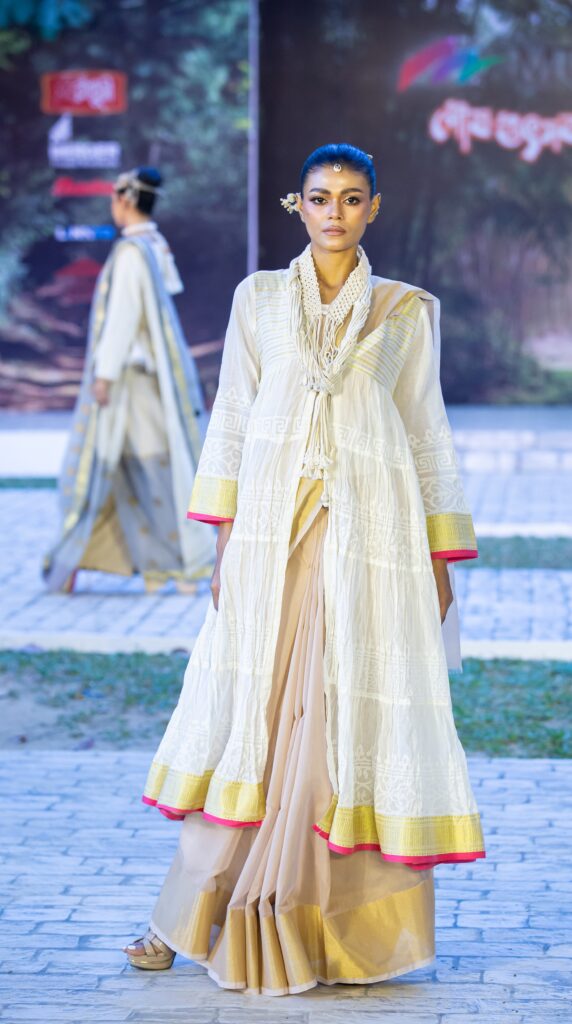
Golden borders dance on ivory layers, a timeless fusion of grace
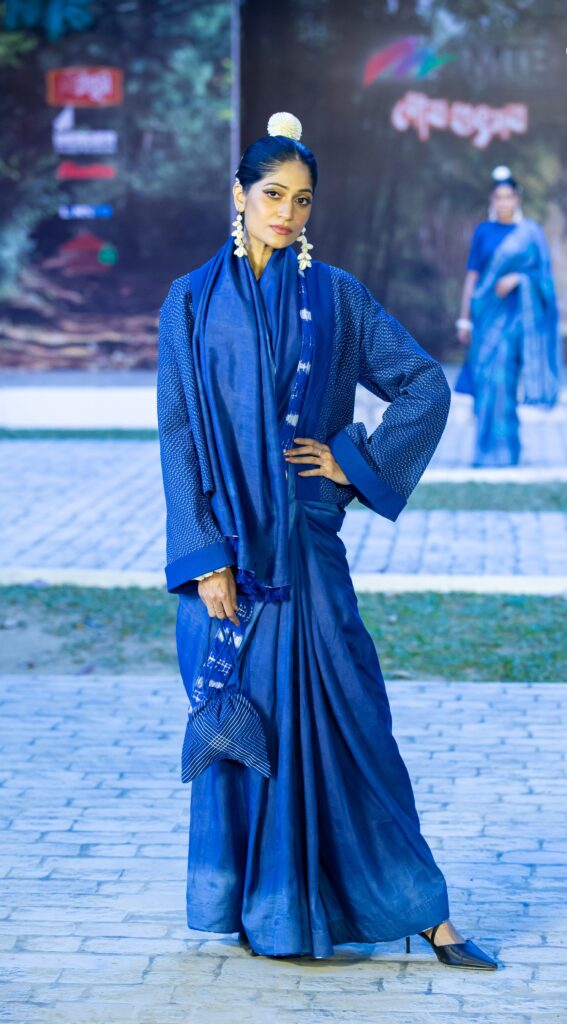
Rich indigo drapes meet structured layers in this elegant, modern ensemble
In many ways, the fashion shows became a bridge between the past and the present, speaking to the soul of Bangladesh’s slow fashion movement where craftsmanship takes precedence over fast trends. Designers like Lipi, Shaibal, Shahrukh, Maheen, Imam, Rukhsana, Rupa, Rima, and Faiza each brought their unique voice to the runway, showcasing pieces that honored local weavers and age-old techniques while also appealing to modern aesthetics. The atmosphere was rich with texture and color, and for visitors, this blending of craft and couture offered a fresh take through which they can see Bangladesh’s textile as a living, evolving art form.
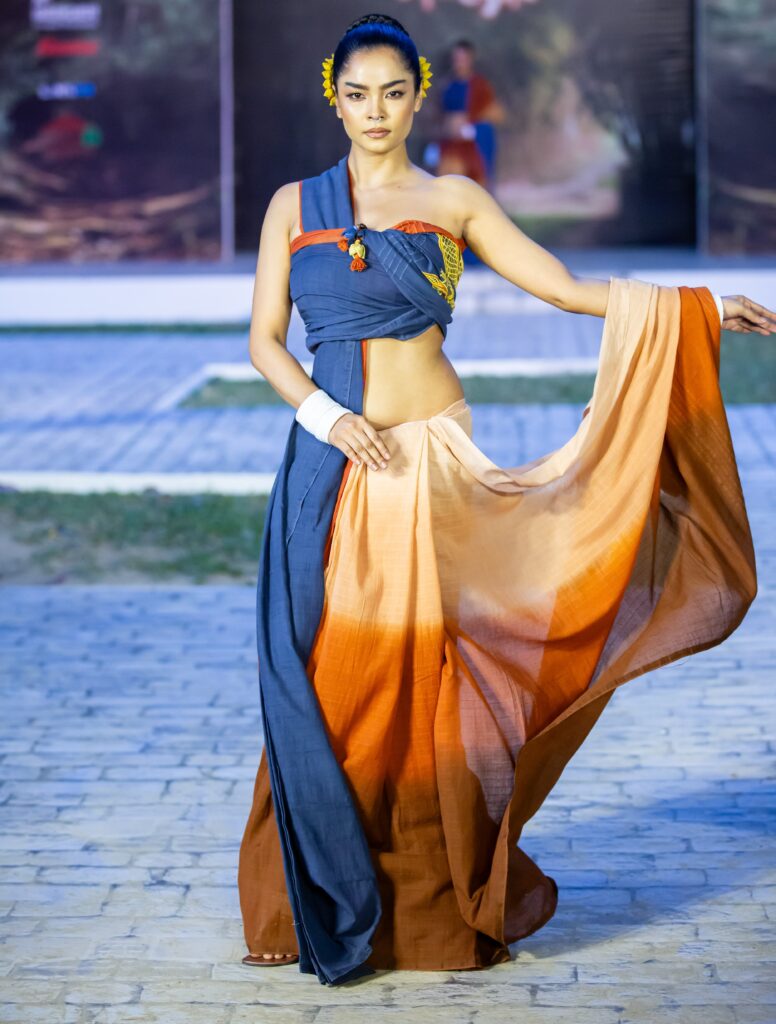
A sunset caught in silk, draped with the poise of ancient royalty
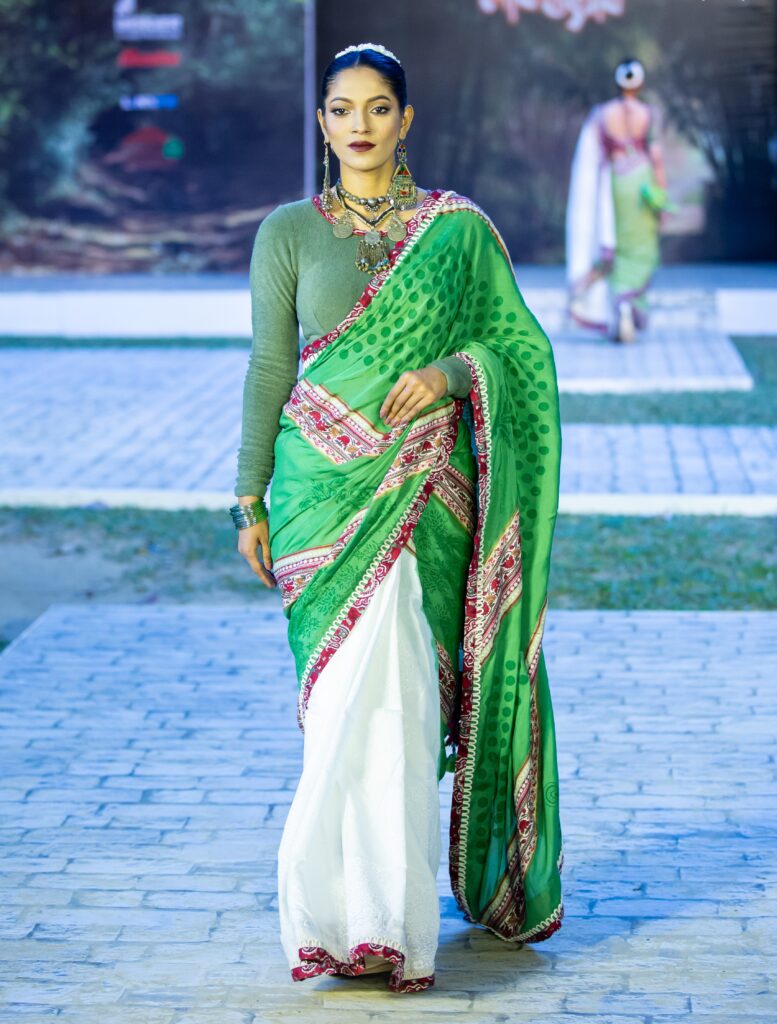
Earthy greens dance on pure white
Elegant beauty in every drape
Among the many collections that graced the runway, what captivated me most was the interpretation of Bengali muslin fabric brought into a contemporary context by Sanjida Haque. While muslin itself carries centuries of history and rarity, she translated its soft, airy quality into garments that were new. What I loved personally was how the pastel hues and delicate weaves gave classic muslin a modern touch in gentle tones that embodied a subtle elegance that seemed to float down the runway. This blend of heritage fabric with a refined, contemporary palette was an indication towards a future where tradition continues to inspire new forms of expression.
After the fashion shows, the Poush Utshab continued to celebrate Bengal’s cultural richness through a series of vibrant performances that kept the festival spirit alive. The evening segments highlighted traditional music and dance, with the rhythms of folk songs and Lalon melodies filling the park, creating a sense of connection between the audience and the rural roots of the festival. Dance performances celebrated both classical and folk movements, while Rabindra Nritya added an elegant, lyrical layer to the proceedings, blending poetry and motion seamlessly.
One of the most memorable highlights was Dholcholon, a special seasonal dhol performance that brought energy and warmth to the chilly winter air. The drummers, hailing from Moulvibazar, infused the event with a lively, communal rhythm that resonated with both children and adults, bridging generations through music. These performances, following the fashion showcase, served as a reminder that Poush Utshab was a living, breathing celebration of Bengal’s intangible heritage, where music, dance, and storytelling intertwined to create a festival that was nostalgic and refreshingly immediate.
All the images are provided by the organizers