


A century-old relic of railway history
By Ayman Anika
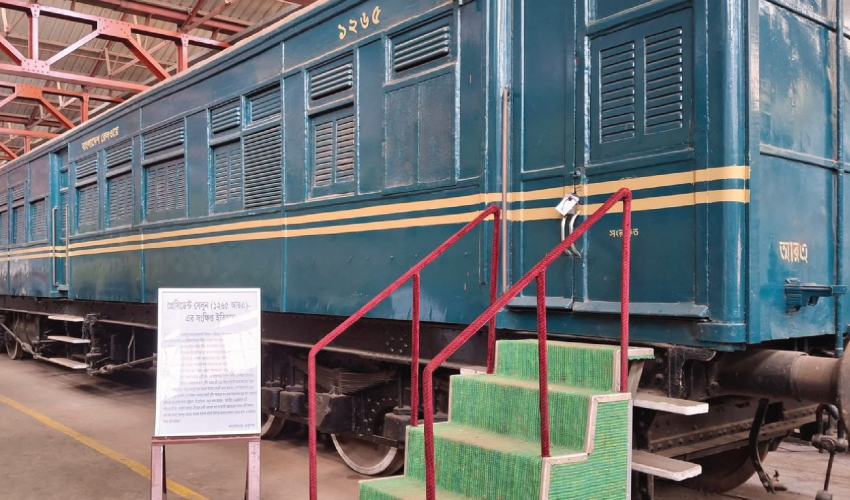
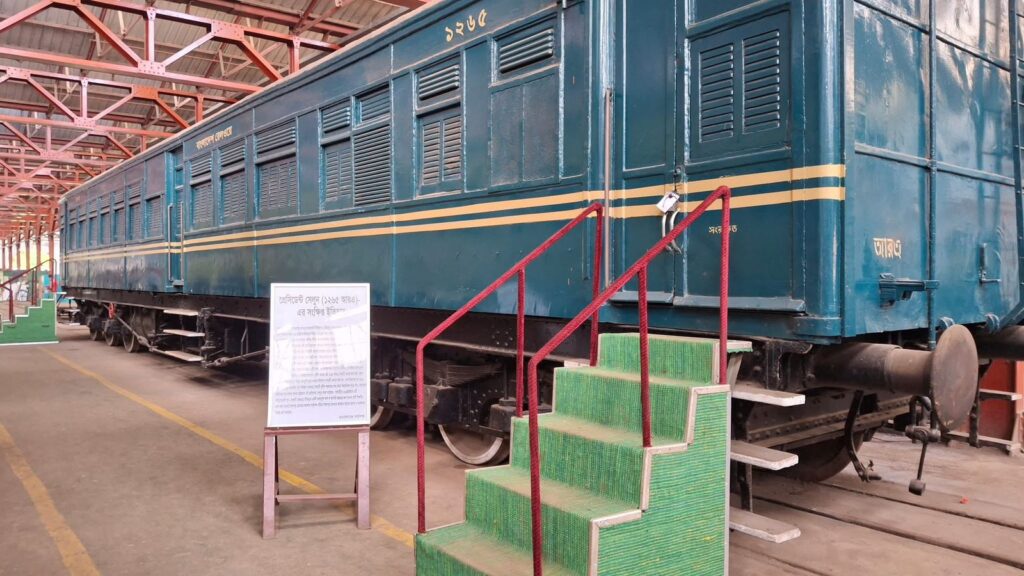
Inside the Saidpur Railway Workshop in northern Bangladesh, where locomotives are repaired, and coaches are routinely dismantled and rebuilt, one railway carriage remains untouched by the everyday rhythms of railway work. Carriage 1265 RA, officially known as the Presidential Saloon, is stored inside the Carriage Shed, locked, sealed, and preserved as a historical artefact.
It is not part of any running train, nor is it accessible to the public under normal circumstances. Yet its presence inside the workshop carries a weight that few other railway assets can claim.
This carriage does not represent transport in the conventional sense. Instead, it stands as a physical record of colonial power, post-Partition history, and the evolution of state symbolism in South Asia.
Built for Royal Travel
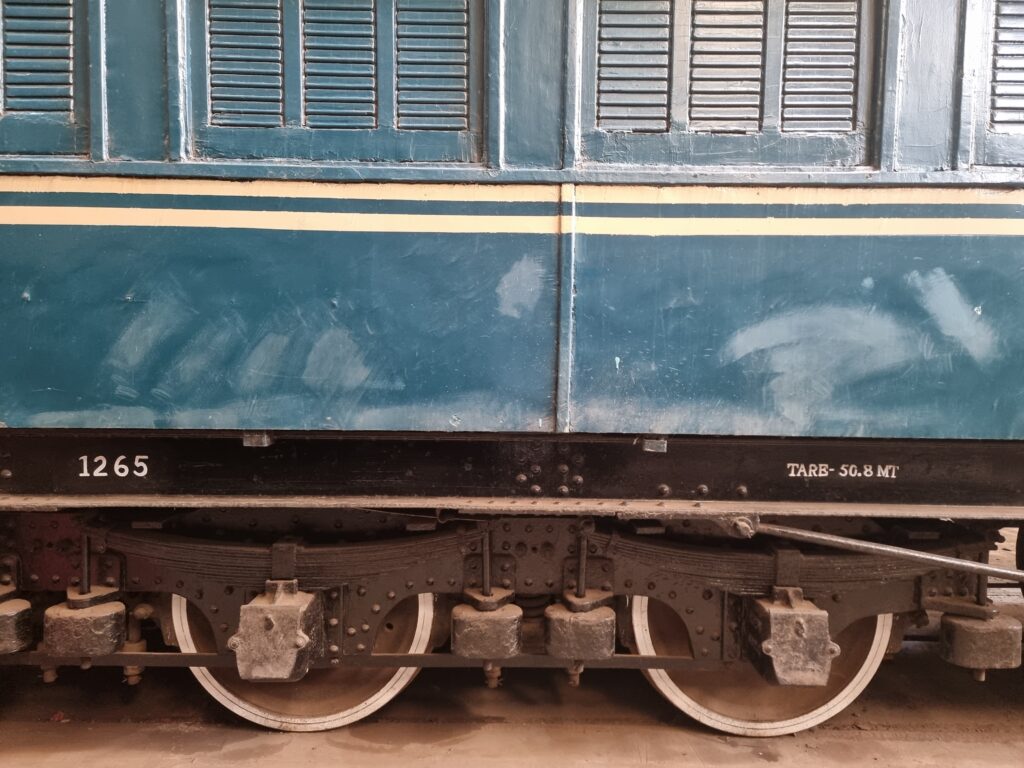
Carriage 1265 was built in 1927 in Britain, specifically for royal travel during the colonial period. Historical records indicate that it was constructed for the personal use of Queen Elizabeth, intended to function as a self-contained mobile residence during official tours.
At the time, railways were the backbone of administrative movement across the British Empire, and such saloon carriages were designed to meet the demands of privacy, security, and comfort for the highest-ranking figures.
Unlike standard passenger coaches, this saloon was engineered with a residential layout rather than rows of seating. It reflected a belief that authority should not adjust to travel, but that travel should be adjusted to authority.
Accessing a Sealed Relic
Gaining access to carriage 1265 can be uncertain. The coach remains sealed at all times as part of its preservation protocol. However, with special permission, the carriage can be visited.
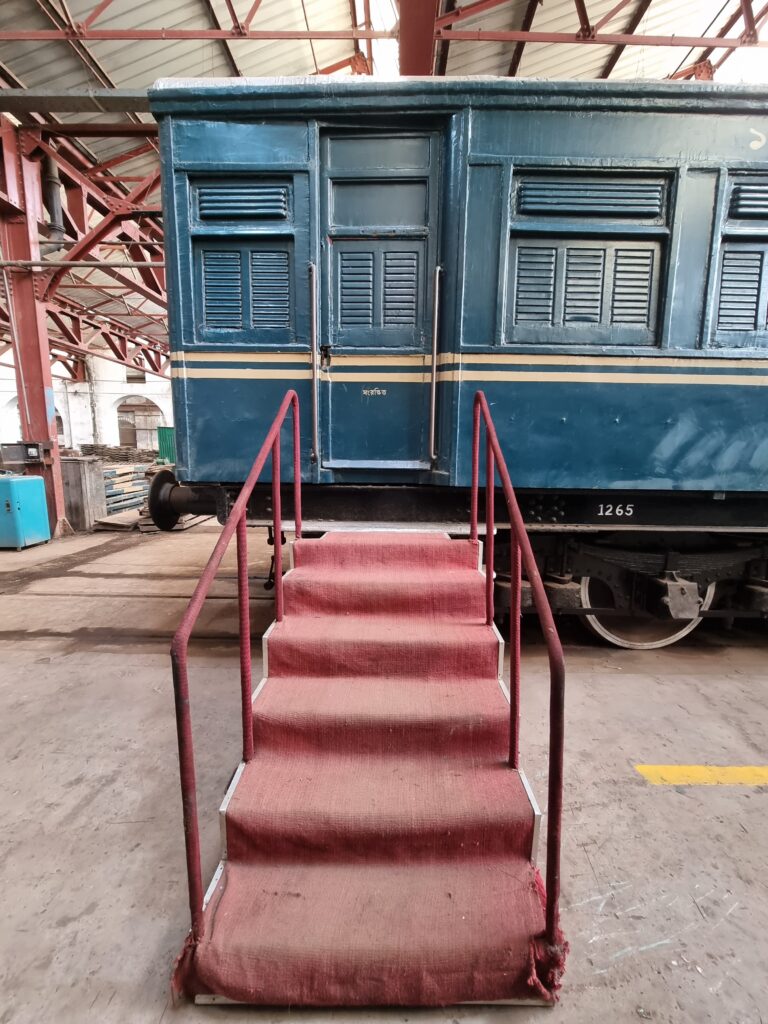
Climbing the steep, narrow steps covered in green carpeting, visitors can enter a space that immediately defies expectations. The sense of stepping into a railway coach disappeared almost instantly, replaced by the impression of entering a compact but complete household.
A House Inside a Coach
The internal layout of carriage 1265 is methodical and hierarchical. Immediately beyond the entrance is a security guard room, positioned to control access and ensure constant surveillance. This was a practical necessity for royal travel, especially in unfamiliar territories.
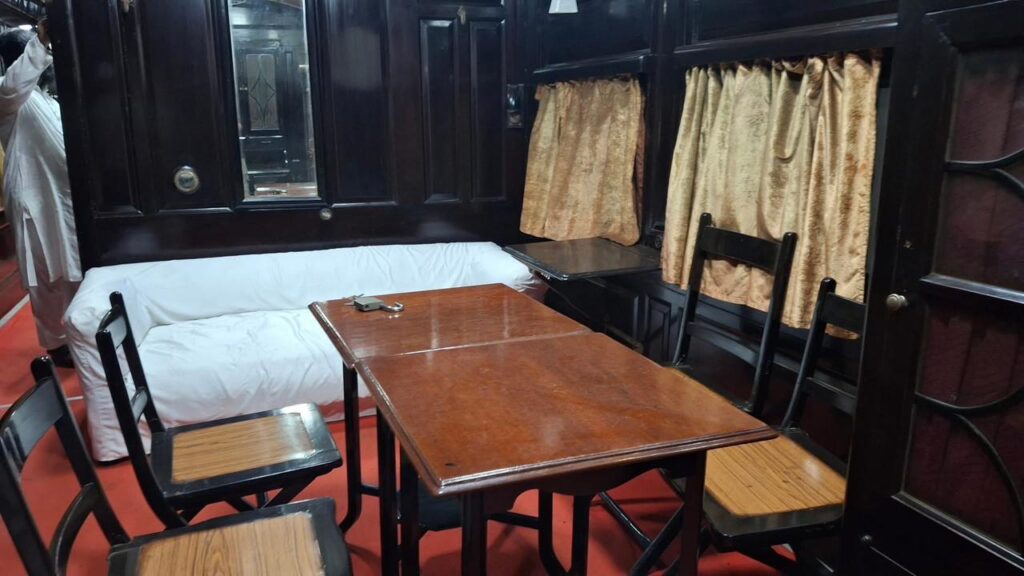
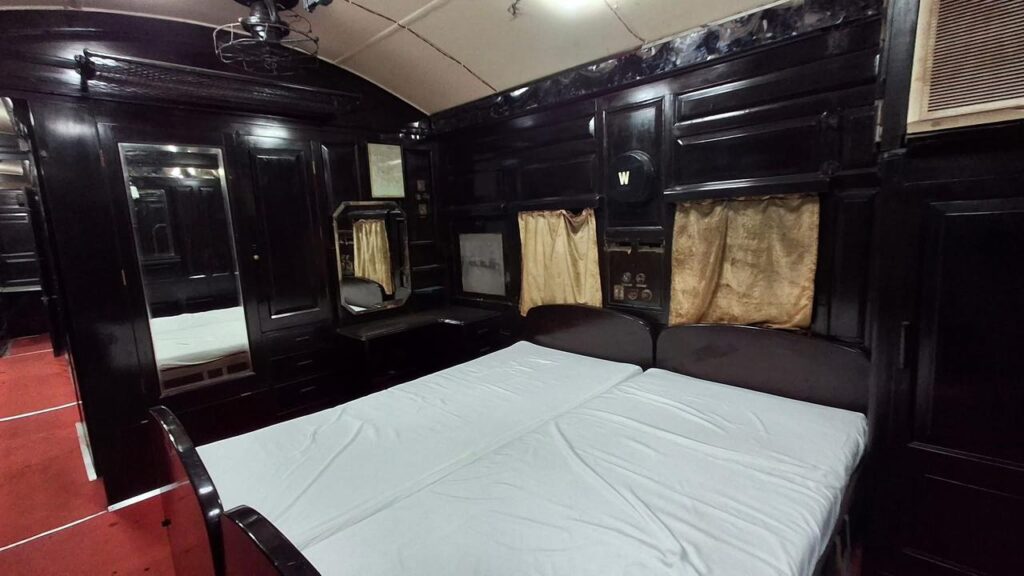
Beyond this space opens a large living room, furnished with a substantial sofa, chairs arranged around a central table, and covered in a red carpet. The walls and ceiling are entirely wooden, finished with dark polished panels that suggest both durability and status. Windows are fitted with curtains, and mirrors are placed to expand the sense of space within the narrow body of the coach.
The living area leads to two single-bed bedrooms, each equipped with built-in wardrobes and dressing tables. Storage is integrated into the structure, allowing for long journeys without compromising comfort.
Attached to these bedrooms is a smaller chamber containing a single bed and a washbasin. This room was likely intended for an attendant or senior official accompanying the Queen, reflecting the layered structure of service within the carriage.
Facilities Rare for Their Time
Further inside, the carriage reveals a bathtub-equipped bathroom, followed by a separate toilet. Such facilities were extremely rare in railway coaches of the early twentieth century, particularly in the Indian subcontinent.
Their inclusion highlights the technical capabilities of British railway manufacturing at the time, as well as the expectation that royal passengers should experience minimal disruption to their daily routines while travelling.
At the end of the carriage is a fully equipped kitchen. Compact but functional, it allowed food to be prepared on board, removing reliance on station stops or external arrangements. In effect, the carriage functioned as a self-sufficient unit, capable of supporting extended travel without logistical compromise.
From Empire to Nation-State
Historical records note that two such royal saloon carriages were sent from Britain to India for royal tours. Following the Partition of 1947, one carriage remained in India, while the other was transferred to Pakistan. After Bangladesh’s independence in 1971, the carriage that had belonged to Pakistan came under Bangladeshi ownership.
Over time, its role shifted from colonial transport to state symbolism. In Bangladesh, the carriage became known as the Presidential Saloon, reflecting its use by heads of state rather than colonial royalty.
The Last Journey
The last Bangladeshi president to travel in carriage 1265 was Hussain Muhammad Ershad. After his use of the saloon, the carriage was retired from active service. The decision was influenced by changing operational realities, modern security requirements, and the impracticality of maintaining such a specialised coach within contemporary railway systems.
Its retirement marked the end of its functional life, but not its historical relevance.
Why Carriage 1265 Matters
Today, carriage 1265 RA stands as one of the most significant artefacts in the history of Bangladesh Railways. It captures multiple layers of history within a single structure: colonial ambition, the legacy of Partition, and the transition to an independent nation-state.
More than a symbol of luxury, the carriage illustrates how infrastructure can embody political power. It shows how design adapts to hierarchy, and how mobility was once engineered to accommodate authority rather than efficiency.
Preserved in Saidpur, the Presidential Saloon no longer travels. Yet it continues to move through history, carrying stories of empire, governance, and the enduring material traces of power along the rails of Bangladesh.