



The ‘Alo’ art exhibition at Prothom Alo
By Ayman Anika
In February this year, the fire-damaged building of Prothom Alo in Karwan Bazar became the site of an unusual art exhibition. Instead of repairing the space and returning it quietly to routine use, the building itself was transformed into a gallery. The exhibition, titled “Alo” (Light), was held from February 18 to March 2, inviting the public to experience contemporary art inside a place that had recently witnessed violence.
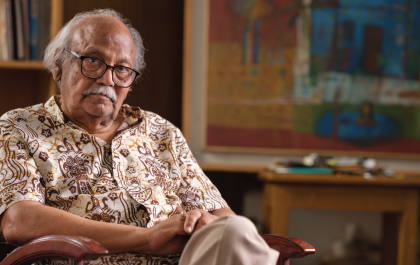
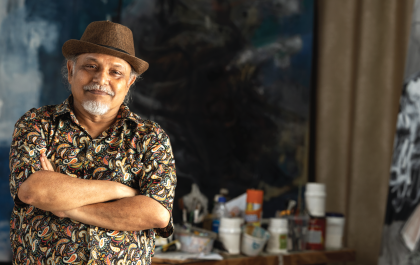
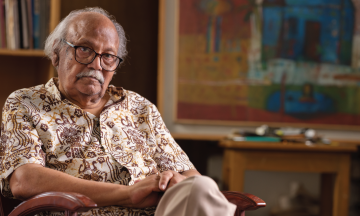
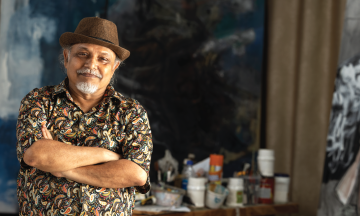
The exhibition was created by Bangladeshi contemporary artist Mahbubur Rahman. His work used the damaged environment not simply as a background but as a central element of the artistic narrative. The charred walls, exposed surfaces, and fractured architecture of the building became part of the installation.
Visitors entering the exhibition encountered a space where art and architecture blended. Rather than hiding the marks left by the attack, the exhibition allowed them to remain visible. The result was a setting that encouraged viewers to reflect on destruction, resilience, and the role of creativity in responding to crisis.
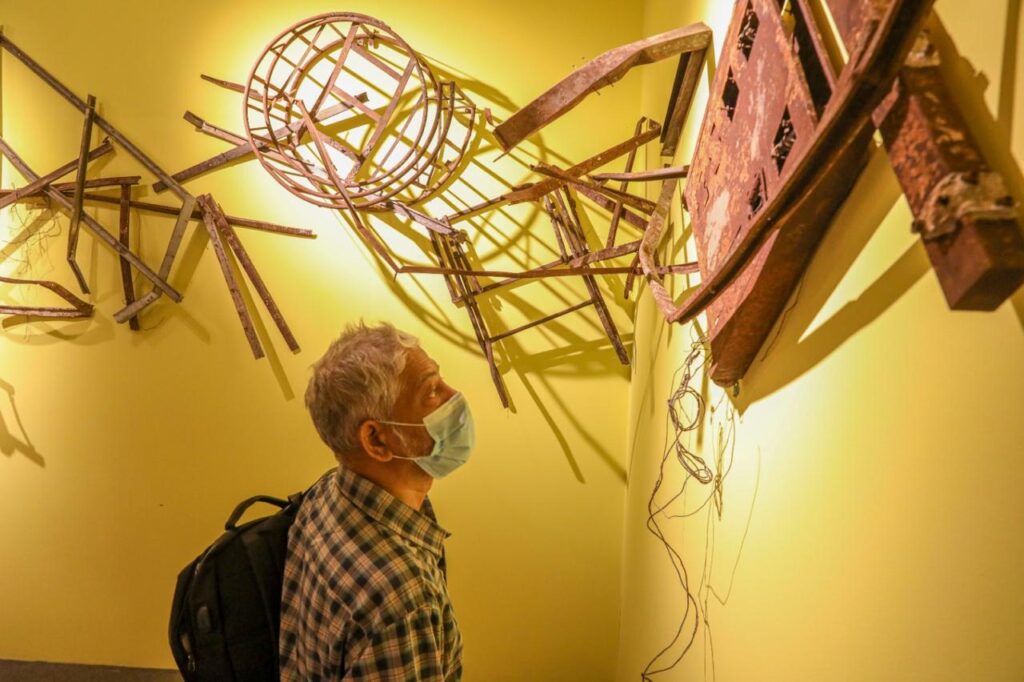
A structure built from fragments
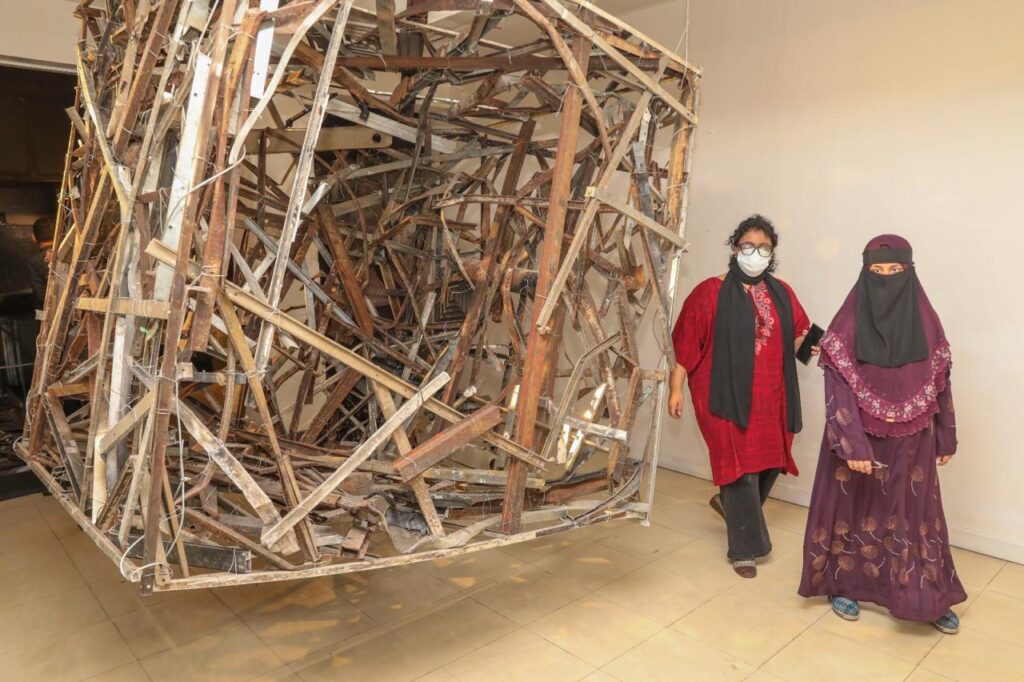
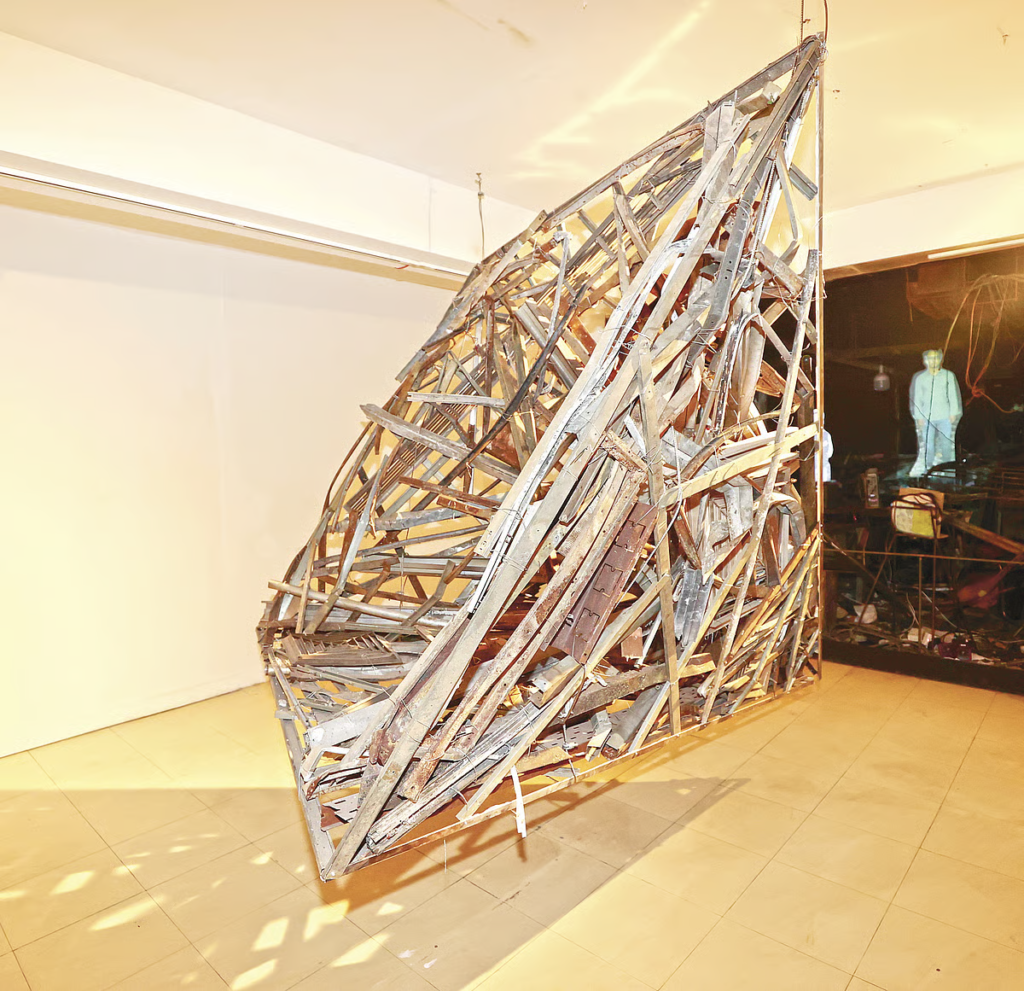
At the centre of the exhibition stood a large sculptural installation constructed from wooden beams, planks, and construction materials. The structure rose vertically inside the room, forming a dense cluster of intersecting wooden elements. From a distance, it resembled the frame of a building that had collapsed or been frozen in the process of reconstruction.
The installation did not follow a conventional symmetrical form. Instead, it appeared layered and irregular, with pieces leaning against one another at different angles. This arrangement created openings where natural and artificial light could pass through.
As visitors moved around the installation, the light shifted constantly. Shadows changed across the walls and floors, creating an atmosphere that evolved throughout the day. The work, therefore, relied not only on physical materials but also on light as an active component.
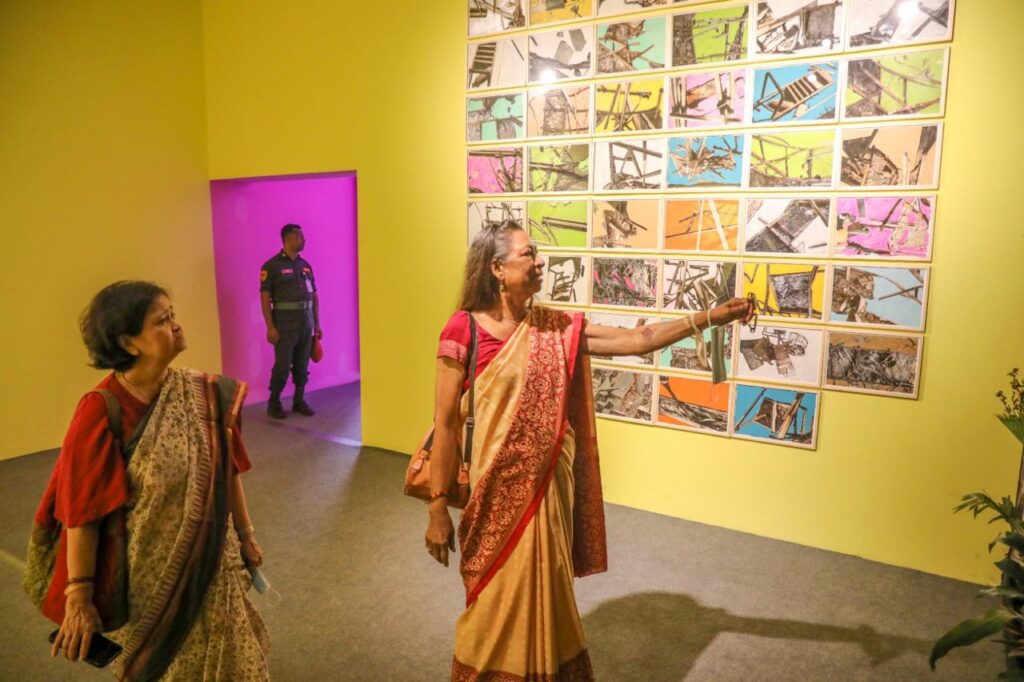
Light as a central idea
The title “Alo” translates to light, but the concept extends beyond illumination. In the context of the exhibition, light symbolised awareness, reflection, and the possibility of clarity after darkness.
The damaged building made this theme especially meaningful. Light entering through the fractured structure interacted with the broken architectural elements of the room. The effect suggested that even in spaces marked by destruction, light can still pass through and reshape how the environment is perceived.
Transforming a newsroom into a gallery
The decision to hold the exhibition added a strong symbolic dimension. The building had been targeted during political unrest, leaving visible damage to the structure.
Instead of concealing that history, the organisers chose to confront it through artistic expression. The exhibition turned the damaged building into a temporary public space where art could prompt discussion about resilience, freedom of expression, and the social role of journalism.
The exhibition was open to visitors daily from late morning until afternoon hours. Students, artists, journalists, and members of the public visited the installation over the two weeks. The organisers later extended the exhibition by two additional days due to public interest.
Art as a response to crisis
In Bangladesh, contemporary art exhibitions are typically held in galleries or cultural centres where the environment is carefully curated. “Alo” challenged that tradition by using a space marked by recent violence.
By situating the exhibition inside the damaged building, the organisers allowed visitors to confront both the physical scars of the attack and the creative response that followed it. The building, therefore, functioned as more than a venue. It became part of the artwork itself.
The exhibition, in the truest sense, served another purpose. It demonstrated how art can reinterpret a difficult space and invite the public to reflect on the relationship between destruction, memory, and renewal.
Photos: Prothom Alo