



The Beauty of Cane Furniture
By Ayman Anika
In an age of polished concrete, sleek plastics, and mass-produced design, cane furniture is making a quiet but steady comeback. Not just as a nostalgic aesthetic, but as a design philosophy. Lightweight, breathable, tactile, and handmade, cane carries with it a history woven into its very structure. It speaks of verandahs and village afternoons, of tea breaks and monsoon breezes. Yet somehow, it has found a firm place in minimalist urban homes, boutique cafés, and even luxury interiors.
What Is Cane, Really?
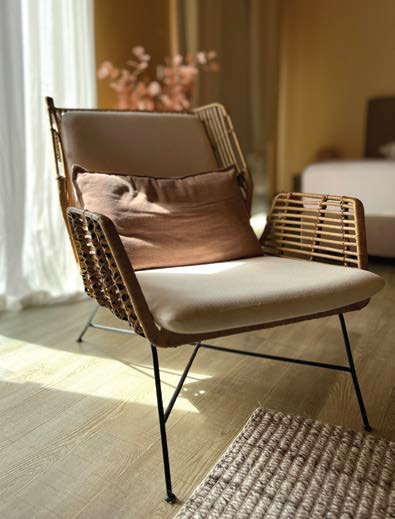
Cane refers to the peeled, processed stems of rattan: a fast-growing vine native to parts of South and Southeast Asia, including Bangladesh. Unlike hardwood, which can take decades to mature, rattan regenerates quickly, making cane a far more sustainable choice. It’s flexible, sturdy, and naturally light, allowing artisans to bend it into elegant curves and detailed weaves without industrial tools.
In Bangladesh, cane craft is deeply rooted in indigenous knowledge systems, particularly among communities in Sylhet, Chittagong Hill Tracts, and parts of Mymensingh. These artisans don’t just manufacture furniture. They coax it into being, using time-honored techniques passed down through generations.
Aesthetics That Breathe
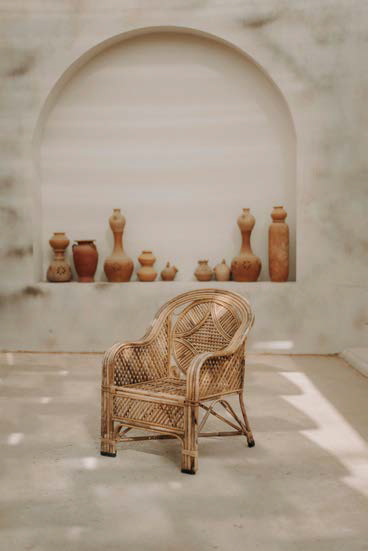
There is a visual and tactile softness to cane that sets it apart from most modern furniture. Where metal is cold and glass unyielding, cane is warm and yielding. A cane chair doesn’t just sit in a room. It invites you in. The natural hues blend seamlessly into interiors that lean rustic, bohemian, Japandi, or even mid-century modern.
More than anything, cane furniture breathes. In tropical climates like Bangladesh’s, this is not just a design perk. It’s functional necessity. Unlike dense materials that trap heat, cane’s woven surface allows air to circulate, making it ideal for hot and humid homes.
A cane divan under the window. A babui dolna (swing chair) in the corner. A glass-topped cane table paired with mismatched chairs. These are not just Pinterest-worthy visuals, they are practical design choices made beautiful.
Built for Small Spaces, Designed for Big Feeling
As urban homes shrink in size, the lightweight nature of cane furniture has made it especially popular among city dwellers. A full cane sofa weighs a fraction of what a hardwood set might, making it easier to move, repurpose, or even store. Many brands now offer modular or customisable cane pieces so you can tailor them to your apartment’s exact proportions.
Beyond logistics, there’s something deeply comforting about cane. It offers a sense of grounding in a fast-paced, concrete-heavy world. A hand-woven bench tells you someone made this slowly. Carefully. Intentionally. That feeling travels with the piece into your home.
Sustainability Woven In
Today, sustainability is no longer a buzzword, it’s a necessity. And cane, by its very nature, is an eco-conscious material. Unlike plastic or metal, which require energy-intensive processes, cane can be harvested, treated, and shaped using simple tools and minimal waste. Even the offcuts and scraps are often used in smaller crafts or burned as fuel.
Supporting cane furniture also means supporting cottage industries, women’s cooperatives, and artisan communities that are increasingly under threat from imported goods and factory-made clones. When you buy a cane chair made in Cumilla or Sylhet, you are not just purchasing a product, you’re preserving a livelihood and a local story.
Beyond the Basics: Contemporary Cane
Gone are the days when cane was limited to generic chairs or “grandparent furniture.” Today’s designers are pushing boundaries, combining cane with brass, glass, and reclaimed wood. You’ll find angular coffee tables, asymmetrical bookshelves, cane headboards framed in steel, and even lighting fixtures that cast stunning woven shadows.
Interior designers are increasingly treating cane as a texture, not just a structure. In cabinetry, for example, cane panels are being used as inserts to break up wooden monotony and allow for airflow, perfect for wardrobes or kitchen shutters.
Architects too, are exploring cane in spatial design: room dividers, screens, even wall claddings made from woven cane are being used to create softness and tactility in spaces that are otherwise hard-edged.
A Return to Intention
Cane furniture invites us to ask different questions: Who made this? How long did it take? What plant did it come from? These are questions we rarely ask in a world of flat-pack furniture and throwaway interiors. And yet, they are questions that bring us closer to our spaces and to ourselves.
There is something undeniably poetic about furniture that bends instead of breaks. That ages gracefully. That smells of the earth it came from.
In a time when everything is designed to be replaced, cane reminds us that some things are meant to last. Not through permanence, but through adaptability.
Final Thoughts
The beauty of cane furniture lies not just in its form, but in its philosophy. It is light but strong. Delicate yet durable. Rooted in craft but open to innovation.
Whether you live in a sprawling house or a 600-square-foot apartment, a single cane piece can bring rhythm, story, and softness into your space.
And maybe, just maybe, it’ll remind you to pause. To sit down. To feel the breeze on your back through the gaps in the weave.
In a world of noise, cane furniture is a quiet song worth hearing.