


Tracing the fault lines of a forgotten storm
By Ayman Anika
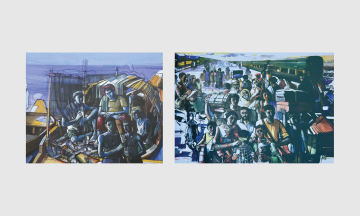
Some documentaries inform, and then there are those that haunt. Monpura 70, produced by Pradip Ghosh in collaboration with Shilpacharya Zainul Abedin’s son, Mainul Abedin, lands squarely in the latter category. It doesn’t just recount the devastation of the 1970 Bhola cyclone, the deadliest tropical cyclone in recorded history, it reanimates it, peeling back the layers of neglect, grief, and collective forgetting that have settled over time like sediment. At the center of this excavation is a singular work of art: Monpura 70, the monumental scroll painting by Shilpacharya Zainul Abedin.
But this is not a documentary about a painting. It’s about why that painting had to be made.
A Land Torn Apart
The Bhola cyclone struck East Pakistan (now Bangladesh) on November 12, 1970. Over half a million lives lost, most of them poor, most of them rural, and almost all of them invisible to the powers that be. The disaster is often cited as one of the key catalysts of the Bangladesh Liberation War. And yet, in the global imagination, it barely registers. Even in national memory, the cyclone is often overshadowed by the war that followed.
Monpura 70 forces us to look and not just look, but feel. Ghosh doesn’t waste time with dramatizations or glossy reenactments. Instead, he gives us something rarer: context. Archival footage, government records, old radio broadcasts, they emerge not as dry historical artifacts but as relics of a bureaucratic machine that sputtered in the face of catastrophe. The film has a quiet fury humming under its surface. You sense it in the editing: the long silences, the abrupt cuts to battered coastlines, the unflinching gaze on mass graves. It’s restrained, but it’s not neutral.
And then, into this void walks Shilpacharya Zainul Abedin.
The Artist as Witness
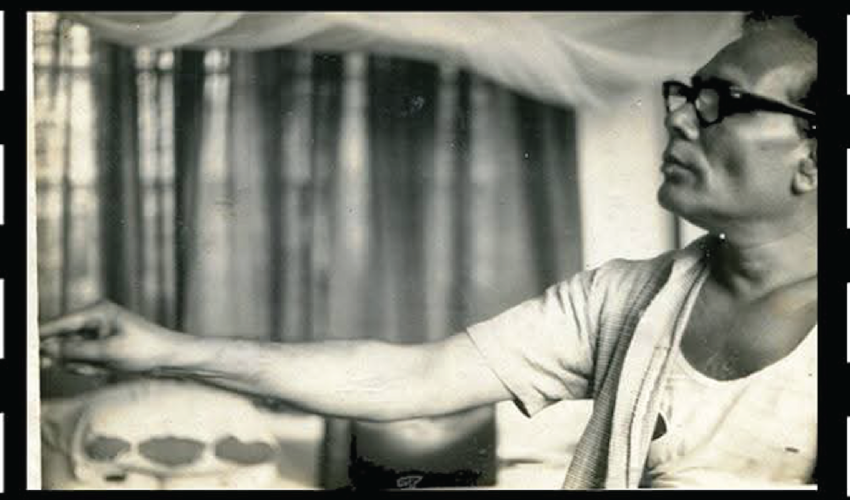
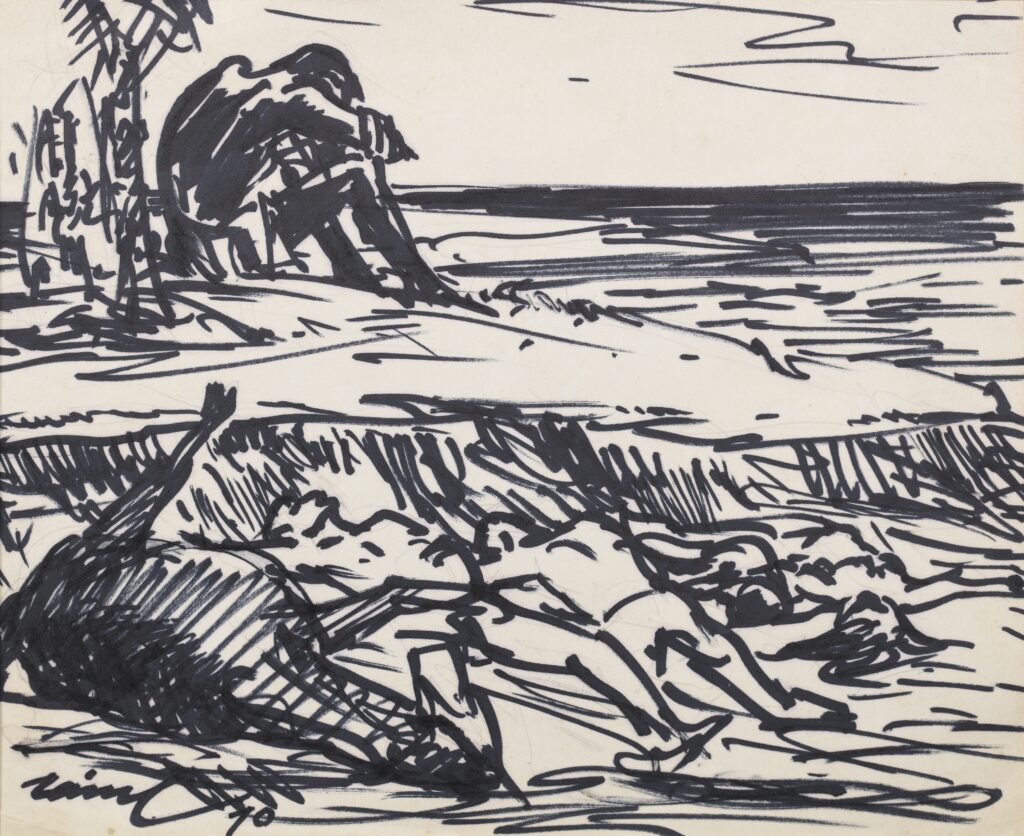
To call Shilpacharya Abedin a national treasure feels reductive. He was more like a moral compass disguised as an artist. Known for his 1943 Famine sketches, stark black ink drawings that documented the Bengal Famine, Shilpacharya Abedin had a long history of turning tragedy into testimony. But Monpura 70 was different. It wasn’t just reactive art. It was immersion. It was grief with a brushstroke.
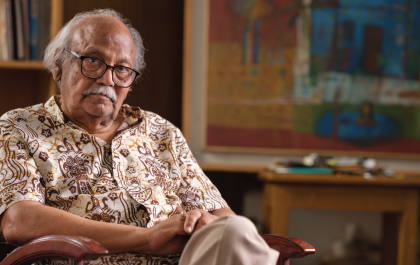
The documentary’s most powerful passages come when we hear from his son, Mainul Abedin. With a mix of pride and pained reverence, he recounts how his father, then in his late fifties, packed his sketchbooks and went to Monpura — not with a camera crew, not for a photo op, but to sit with survivors, listen to them, and watch. Shilpacharya Abedin wasn’t just documenting devastation; he was absorbing it. Ghosh follows this journey with empathy, never mythologizing it but letting it unfold in quiet, devastating fragments: the corpse-littered fields, the orphaned children, the salt in the air that seemed to sting the canvas itself.
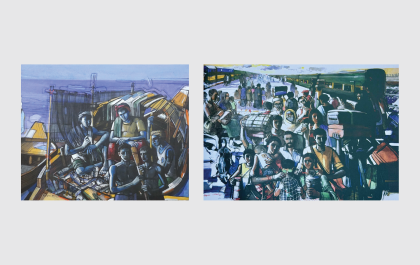
The actual scroll painting, Monpura 70, clocks in at over 30 feet. The documentary treats it less like an object and more like a survivor, a living, breathing witness. Ghosh uses close-ups and slow pans over the scroll, but never fetishizes it. The camera lingers on certain brush strokes: a mother clutching her dead child, boats overturned like broken ribs, villagers staring out with eyes that accuse. These are not abstract gestures; they are precise, documentary lines. Shilpacharya Abedin didn’t imagine this horror. He saw it.
Form as Memory
What makes Monpura 70 (both painting and film) extraordinary is how they reject the impulse to sanitize or distill. The scroll form itself is unruly; it doesn’t conform to the neatness of gallery frames or academic interpretation. You have to move to engage with it. You have to follow its story as it unfolds sideways, much like trauma itself.
Ghosh mirrors this aesthetic in the documentary’s structure. It doesn’t follow a clean three-act arc. It meanders, revisits, and contradicts itself. Survivors’ testimonies are not arranged into tidy narratives. Sometimes they trail off, or repeat, or collapse under their own weight. This is not sloppiness; this is memory as it exists in the real world.
One particularly affecting scene features a present-day return to Monpura by Mainul Abedin. The landscape has changed, the silt has shifted, the river has redrawn its edges, but the ghosts remain. There’s a moment when he stands in silence, holding a faded photograph of his father standing in the same spot decades ago. Nothing is said. Nothing needs to be.
A Political Absence
It’s tempting to call Monpura 70 apolitical, but that would miss the point. Its politics are subtle but scathing. The film doesn’t editorialize much about the Pakistani government’s failure to act during the cyclone, but it doesn’t need to. The silence is indictment enough. The absence of state rescue, the delayed relief, the death toll that skyrocketed not just because of nature but because of negligence, all of it is embedded in Shilpacharya Abedin’s painting. And by extension, in Ghosh’s film.
In one scene, a survivor recalls how helicopters dropped relief packages days late, often too far to reach. Another shows old letters written by Shilpacharya Abedin to government officials urging better documentation of the disaster. There’s no dramatic payoff, no last-minute redemption. Just slow, persistent injustice, the kind that wears you down rather than knocks you out.
Art as Resistance
What makes Monpura 70 remarkable is its refusal to treat art as ornament. Shilpacharya Abedin’s scroll is not meant to be admired. It’s meant to provoke, to shame, to remember. And Ghosh understands that. He doesn’t try to make the film beautiful; he tries to make it honest. There’s a rawness to the cinematography, an occasional roughness in sound mixing, that somehow suits the subject. This isn’t a polished tribute. It’s an open wound.
By the end of the film, you’re left not with closure but with questions: What do we do with suffering once it’s been seen? What responsibility do we carry, as viewers, inheritors of history, and citizens of vulnerable geographies? Ghosh doesn’t pretend to answer them. But he does hand us something more powerful, a scroll unfurling across time, demanding not admiration, but reckoning.
Final Thoughts
Monpura 70 isn’t a film that wraps up neatly. It stays with you like silt in the lungs. It’s about disaster, yes, but also about the inadequacy of response. It’s about an artist who decided that witnessing was an act of defiance, and a son who continues that defiance through remembrance.
In a world that moves on too quickly, Monpura 70 insists on standing still. And sometimes, standing still is the most radical thing you can do.