


Khurshid Anwar Jasimuddin on Childhood, War, and Preserving a Cultural Legacy
By MWB Desk
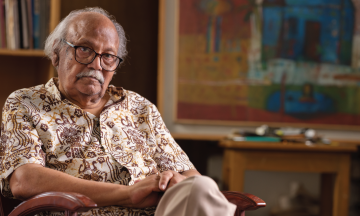
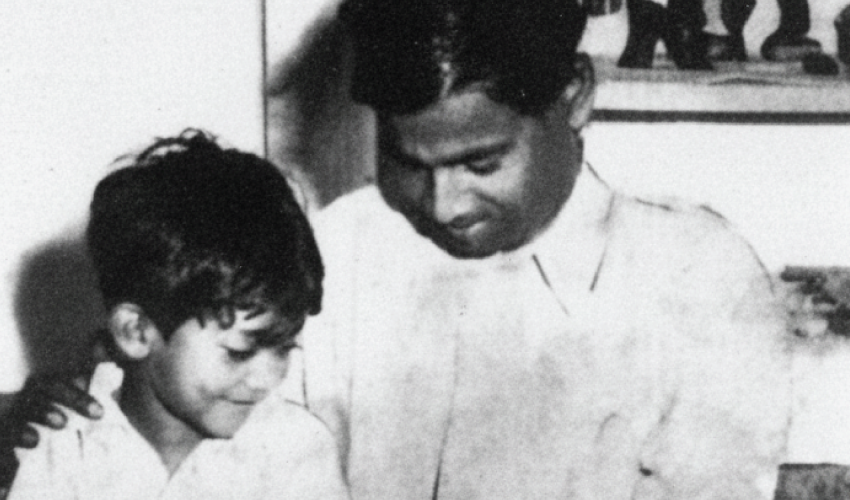
Khurshid Anwar Jasimuddin grew up in a household where literature, rural life, and intellectual curiosity coexisted. As the son of the celebrated Bangladeshi poet Jasimuddin, widely known as the Polli Kobi, his childhood unfolded within a family deeply connected to the cultural and intellectual life of Bengal. Yet his own path took a different turn from his father’s.
Rather than pursuing literature, Khurshid Anwar cultivated an early fascination with science and engineering.
Despite his professional life in engineering and years abroad, Khurshid Anwar has remained closely connected to his father’s legacy. Over the years, he has helped preserve Jasimuddin’s manuscripts, letters, and personal archives, donating materials to the National Museum and advocating for the protection of heritage sites associated with the poet in Faridpur and Dhaka.
With MWB, Khurshid Anwar Jasimuddin revisits those memories, sharing intimate childhood stories of the Polli Kobi at home, reflecting on his own journey across continents, and discussing the continuing responsibility of safeguarding one of Bangladesh’s most significant literary legacies for future generations.
What is your earliest memory of your father, not as a famous poet, but simply as a father at home?
When I was a very small child, I used to wait for him every evening. He would return home around seven or eight o’clock. The first thing he did was call my mother, and then he would call me by my name.
Behind our house, we had a large shed where we kept cows. My father loved animals deeply. Every evening, he would go to the cowshed to check on them, and naturally, I followed him there. At first, I was a bit afraid of the cows, but gradually I got used to them.
What was interesting was that we even had a radio in the cowshed. My father believed animals should listen to music. Sometimes singers would come to our house, and the music would reach the cows as well. Today, scientists say cows produce more milk when they hear music. My father had introduced music to his small dairy farm long before such ideas became widely discussed.
Where did you study in your early years?
My first school was very unusual for that time. It was called Khelaghor School, run by Hakim Bhai. The school followed the philosophy of the famous German educator Rudolf Steiner. At that time, it was an extremely progressive educational model.
Students could come to school whenever they wished. There was no rigid attendance rule. If a student did not feel comfortable in class, he could leave and return later. Even examinations were flexible. Students could take them when they felt ready.
Later, when I went abroad to study in Europe and America, people would ask me about my schooling. When I mentioned that my education had been influenced by Rudolf Steiner’s philosophy, they were quite surprised. They all knew his work and found it remarkable that such an educational experiment had existed in Bangladesh.
After that, I studied at St. Gregory’s School and later at Notre Dame College.
My first school followed Rudolf Steiner’s philosophy, which was extremely modern for that time. We were allowed to learn freely, without rigid rules, and that stayed with me throughout my life.
Your youth coincided with a turbulent political period. What role did you play during that time?
From a very early age, I was active in student politics and political discussions.
When the Liberation War began in 1971, I went to Faridpur to participate. There, I worked with several political leaders and student activists.
One of the responsibilities I was given was to assist foreign journalists who were coming to report on the situation. At that time, very few students spoke fluent English, so I became a useful bridge between them and the local people.
For example, I helped the journalist Colin Smith from the London Sunday Observer. I showed him evidence of the atrocities committed in Dhaka, including photographs from events like the massacre at Jaykali Temple.
Later, I travelled with these journalists to Calcutta. The Mujibnagar government eventually advised me to leave Bangladesh and go abroad rather than continue direct participation in the war.
During that period, you interacted with several well-known journalists. Can you tell us more about that?
Yes, I had the opportunity to meet several internationally known reporters and photographers.
Among them were Romano Cagnoni, a famous war photographer, and Colin Smith. When we reached Agartala, I also met Raghu Rai, who later became a very prominent photographer and editor in India. In Delhi, I met the Foreign Secretary of India. He asked me many questions about the situation in Bangladesh.
Those were extraordinary days. The world was slowly beginning to understand what was happening in our country.
During the Liberation War, I became a link between foreign journalists and what was happening on the ground. At that time, very few students could communicate in English.
How did growing up in such a culturally significant family shape your personality?
Interestingly, my father never tried to influence our career choices. He did not expect us to become writers or poets. I was personally very interested in science. As a teenager, I used to build model aircraft. My ambition was to become an aerospace engineer.
My father encouraged this completely. He believed children should develop their own interests freely. He never imposed his personality or profession on us. That freedom shaped my worldview. I learned that intellectual curiosity is more important than following a predetermined path.
You eventually studied abroad. How did that journey begin?
I first went to the United States, where I received a full scholarship. But I did not enjoy living in New York. The city was simply too large and overwhelming for me. So, I decided to move to Germany. My father did not initially approve of that decision, but I believed it was the right choice.
When I arrived in Germany, I faced a big challenge: I did not know the language at all. I had to learn German from scratch.
However, German universities offered great academic freedom. Once you were admitted, you could explore many subjects and structure your education according to your interests. That environment suited me very well. I studied there until 1978, working in research centers and gradually building my career in engineering.
What kind of work did you do after completing your studies?
I worked in several engineering institutions and industrial companies. At one point, I worked in a maritime museum in Hamburg, and later in a shipyard in Kiel.
I also worked at the famous Blohm+Voss shipyard in Hamburg.
Later, I joined a company called Montan Engineering. Through that company, I was assigned a project in Bangladesh to help build a locomotive overhauling station in Parbatipur.
Many of the machines installed there are still functioning perfectly today. German engineering companies played a significant role in building several industrial facilities in Bangladesh, including Eastern Tubes and diesel plants.
At one point in my life, I earned a lot of money, but I realised very early that running after more does not bring peace. If you have enough, that is enough.
Did your father’s literary background influence your own reading habits?
During my years in Europe, I was more drawn to European literature than Bengali literature. I read writers such as Thomas Mann, Heinrich Mann, and Klaus Mann. I was also fascinated by the works of Bertolt Brecht.
The German government provided cultural exposure to students. They gave us free tickets to theatres, opera houses, and symphony concerts.
When I watched Brecht’s theatre, I realized something interesting. His actors often spoke directly to the audience. It reminded me of Jatra, the traditional rural theatre in Bengal, where performers also interact directly with spectators. In that sense, our traditional forms were already very modern.
Did you maintain connections with artists and writers during that period?
Yes, many of my friends were artists and writers. For example, I knew the German writer Siegfried Lenz quite well.
In Bangladesh, I also had friendships with artists such as Shahabuddin Ahmed, who is now internationally known and lives in Paris. At one point, I even wrote an interview about Siegfried Lenz for the magazine Bichitra, whose editor Shahadat Chowdhury was my friend.
What steps have you and your family taken to preserve your father’s writings and personal archives?
One of the first things I did was donate many documents and personal items to the National Museum.
The government later built a museum near our ancestral home in Faridpur. I provided them with many of the materials and advised them on the process. However, I believe the old house and the museum should work together as a single heritage site. We are still trying to persuade the government to make that happen.
Ideally, both the Faridpur house and the Kamalapur house in Dhaka should be turned into museums.
What challenges have you faced in preserving his legacy?
One of the biggest disappointments for me was what happened to our house in Kamalapur. It was once a beautiful place with many trees and birds. We had planted almost every fruit tree that grows in Bangladesh. The house stood on four or five bighas of land.
Unfortunately, my siblings later divided the property and cut down many of the trees. Today, most of the land has been replaced by high-rise buildings.
Only my portion remains unchanged. I still keep cows there. Some people criticize me and say I am foolish for not building apartments and making money. But I believe once you have enough money, chasing more only creates problems.
We have tried to preserve father’s documents and archives, but there is still much more to be done. It requires both institutional effort and cultural awareness.
Are there still efforts being made to keep his books available?
Yes. In fact, one remarkable achievement is that around 95 per cent of his books remain in print across Bangladesh. My brother Jamal Anwar played a crucial role in maintaining the publications. Sadly, he passed away last year. After his death, the situation has become more difficult.
We now hope that the government will take greater responsibility in preserving and publishing these works.
Are there still unpublished materials from Jasimuddin’s archives?
Yes, many of his letters remain unpublished. My father worked very systematically. Unlike many poets, he carefully documented his work. He began his career as a researcher, so documentation came naturally to him.
I am currently trying to compile and publish a collection of his letters, which could provide valuable insight into his intellectual life and friendships.
Did your father maintain relationships with international writers?
He had a wide network of friends abroad. For example, he was acquainted with the famous American folk song collector Alan Lomax, who recorded Bengali folk songs for the Library of Congress.
He also visited the American poet Ezra Pound, who at that time was under detention for his political views during World War II. Many people avoided Pound because of the controversy surrounding him, but my father was brave enough to visit him.
What do you hope future generations understand about Jasimuddin’s work?
Many people think he simply wrote about village life. That is a misunderstanding.
His work is about human emotion, love, social conflict, and cultural identity.
In Nakshi Kanthar Math and Sojan Badiyar Ghat, he used many rupok or symbolic metaphors drawn from folk songs. His writing is layered. Just like a Van Gogh painting, you can discover new meanings each time you look at it. If Bangladesh wants to develop culturally, it must understand this human connection to the land and to its people. That connection exists deeply in his poetry.
After everything you have experienced, your childhood with your father, the Liberation War, your life abroad, and your efforts to preserve his legacy, what gives you a sense of purpose today?
I think purpose changes at different stages of life. When you are young, you are trying to build something for yourself: your career, your identity, your place in the world. I also went through that phase. I studied, worked abroad, earned well, and built my own life.
But later, you begin to understand that not everything is about personal achievement. Some things are bigger than you. History, culture, and memory become more important. When you come from a family like ours, you cannot ignore that responsibility.
Now, what gives me purpose is making sure my father’s legacy is not lost or misunderstood. It is not only about preserving books or documents. It is about preserving a way of thinking, a connection to the roots of this country, and a sense of humanity that exists in his work.
At the same time, I try to live simply. I have seen both sides, having a lot and needing very little. In the end, peace comes from understanding what is enough and holding on to what truly matters.
If future generations can read his work, understand it, and feel that connection to this land and its people, then I think I have done something meaningful.
I try to live simply. I have seen both sides, having a lot and needing very little. In the end, peace comes from understanding what is enough and holding on to what truly matters.
The interview was conducted by Abu Adnan Khan.