


By Abak Hussain
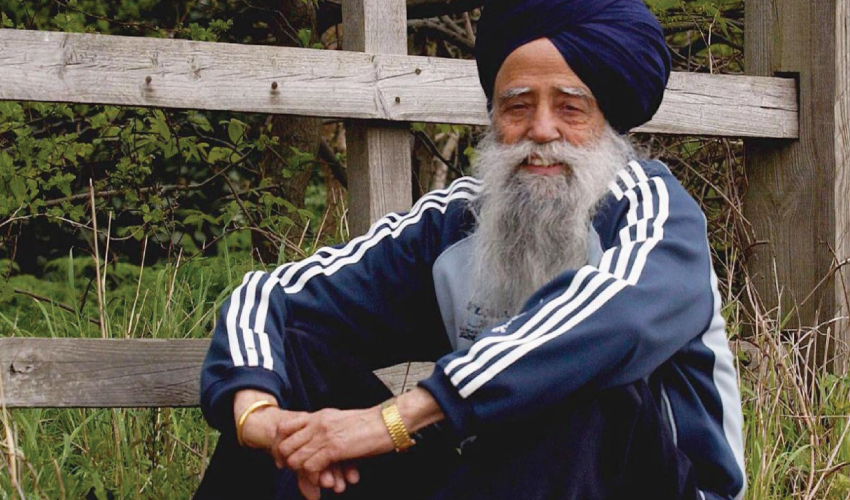
Fauja Singh’s death in a hit-and-run at his home village in India felt unspeakably tragic to his many admirers all over the world. Here was a man who cheated the grim reaper for 114 years, only to lose his life in a senseless accident while crossing the road. His fans, myself included, always knew that at his age, the possibility of being hit with his obituary was always there – after all no one lives forever. But like this? It feels like a cosmic betrayal, the wrongness weighs on our hearts, and it becomes harder to process our grief. Perhaps one way of dealing with it is to say, in the end, a natural death was never able to take Fauja, so healthy was he of body and mind, even until that fateful moment of the accident that took his life. And when you live for such an extremely long period, statistically speaking, the odds of a fatal accident only increase, so in the end, the odds caught up to him.
I say the odds caught up to him, but not bad luck. Fauja Singh has been through his share of tragedy. He lost his wife and soon afterwards lost his son, with much of his own life still to live. He was born in the village of Beas Pind in Punjab, India in 1911. Much discussion has taken place over this date of birth, many saying Fauja was not quite as old as he claimed to be. Guinness refused to ratify Fauja’s world record because they were unable to authenticate his age with satisfaction. Fauja’s reply of course, was there were no birth certificates in India back in those days, much less in rural areas.
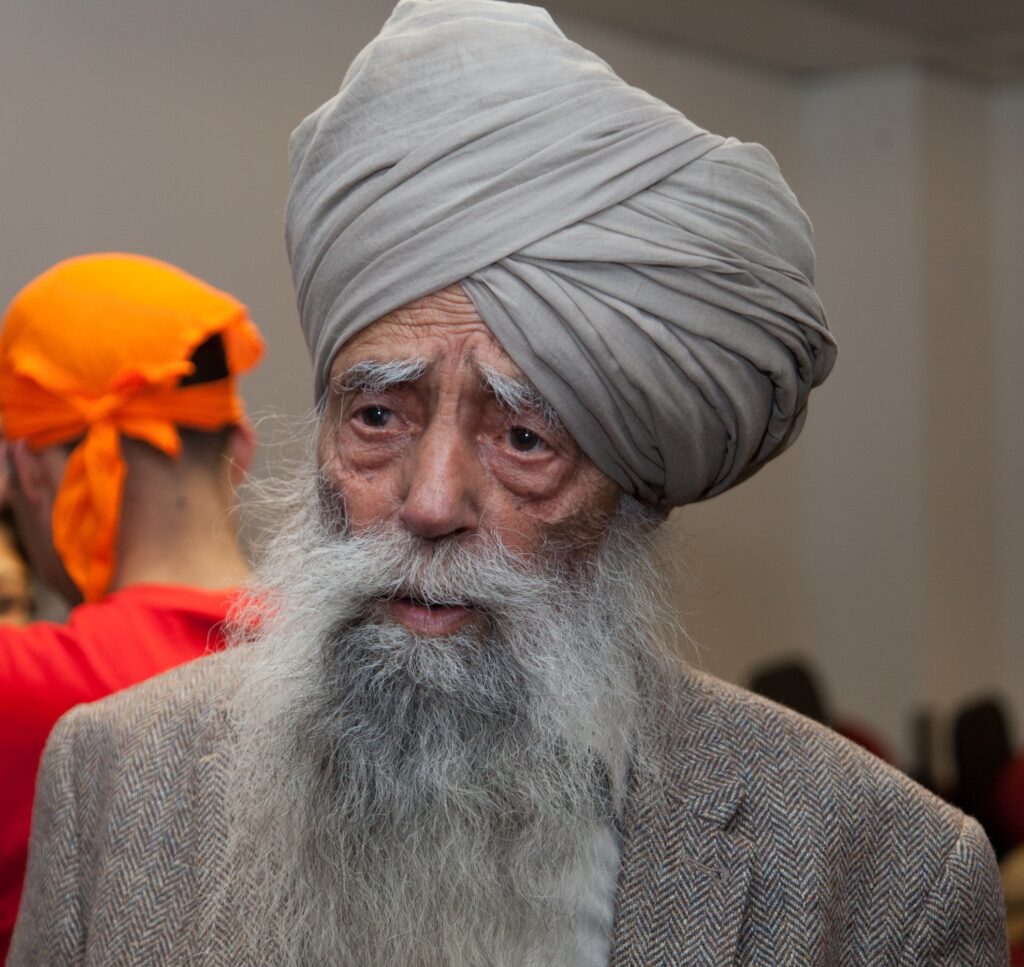
Nevertheless, the refusal by Guinness or the lack of any Masters athlete world record recognition has not dimmed Fauja Singh’s overall star, or the respect that athletes feel towards him all over the world. I personally don’t have enough evidence to comment on whether or not Fauja Singh was actually a jaw-dropping 114 years old at the time of death, but my personal opinion is … probably yes. He was indeed, that extraordinary. If you look at pictures of him when he first came to attention in his late-eighties/early-nineties, he certainly looks his claimed age. There is a picture of him with superstar athlete Milkha Singh (born in 1929) and while Milkha was no spring chicken, certainly next to him Fauja was looking super-ancient, easily old enough to be Milkha’s father. When Fauja recounts his childhood in the village, and goes over his rough timeline of coming to the UK, raising a family, or his running career which started after a lifetime of being a farmer, it seems pretty plausible that he indeed was born in 1911, so I am perfectly satisfied with his age claims, Guinness be damned. Also, who are we to argue with our elders?
He started running, as he said, to overcome tragedy. He said he ran while talking to God. And how beautifully he ran. No one had seen a nonagenarian or a centenarian run like that before. His first formal race was the London Marathon some 25 years ago. As a centenarian he ran the Toronto Waterfront Marathon. He was part of the highly publicized Impossible is Nothing campaign by Nike. He went on to set world records in numerous age categories, like 200m, 400m, 800m, 3000m, and one mile – none of them acknowledged formally. Did Fauja care? There’s no way to be sure, but probably not. What Fauja Singh got out of his running career went far beyond awards, recognition, or glory. His achievement was spiritual, and running kept him going.
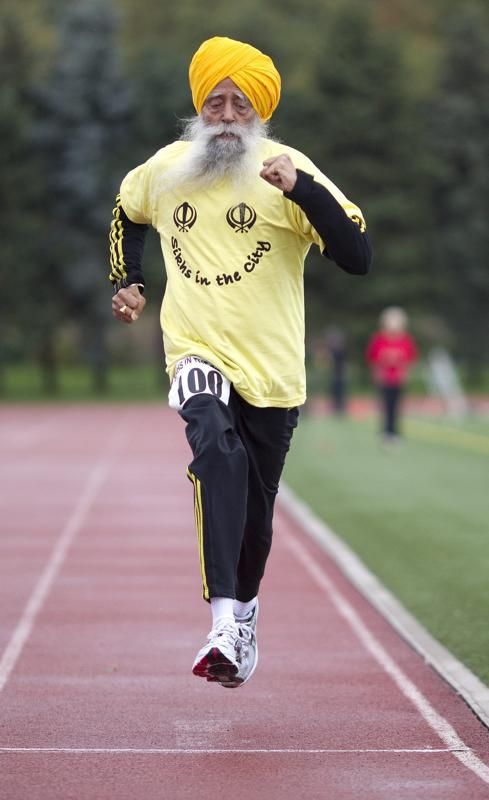
I have always found Fauja Singh inspiring beyond words. His background, his celebrity, his personality, everything is such an anomaly in relation to other famous athletes we may look up to. For a while, I even had his picture as my desktop wallpaper in my computer. During the pandemic I attended a zoom celebration of his birthday, where there was a discussion on his life and philosophy. Fauja was the ultimate marathon man, not just when running on the track, but in life itself. Marathon is all about endurance, perseverance in the face of pain and adversity and rejection that tells us to give up. Fauja never gave up. He curbed his expectations, kept his chin up, kept running, and kept going. His diet was a simple vegetarian diet of mainly Indian dishes. He trained but he never overdid it. Even though he was a British citizen and received a certificate from the Queen, he did not speak English, and did not read or write due to his lack of formal education. A print biography titled Turbaned Tornado by Khushwant Singh came out in 2011, but of course Fauja couldn’t read it. All of this makes Fauja a unique sort of role model relative to the obvious ones like, say, Novak Djokovic, or Ronnie Coleman, who, as I write this, is recovering from scary attack of sepsis which almost took his life.
One of the most inspiring marathon runners is a curious case – he holds no officially recognized world records, no Olympic medals, and has none of the glamor of the world of sports. His fame and celebrity was accidental, not something he actively chased. He was a humble, spiritual man who prayed every day, approached life with gratitude, and till the very end, kept going. Even on his last day on Earth, Fauja was on his two feet, crossing a street. Perhaps that means something. Perhaps not. Such are life’s cruelties.
May his light live forever in the hearts of his many fans around the world. Rest in peace, Turbaned Tornado.
Abak Hussain is Contributing Editor at MW Bangladesh.
All Images: Courtesy