


By Ayman Anika
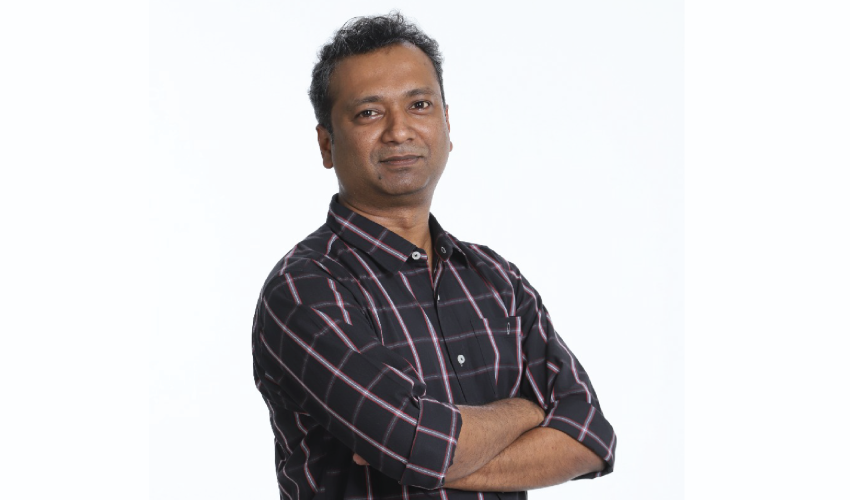
Tanim Noor’s directorial choices often live in the spaces between extremes—between fast-paced thrillers and gentle family dramas, between mainstream viewing habits and a more personal kind of cinema. He doesn’t follow trends; he tracks emotions, human rhythms, and the slow arc of a good story told well.
From directing the genre-bending detective series Kaiser to co-directing the emotionally textured Utshob, he is quietly reshaping what Bangladeshi storytelling can look and feel like—across both cinema halls and streaming platforms. He doesn’t believe in grand declarations about “changing the industry.” He believes in rhythm, restraint, and letting the work speak.
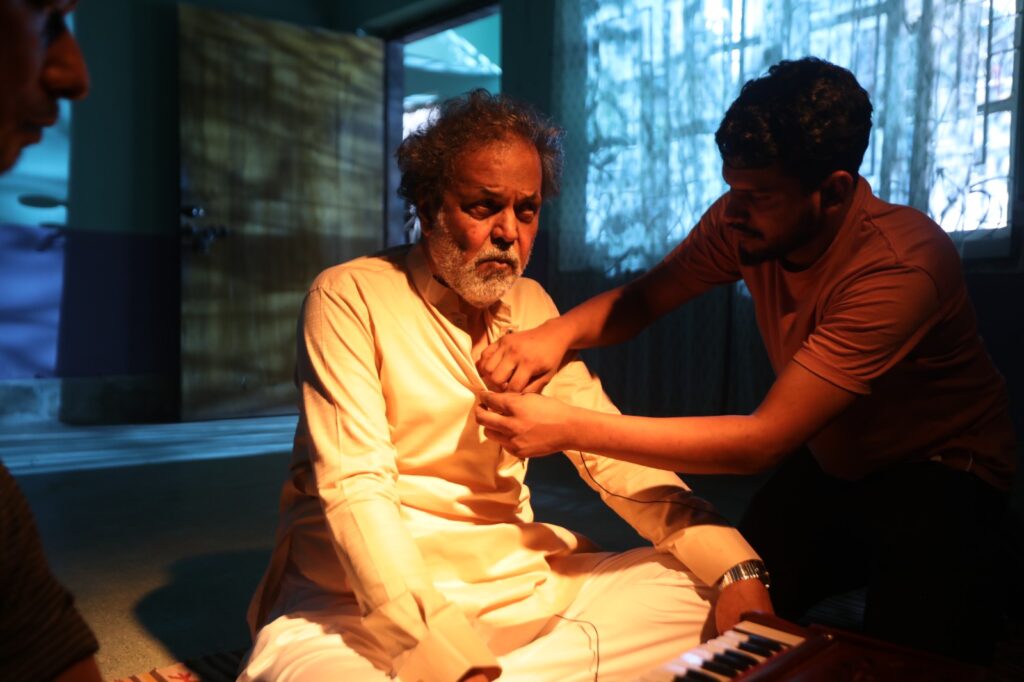
In this conversation with MWB, the thoughtful director opens up about childhood influences, the unpredictability of inspiration, and what’s next on his creative horizon.
In Utshob, you beautifully captured the quiet excitement of celebrations and, more importantly, emphasized the idea of families coming together—not just within the story, but also as an audience. Was there something in your own childhood—an experience, a rhythm of daily life—that shaped this sensibility?
The idea of community was a very personal one for me. I grew up in Dhaka during the 1990s, and back then, neighborhood life had a very different kind of warmth. There was a natural closeness among people.
Whether it was a festival, a wedding, or even something as simple as a cricket match in the alley, everyone joined in. Celebrations weren’t grand, but they were deeply felt. That sense of shared joy and collective memory really stayed with me, and I wanted to bring some of that spirit into Utshob.
One thing that especially stayed in my mind was Eid. Our Eid celebrations at home were always very simple, but meaningful. And I kept thinking—what if we celebrated Eid a little differently, with music and dance and everyone gathering under one roof, not just family, but the whole community? That thought became a seed for Utshob. I wanted to portray not just a celebration, but a feeling—a kind of nostalgia, a reminder of how festivals once brought people together. That’s why I hoped families would come to the cinema together to watch it—because at its core, Utshob is a film about shared moments.
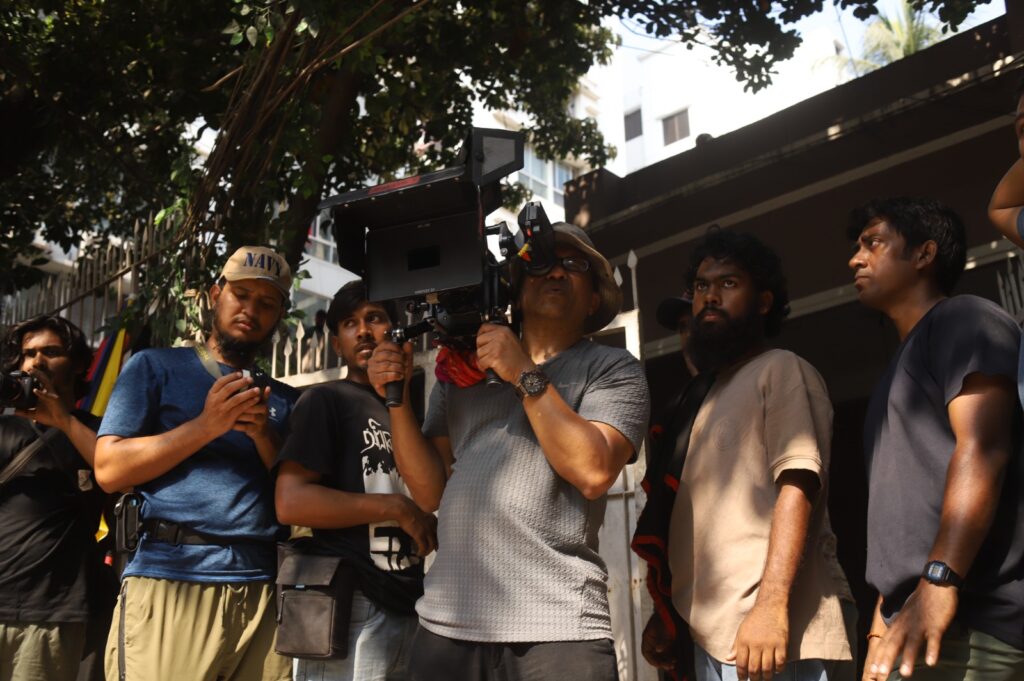
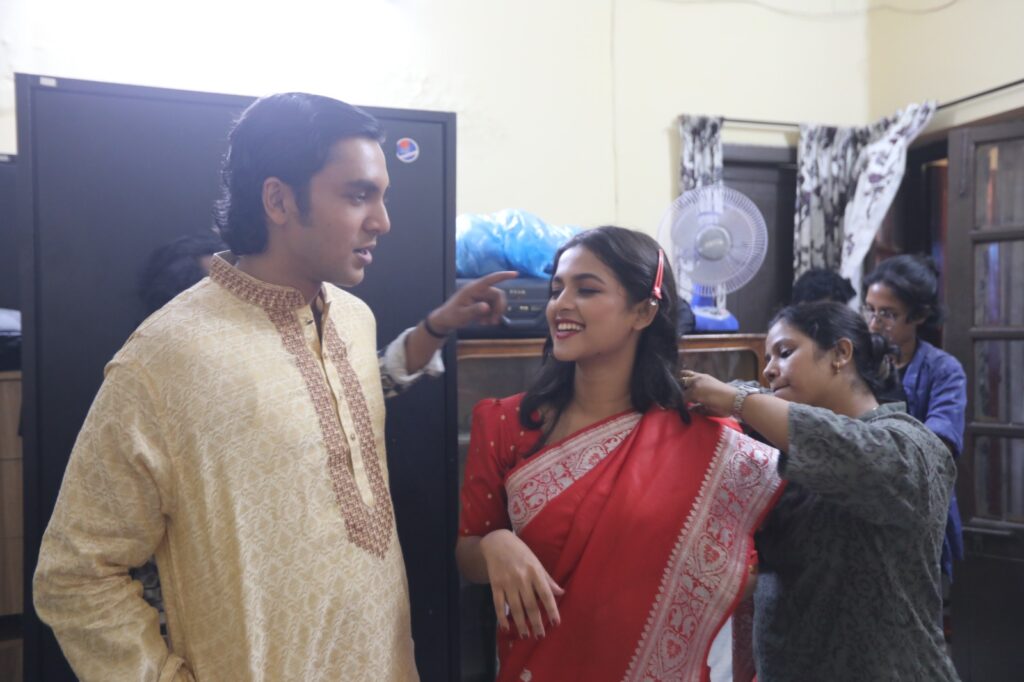
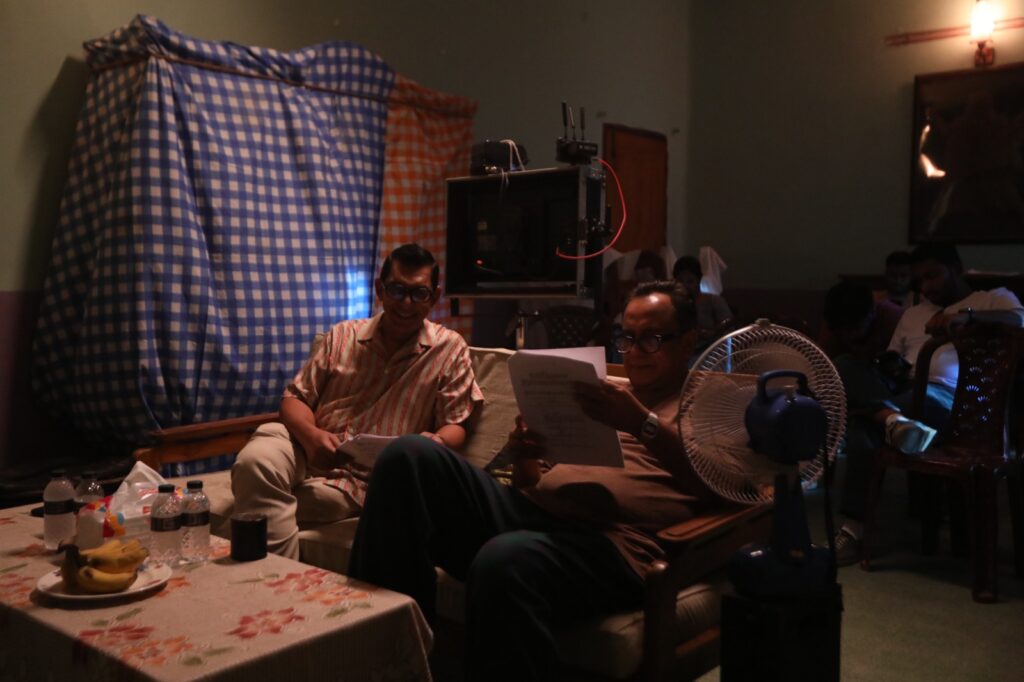
As for my childhood, I grew up in Shyamoli—Road No. 2, to be specific. I went to school at Dhaka Residential Model College, then Dhaka College for intermediate, and later Dhaka University.
My love for cinema started quite early. Back then, we had VHS tapes—so we’d rent cassettes from local stores. And of course, BTV (Bangladesh Television) was a big part of our lives. They used to show brilliant films on their “Movie of the Week” slot.
By the time I was in classes 9 and 10, I was already attending the film festivals in Dhaka. The Dhaka University Film Society would organize screenings, often in collaboration with various embassies. Watching those films on a big screen, surrounded by people who loved cinema—it was a turning point. That’s when the idea of becoming a filmmaker first started taking shape. Later, when I got into Dhaka University, I even joined the Film Club briefly. All of those early experiences—watching films at Modhumita, catching Titanic over and over again as a teenager, walking into Shyamoli Cinema Hall with wide eyes—they added up. They gave me both the emotional language and the dream.
So yes, Utshob wasn’t just about a fictional celebration. It was, in many ways, a return to a time and place that shaped me. A small tribute to the rhythms of my own childhood.
Were there specific people early in your journey – mentors, critics, collaborators – who helped sharpen your voice?
Not in a direct or formal way, no. There wasn’t one particular person who sat me down and guided me toward filmmaking. But if I had to name what truly shaped me, it would be the environment I found myself in after getting into Dhaka University. That space—and the people in it—played a huge role in how I grew creatively.
Back then, the cultural atmosphere around the university was very alive. We used to spend a lot of time at places like Aziz Market, and of course, TSC—the Teacher-Student Centre. It wasn’t about film school or structured learning. It was more about conversations, ideas, friendships, and just being around people who were curious and expressive. That kind of energy really pushed me to think differently, to question things, and to start imagining stories of my own.
So, while there wasn’t a single mentor figure, my friends at that time—our discussions, the films we watched together, the hours we spent just hanging out—probably had the deepest influence on me. That entire cultural ecosystem at Dhaka University shaped not just my worldview, but also the kind of filmmaker I would slowly become.
Do you find yourself making films about what you understand or about what continues to confuse you?
Honestly, it doesn’t quite work like that for me. I usually start with the story—something I personally enjoy. My choices are guided more by instinct than by a conscious decision to explore something I know or don’t know. I’m a big fan of both Hollywood and Bollywood films, so those influences are definitely there. But what I choose to make often depends on what I’m feeling at a certain time, or what’s happening around me.
Take Utshob, for example. I’d actually been thinking about adapting Charles Dickens’s A Christmas Carol for years—maybe four or five years. I wanted to find a way to connect it to Eid, because I felt we didn’t really have enough films that captured the emotional atmosphere of that time. Then, in February 2024, the idea just clicked. I was in Mohammadpur when I thought, “Why not set the story here, in this neighborhood, with this kind of energy?” And that’s how it began.
So, for me, it’s not about clarity or confusion—it’s more about what resonates with me in the moment. Sometimes the story comes from a long-held idea, sometimes from a passing thought. It’s situational, emotional, and often shaped by the world around me at that particular time.
You once said Utshob was meant to be a film for families. In a time of fractured attention and individual screens, what does it mean to you to create cinema that’s shared, felt collectively?
To be honest, the first and most practical reason I make films is because it’s my profession. This is how I earn a living. So, sustainability is a real concern for me—just like it is for anyone in their field. That’s always part of the equation.
But of course, alongside that—and maybe even before that—is my love for cinema. That love is what brought me here in the first place. So, it’s probably a mix of both. I don’t see myself only as an artist driven by pure creative impulse, nor do I see myself only as a technician making content for survival. I’m somewhere in between.
I have a very clear and honest view on this: I treat filmmaking as my profession. And my goal is to grow within that profession, to keep building something meaningful and lasting. The current viewing habits—people watching alone, the shift to individual screens—I do think about those things. But at the end of the day, I still believe there’s room for stories that bring people together. Whether that happens in a theatre, or at home, or even through quiet reflection after the credits roll—my hope is that the film leaves some kind of shared impact. But yes, first and foremost, I do this because this is my life’s work.
Kaiser follows a fast-paced mystery, while Utshob is slower and more emotional. Was your approach to directing them very different?
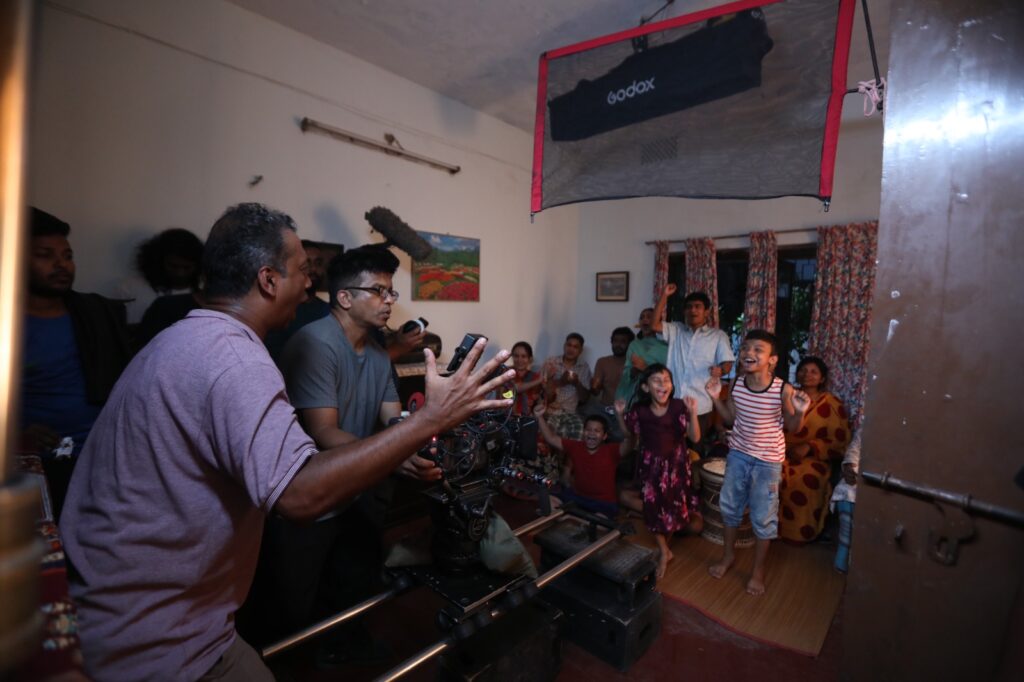
The approach was quite different, and that was intentional. Utshob was designed to be a feel-good film—a light, emotional family drama. From the beginning, I knew I wanted it to be something that families could watch together without discomfort. That meant keeping the tone gentle, the pacing unhurried, and the emotions sincere. It’s a film about small moments, about people coming together—and I wanted the audience to feel that togetherness.
In contrast, Kaiser wasn’t built that way. It had a darker edge, more psychological tension, and a faster rhythm. The genre demands a different kind of attention. With Kaiser, you’re pulling the audience into a mystery, keeping them on their toes. So naturally, my approach had to shift. The camera work, the pacing, even the way the characters were revealed—it all had to serve that atmosphere of suspense.
But at the end of the day, a story is a story. Whether it’s made for streaming or the big screen, what matters most is how honestly it’s told. That said, the experience of releasing Utshob in a cinema hall was something else. You really can’t compare it to the streaming experience. In a hall, you can feel the audience reacting in real-time—the laughter, the silence, even the restlessness. As a director, that’s incredibly valuable. With streaming, it’s a more individual, quiet kind of viewing. Both have their place, but if I get more chances to release films in theatres, I’d absolutely want that.
On OTT platforms, we’re now seeing a wave of young directors experimenting with different kinds of stories and storytelling styles. In your view, is there anything missing in this new movement—or something that could still be added to make it even better?
Honestly, I think the young filmmakers we’re seeing now are incredibly talented. What’s missing isn’t creativity or skill—it’s opportunity. Many of them just haven’t had the platform yet to show what they can do. But the sooner they get that chance, I truly believe we’re going to see a surge of outstanding work. In fact, I’m sure that some of them will go on to make films far better than ours. I say that with full confidence.
Even now, on various OTT platforms, we’re already witnessing the rise of some brilliant young voices—people who are thinking differently, who are unafraid to take risks. And there are many more out there, waiting. Once they get the space to tell their stories, they will do wonders. No one will be able to stop them. It’s just a matter of time and access.
What helps you unwind?
Music. Definitely music. That’s the one thing that always helps me slow down, clear my head, and feel recharged. I’m a huge fan of rock and roll—I listen to rock music from all over the world, including Bangladesh. At the same time, I really enjoy today’s electronic music too. I think both styles have their own energy, and depending on my mood, I go back and forth between them.
What stage is your next project in?
I’m currently developing a new project that’s planned for release during the next Eid-ul-Fitr. It’s also an adaptation, like Utshob. But unfortunately, I can’t share any specific details or the title just yet.
Photo Source: Courtesy