


By Neha Shamim
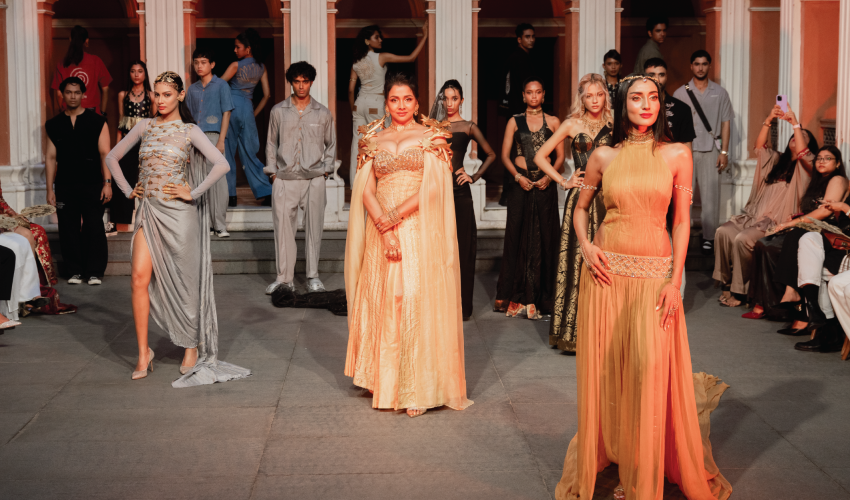
Morning at Boro Sardar Bari in Sonargaon had a quiet magic to it. The sunlight spilled across the old courtyard, warming the faded walls and highlighting the cracks and arches that have witnessed centuries of history. It was the perfect backdrop for Ami Dhaka’s latest showcase, a collection that bridged the past and the future in one seamless experience. There was a calmness in the air, but also an energy, the sense that something remarkable was about to happen.
Under the creative direction of Asad Sattar, the collection fully embraced Ami Dhaka’s philosophy of Heritage Futurism. This is a vision that doesn’t see the past and the future as separate, but as threads woven together into a single story. Structured silhouettes stood firm alongside flowing, ethereal forms. Fabrics familiar to Bengali heritage muslin, khadi, silk, and katan, were elevated with modern finishes, zardosi embroidery, delicate kantha, block prints, and Benarasi motifs reimagined for today. The palette was anchored in black and gold, colors that spoke of resilience, survival, and timeless transformation.
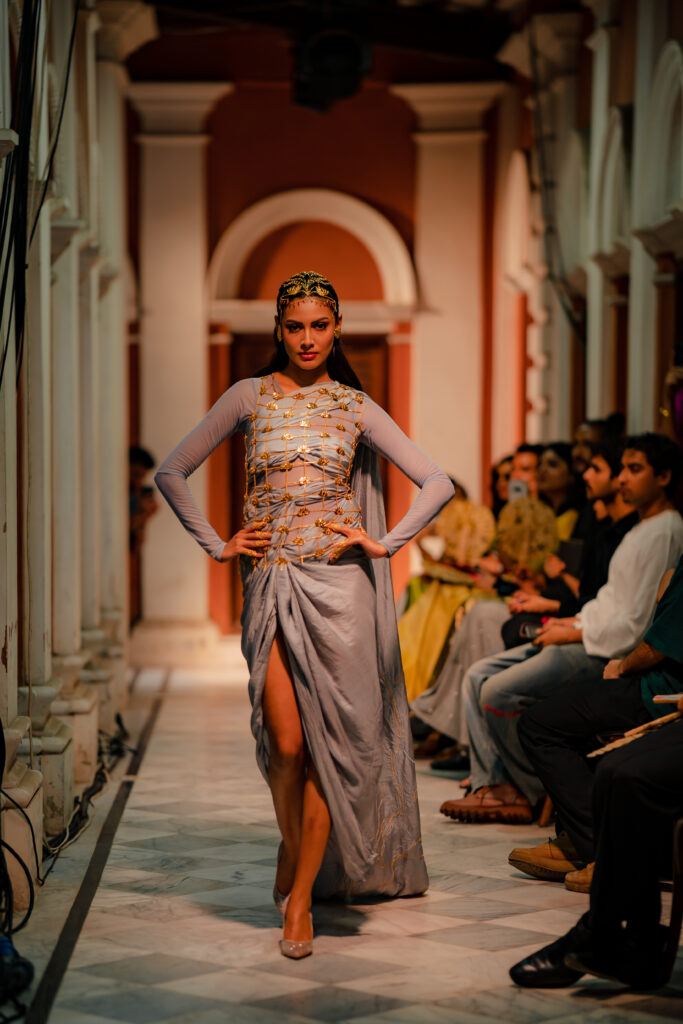
The collection unfolded in five acts, each inspired by a Bengali literary icon. The first, Rebirth, drew from Kazi Nazrul Islam’s Bidrohi, bringing a bold sense of transformation to the runway. Flowing scarves and sharply tailored jackets spoke of breaking free and reinventing oneself. Call of the River, inspired by Tagore’s Sonar Tori, moved like the waters of Bengal’s many rivers, carrying stories, journeys, and lives. Fabrics rippled and shimmered as if in motion, echoing centuries of travel and trade along the riverbanks. Heritage, borrowing from Jibanananda Das’s Smriti, took inspiration from the textures of old Dhaka, the worn bricks, the faded walls, the patina of time, translating them into contemporary silhouettes that felt familiar yet new. City of the Night, with Shamsur Rahman as its muse, captured Dhaka’s restless energy after dark, with edgy tailoring, flowing trousers, and subtle metallic touches that caught the morning light in unexpected ways. Finally, The Eternal Saree celebrated the saree not as a garment, but as continuity itself, a thread that links generations, black and gold weaving permanence into every fold.
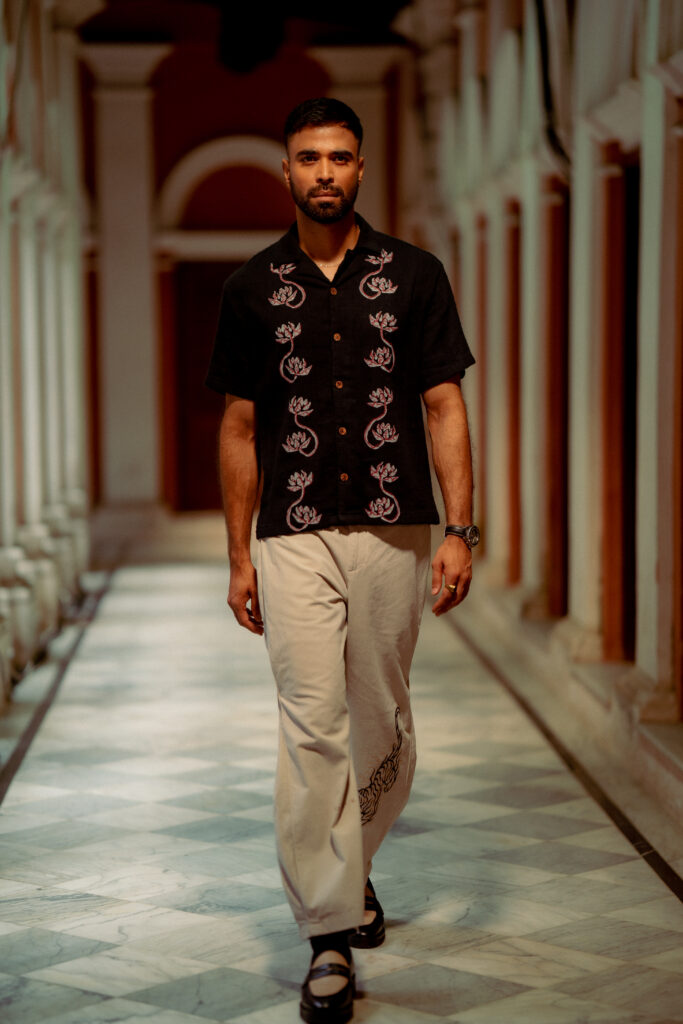
The craftsmanship was meticulous. Each stitch felt purposeful. Zardosi shimmered under the sunlight, kantha spoke of centuries of domestic artistry, and block prints were paired with hand-forged jewelry that complemented the textures of the fabrics. Every element carried intimacy, a human touch that made the garments feel alive, more than just pieces of clothing.
Models and celebrities brought the vision fully to life. Tangia Methila, Runa Khan, Jessia Islam, Raaz Mania, Seyam Sobhan, and Azraf moved with a natural grace that turned the runway into storytelling in motion. Their performances weren’t about showing clothes; they were about embodying ideas, histories, and moods. With the collaboration of Be Here Now, the show became more than a visual experience. Soundscapes, storytelling, and immersive staging made the audience feel part of the world Ami Dhaka was creating, a space where fashion carried emotion, history, and imagination.
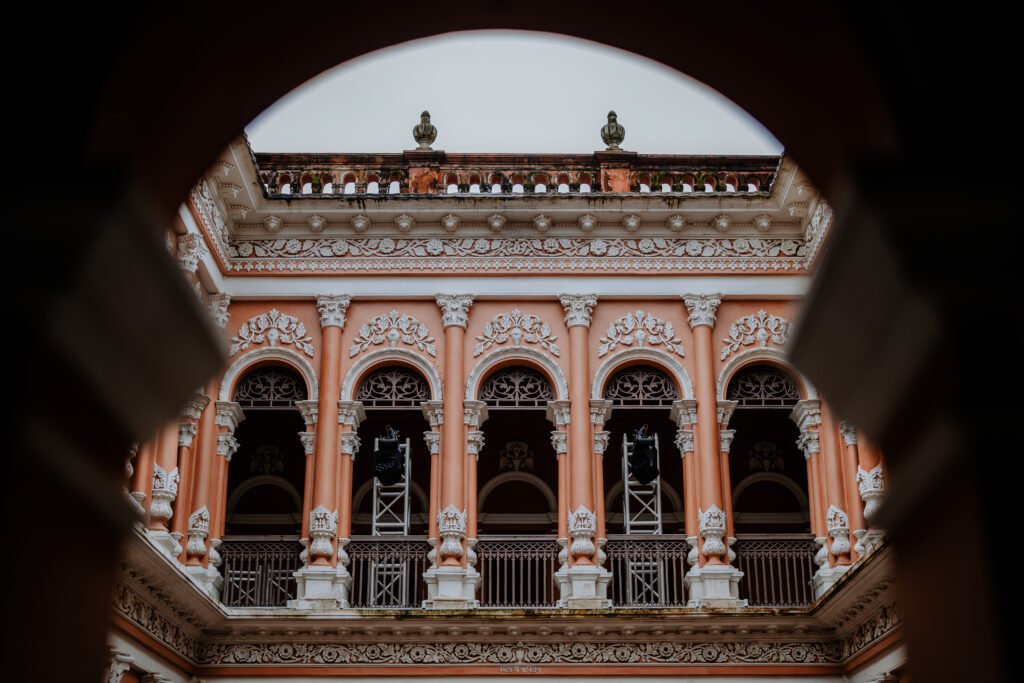
While the first day focused on the showcase, the second day was about celebration. The after-party brought together models, designers, and stars like Runa Khan. What began as a casual gathering quickly transformed into a happening night. Music filled the mansion’s courtyards, laughter echoed through the arches, and the energy of Dhaka’s creative community came alive. Conversations flowed, connections were made, and the atmosphere shifted from reverent admiration to joyful celebration. It was a reminder that fashion isn’t just about what is worn; it’s about who experiences it, how it moves people, and how it brings them together.
The two-day event as a whole was a success. The morning showcase grounded the collection in heritage, storytelling, and craft, while the after-party gave it energy, life, and celebration. Together, they demonstrated that Ami Dhaka isn’t just creating clothes, it’s creating experiences, memories, and conversations. At Boro Sardar Bari, fashion became a living bridge between past and future, craftsmanship and celebration, quiet intimacy and lively connection. Ami Dhaka reminded everyone present that in Bangladesh, fashion is not just about style, it’s about stories, identity, and the promise of what’s next.
Photo Source: Courtesy