



By Ayman Anika
When I first read the premise — two women locked together in a house during the COVID‑19 lockdown, forging a bond under stress and grief — I braced myself for something austere, even claustrophobic. And that is exactly what Piplu R Khan offers with Jaya Aar Sharmin (2025), but with unexpected tenderness and sly ruptures of emotional power.
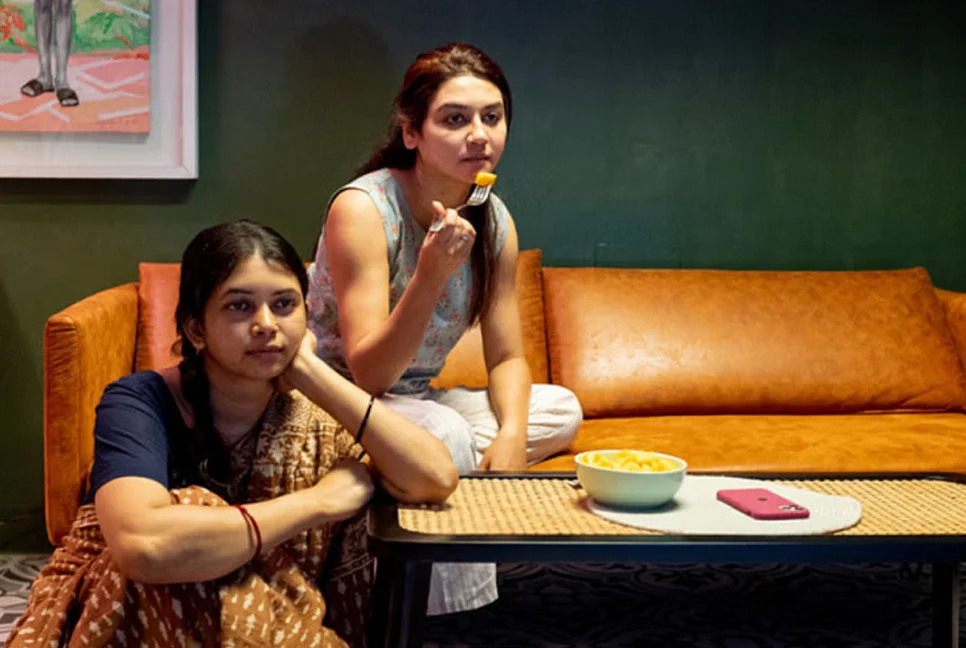
From the start, Jaya Ahsan as Jaya and Mohsina Akter as Sharmin are not caricatures of “rich woman/servant.” They arrive on screen with full bodies of fear, regret, guilt, and silences that carry more weight than dialogue. In their unnerving proximity (the film is, more or less, a chamber piece), they negotiate territory — both physical and emotional — and the slightest shift in expression becomes seismic.
The House as Character
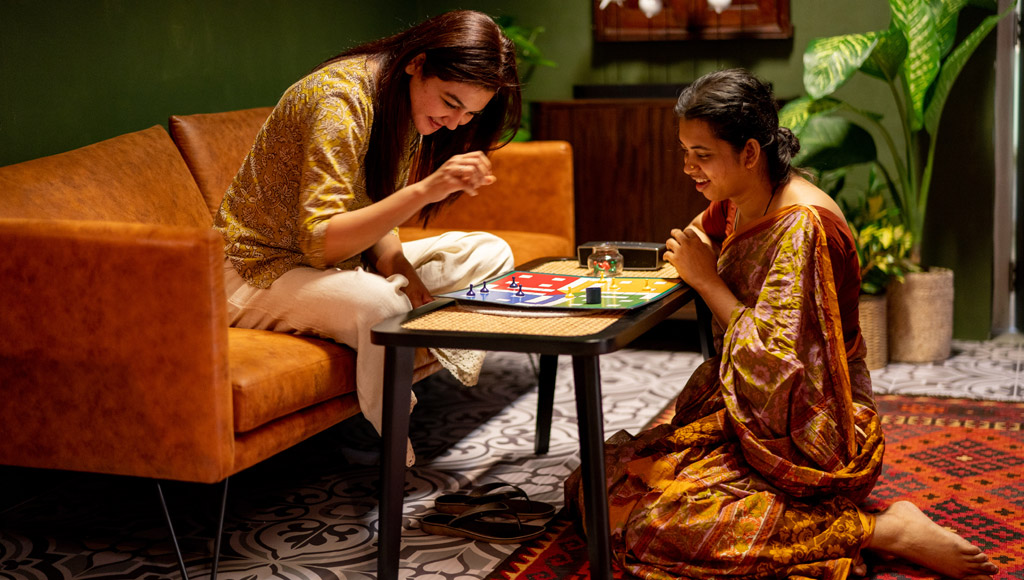
The house in which Jaya and Sharmin are stuck is not neutral. It pulsates with history, with pandemic dread, and with unspoken boundaries. The camera lingers on corners, on a half‑closed door, on small windows that admit a breath of light but not escape. Cinematographer Zohaher Musabbir (credited in the film’s details) turns these details into psychological topography.
In quieter moments, the air is so heavy you can hear it: the hum of an air conditioner, a drip of water, distant echoes of a world outside that has gone mad. The film uses stillness and a few handheld cuts to destabilize the viewer’s sense of safety. As the scenes unfold, the house begins to feel like a cell, a womb, a trap, a fragile bubble clinging to two souls.
Trauma, Guilt and Unspoken Histories
What distinguishes Jaya Aar Sharmin is how it lets trauma lurk at the margins rather than delivering cathartic monologues. Sharmin carries secrets; Jaya carries grief. At times they mirror each other; at others, they repel. The film keeps you off‑balance: trust flickers, sympathy shifts, boundaries blur.
There’s a boldness in how the screenplay (by Nusrat Islam Mati and Piplu Khan) lets silence speak. Scenes where nothing “happens” — a near whisper, a flinch, a glance away — become loaded. The lockdown isn’t just backdrop but metaphor: when the world outside is too dangerous, inner selves get exposed, sometimes torn open.
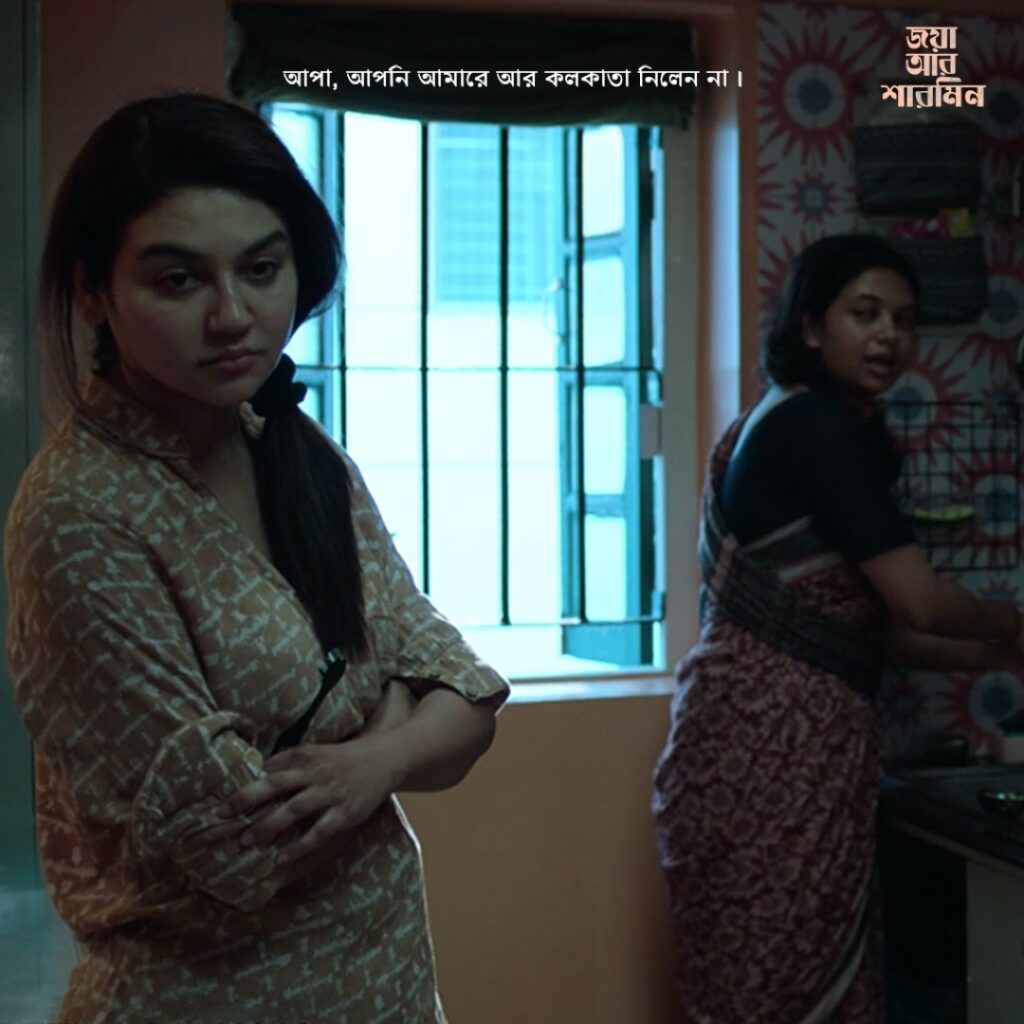
Because the film was shot under COVID constraints (in just fifteen days, with minimal crew) it wears its limitations as aesthetic choices. That urgency, that necessity of closeness, seeps into the narrative itself.
Performance Alchemy
To sustain a film so lean, the performances must be porous, vulnerable, and magnetic. Jaya Ahsan, as ever, is a reservoir of contradiction: dignity, exhaustion, rage, longing. Mohsina Akter holds her own — her Sharmin is not a sidekick but a force, pushing and pulling against Jaya’s world. Their interplay is electric. In one scene, Jaya’s voice cracks so quietly you almost miss it — and that is the moment you remember you’re watching an actor, or rather two actors, channeling rawness.
Some may quibble that plot developments feel episodic, or that the outside stakes never fully land. But in a film like this, inner stakes matter more. Who trusts whom? Who breaks first? Who will carry what beyond the walls?
Where It Warms, and Where It Wobbles
The film’s greatest asset is restraint. It never oversells emotion. It doesn’t dramatize for cheap effect. Instead, it invites you to puzzle, to listen, to lean in. The shift from distance to empathy is gradual and disquieting. The setting, performances, pacing — all cohere into an experience more felt than narrated.
Because the film lives in nuance, some moments may feel under‑resourced. A few narrative threads aren’t fully elaborated — we glimpse severed connections, unanswered histories, but only faintly. There is a risk for viewers who prefer narrative clarity that they’ll feel adrift. Also, the film’s confinement can feel repetitive: between two rooms, three conversations, and loops of guilt, the visual vocabulary occasionally strains. And when the outside world intrudes, those intrusions can feel abrupt, jolting the calm tension.
Why This Film Matters
In Bangladesh’s film landscape, Jaya Aar Sharmin feels like a small rebellion: a story that doesn’t pander to spectacle but trusts subtlety, that centers women in crisis but gives them interior lives rather than tropes. The Daily Star calls it “soul‑cleansing,” noting how it “defies convention” in pairing a middle‑class woman and her domestic help against all social barriers.
There’s something quietly radical here: in showing how even in lockdown, social hierarchies persist, even as emotional worlds collapse.
Moreover, the decision to release this film five years after shooting — letting it wait for its “moment” — gives it a poignancy. The trauma it depicts isn’t retrospective: it still resonates.
Final Word
Jaya Aar Sharmin is not a film you consume easily. It’s one you inhabit: you’ll carry its silences, its tremors, its small acts of betrayal and tenderness. It’s a film about confinement not as limitation, but as crucible — where pain, empathy, resentment, and grace are discovered in cramped quarters.
If you’re going in expecting sweeping plot or cathartic release, you’ll likely come away wanting. But if you’re willing to lean into quiet storms, to sit with two broken souls, to let gesture and silence speak, this is the kind of film that lingers — in your mind, in your chest, in that space where words fail.