


By MWB Desk
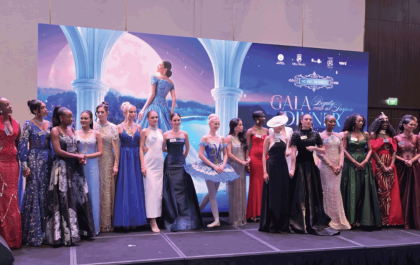
Since its inception, Arka Fashion Week has evolved into one of Bangladesh’s most influential creative platforms ,a movement that champions youth culture, community, and the conviction that Bangladesh can transition from exporting garments to exporting fashion. Over the years Arka has grown beyond a sequence of runway shows into a weekend-long festival where designers, students, artisans, musicians, and audiences converge to shape the country’s creative narrative.
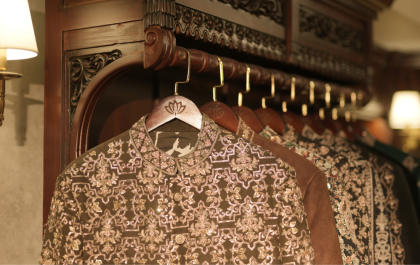
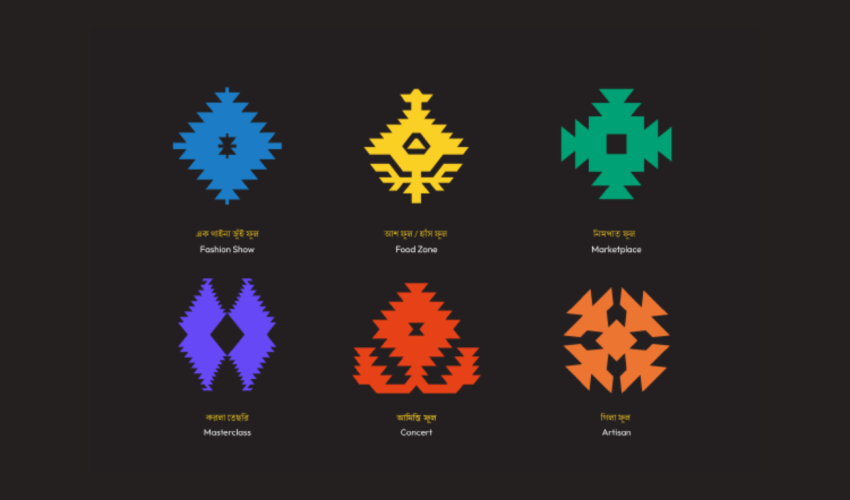
This Winter, Arka places Jamdani at the centre of its storytelling. From branding and set design to the student runway’s upcycled Jamdani pieces and live weaving demonstrations, the edition honours the craft’s deep roots. The choice of Jamdani is an assertion: that Bangladesh’s future in fashion should be anchored in its own proud textile past.
What Is Jamdani ,Bangladesh’s Heritage and Pride
Jamdani is not merely a fabric; it is a woven archive of Bangladeshi history. Originating in the Bengal delta during the Mughal period and flourishing in regions such as Narayanganj, Rupganj, and Sonargaon, Jamdani occupies a singular place in the nation’s cultural memory. With its translucent muslin ground and motifs that appear to float on the cloth, Jamdani has long been associated with ceremonial life, social identity, and national pride. UNESCO’s recognition of Jamdani as an Intangible Cultural Heritage of Humanity validated what Bangladeshis have known for generations: this craft is a vital expression of our artistic lineage.
Beyond aesthetics, Jamdani’s motifs-drawn from flora, geometry, folklore, and spiritual rhythms, tell stories of place and people. The craft supported thriving textile towns and was central to trade and cultural exchange in Bengal’s history. Today, wearing Jamdani is a statement of cultural belonging; preserving it is an act of safeguarding Bangladesh’s historical memory. Protecting the craft therefore means protecting livelihoods, cultural continuity, and a proud national legacy that has survived colonial disruption, industrial change, and global fashion cycles.
Jamdani & Its Weavers
Jamdani’s creation is slow, intimate, and deeply human. Woven on traditional pit looms, it relies on the supplementary weft technique: artisans insert tiny motifs by hand, line by line, without templates, producing pieces that are uniquely individual. This process demands patience, visual memory, and a mastery of rhythm and tension—skills transmitted across generations in weaving households. Historically centered around riverine towns, where fine muslin once flourished, Jamdani sustained local economies and shaped Bengal’s reputation for delicate textiles. The weavers’ lives revolve around the loom; a single sari may take weeks to months, reflecting intense labor and rare expertise. Yet these communities face pressure from low-priced machine-made imitations, fluctuating demand, and limited access to markets that value handwork. Reviving Jamdani’s market requires design innovation, fair pricing, and cultural advocacy. Initiatives like designer collaborations, live artisan showcases, and sustainable upcycling help reconnect contemporary consumers with the value of handloom. Supporting weavers through capacity-building, transparent supply chains, and festival platforms ensures that Jamdani remains a living craft—both economically viable and culturally vibrant—for future generations.
Artisans, Marketplace & Collective Live
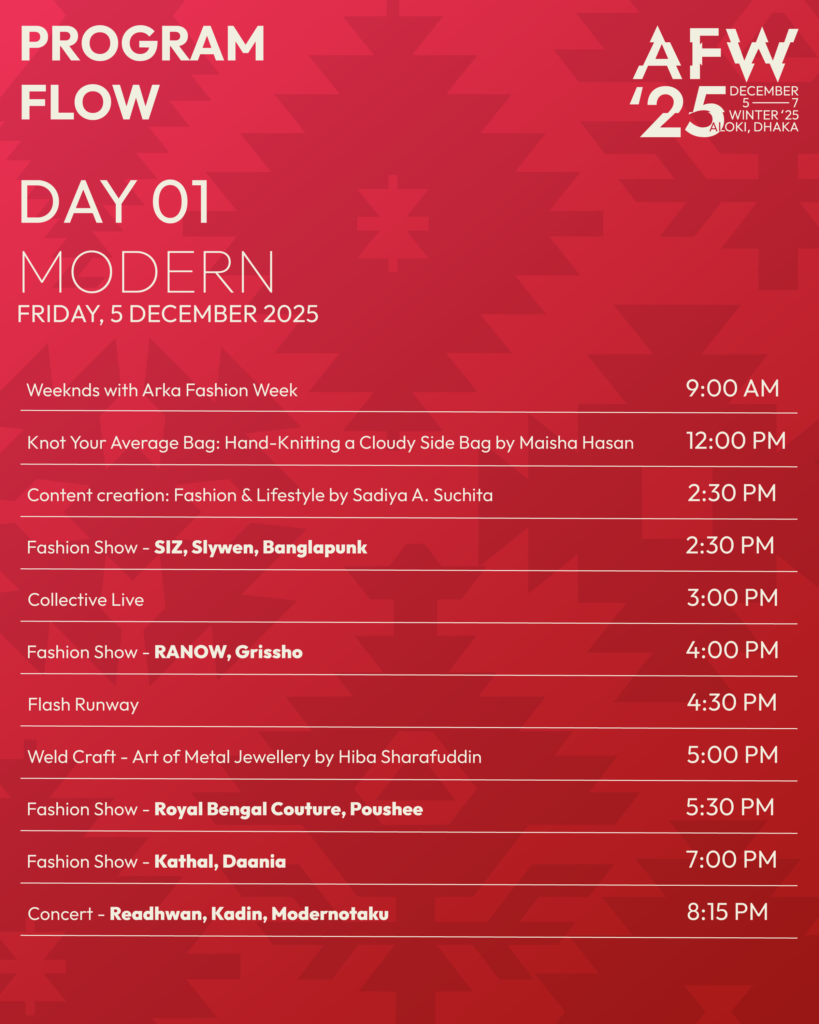
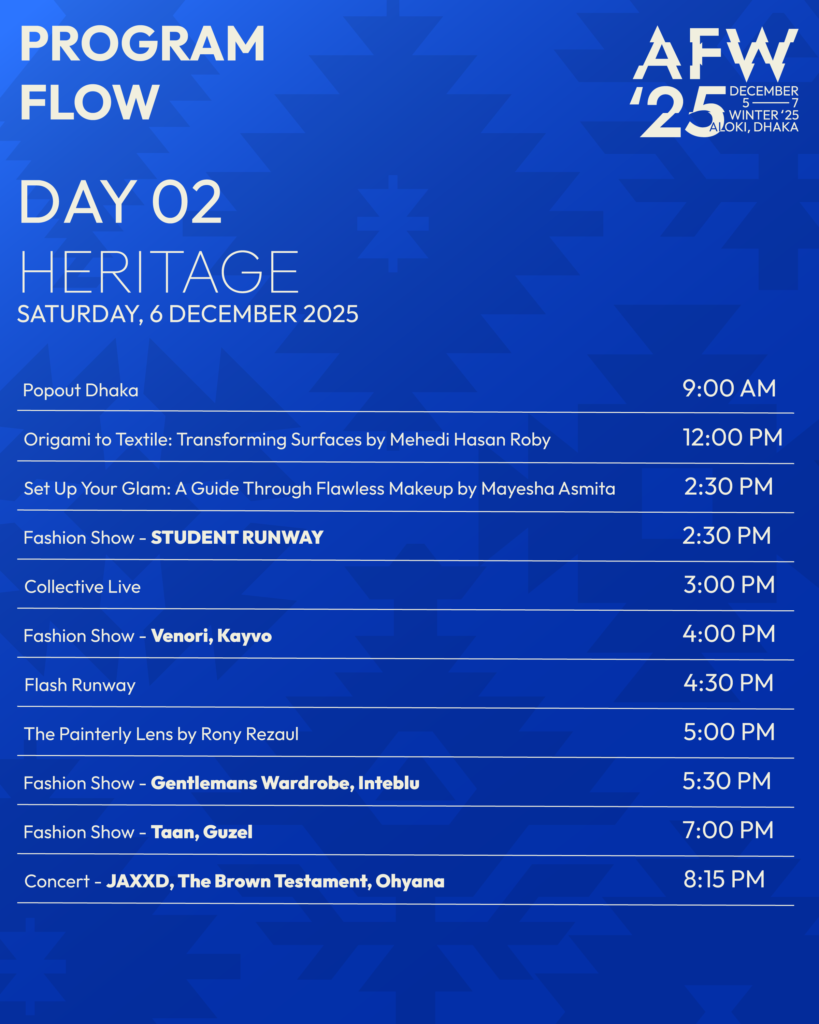
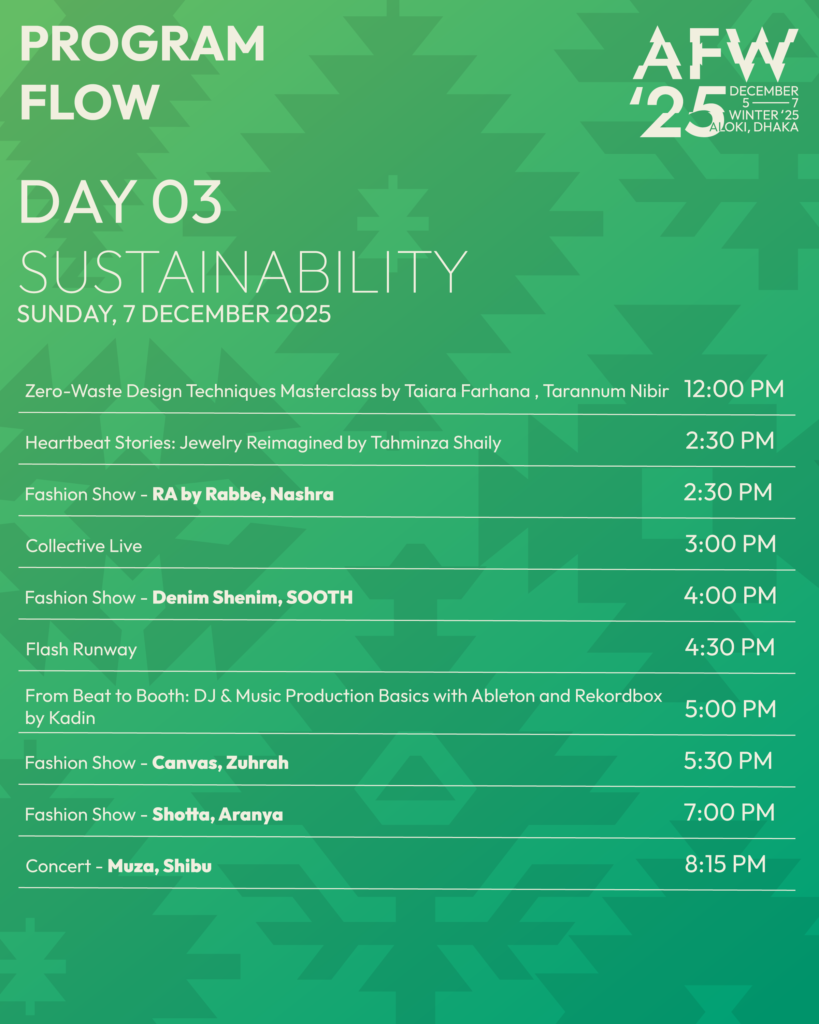
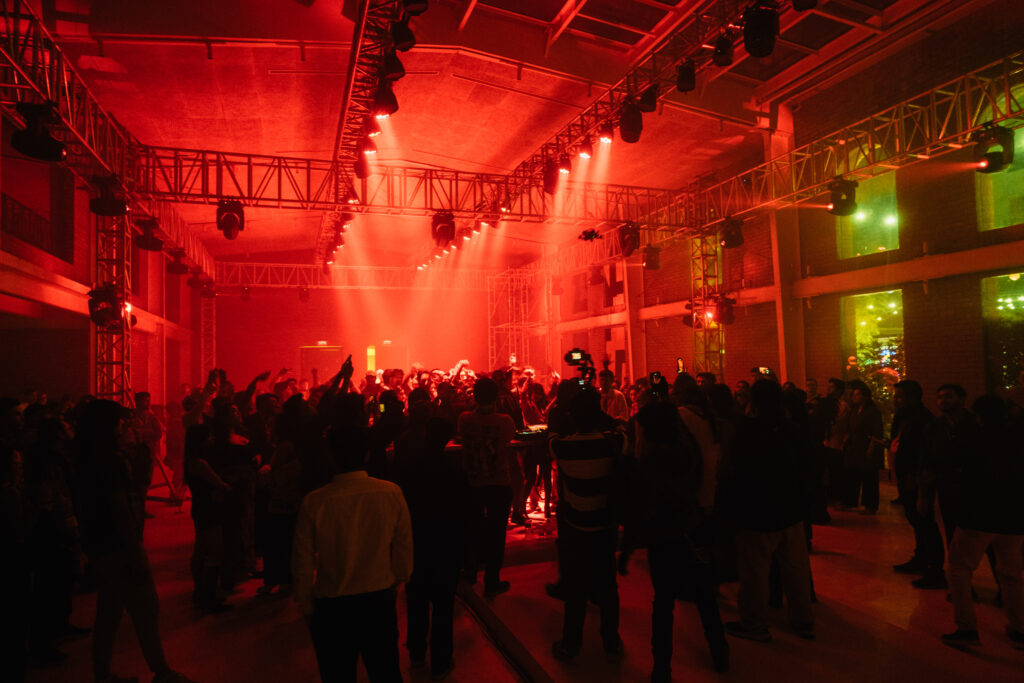
Arka Fashion Week Winter ’25 is set to launch with a three-day program built around the themes of Modern, Heritage, and Sustainability. The event will follow a full day rhythm of masterclasses, flash runways, designer shows, and evening concerts, creating a continuous flow of fashion and cultural programming for visitors. This edition will feature a special collaboration with Aarong, which will bring six master artisans to demonstrate traditional techniques such as weaving, hand stitching, block printing, and needlework. The live exhibitions will allow audiences to observe the depth of Bangladeshi craftsmanship and highlight the importance of supporting indigenous artisans. Arka will also introduce Collective Live, a daylong performance platform inside the Marketplace where musicians, DJs, rappers, vocalists, and experimental artists will perform in rotating sessions. The festival will open with Weekends with Arka Fashion Week Presented by Live The Moment. DJs JBI, SHEZMIX, and MOMI will lead the opening morning session, setting the tone for a weekend where fashion, music, and community will converge.
The Marketplace itself becomes a living gallery—sustainable stalls, artisan booths, and continuous Collective Live sets invite visitors to move between craft stalls, masterclasses, and pop-up performances, making discovery central to the festival experience.
Themes & Direction
Across three days Arka will map a clear trajectory:
- Day 1 ,Modern: Contemporary design, bold ideas, young talent and city narratives.
- Day 2 ,Heritage: Craft-focused storytelling, classical techniques, and Jamdani as a cultural anchor.
- Day 3 ,Sustainability: Responsible design, upcycling, and circular approaches to fashion.
Jamdani threads through all three: an ancestral technique reimagined into modern silhouettes and championed for its inherently low-waste, human-centered production.
Concert Highlights
Evenings will be soundtracked by an energetic lineup that complements the runway’s visual drama:
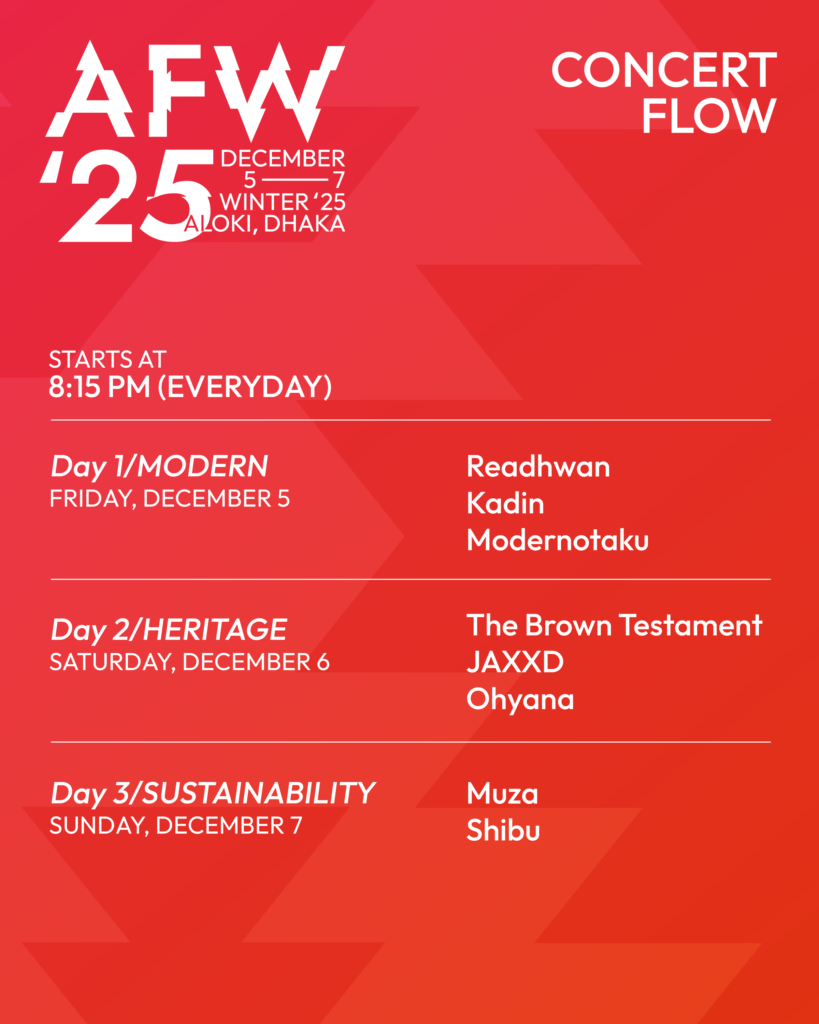
- Day 1 (Dec 5): Modernotaku, Kadin, Readhwan
- Day 2 (Dec 6): Ohyana, JAXXD, The Brown Testament
- Day 3 (Dec 7): Shibu, Muza
These performances frame each day’s finale with music that mirrors Arka’s blend of youthfulness and craft—turning fashion shows into festival moments.
All information provided by Arka Fashion Week team