


By Ayman Anika
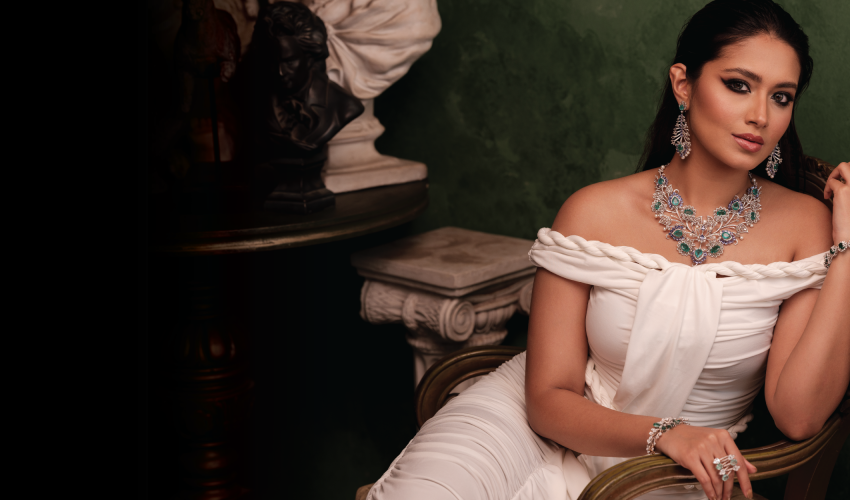
Tasnia Farin doesn’t perform – she inhabits. Whether she’s portraying a restless daughter discovering herself in the grey alleys of London or unravelling suspense in a high-security prison drama, there’s a certain stillness in her that demands your attention without ever raising its voice. With no dramatic declarations or headline-chasing antics, Farin has quietly redefined what it means to rise in the Bangladeshi screen industry – on her own terms.
Her path to acting wasn’t scripted. A marketing graduate from Bangladesh University of Professionals (BUP), she initially dabbled in TV commercials, nudged into the spotlight by her mother, who saw something in her before Farin herself did. Since then, she’s balanced academia with creative exploration, earning praise for her nuanced performances in Ladies & Gentlemen, Karagar, and the Indo-Bangla film Aaro Ek Prithibi. What sets her apart is not just her talent, but her refusal to rush. Farin chooses characters with care, reads scripts like a viewer first, and lets instinct, not impulse, guide her decisions.
Could you begin by sharing a bit about your childhood and upbringing? Were there any early influences that sparked your interest in performing arts?
Well, my childhood was quite unconventional. I didn’t grow up in a single place because my father worked for the government, and that meant he was frequently transferred to different postings across the country. I was born in Meherpur District, and from there, we moved to Dhaka, then Chittagong, followed by Jessore and Pabna. Finally, when I reached Class Six, my mother, brother, and I settled in Dhaka permanently.
This constant movement meant I had to change schools quite often, and as a result, I never really had the chance to build long-term friendships or feel rooted in one place. I think, in a way, that made me very self-reliant. I became my own companion. Looking back, I feel that solitude perhaps planted the earliest seeds of performing arts in me. At the time, I didn’t recognize it for what it was – it’s something I came to acknowledge much later in life.
That said, my mother played a crucial role from the very beginning. Thanks to her, I learned dance and music, so I was always connected to creative expression in some form. But acting? That wasn’t on my radar at all. It wasn’t something I practiced or even imagined myself doing back then.
Who has been your biggest source of support throughout your journey in the creative field?
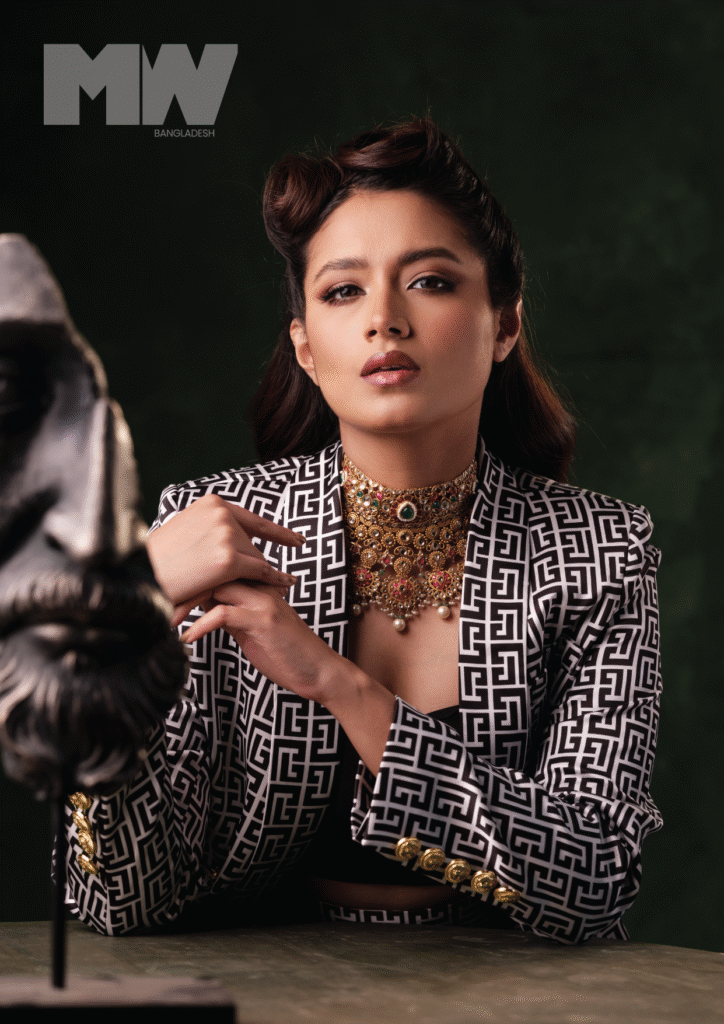
It’s always been my mother, without a doubt. She has believed in my creative potential from the very beginning. She felt I would do well in the creative field, though she never imagined it would become my full-time profession. Like most parents, she expected that I would probably pursue a more conventional career path – maybe become a doctor or an engineer – and that music or dance would be side activities, something I did for fun or as an extracurricular involvement.
Interestingly, my mother wanted me to become a singer and, for quite some time, she pushed me in that direction. She was more passionate about it than I was! But regardless of the path, she was always supportive of my interests – even if she didn’t always know exactly where they would lead.
While you were pursuing your academic studies in marketing at BUP, what drew you toward acting, and how did you balance both academic and creative commitments?
Honestly, I’d credit that balance – and even the beginning of my journey in this field – to my family, especially my mother. From the very start, she would tell me, “Whatever you choose to do in life, you must complete your education first. That’s non-negotiable.” And I truly took that to heart.
I began modelling in 2016, mainly working in TV commercials. It all started when my mom took me to a couple of shoots. She would accompany me to the sets and, in many ways, acted like my manager, though not officially. All the phone calls would come to her, and she would handle everything behind the scenes.
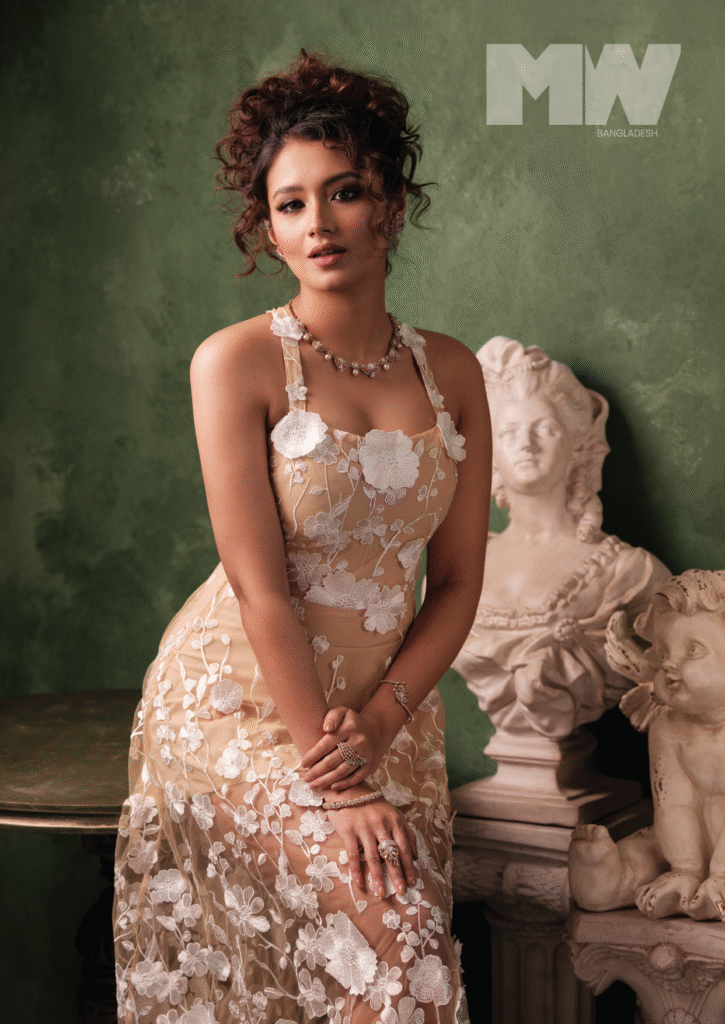
But there was a clear boundary. Her condition was that my work couldn’t interfere with my studies. So, if I had some time off – on Fridays, Saturdays, or during semester breaks – I could take on one or two projects. Nothing beyond that. I respected that, and I made it a rule for myself too.
Thankfully, my work started getting noticed. People seemed to appreciate my performances, and I suppose I had that “girl-next-door” quality that worked well for TVCs. Gradually, I began receiving offers for fiction work – dramas and more substantial roles. But again, my mother was very strict. Until I completed my degree, this couldn’t become my primary profession. It had to remain something I did on the side.
We had an understanding: if I could maintain a good CGPA, I could keep working here and there. That became my priority. I focused on my studies and ultimately graduated with a CGPA of 3.75. It was only after that, in 2019, that I began working in dramas more regularly.
Within a few projects – maybe three or four – I was cast in a drama called X Boyfriend, directed by Kajal Arefin Ome. That project turned out to be a major turning point.
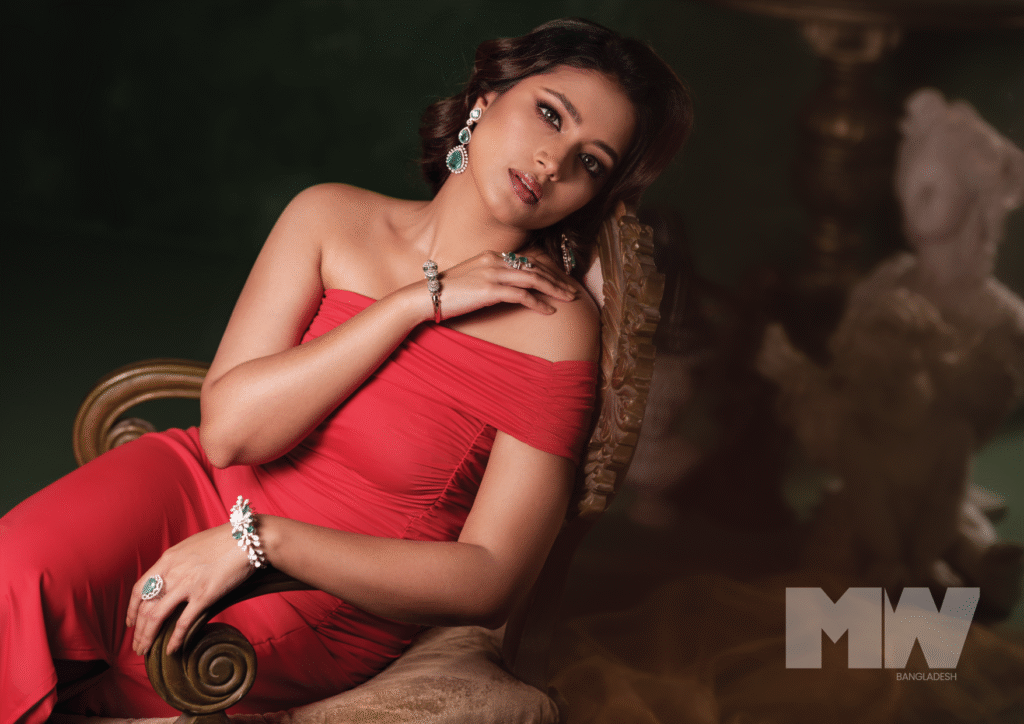
If you weren’t an actor, what would you be doing right now?
That’s a really interesting question. Honestly, even if I weren’t acting, I feel like I would still be doing something quite similar, just in a different form. I’ve always wanted to be an entrepreneur. That was something I envisioned for myself early on. And in a way, I think I’ve become one – just not in the traditional sense.
Right now, I’m not selling a physical product. Instead, I’ve sort of become the brand myself. It’s like I’m presenting, shaping, and marketing who I am through my work. So, even though I didn’t follow the typical entrepreneurial route, I’m still very much involved in building something, just that this “something” happens to be me.
It’s an odd but fascinating realization that I’ve ended up becoming exactly what I wanted, just not in the way I originally imagined.
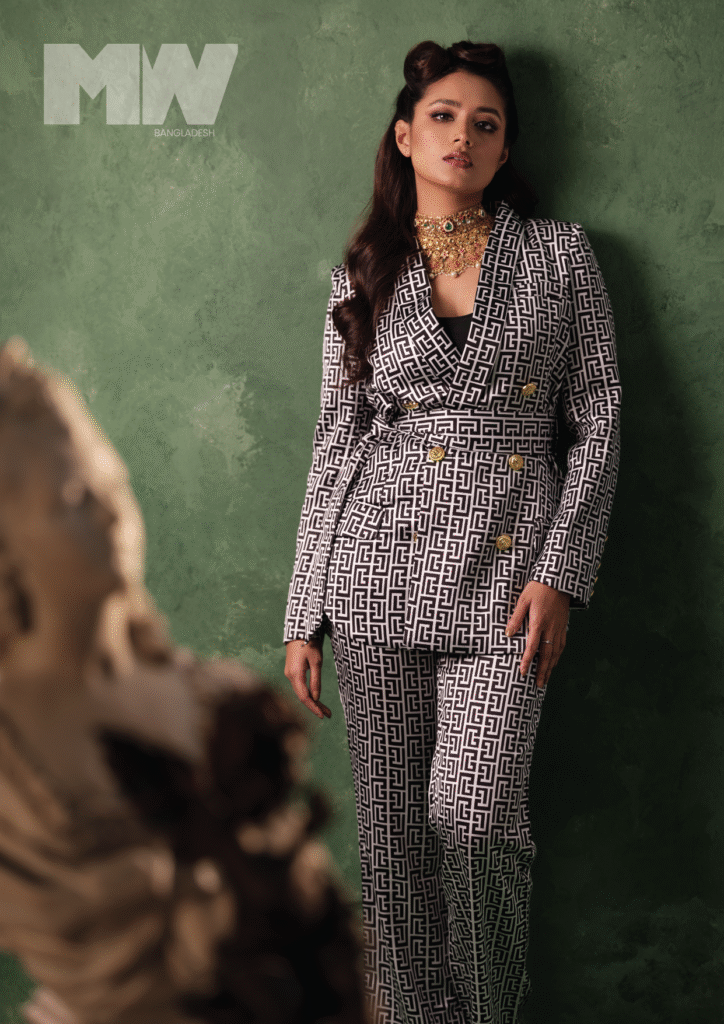
You started acting around 2017, but it wasn’t until X Boyfriend and later Ladies & Gentlemen (2021) that people really started paying attention. What were those early days like for you – navigating auditions, expectations, rejections?
Absolutely – that part of the journey is something most people don’t get to see. What’s visible is the success, the polished final product. But behind that, there were plenty of rejections and setbacks that shaped me.
I remember in 2016, when I went for my very first TVC audition, everything was finalized. I was so excited – I even learned to ride a bicycle specifically for that role. And then, right at the last moment, I was dropped. That kind of thing happened more than once. It was frustrating, of course, but I kept going.
In the early days, especially around 2019, I took on roles that, in hindsight, I probably wouldn’t accept today. Back then, I wasn’t always convinced about the scripts or the production quality, but I still said yes – because I knew I needed to build visibility and make a name for myself. The priority was to become a household name first.
Then came COVID-19, and honestly, that period played a pivotal role in how my career evolved. I had already been working for a year or two by then, but I still felt like I hadn’t done that one project – something I could truly be proud of, something that would stay with people even if I stopped working the next day.
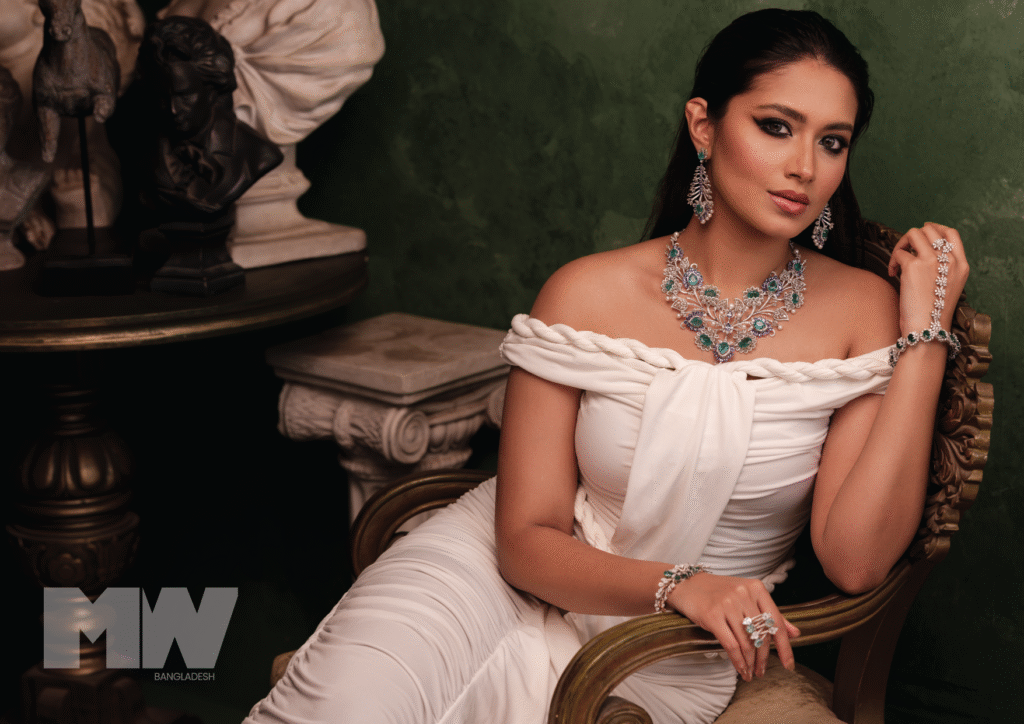
I was manifesting exactly that kind of work when, out of the blue, I got a call from Mostofa Sarwar Farooki Bhai. That’s how Ladies & Gentlemen happened. Ironically, I wasn’t even supposed to be in that project initially. But somehow, everything aligned.
Is there someone who has deeply influenced you – someone you look up to, either as a mentor or a personal inspiration?
I wouldn’t say I have a traditional role model in the usual sense. But there is someone who has always deeply inspired me – our college principal at Holy Cross College (HCC). She’s still there, and I consider it one of the greatest privileges of my life to have studied under her. She also taught us Bangla second paper, and having that kind of direct connection with such a dignified and powerful personality shaped me.
Looking back, I think so many of the values I carry today – my sense of discipline, integrity, confidence, even how I navigate life without constantly seeking validation from others – those things were instilled in me through her guidance. She taught us the importance of self-trust, of standing your ground, of being vocal about your ambitions, and never compromising your principles.
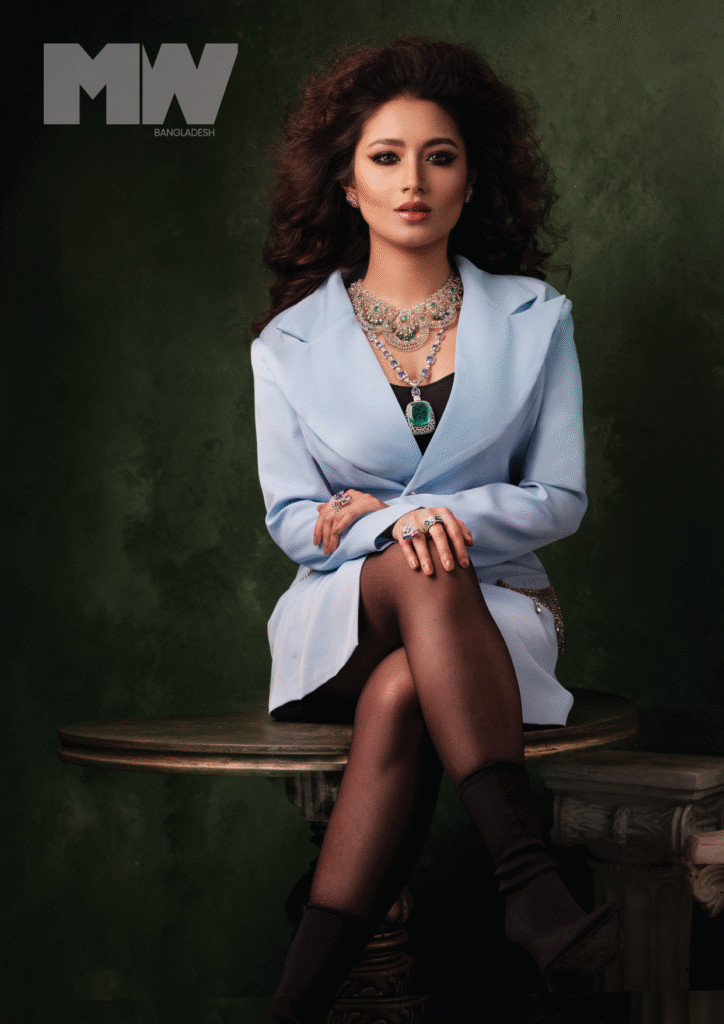
Honestly, the environment at Holy Cross College, the teachers, the values they passed on – it all played a huge role in shaping the person I am today. So, while I may not have one fixed role model, I carry those lessons with me, and I’m incredibly grateful for them.
How do you usually prepare for a role, especially one that involves emotional depth or addresses strong social themes?
Every character is different, and so is the process of preparing for them. In my early days, it took a lot of time and effort to fully understand a character. I had to visualize every little detail – how she would speak, how she would walk, how she might cry or laugh. That visualization was, and still is, a crucial part of my process. It helps me embody the role beyond just the lines or the script.
Now, with more experience, that part has become a bit easier. I’ve developed a sharper sense of how to interpret characters. But ironically, it has also become more challenging – because when you’ve played a wide range of roles over time, the question becomes: What’s next? How can I still surprise the audience – and myself?
That’s where the real creative challenge lies. Even if I receive a similar type of script or character, I push myself to portray it differently. It becomes more research-driven and exploratory. I ask myself: What haven’t I tried yet? What new emotional shade can I bring out? What untouched layer of myself can I tap into to make this character feel fresh and real?
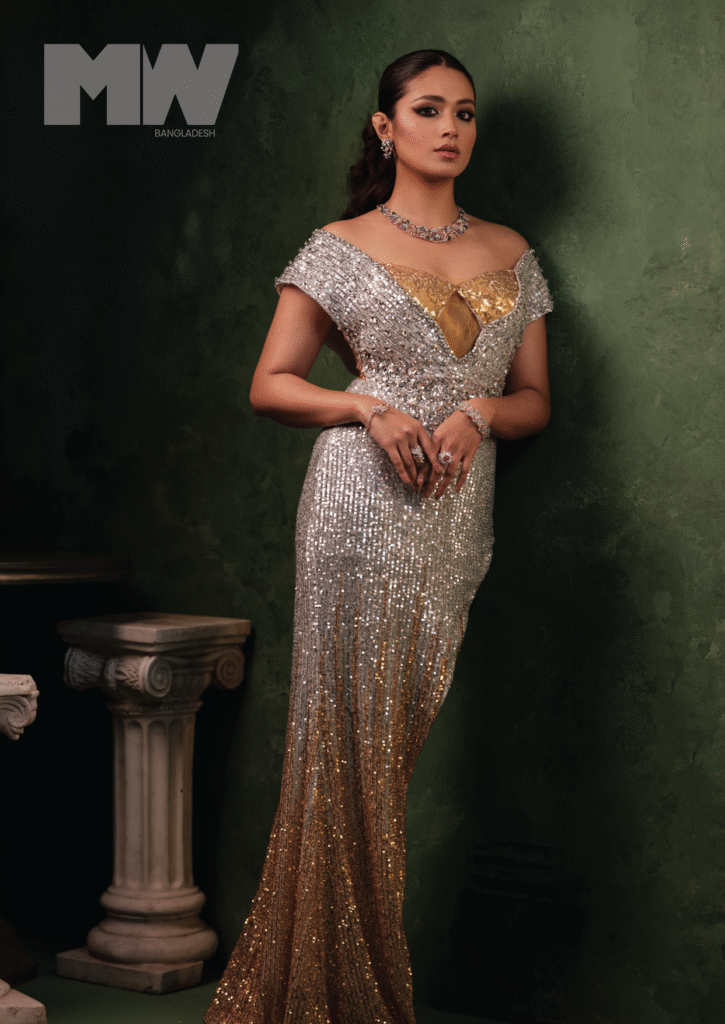
At this stage in my journey, it feels like a process of self-discovery. To portray deep emotions on screen, I often have to dive into my own. That introspection is what helps me bring authenticity to my performances.
As for maintaining mental clarity through this process, I don’t follow a rigid routine, but there are a few things that help me reset. I write. I sing. Both are deeply therapeutic for me.
When you’re offered a role now, what’s the first thing you look for – story, director, challenge, or something else?
For me, it always starts with the overall feeling. When I receive a script, I try to approach it from the perspective of an audience member first, not as an actor. I don’t immediately look for what role I’d be playing or who the director is. Instead, I read it as a complete story, without any prior assumptions.
If the story grips me, if it holds my attention and makes me curious as a viewer, that’s the first green flag. I ask myself: Would I want to watch this if I weren’t part of it? That sense of intrigue and emotional connection to the narrative is very important to me. Only after that initial impression do I start thinking about the other factors – what role I’m being offered, who the director is, who else is involved, and so on. But at the core, it’s always about the story. If the journey doesn’t resonate with me as a viewer, I find it difficult to commit to it as a performer.
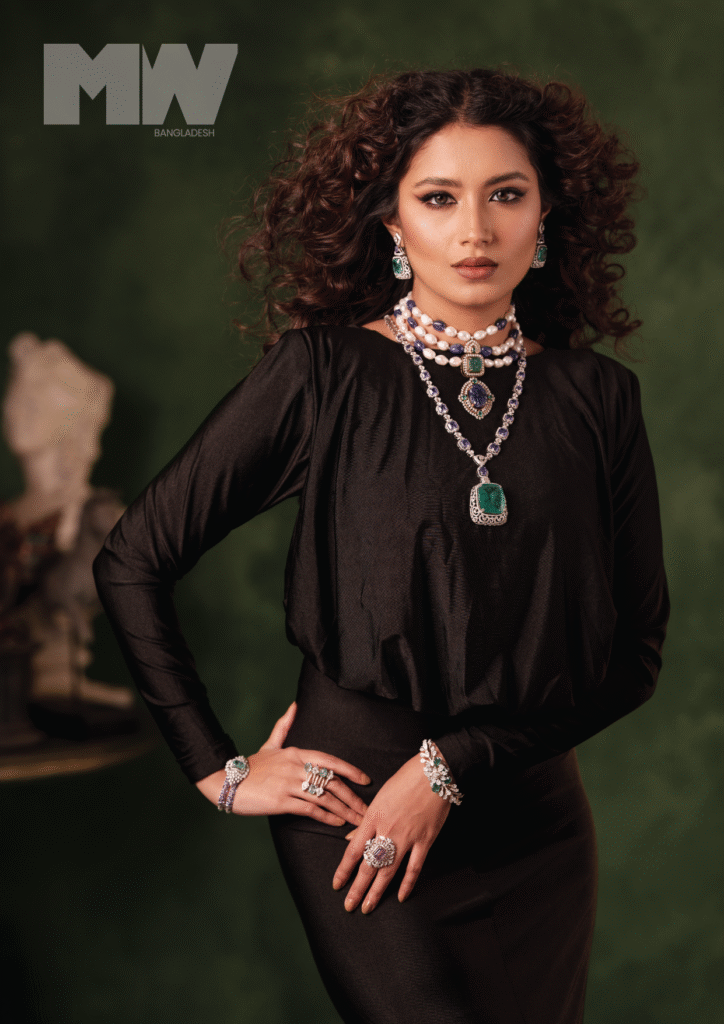
You’ve now worked in both Dhaka and Kolkata. How would you compare the two industries in terms of creative freedom, pace, or how women are treated on set?
It’s interesting because the two industries are quite similar in many ways, yet they operate differently in terms of work culture. In Dhaka, the environment feels more homely – there’s a strong sense of camaraderie and shared responsibility. We hustle a lot here. If someone is struggling or unable to do something, there’s usually someone else who steps in. Everyone’s involved beyond their individual roles, and that gives it a very collaborative energy.
In contrast, the Kolkata industry is more structured and professional. People are very focused on their own responsibilities, and there’s a clear boundary around roles. For example, if something isn’t going right with my part of the work, people might not step in unless it’s absolutely necessary. It’s not that they’re less helpful – it’s just a different dynamic, more compartmentalized and disciplined.
That said, when it comes to the work itself, both industries are deeply committed. Everyone gives their best, regardless of where they are. The intent and passion are the same; it’s just the processes and interpersonal dynamics that vary.
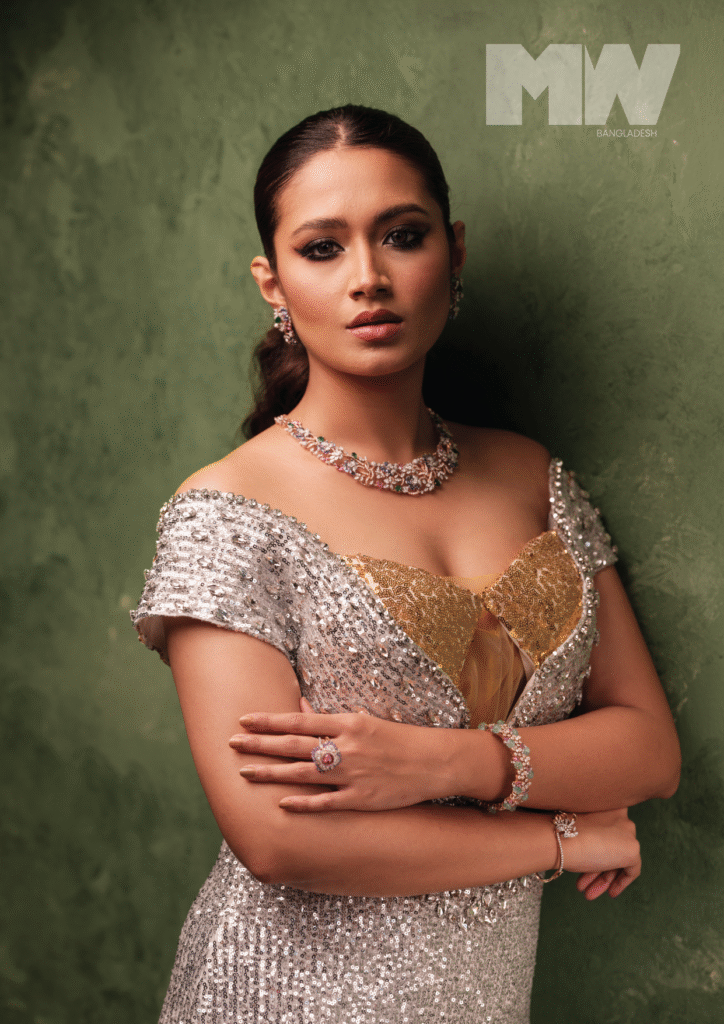
Your film Aaro Ek Prithibi (2023) marked a significant moment in your career, especially as an international project. What was the most memorable part of that experience for you?
I think the most unforgettable part of Aaro Ek Prithibi was the entire team I got to work with. I honestly didn’t expect to have such a warm and enriching experience. Despite coming from a different industry and city, I never once felt like an outsider. It felt like I belonged there from the very beginning.
Working with our director, Atanu Ghosh, was a true privilege. He’s incredibly well-read and insightful. What struck me the most was how intentional he was about every element of the film. He knew exactly why each scene existed, what motivated every line, every gesture. The script was written with such depth and clarity that it was a joy to interpret.
I also really enjoyed working with Kaushik Ganguly. He’s not just a seasoned actor but also a remarkable director in his own right. Being around artists like him taught me so much, not just about acting, but about presence and process.
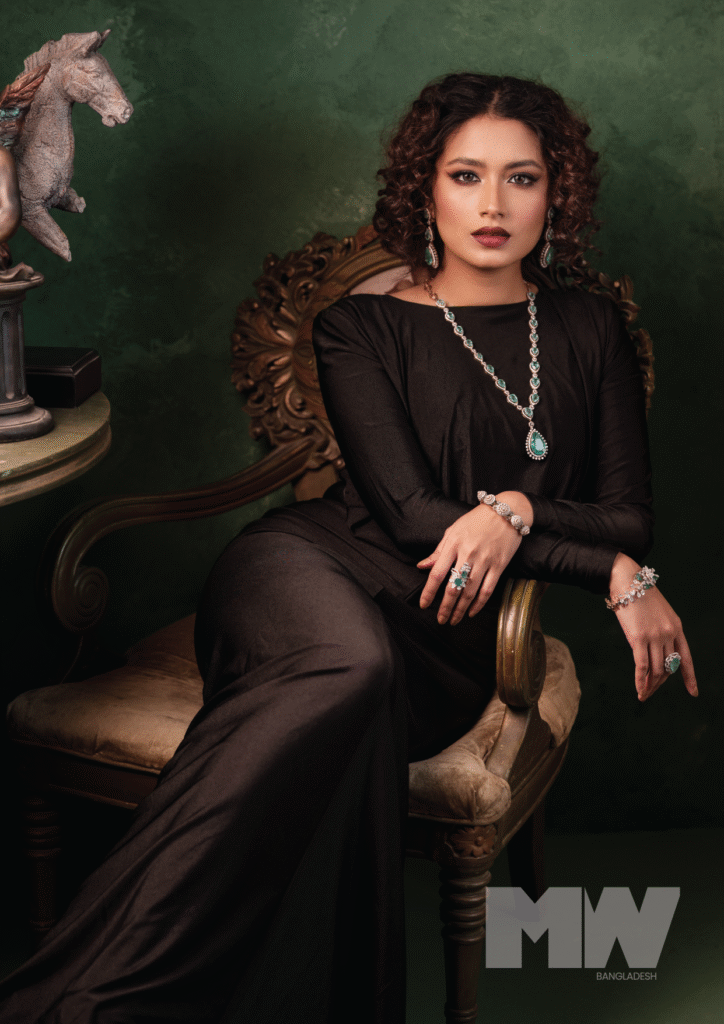
Karagar (2022) stood out for its unique narrative structure and suspense. What initially drew you to the project?
Honestly, how could I not do it? When I first heard the story at Syed Ahmed Shawki Bhai’s office, he didn’t even tell me what character he had in mind for me. He was just narrating the overall plot, and even halfway through, I knew I wanted to be a part of it. It didn’t matter how big or small the role was, or whether it was a lead or a side character. The story itself had something incredibly rare – an X-factor. It was unlike anything I had heard before. It was bold, fresh, and completely absorbing.
As someone who also consumes content as an audience member, I was instantly hooked. I just knew I had to be part of this journey. And when he finished narrating and offered me the role, I didn’t hesitate for a second. I said yes immediately.
Plus, knowing that such a talented ensemble cast was coming together for this series made it all the more exciting. There was no room for doubt. I was all in from the start.
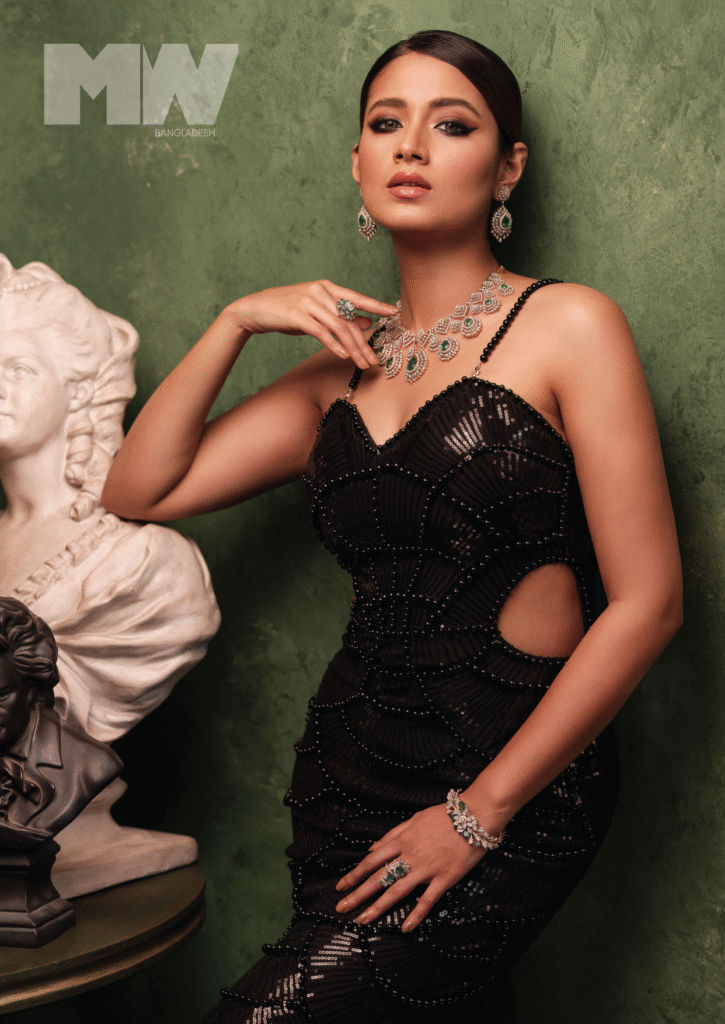
What’s something you’ve learned from someone on set – maybe a co-star or director –that’s stayed with you?
There’s honestly so much. I feel like I pick up little things from everyone I work with. Every new project brings new people, and I always try to absorb their best qualities – especially the ones I admire.
For instance, working with Ziaul Faruq Apurba bhaiya taught me a lot. He has this remarkable ability to stay grounded while still commanding a presence. That balance – being humble, yet making it clear that you carry influence – is very difficult to achieve. But he does it so effortlessly. You always feel his warmth and humility, but at the same time, you’re also reminded that he’s someone with a powerful presence. That really stayed with me.
More recently, I worked with director Sanjay Samaddar on a film titled Insaaf. From him, I learned the importance of composure as a leader. No matter how chaotic or stressful the situation is, he never lets it show. He solves problems internally, quietly, without creating panic on set. That kind of emotional discipline and grace under pressure is something I truly admire.
And it’s not just the big names. Sometimes I learn the most from the smallest gestures. I remember a production boy who had been working tirelessly all day and night. At 3:00 AM, he brought me food and softly apologized because it wasn’t warm – there was no stove available on location. But he still said it with a smile. That moment really touched me. It reminded me that no matter how hard things get, kindness and attitude matter.
So yes, I’m constantly learning. Whether it’s from a co-actor, a director, or a crew member, I carry little lessons from each set with me.
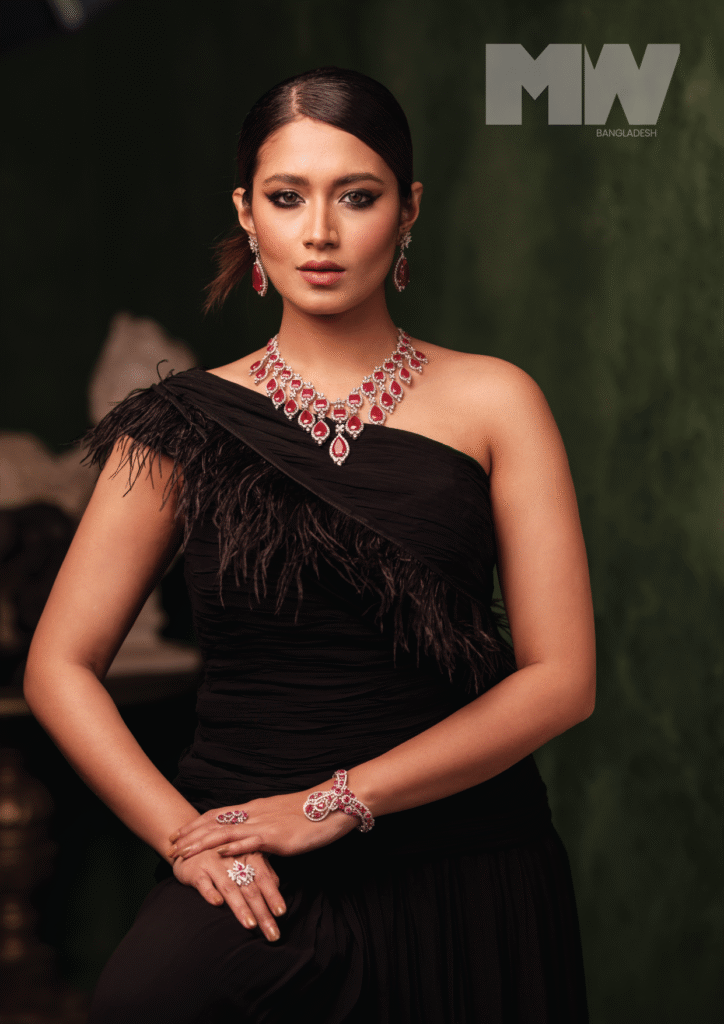
What advice would you offer to young actors, particularly women, who are entering the entertainment field?
My biggest piece of advice would be: Don’t look for shortcuts. In this industry, it’s easy to get caught up in the rush for quick fame, and in that urgency, many end up making decisions that aren’t right for them in the long run.
It’s important to be patient and to understand that timing is everything. Opportunities might come your way early on, but not every opportunity is the right one. You need to be able to assess whether something truly aligns with your goals, your values, and the kind of career you want to build.
It’s also about listening to your heart. Balancing practical thinking with your passion is difficult, but if you can do that, you’ll be able to sustain yourself in this industry. Otherwise, it’s very easy to lose your way.
What’s next for Tasnia Farin?
I’m really excited about my upcoming film Insaaf, which is releasing this Eid-ul-Adha. It’s a special project featuring Mosharraf Karim bhai and Sariful Razz, and I’m looking forward to seeing how the audience responds to it.
Beyond that, I’m just going with the flow for now. I haven’t mapped out anything too specific at the moment – I’m keeping things open and seeing where the journey takes me.
Fashion Direction & Styling: Mahmudul Hasan Mukul
Photographer: Kaushik Iqbal
Make-up & Hair Style: Parvez Ahmed
Assistant Stylist: Arbin Topu
Jewelry: Amisheé
Wardrobe: Jealous Tomato