


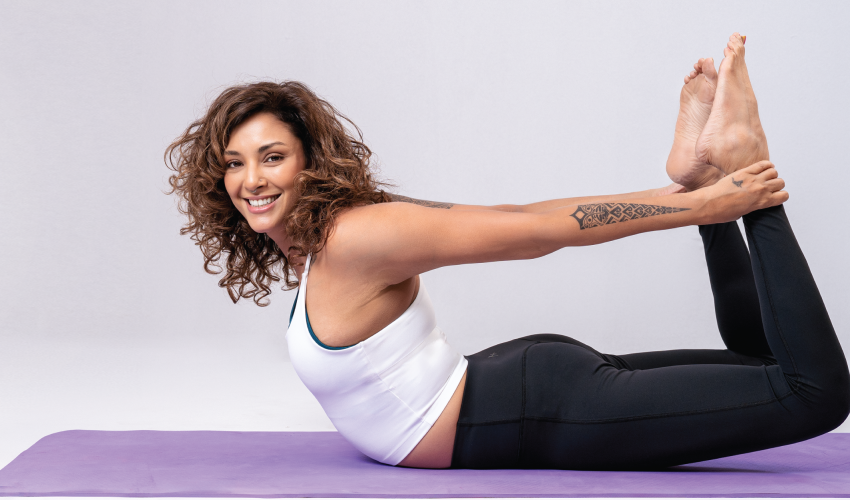
Celebrating international yoga day in style with Turaag Active
By MWB Desk
There was a time when yoga belonged to ashrams and silent retreats—an esoteric practice tied to spiritual asceticism, understood only by those who had studied ancient texts. Fast forward a few thousand years, and yoga is now unfolding under ceiling fans, on concrete rooftops, and in public parks across Dhaka. The setting has changed. The urgency has not.
Yoga’s story in Bangladesh isn’t one of overnight hype. It seeped in quietly.
First through elite wellness corners, then into middle-class homes, and finally into the rhythms of everyday life. No longer bound to boutique studios or expensive DVDs, yoga has been reclaimed and reinterpreted—not for enlightenment, but for something more immediate: relief from the relentless pace of urban life.
Evolution without ornament
The evolution of yoga today isn’t about replacing tradition—it’s about making it usable. Classical yoga revolved around detachment and self-realization. Now, it’s about posture correction, anxiety management, and getting through the week.
In a city buzzing with screen fatigue and economic uncertainty, breathwork and stillness have become forms of resistance.
Yoga in Dhaka isn’t performed for Instagram. It’s practiced in narrow bedrooms or on rooftops shared with drying laundry. It’s private, improvised, and deeply practical. People aren’t seeking transcendence. They’re just trying to feel okay.
What you wear when you pause
This shift in the nature of practice has led to a parallel shift in what supports it. Gone are the days when yoga gear was about statement pieces. Today’s practitioners choose function over frill—garments that allow them to move, breathe, and stay focused.
And this is where Turaag Active enters the picture—not as a fashion label, but as a lifestyle companion. Unlike traditional fitness wear that prioritizes performance aesthetics, Turaag Active stands for ease, adaptability, and intention.
“In stillness or flow, what you wear should feel like an exhale. That’s the promise behind every piece we make.”
– Turaag Active
The fabric doesn’t shout. It supports. Breathable, soft, and built for movement, the pieces are designed not just for studio sessions but for everything before and after—morning meditations, grocery runs, tea breaks, rooftop sun salutations.
What makes Turaag Active relevant is not how it looks, but how it feels. In a culture where dressing for yoga often feels like a barrier—especially for women who don’t want to conform to tight gym silhouettes—this line offers alternatives. Tunics that stretch. Pants that breathe. Outfits that blend with everyday wear, rather than standing apart.
Mindful living isn’t just about doing yoga—it’s about what surrounds the practice. And what we wear during those moments can either distract or deepen our connection to the present. Turaag Active gets that. It doesn’t ask you to dress like someone else. It lets you practice as you are.
The quiet future
As yoga continues its quiet expansion across Bangladesh, it’s not claiming cultural space with fanfare. It’s arriving with mats in office breakrooms, with stretches between chores, with a few deep breaths before logging into Zoom. It’s a revolution not of image, but of rhythm.
Yoga doesn’t demand change from the world—it teaches you to move through it more intentionally. And in that same spirit, activewear doesn’t need to scream wellness. Sometimes, it just needs to let you move.
“Made for the flow of your life – Turaag Active supports your pace, your pause, your practice, just as it is.”
– Turaag Active
In that sense, yoga’s relevance in Bangladesh isn’t waning. It’s deepening. Not through slogans or celebrity campaigns, but through small, consistent gestures: a morning stretch, a quiet breath, and clothing that doesn’t get in the way.
“Yoga Has Not Changed — We Have”
The Journey of Anika Rabbani (Yoganika)

Anika Rabbani, better known as Yoganika, didn’t start out as a yoga teacher. She spent a decade in the development sector, working through the stress, the trauma, and the systemic weight that comes with that territory.
During those years, she casually taught yoga to colleagues after work—just something she loved. But everything shifted after the Rana Plaza collapse, where she volunteered. “You see so much brokenness that it forces you to ask—what are we really doing with our lives?” she reflects. That moment didn’t just shake her worldview—it redirected it.
Yoga became more than a personal practice. It became a tool to make sense of life. “One of the reasons I became a yoga teacher was to find value and meaning. That experience made me realize how much we need that.”
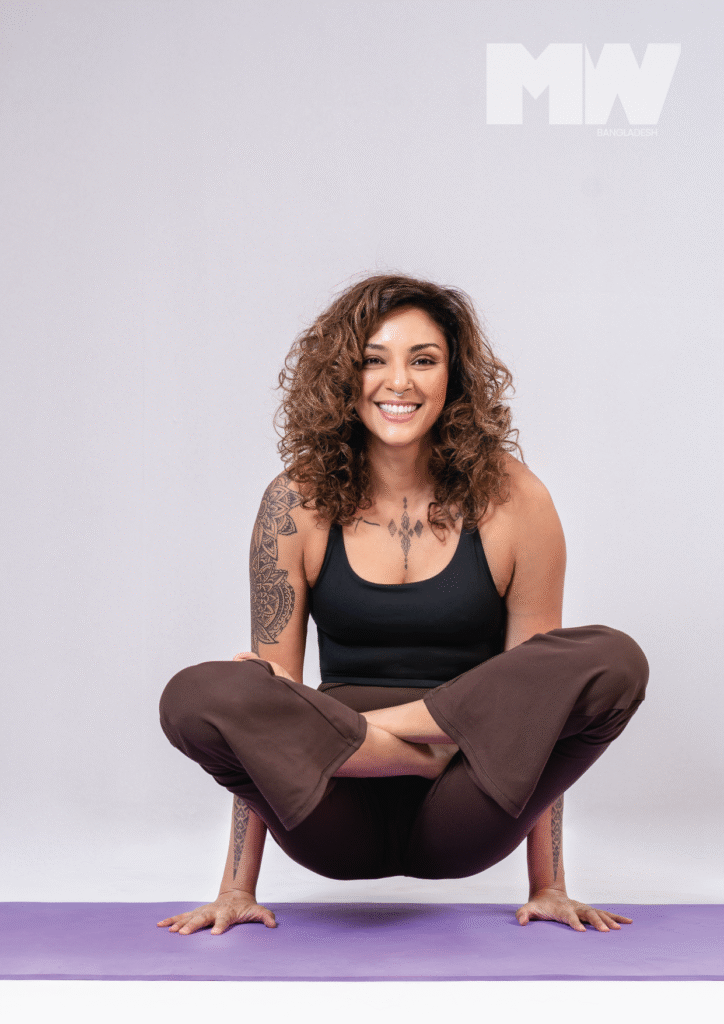

Anika doesn’t teach yoga as a fixed set of postures. “It’s not just Asana. Yoga is Yama and Niyama—ethics, wisdom, how to live well.” For her, the practice is both a compass and a mirror. It reflects who we are and where we’re going.
She primarily teaches Ashtanga Vinyasa, a traditional, physically intense form of yoga. But she doesn’t believe in staying rigid. “I mix it with modern techniques,” she explains. “Not because tradition is outdated—but because people today need tools that work in this time.”
Anika resists the idea that yoga is something we upgrade or modernize. “Yoga hasn’t changed—we have. We’ve changed how we use yoga. That’s the real shift.
Her own health journey mirrors this evolution. Diagnosed with hypothyroidism as a child and secondary hypertension later in life, she found stability through disciplined practice. “I’ve never experienced better health than I do now. Yoga helped me build a lifestyle that actually works for me.”
But Anika is clear: her story isn’t about perfection. It’s about endurance. “I don’t see myself as a victim. I’ve had challenges, and I’ve managed to overcome them. That’s what yoga gave me—the capacity to stay grounded.”
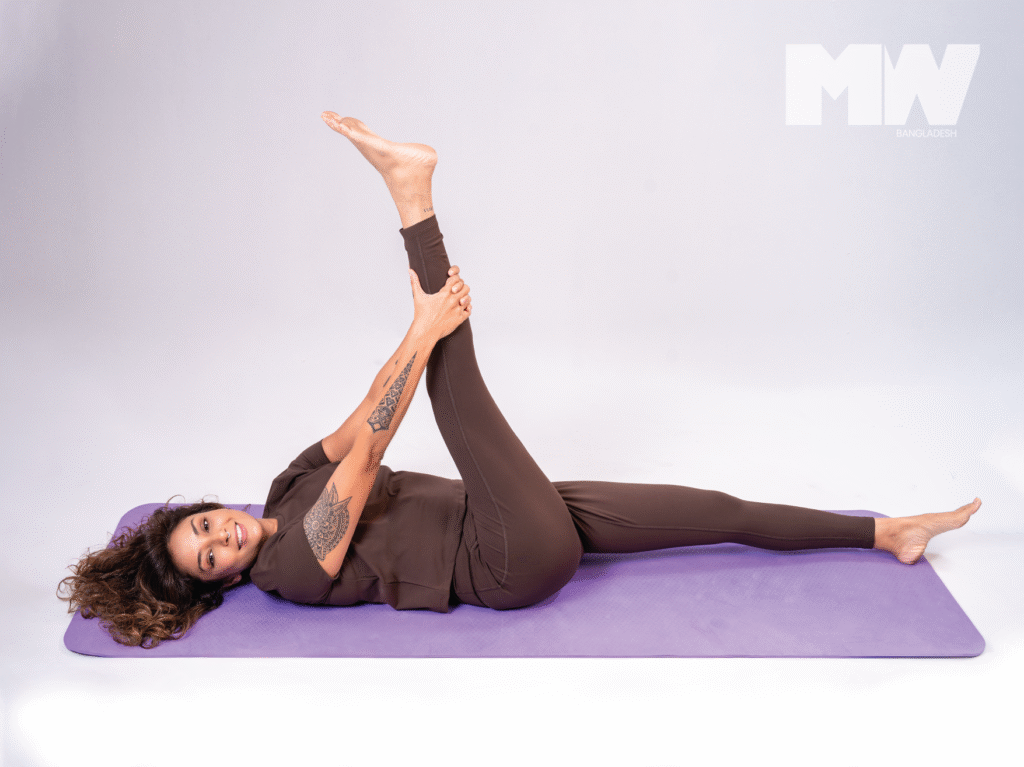

In her classes, the focus isn’t just flexibility or strength. It’s awareness. No theatrics, no glamor. Just breath, stillness, and patience. Her students show up not for transformation, but for space—to think, to recover, to simply be.
In an era where yoga is marketed with slogans and hashtags, Anika’s approach is refreshingly grounded. She doesn’t promise peace. She teaches people how to work with discomfort instead of running from it.
“Yoga isn’t about escaping,” she says. “It’s about facing the world—one breath, one step, one moment at a time.”
And that’s what makes her work so necessary. Not because it changes lives overnight, but because it reminds people how to live—with intention, honesty, and strength.
“Yoga Has Changed My Life”
The Quiet Impact of Yoga on Tani Baten
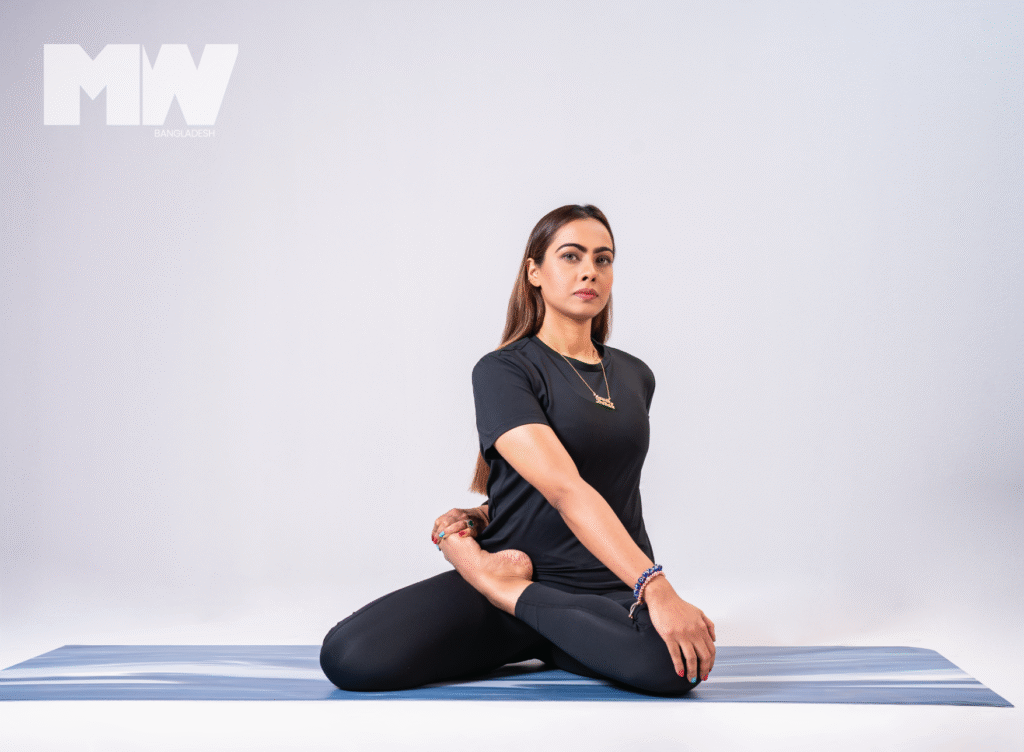
Tani Baten didn’t come to yoga with a grand vision. Like many others, she joined a class looking for some relief—physical, mental, maybe just a break from the everyday. But what she found was something larger, something that would become her life’s work.
“Yoga has changed my life,” she says simply. It’s not just a statement—it’s a turning point. A shift that began with personal healing and grew into a mission to share that stillness with others.
Today, Tani is an internationally certified yoga and Pilates instructor. She completed her 700-hour teacher training in Vietnam, earned a yoga therapy diploma from Swami Vivekananda Yoga University in India, trained in meditation in Rishikesh, and received her Pilates certification in Switzerland from Sana Motion. But it wasn’t the certifications that defined her. It was what yoga taught her in between the postures: presence, strength, and confidence.
Yoga, she says, gave her energy, improved her health, and helped her discover her voice. “It boosted my confidence,” she reflects. “Along with preventing many sicknesses, it has improved my healthcare. Yoga helped me pursue a career in life.”

Tani now leads classes that blend modern and traditional approaches—flexible enough for city dwellers and grounded enough to retain authenticity. “I conduct modern yoga classes mostly, but I also take traditional ones. Both are needed. People come with different goals,” she explains.
Her sessions don’t focus on trendiness or spiritual theatrics. Instead, they emphasize accessibility and function. In a culture that often prioritizes external productivity, Tani’s practice encourages internal awareness. It’s not about performing yoga—it’s about understanding your body, your limits, and your breath.
What’s changed recently, she observes, is how people approach the practice. “Nowadays I am noticing that people are more enthusiastic. Everyone is getting motivated and cautious about their health.” Yoga, once a niche interest, is now part of mainstream wellness in Bangladesh—and Tani is at the heart of that shift.
What makes her work remarkable isn’t flashy branding or lofty promises. It’s the simple, consistent act of creating space—on the mat and in life—for people to slow down, stretch, and breathe.
In a world that rarely allows pause, Tani Baten teaches stillness—not as an escape, but as empowerment.
“Yoga Isn’t Foreign—It’s Human”
Eliza Chowdhury on Demystifying Yoga in Bangladesh
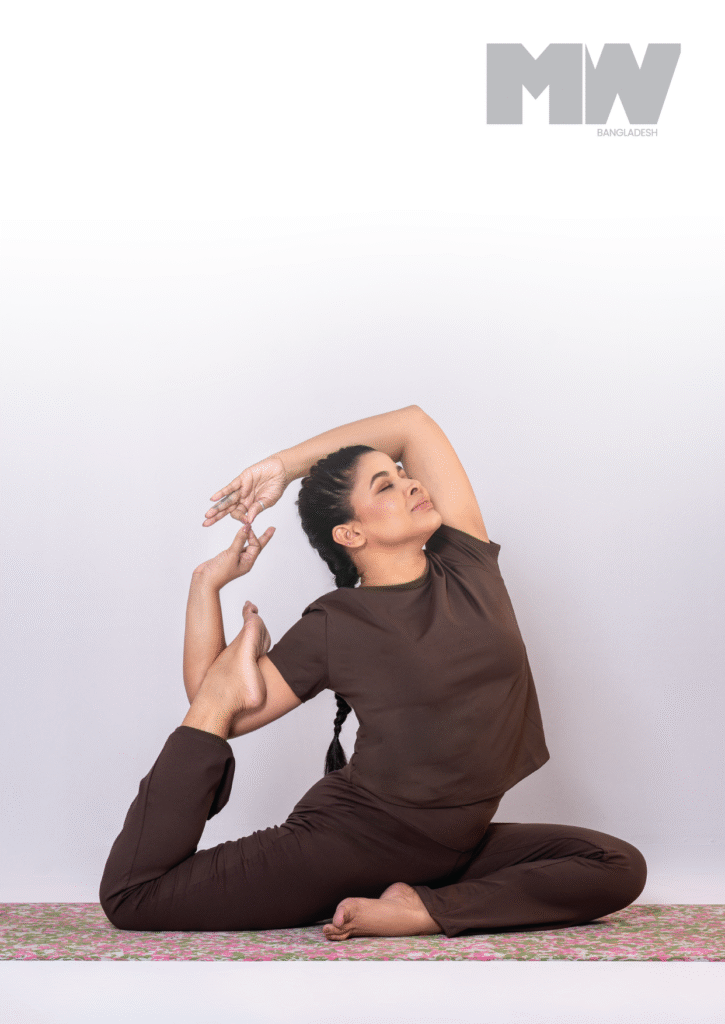
Eliza Chowdhury didn’t set out to become a yoga teacher. Like many others, she lived multiple lives—moving through different careers before yoga entered the picture. But when it did, it stayed.
“I came to yoga much later,” she says. “But once I started practicing postures and meditation, it became clear to me: if I took this up seriously, I could help myself—and others—overcome physical and mental challenges. That felt meaningful. Not just for people, but for nature too.”
Today, Eliza is a seasoned yoga instructor with certifications from India and Thailand, but her teaching doesn’t revolve around titles or aesthetics. She teaches from lived experience—a body once fatigued, a mind once overwhelmed. “There’s no alternative to yoga when it comes to well-being,” she insists. “I say this from my own life. I was dealing with all sorts of issues, and yoga gave me a way out. Not dramatically. Quietly.”
Her approach to teaching is simple and grounded. Eliza doesn’t chase trends. She focuses on consistency. She sees yoga not as a global trend, but as a human inheritance—older than borders, deeper than branding.
When asked about the so-called modern evolution of yoga, she pauses. “There’s no real ‘modern’ technique. The postures are ancient. What’s changed is the tools we use—props, mats, supports. Before, people used whatever they had: cloth, wood, oil. Now it looks slicker, but it’s the same foundation.”
What’s truly modern, she argues, is science catching up. “Yoga is 5,000 years old. Now, science is proving what yogis already knew. That’s what we call modern yoga today—scientific validation of ancient knowledge.”
But in Bangladesh, the road isn’t smooth. Eliza points to the lack of proper training infrastructure as a major hurdle. “There’s no real institution here to study yoga seriously. Most teachers have to go abroad or learn through scattered means.”
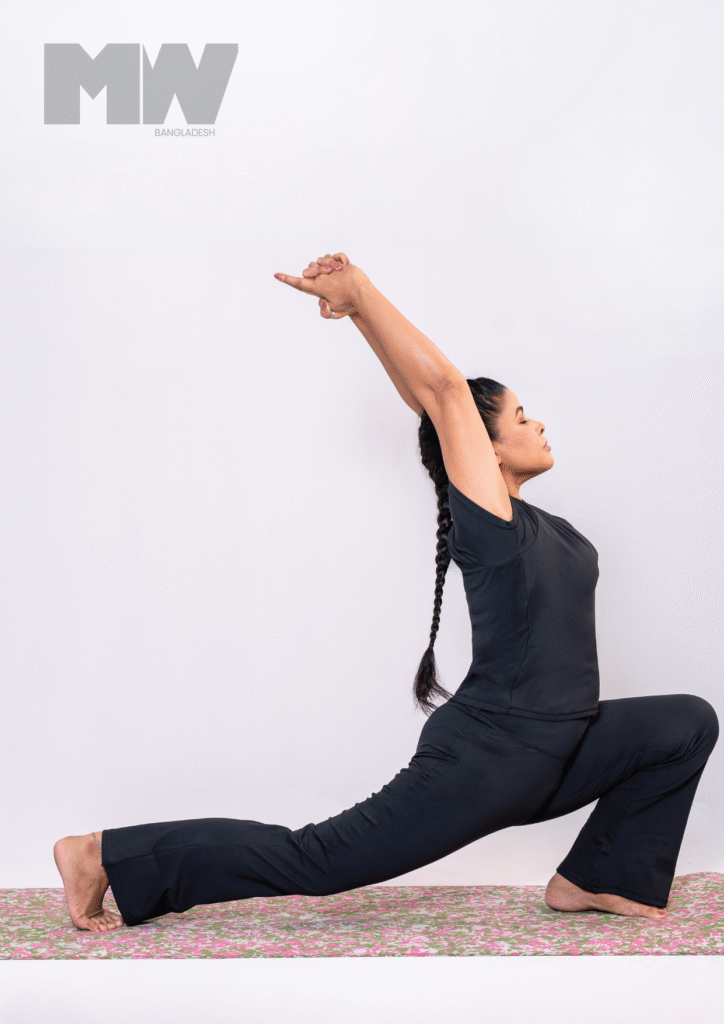
Then there’s the religious misconception. “Some people still think yoga belongs to one specific religion. That holds a lot of folks back.” She’s had to patiently explain that yoga isn’t about worship—it’s about alignment. With your breath. With your habits. With your body.
Another unexpected challenge? Clothing. “Many assume yoga needs Western outfits—shorts, tight leggings, tank tops. That’s not true. You can practice yoga in a kameez, fatua, even a saree. But this belief that you need modern gym wear stops many women from trying it.”
Despite the obstacles, Eliza sees progress. “Yoga is definitely more popular now. People are beginning to see it for what it is—a practical way to feel better and live better. And that acceptance will only grow.”
For Eliza, teaching yoga isn’t about prestige or performance. It’s about returning people to themselves. Not by pushing them into poses, but by quietly reminding them that their bodies—and lives—can feel different. Better. Grounded.
Because for her, yoga isn’t something foreign to be imported. “It’s already in us,” she says. “We’ve just forgotten how to access it.”
MW’s Summer Checklist
Curated Picks for a Grounded Season with Turaag Active
As the heat rises and the city hums louder, MW’s summer mantra is simple: move with intention, dress with purpose. This season, we’ve teamed up with Turaag Active to curate a wardrobe that speaks the language of stillness and strength. These pieces aren’t about chasing trends. They’re about function, breathability, and letting your body speak freely, on and off the mat.
The Everyday Flow Tank – Lyra Camisole
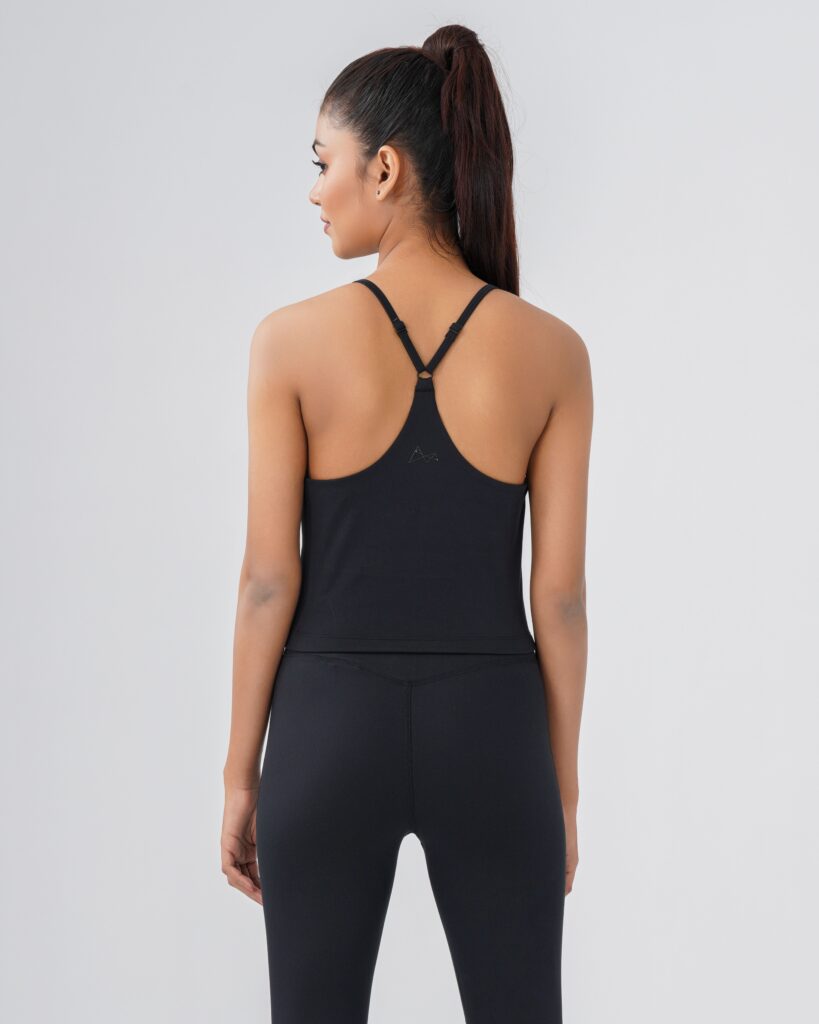
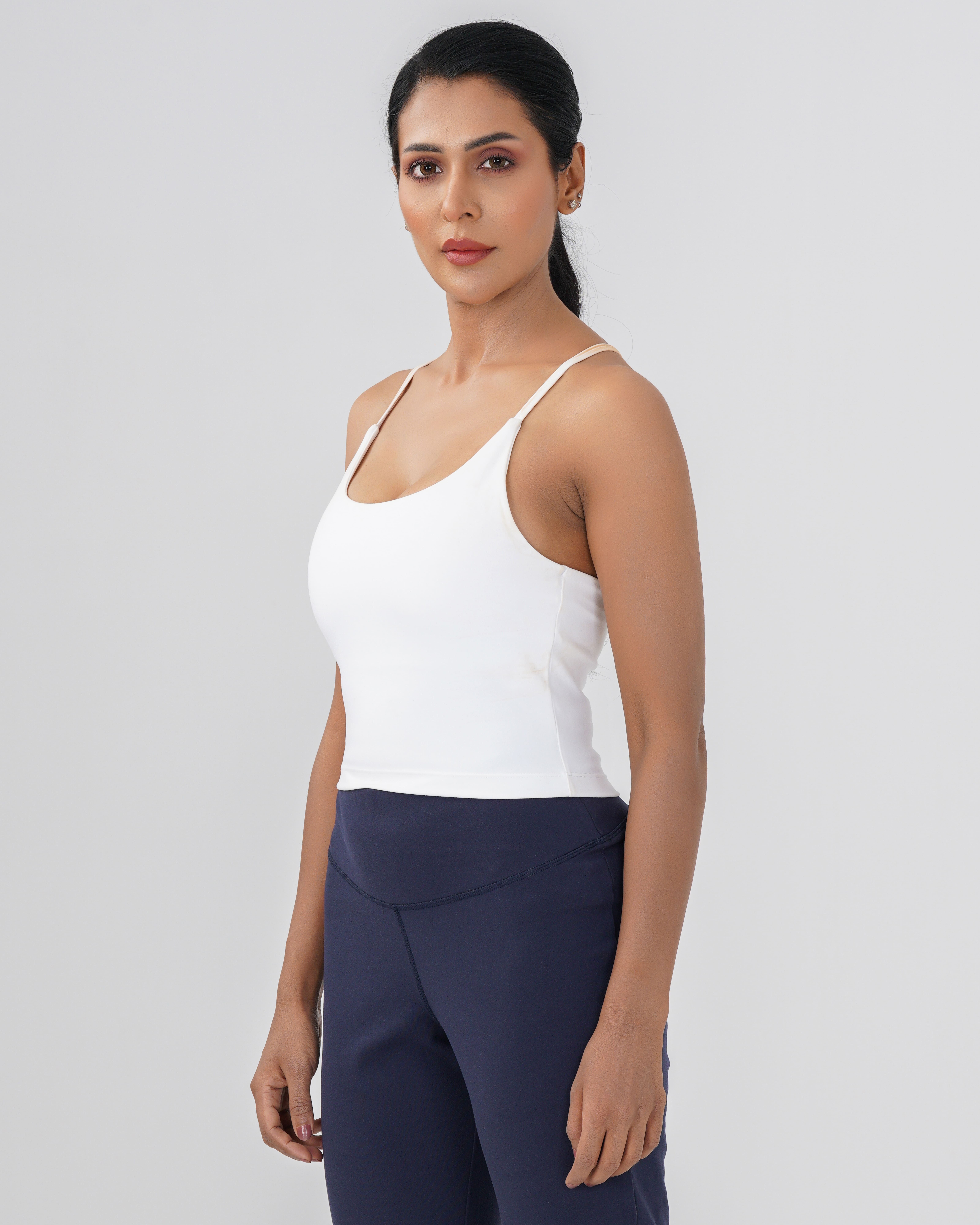
Hugging yet breathable, the sleek scoop-neck design features an added inner layer that offers gentle support for light movement—from yoga flows to focused work at a café—without ever constricting your breath or thoughts.
Aerosculpt Cropped Leggings
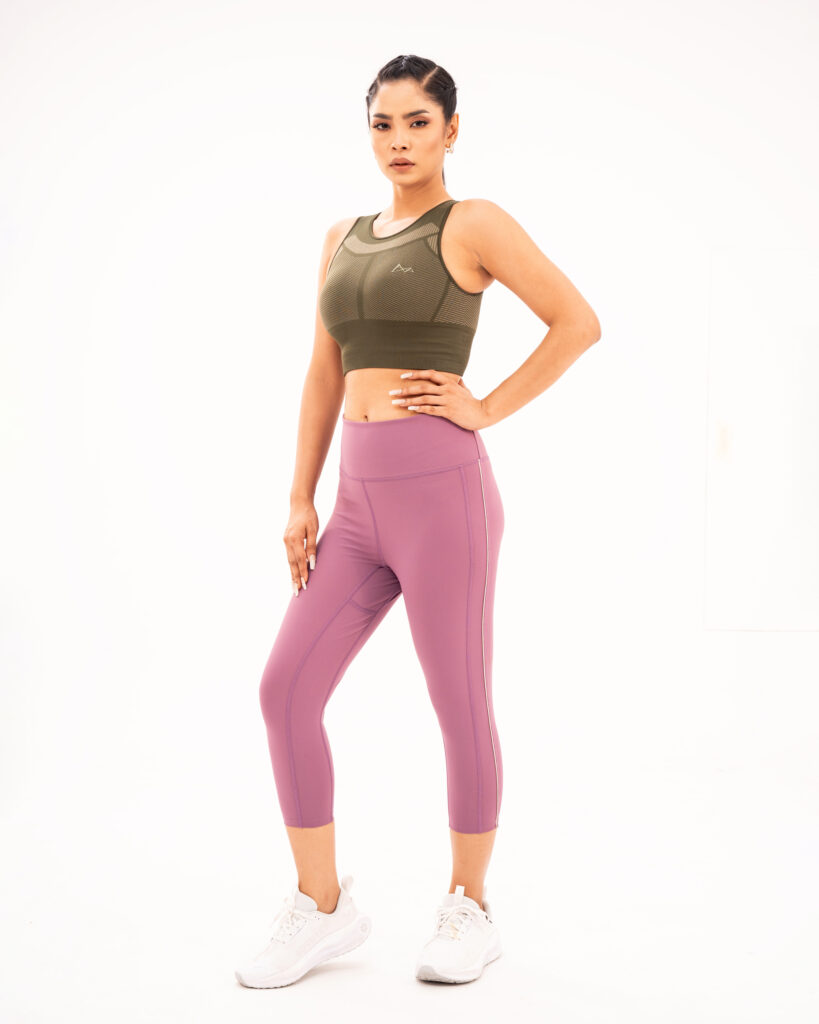
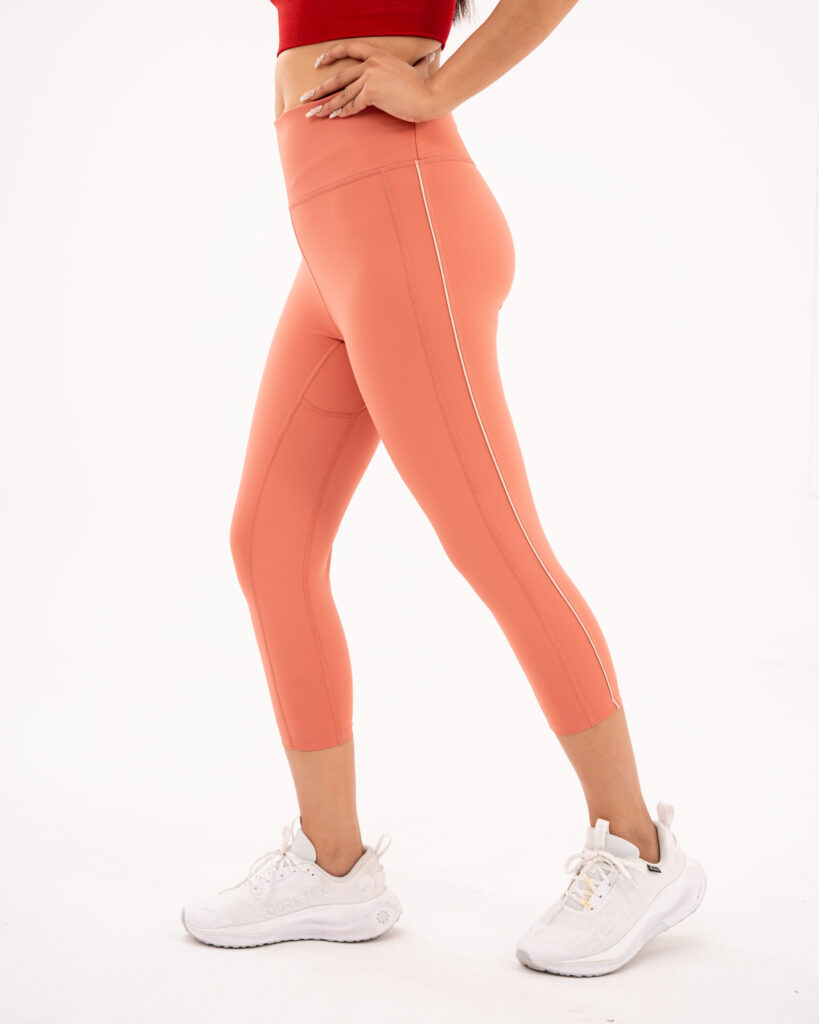
Cropped just above the ankle, sculpted to support without squeezing. These leggings offer a tight-but-comfy fit in breathable fabric. Heat-tested and urban-ready, they strike the perfect balance between confidence and comfort.
Velocity Seamless Racerback + Shorts

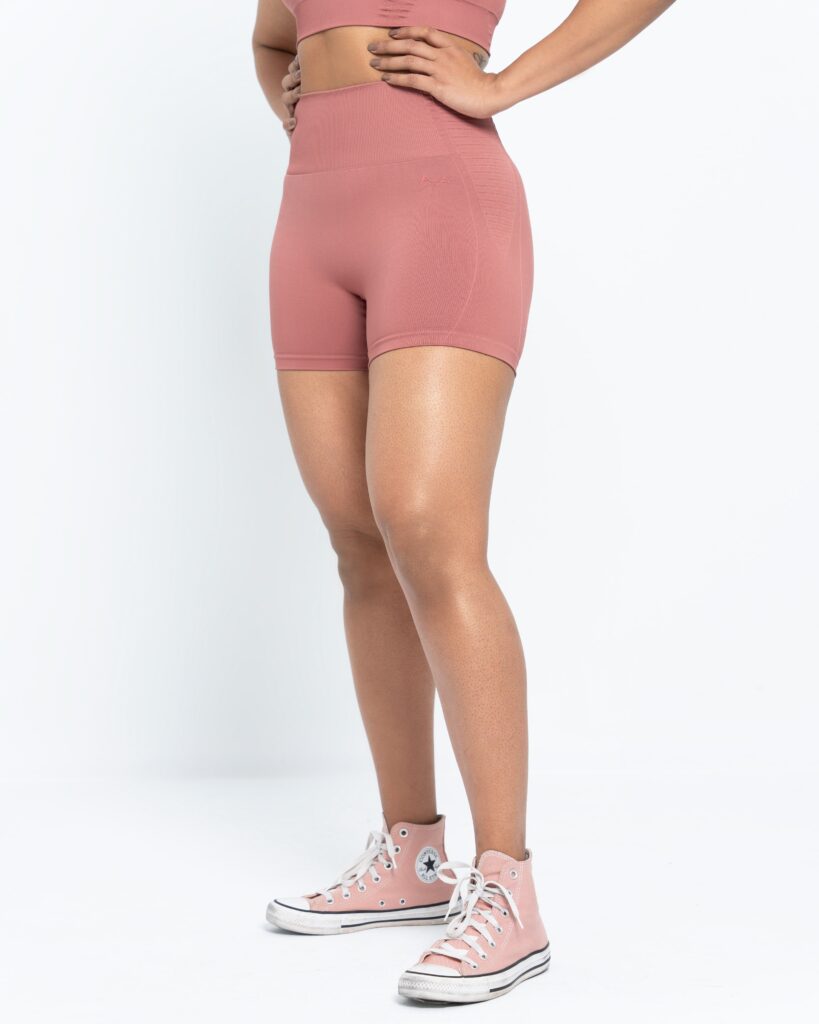
This duo pairs like a dream: supportive racerback top and sculpted sweat-wicking shorts that carry you from rooftop yoga to riverside walks. Both pieces are seamless for fewer distractions, and lightweight enough to stay with you from practice to after-work plans.
Lyra Cropped T-shirt
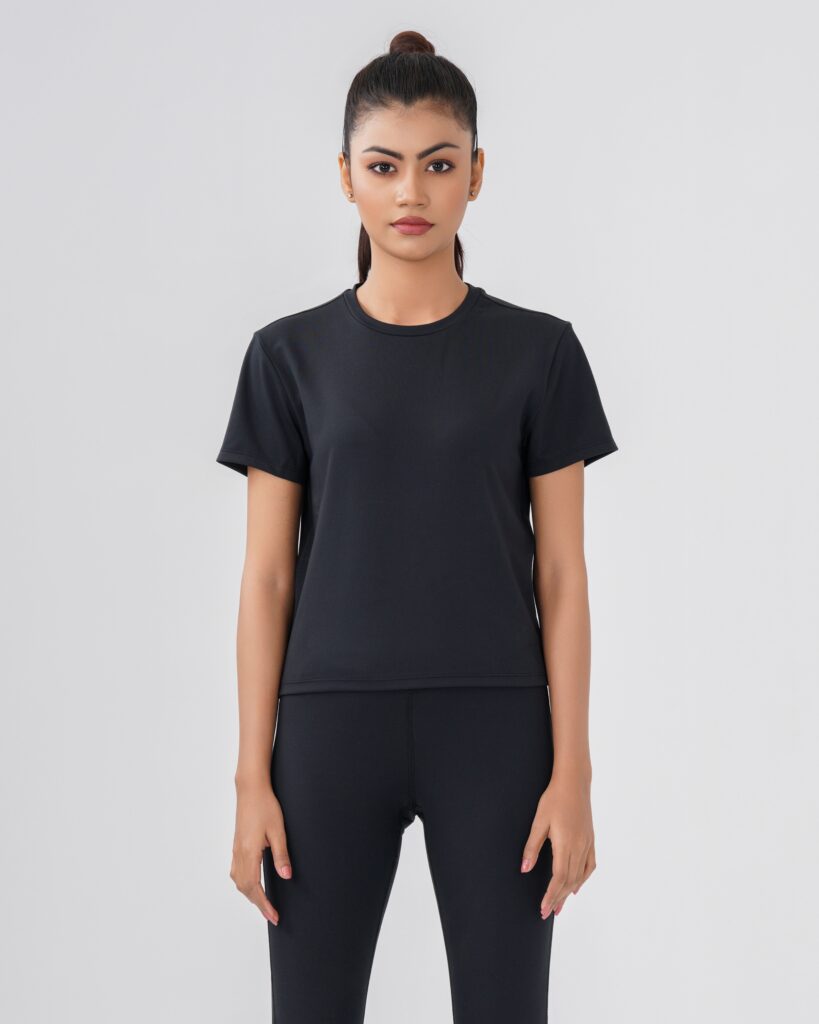
Softly structured and effortlessly wearable, this versatile t-shirt is an everyday essential. Made with breathable fabric and a flattering fit, it’s perfect for layering over your activewear or wearing on its own.
Lyra V-Cut Leggings
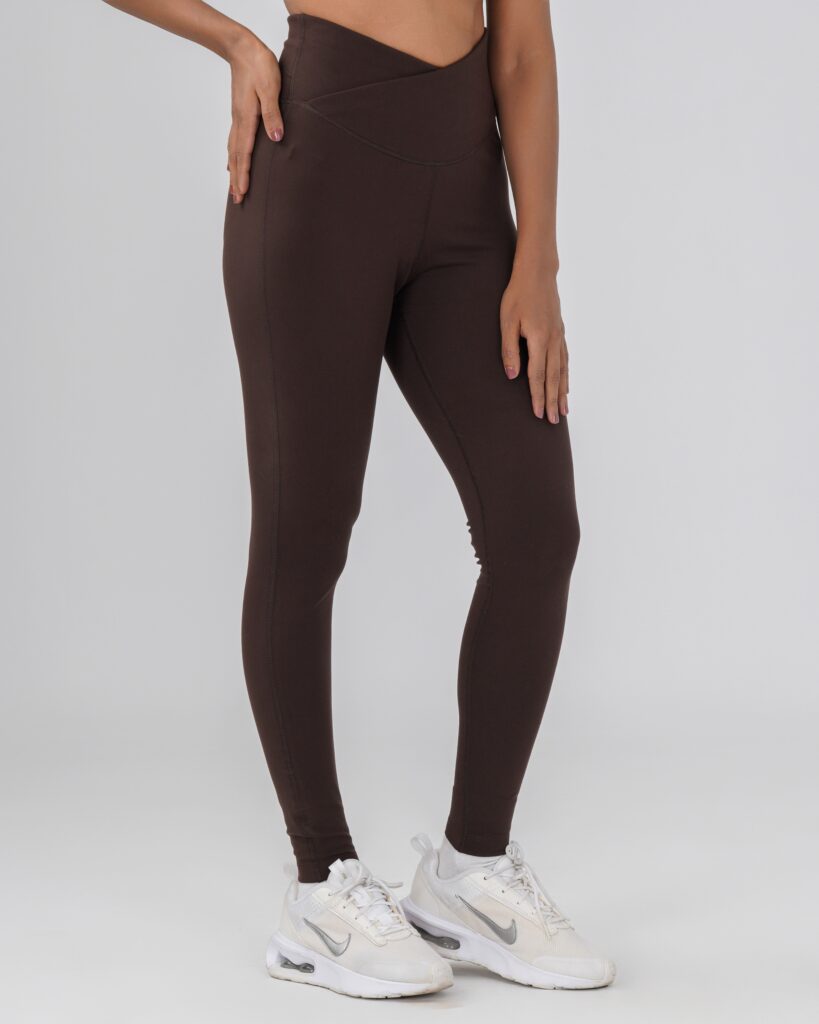
Sculpted with a high-rise silhouette, these V-cut leggings are designed to flatter, support, and flow. From studio sessions to slow days off, they move with you, never holding you back.
Flare for the Pause
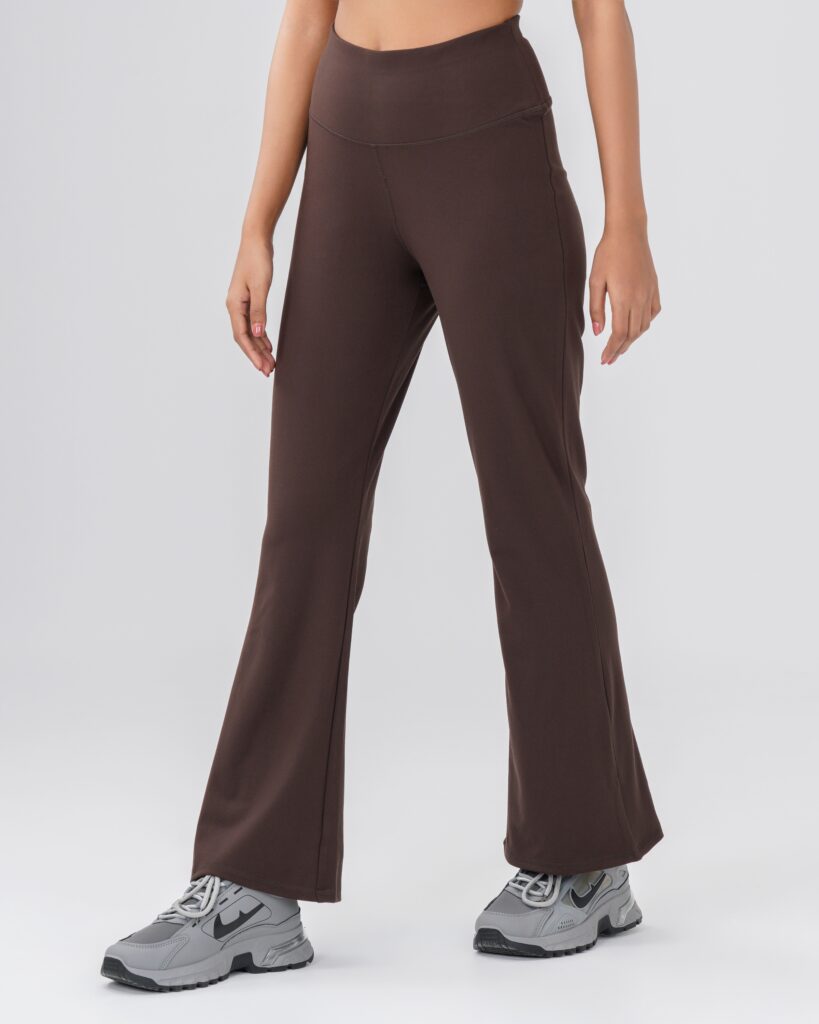
When activewear meets intention, the result is never just “fit.” The Lyra Flared Pants redefine what it means to dress for ease, especially in Bangladesh’s humid heat. These aren’t about fashion statements. They’re about freedom.
In Association With Turaag Active
All Product Photo: Courtesy
Fashion Direction & Styling: Mahmudul Hasan Mukul
Photographer: Mobarak Hossain
Yoga Instructor: Anika Rabbani | Tani Baten | Eliza Chowdhury
Make-up: Sumon Rahat