


By Abak Hussain
Eleanor Catton’s recent novel Birnam Wood is a taut thriller that brings out all of the classic Millennial anxieties, central to which is the tension between wanting to do good for the planet and wanting to shake hands with billionaires who would gladly burn down the world if it meant a rise in their stock price.
Early Millennials, if you will remember, were the advocates of tech companies which seemed to harbor a new ethos. We fell in love with Apple and Google, and we started living our lives on social media. Many of us bought Google’s promises – hook, line, and sinker – to not be Evil. We advocated for data centers and cloud computing.
Google, for example, in its early days promised a clean energy revolution which really turned out to be a lot of hot air. Today, unless you have wilfully put blinkers on, it should be clear that these tech companies, with their eye-watering levels of energy consumption, are taking a disastrous toll on the planet, and let’s not even get started on the other twists and turns leading up to things like crypto and the current obsession with AI.

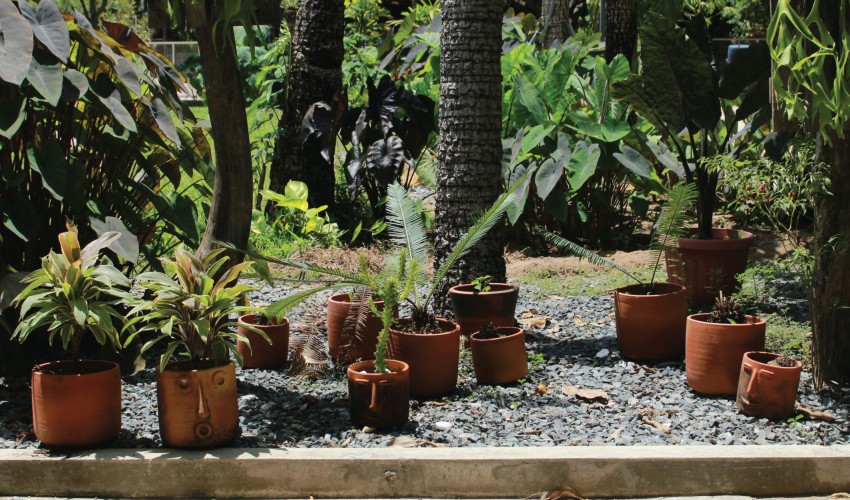
Photo Source: Josui Isai Ramos
They heat up the planet, deplete our water supply, wreak havoc on the eco-system, all at the service of greed. Getting cozy with the likes of Trump is not beneath them. All of this feels like a betrayal for Millennials, who in the not-so-distant past wanted to be all about living clean and green, but also wanted to embrace a future controlled by the tech sector.
In Birnam Wood, Catton’s long-gestating novel and follow-up to her Booker-prize winning doorstopper The Luminaries, we meet the titular guerrilla garden collective which genuinely has its heart in the right place. Things get complicated when the group encounters a sinister billionaire who cares not the slightest bit for the environment but knows the value of a good smoke screen. Patronizing Birnam Wood gives this billionaire a chance to greenwash his reputation (Musk or Bezos anyone?) while for the starving idealists of Birnam Wood, the promise of some real cash and the chance to go official and go public in a more real way is too much to resist.
The ethical question that emerges is one that pretty much all of us have faced at one time or another in our lives: If a company that you morally disagree with offers you an attractive job, would you take it?
I enjoyed reading Birnam Wood from first page to last – as a thriller it doesn’t do anything too adventurous, and takes plot seriously, which moves along briskly. Though a Booker-winner, Eleanor Catton is less interested in living up to the “literary” part of the term of “literary fiction,” unapologetically delivering the thrills of good genre fic.
What I am most appreciative of in the novel though, is the way it introduced me to the world of guerrilla gardening, and though I do not yet know enough to comment on its efficacy in the real world, it is a powerful idea that exhorts all of us to do our part for the environment even if it means breaking a rule or two.
The rules, after all, came from authoritarian-leaning governments in bed with tech titans, and as such, breaking them may be the morally right thing to do.
So what is guerrilla gardening?
Simply put, guerrilla gardening is taking the initiative to garden in zones where one does not explicitly have the right to do so. It is gardening that is not afraid of breaching the fence. Public places, abandoned zones, unfrequented dirt tracks, your neighbor’s lawn which they never seem to care about – all are fair game for the guerrilla gardener.
As such, guerrilla gardeners are, if you will, environmental vigilantes of sorts. They have chosen to side with the environment at personal risk to themselves. I am aware that this probably sounds a bit hippie-dippie idealistic. It’s for sure a bit reminiscent of utopian dreamers with no conception of how the real world works, with folks chaining themselves to trees or living somewhere up in the forest. They are dreamers who say Down With Capitalism while ordering sleeping bags off Amazon to camp out in a national park.
No doubt, for a long time this group had made itself an easy target of Boomer derision, but as I sit here and write this, with the noise of a literal monstrosity being constructed in my backyard ringing in my ears, as I see how badly Dhaka has gotten screwed over by short-sightedness and greed, I will take a stupid hippie dreamer any day over the money-laundering scumbags building gaudy skyscrapers in my city with helipads on top of them. Dhaka, thanks to these people, is utterly unliveable – the air is toxic and the water is poisoned. Construction pollution pervades the city, and the joy and beauty of the outdoors now exists only in the form of memory.
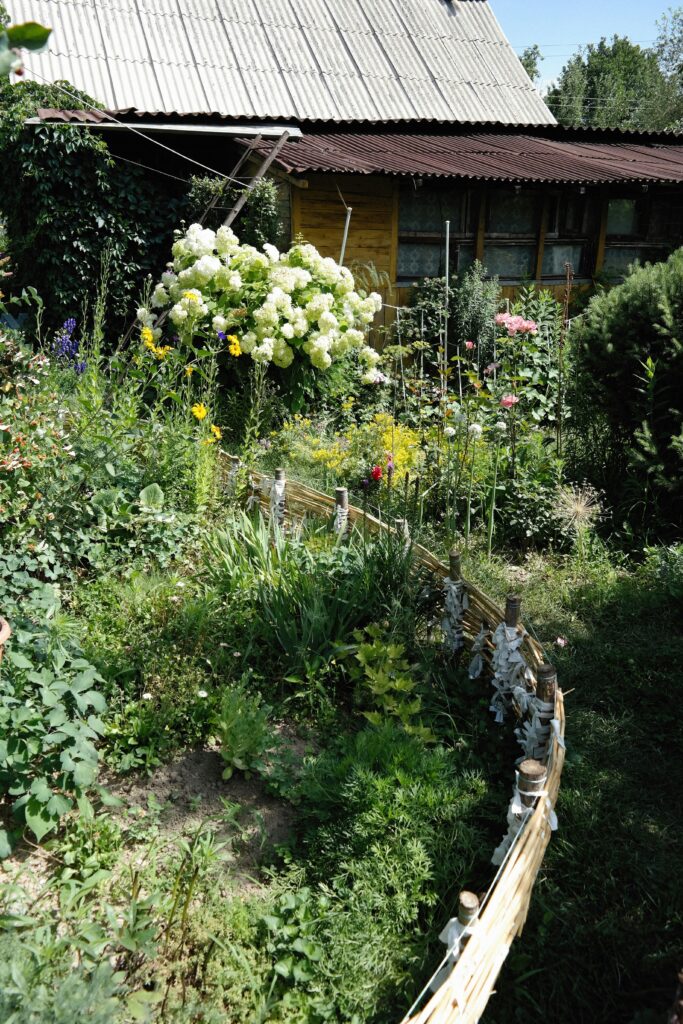
Photo Source: Alexey Demedov
Sleepwalking through a capitalistic lifestyle got us here. To save the environment, perhaps we all need to become a little bad, for lack of a better word – at the very least push back against the status quo.
And why not? It’s not like the rich folk play by any rules. Just take a walk down any neighborhood in Dhaka. You will see that construction sites take up the sidewalk and extend their barriers like it is their birthright. Public pavements are littered with their construction garbage, and regular people are expected to walk in the middle of the street risking oncoming traffic. It doesn’t occur to anyone to complain, and even if someone does, they are bullied into silence. An insane lack of civic sense, and complete disregard for environmental protection has become normalized in Bangladesh. In this circus, any ethical person trying to talk common sense comes across as a clown.
But why should these rich bullies get away with breaching every boundary of law and civility, while the do-gooders sit meekly in a corner? We did not get rid of a tyrannical regime by being meek and passive, and it is certain that we will not be able to save the environment by doing so.
There is, to be fair, a lot of soul-searching my own generation has to do. Elder Millennials are losing their touch. Now that many of us have crept into middle age, are raising kids, and have simply no more headspace for idealism, we have – many of us – joined the dark side. Fear and cynicism has taken over, and we do not wish to rock the boat, preferring to hand over the baton of youthful rebellion to Gen Z.
This would be a mistake. Just like Eleanor Catton, the first ever Millennial Booker-winner, showed that you can be acknowledged as lit-fic while doing straight up genre, the Millennial cohort (birth years 1981 to 1996) dreamt of a different definition of progress. It was ethical, egalitarian, and most importantly, environmental. But we’re all advancing in years, and weariness is setting into our bones, and the bad guys seem too damn powerful, and so, this all feels like a losing battle, I know. But what are we in the end, if we fail to be true to our conscience?
Don’t let the bastards get you down.
Abak Hussain is Contributing Editor at MW Bangladesh.
Feature Image by Bunly Hort