


MW Magazine’s Celebration of Rain, Ritual, and Rabindra Sangeet
By MWB Desk
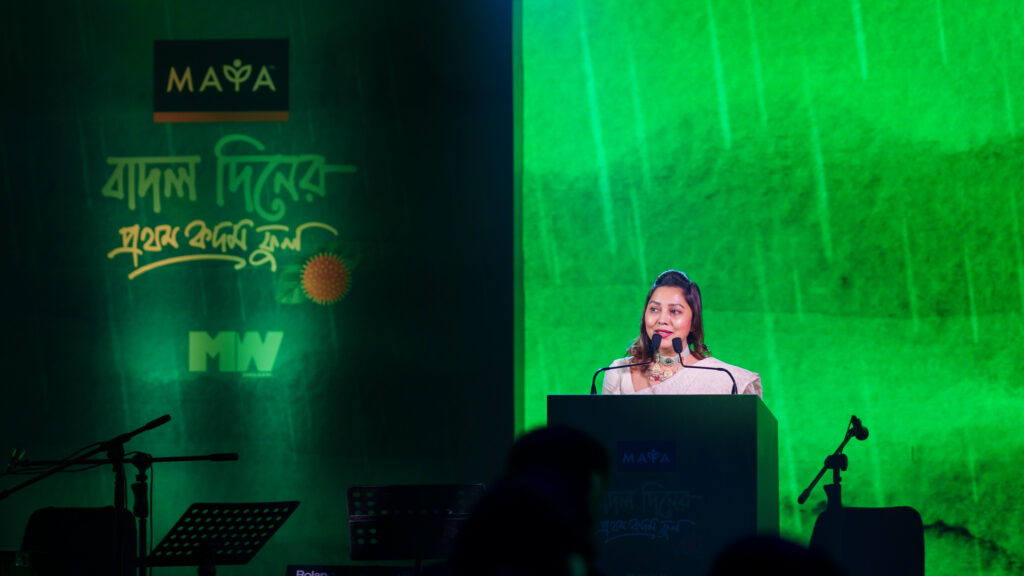
The host, Sarah Alam, walks slowly across the Grand Ballroom floor of the Sheraton Dhaka. She holds an umbrella—not to shield herself from the monsoon outside, but as a symbol of everything the night promises to stir: childhood rain, wistful Kodom blossoms, half-forgotten verses humming in the dark.
Then they arrive.
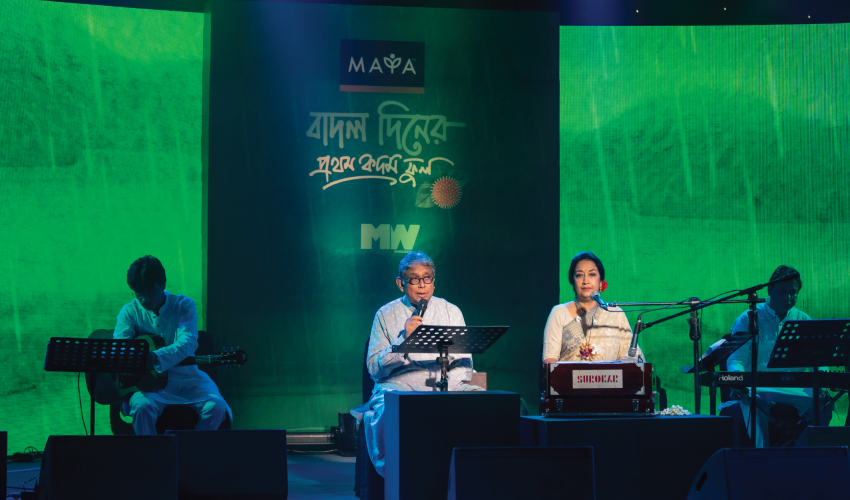
Rabindra Sangeet artist Shama Rahman and veteran actor-director Afzal Hossain—two forces of art, calm yet commanding. Their presence doesn’t announce itself; it seeps in like rain through a half-open window. Within minutes, they hold the room in rapt attention, and the rain inside merges with the rain outside.
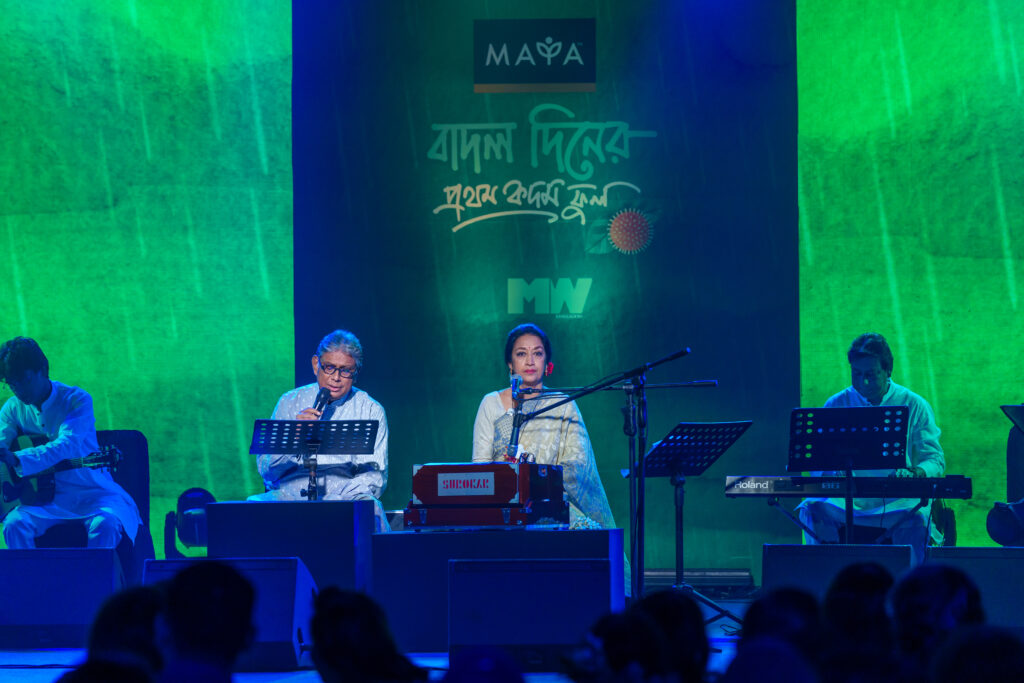
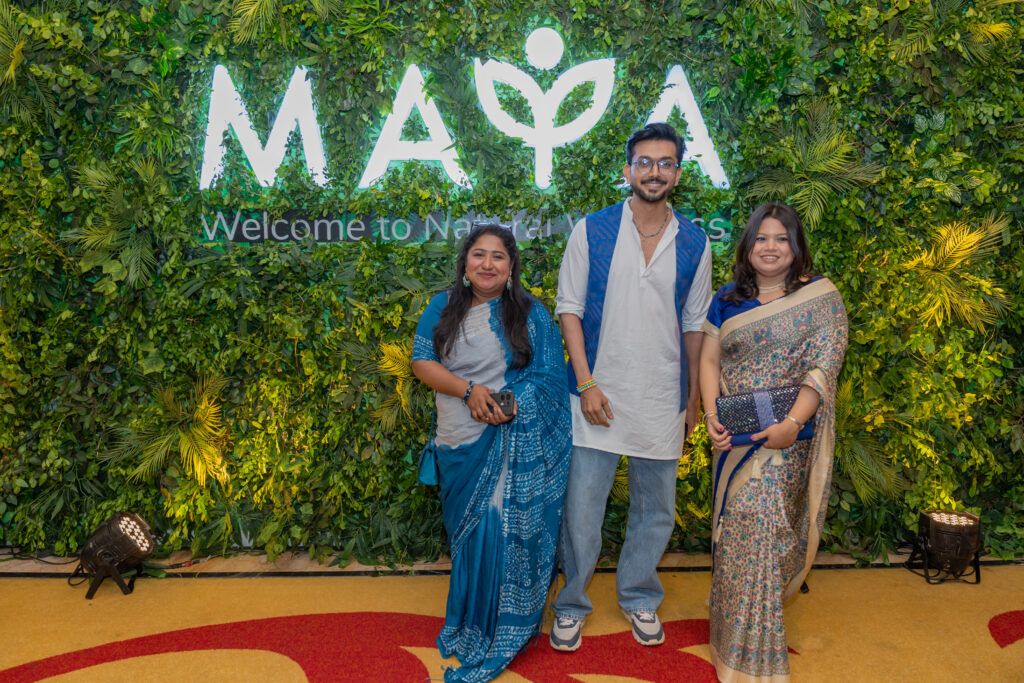
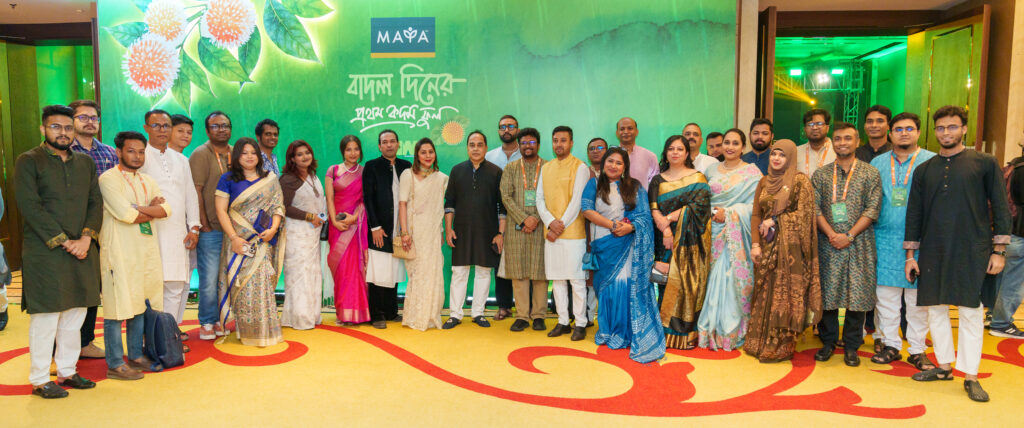
Thus begins “Badol Diner Prothom Kodom Phul”—a cultural evening co-hosted by MW Magazine Bangladesh and Maya, the natural wellness brand under Square Toiletries Ltd.
But to call this a “program” would be missing the point.
This was less of an event and more of a quiet resurrection of monsoon memories, of artistic friendships, of nature’s dialogue with art. As Rumana Chowdhury, Publisher and Editor of MW Magazine, described, “A heart stirred by stormy winds, or getting lost in imagination with a wet Kodom flower in hand—these are more than memories. The monsoon becomes a silent invitation to open the treasure chest of our past.”
And that invitation was answered—with music, poetry, and a kind of stillness that only rain can bring.
“The monsoon becomes a silent invitation to open the treasure chest of our past—and through music, poetry, and memory, we simply answered that call. From Dhaka Drama to Bengali in Motion, MW has always believed that art, architecture, and poetry deserve not just a page, but a stage.”
– Rumana Chowdhury, Publisher & Editor, MW Magazine Bangladesh
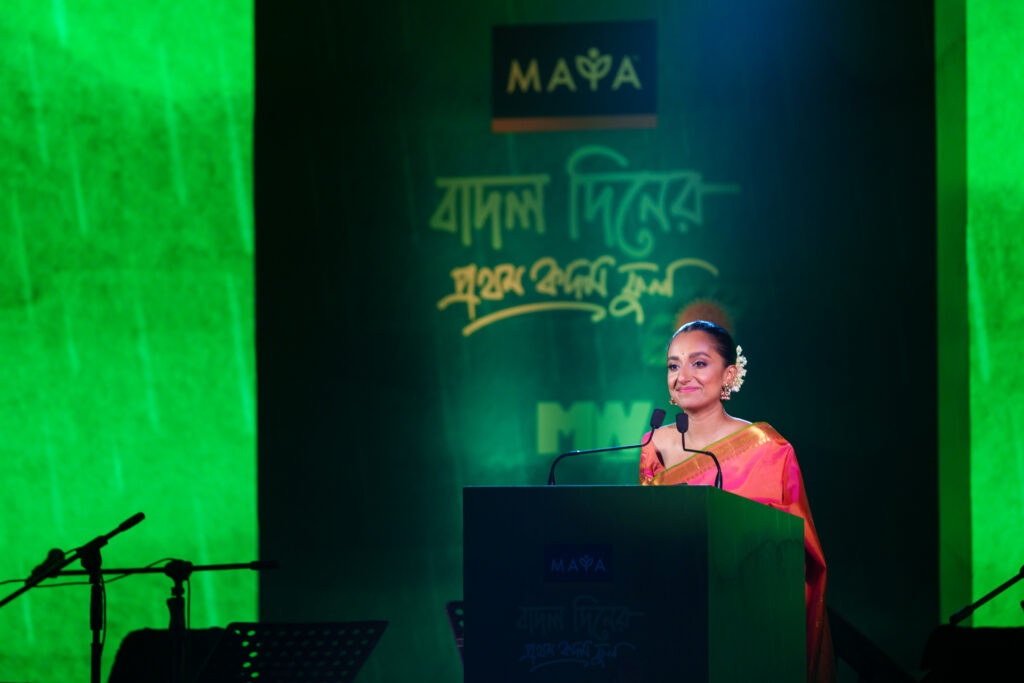
The Mood of Monsoon
The event’s title, borrowed from Tagore, wasn’t just a metaphor. As the night unfolded with musical performances and poetic recitations, it became clear that each act was a Kodom flower in bloom—brief, fragrant, and resonant.
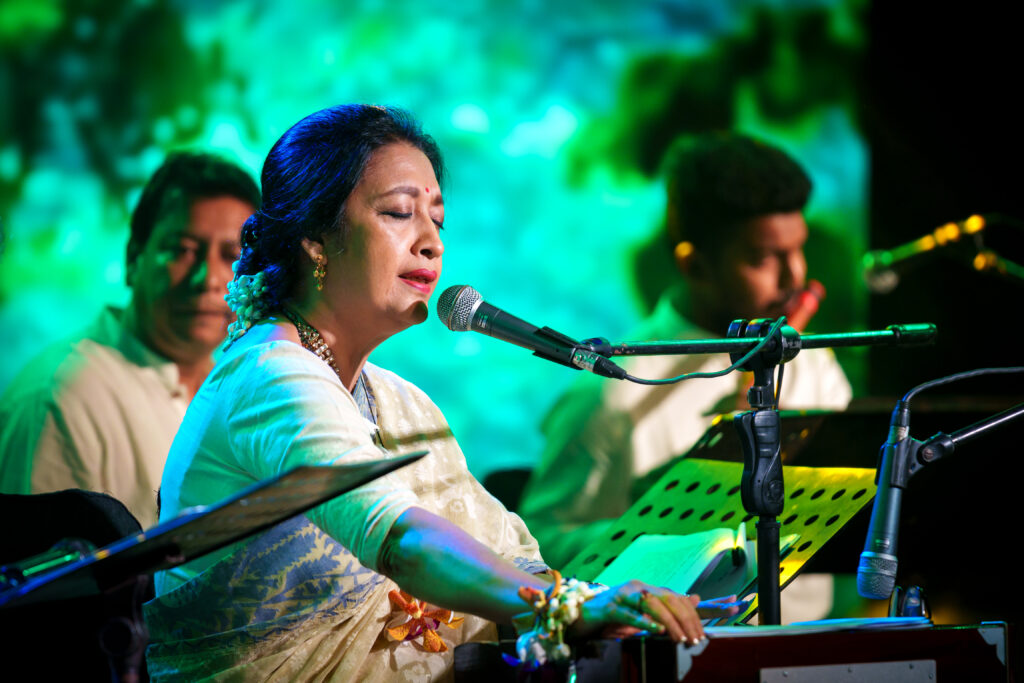
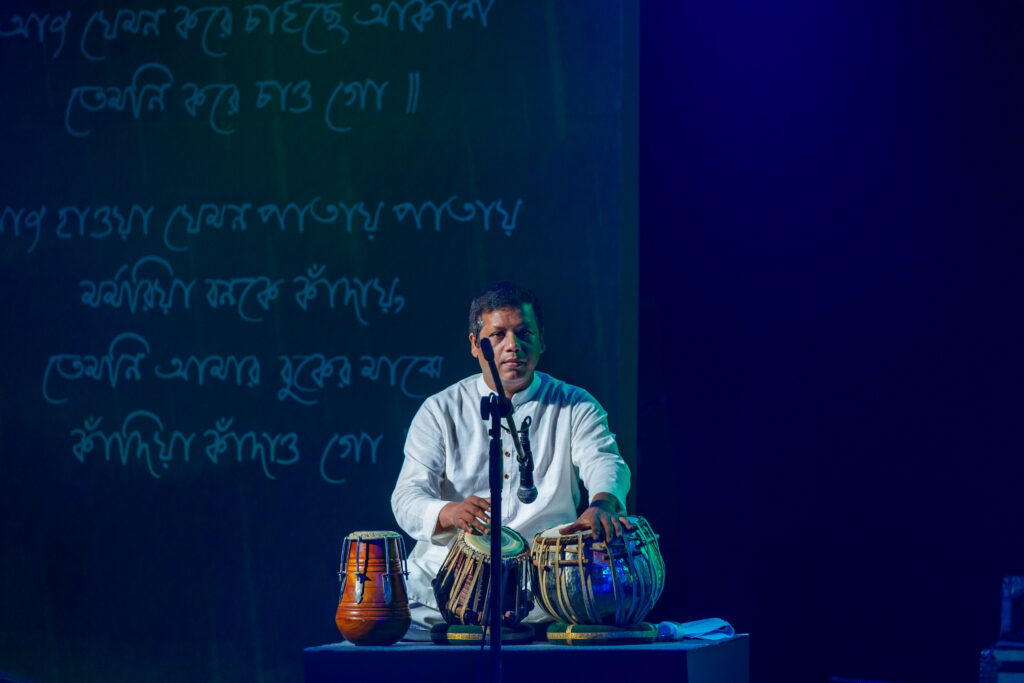
Shama Rahman opened the evening with the titular “Badol Diner Prothom Kodom Phul”, her voice unfolding like the first bloom of rain-soaked memory. From the very first note, it was clear that this wasn’t just a song—it was the season itself, singing back to us.
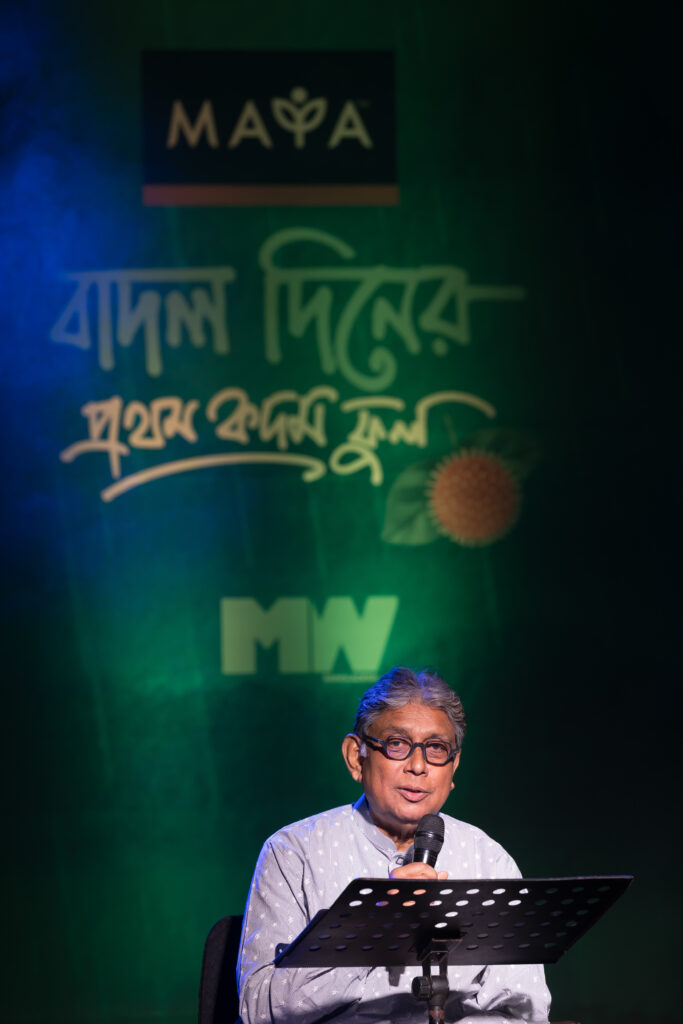
Afzal Hossain followed with Tagore’s poem “Ashaar”, his voice layering the verses with both weight and air. It felt, as someone whispered in the crowd, “like a letter drawn out from rain‑stained pages.”

What followed was a beautifully interlaced setlist, where songs became breaths and poems turned into ripples. Rahman’s renditions of “Megher Por Megh Jomechhe”, “Krishnokoli Ami Tarei Boli”, and “Aji Jhorer Raate” filled the room with quiet wonder, each note suspended like a raindrop refusing to fall.
Hossain responded with poetry. His recitation of Jibanananda Das’s “Pochis Bochhor Pore” brought a hush so deep, it felt like the entire room had stepped into the past. And when he performed Sunil Gangopadhyay’s “Okhane Ke, Keu Na Batas”, the air shifted—the poem lingered, unsettled and tender, like wind before a storm.
A Message from the Heart
At the event, Chowdhury didn’t deliver a formal speech. She told a story.
“MW began in 2022 with a commitment to spotlight art, literature, and culture—not in silos, but as a living, breathing landscape,” she said. “From Dhaka Drama to Bengali in Motion, we’ve tried to make space for shared cultural memory. Maya has been with us every step of the way.”
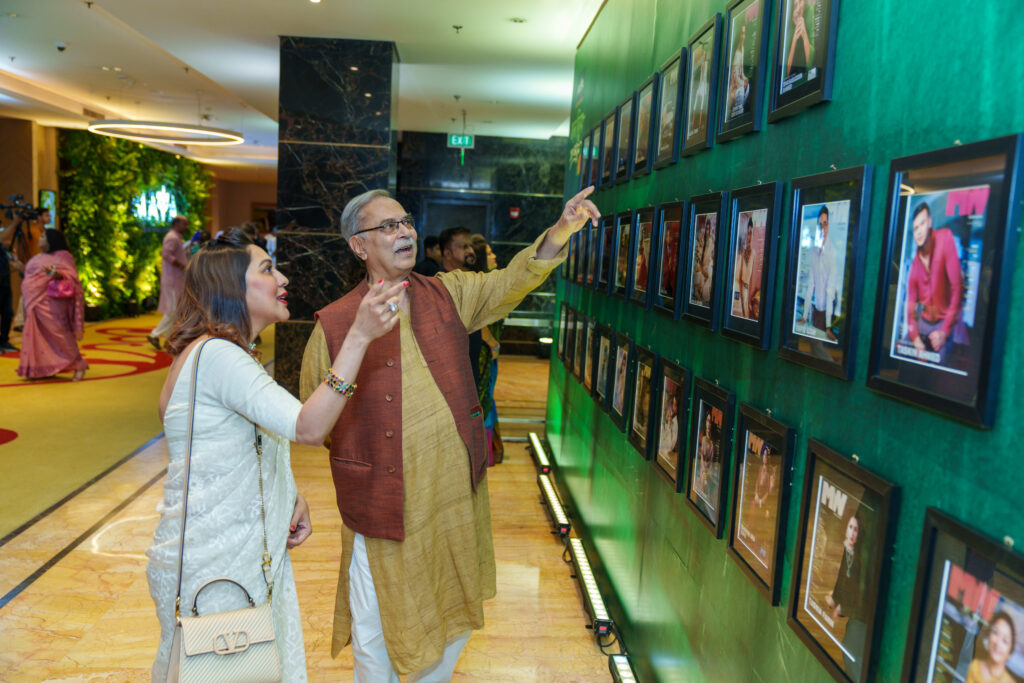
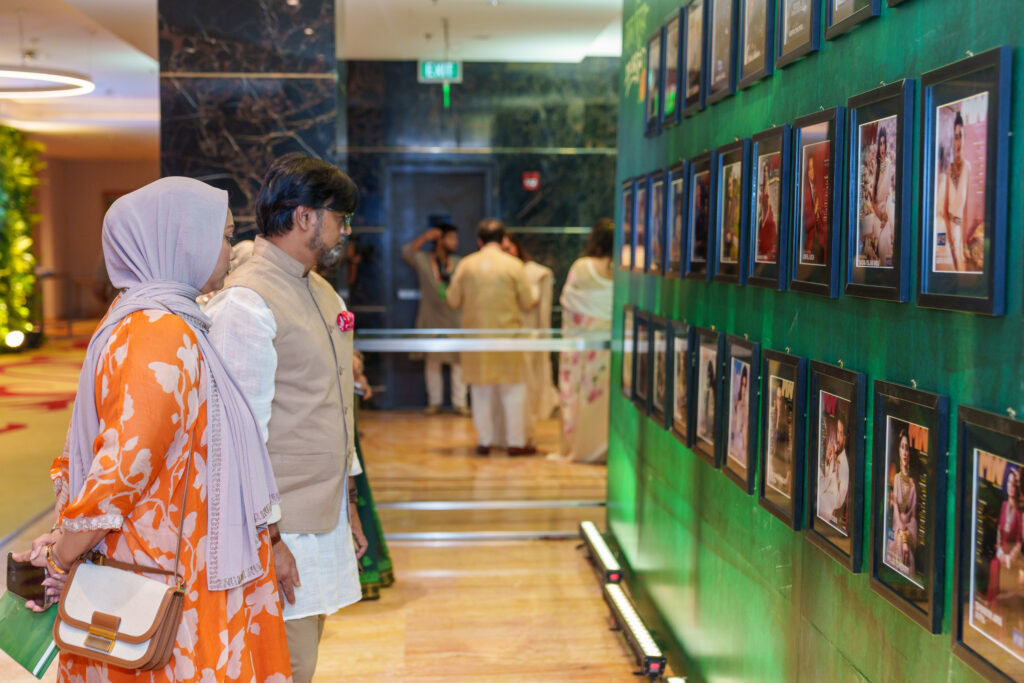
Chowdhury reflected on her personal connections with both performers. “Afzal bhai isn’t just an actor. He’s a director, a writer, and someone we now consider part of the MW family since our 2023 cover shoot.” As for Shama Rahman, the June cover star: “Many of my mornings begin with her voice. There’s a depth in her singing that reawakens something inside us.”
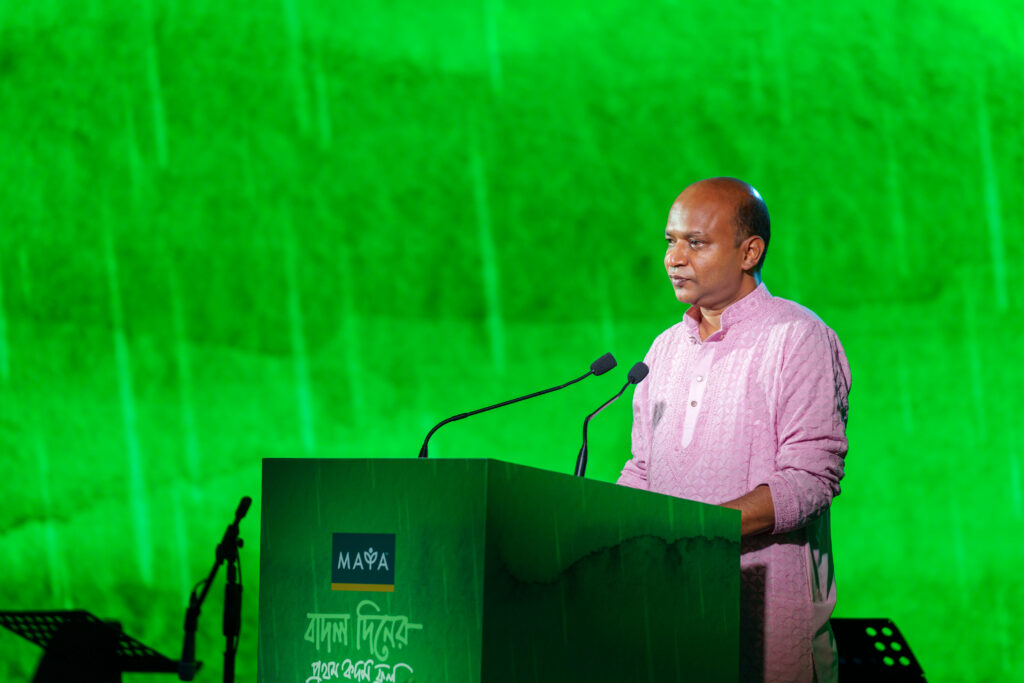
For Malik Mohammad Sayeed, CEO of Square Toiletries Ltd., the event was more than a collaboration. It was an embodiment of Maya’s core values.
“We didn’t want Maya to be just another skincare brand,” he explained. “We wanted to create something that captures our bond with nature.”
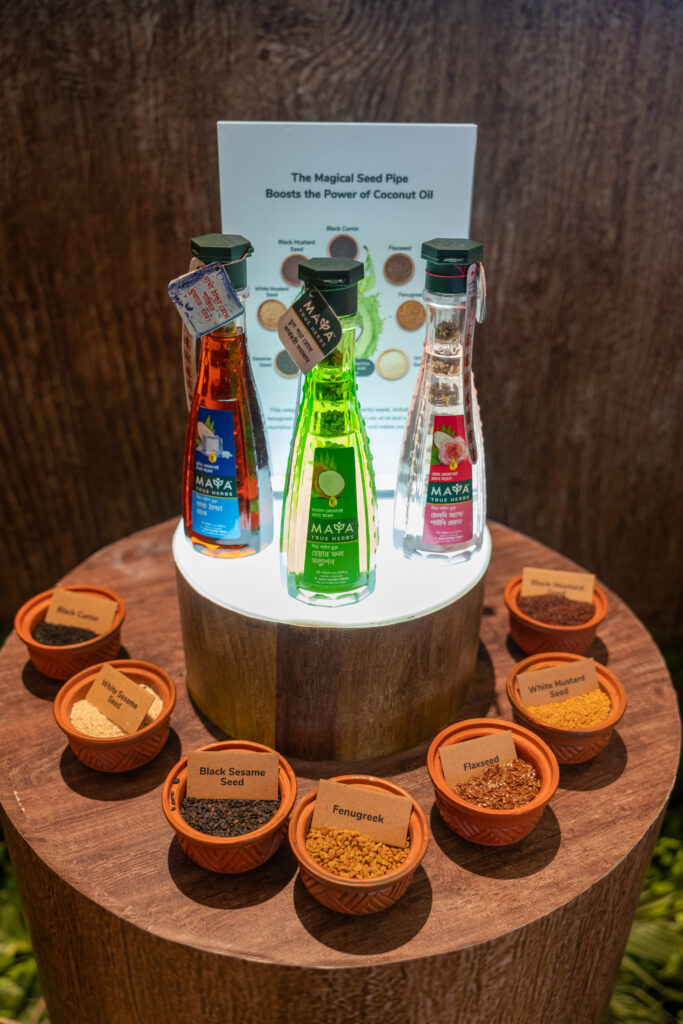
He shared how Maya uses locally sourced ingredients, processed within hours of harvest—something he described as “not just efficiency, but a form of care.” Maya, he emphasized, draws not only from Bangladesh’s own herbal traditions but also incorporates certified organic ingredients from Morocco and Spain.
“In moments like tonight,” Sayeed said, “you realize how closely wellness is tied to memory. The scent of rain, the softness of a Kodom flower—these are sensory experiences that center us. That’s what Maya stands for.”
He also acknowledged the visionary role of Mr. Anjan Chowdhury, Managing Director of Square Toiletries Ltd., whose love for art and sustainability continues to guide the brand’s direction. “His passion for culture has allowed Maya to walk alongside projects like this—not as a sponsor, but as a participant.”
“Maya isn’t just about skincare—it’s about reconnecting with nature, with emotion, and with the quiet rituals that make us feel whole.”
– Malik Mohammad Sayeed, CEO, Square Toiletries Ltd.

Faces in the Rain
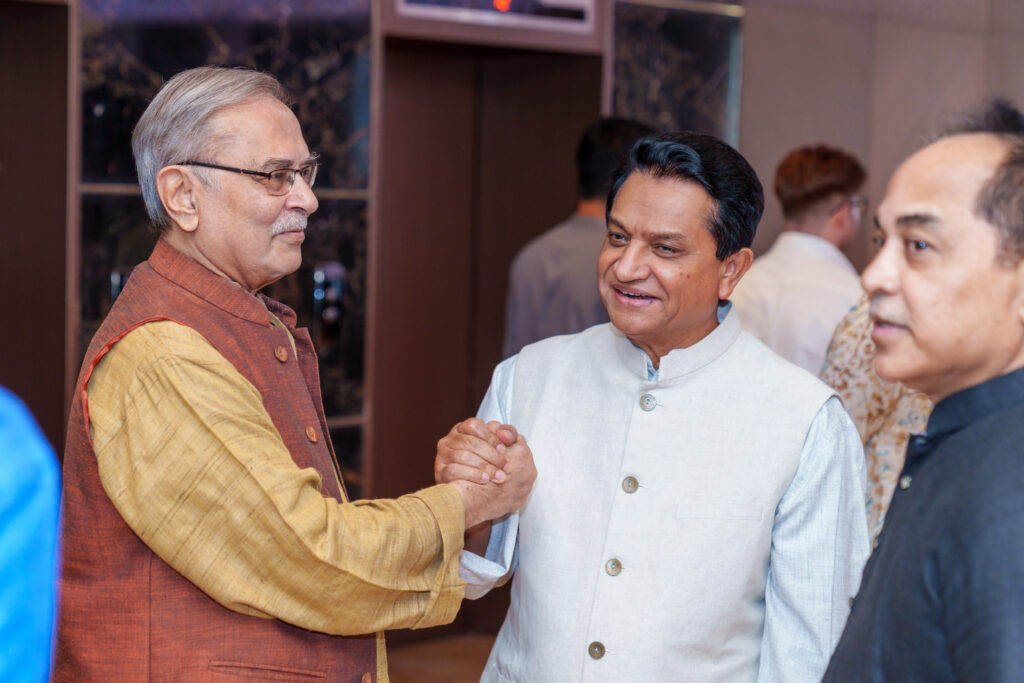
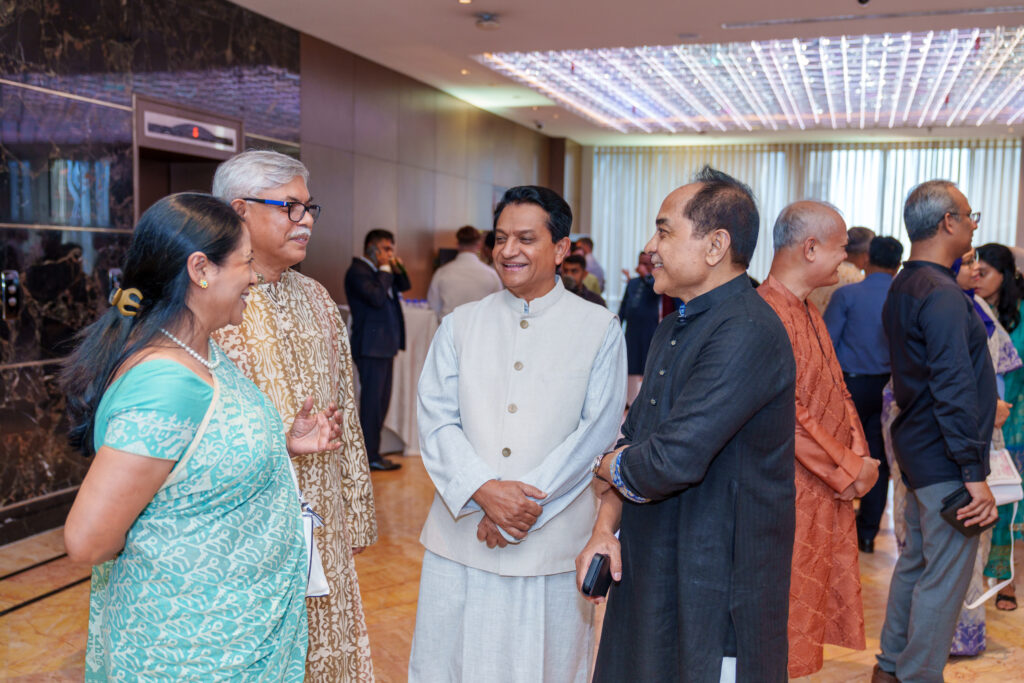
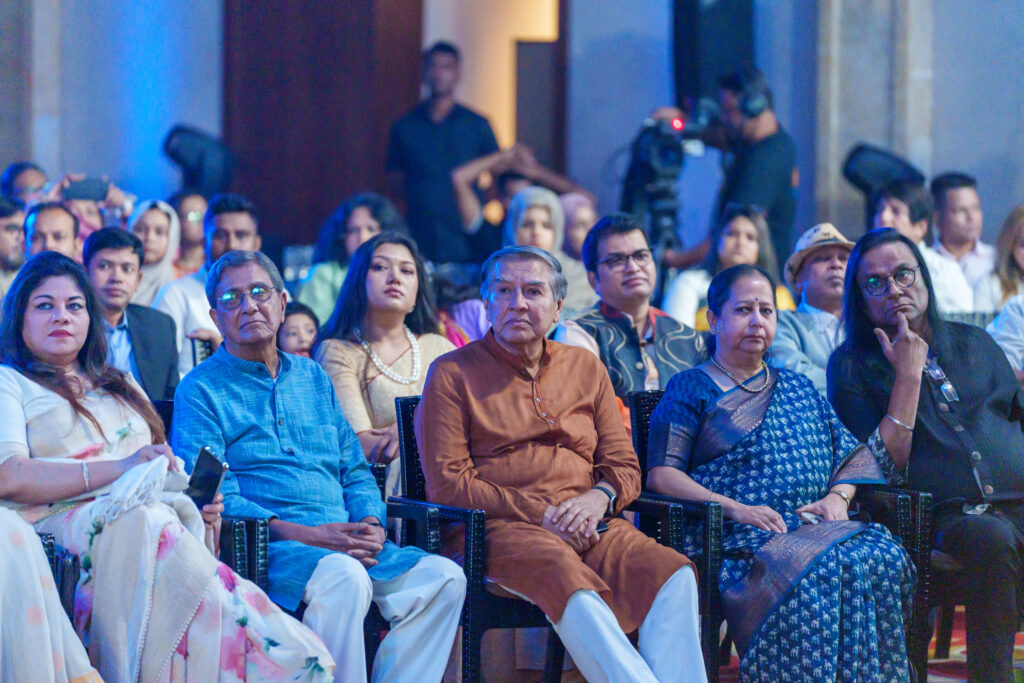
Despite its poetic tone, the night wasn’t weighed down by formality. The room was alive with familiar laughter and easy grace.
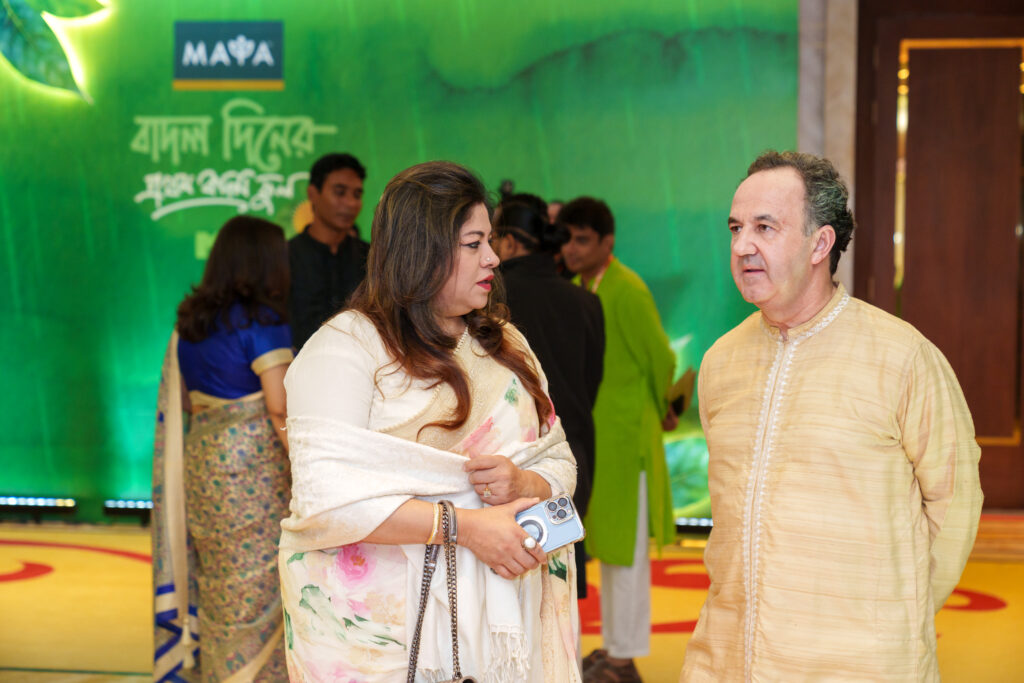
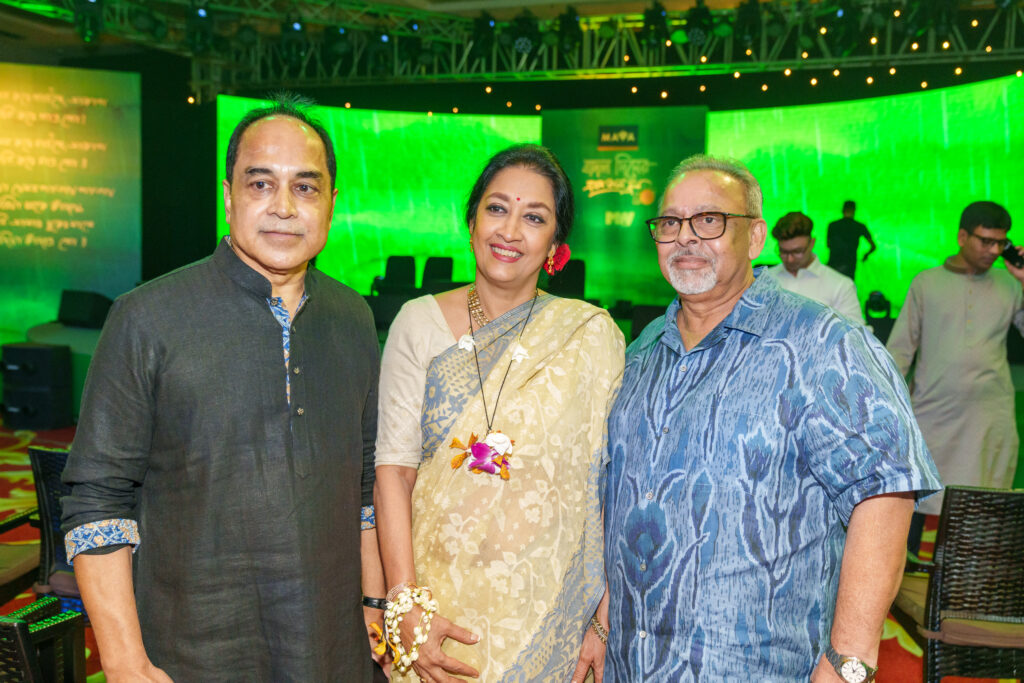
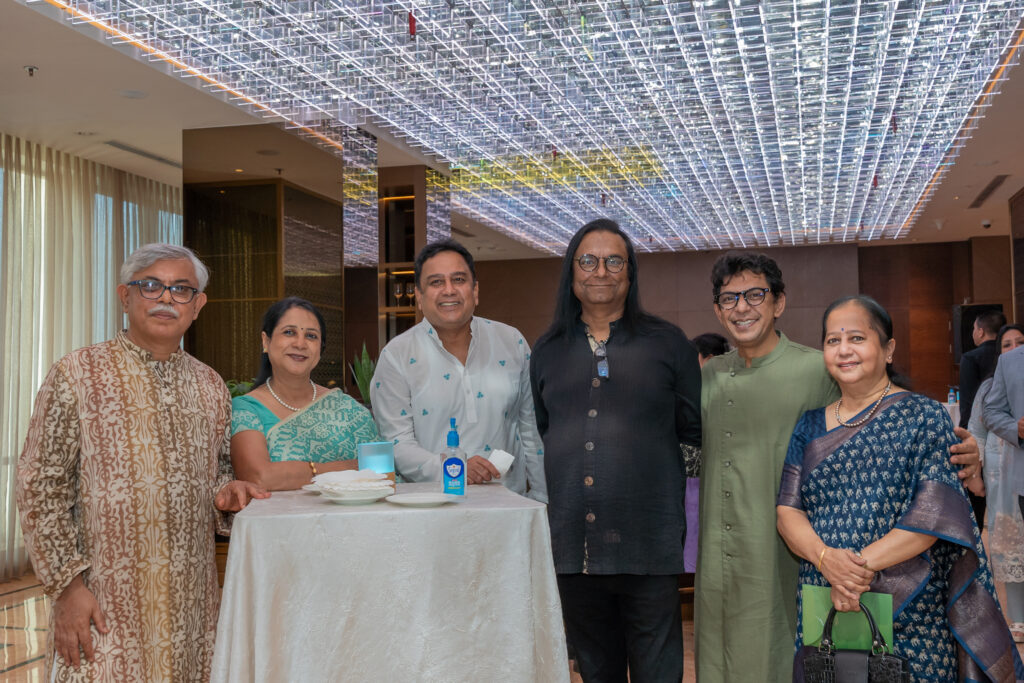
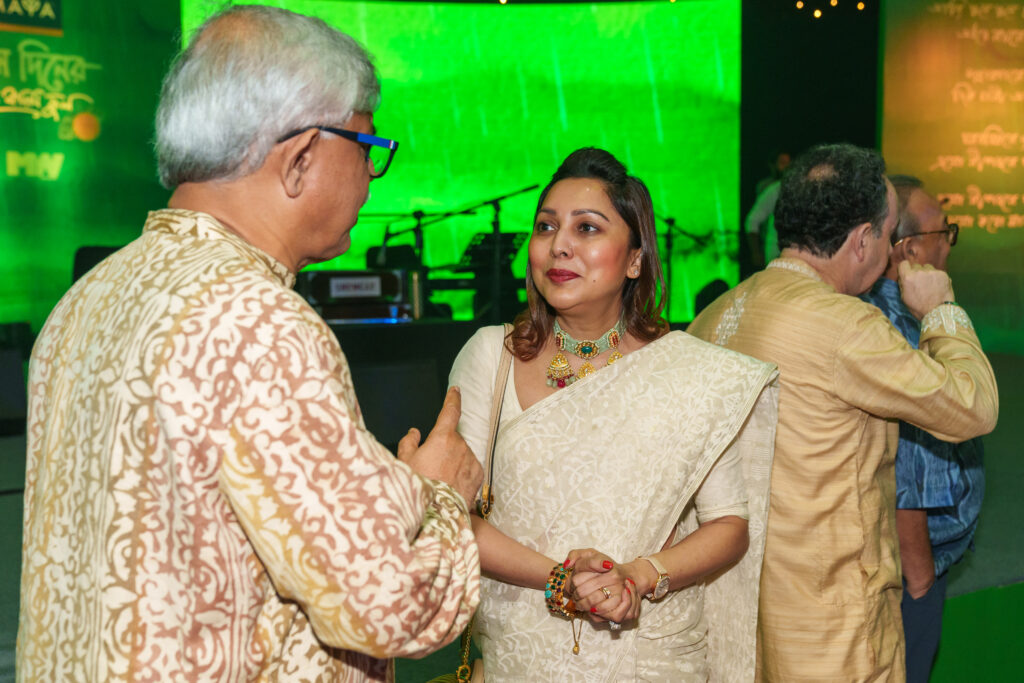
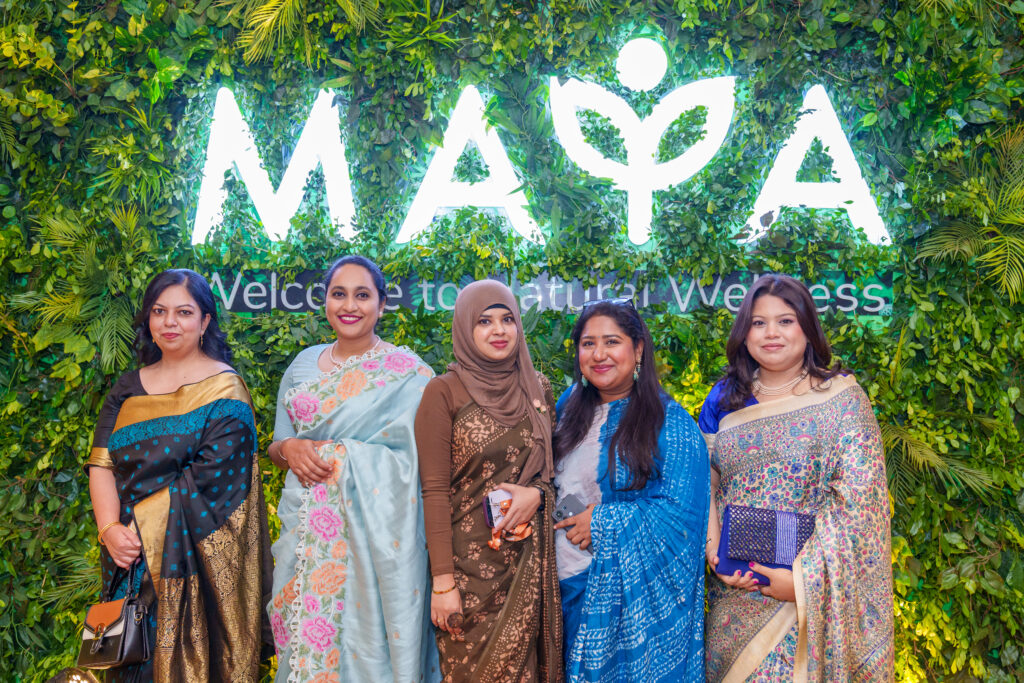
Some of Dhaka’s most respected cultural and corporate figures were in attendance—Mahfuz Anam, Matiur Rahman, Anisul Haque, Zahid Hasan, Chanchal Chowdhury, Arifin Shuvoo, Afsana Ara Bindu, Jannatul Ferdous Peya, and Sabnam Faria, among others. Yet the atmosphere remained personal, almost familial, as if everyone had gathered at someone’s home on a rainy evening to share songs and stories.
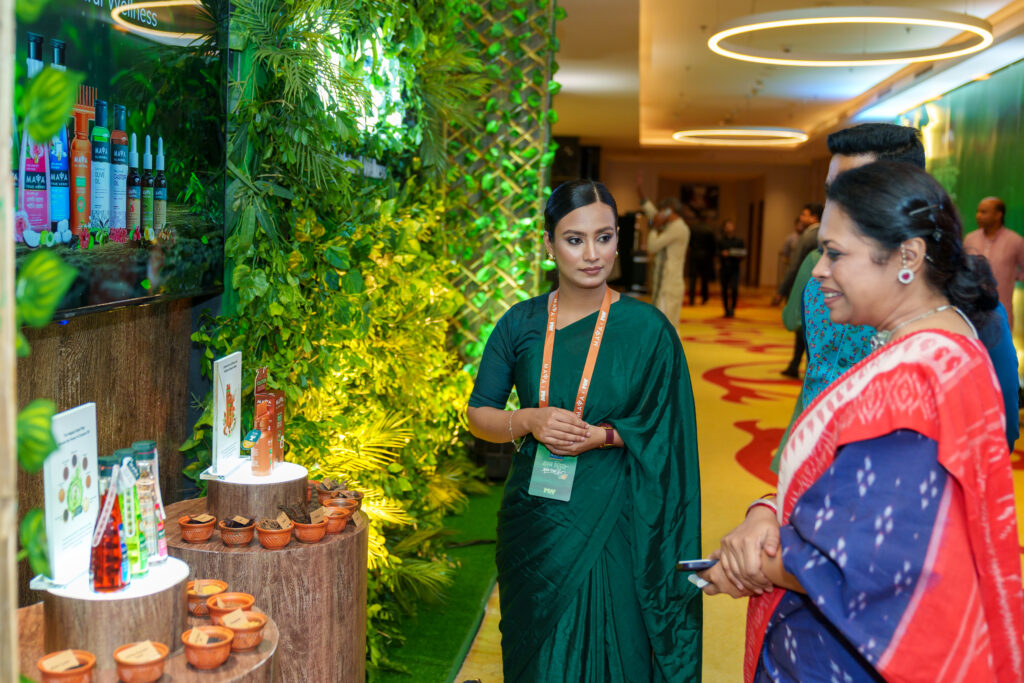
The mingling between performances was unhurried and genuine, marked by reunions, shared laughter, and quiet admiration. Attendees didn’t just come to observe; they came to participate in a feeling. There were no grand announcements, no red carpets—only warmth. Glasses clinked, smiles were exchanged, and time briefly forgot to pass.
The Silence That Stayed Behind
The final moments of the night didn’t end in applause. They ended in silence. And not the awkward kind—the full kind. The kind that says, “This mattered.”
People lingered. A few hummed Rahman’s tunes under their breath, as if to hold onto the evening just a little longer. Badol Diner Prothom Kodom Phul wasn’t about staging a spectacle. It was about giving language to feelings we usually let pass—like the heaviness before a storm, or the way old songs sneak up on us when we’re alone in the rain.

This night reminded us that wellness doesn’t only come in the form of self-care routines or product lines. Sometimes it comes through verses. Sometimes it comes from the familiar cadence of Rabindra Sangeet. Sometimes, it’s simply about remembering who we were—when we ran barefoot through rainwater and believed in the magic of a single white blossom.
So, the next time thunder rolls in, and the Kodom tree outside your window begins to bloom, you may just remember this night. And if you do, you’ll know: the first flower of the monsoon isn’t just a song title. It’s a feeling. And now, it’s part of you.
Sun Communications Limited oversaw the overall management of the event. Prior to this event, the magazine had organised Bengal in Motion, Dhaka Diorama: Impressions of a Mega City, a group art exhibition held in collaboration with City Bank and American Express.