


A letter from Mysore
By Ayman Anika
Some cities remember. Others refuse to forget. And then there’s Mysore—a city that lives with its past like an old friend, never too far from the present.
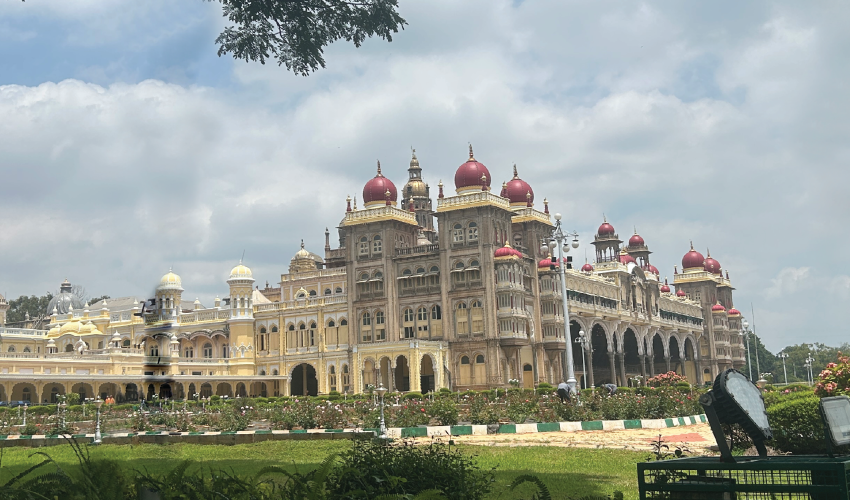
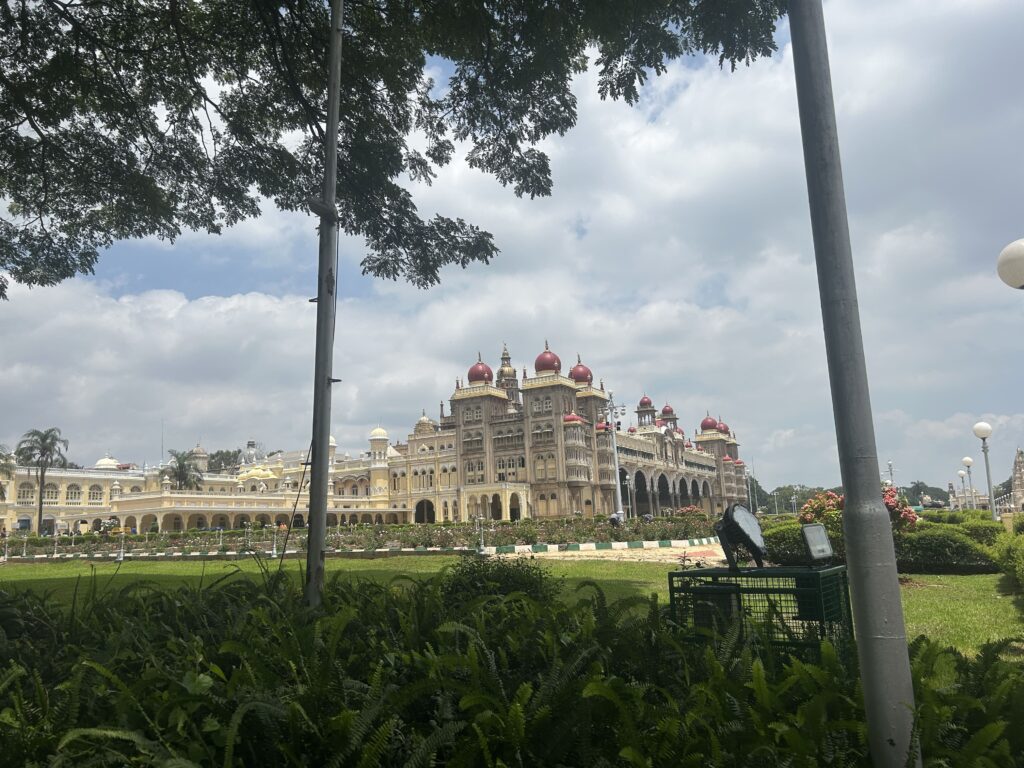
I found myself standing before the gates of the Mysore Palace on a mist-laced morning, the kind that turns red sandstone golden and stirs something ancient inside you. Behind me, vendors unrolled postcards and jasmine garlands. In front, tourists tilted their heads toward soaring domes. A group of schoolchildren in uniform tried to outpace the pigeons. Everything felt staged and unscripted all at once.
And somewhere in that theatrical dance of past and present, I began to wonder: Can tourism really help save what we risk forgetting?
Where Memory Wears a Crown
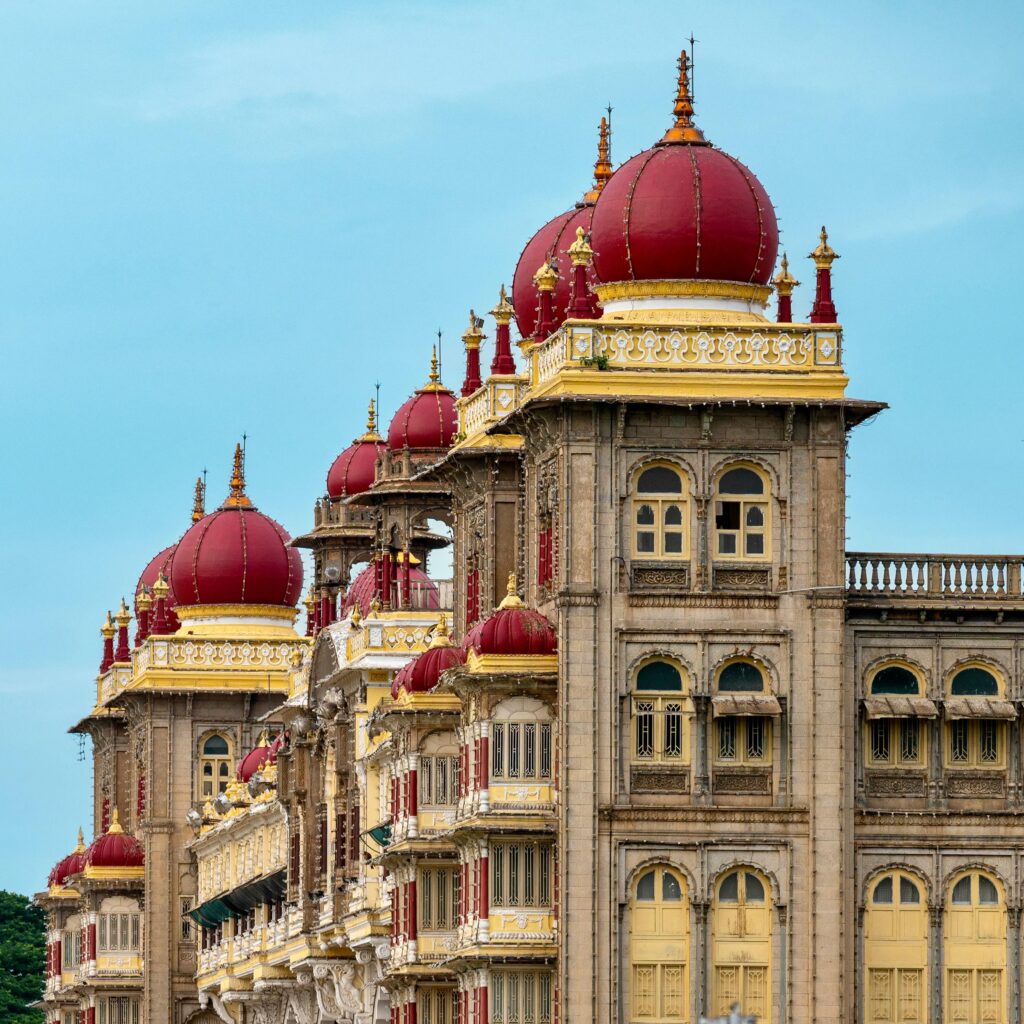
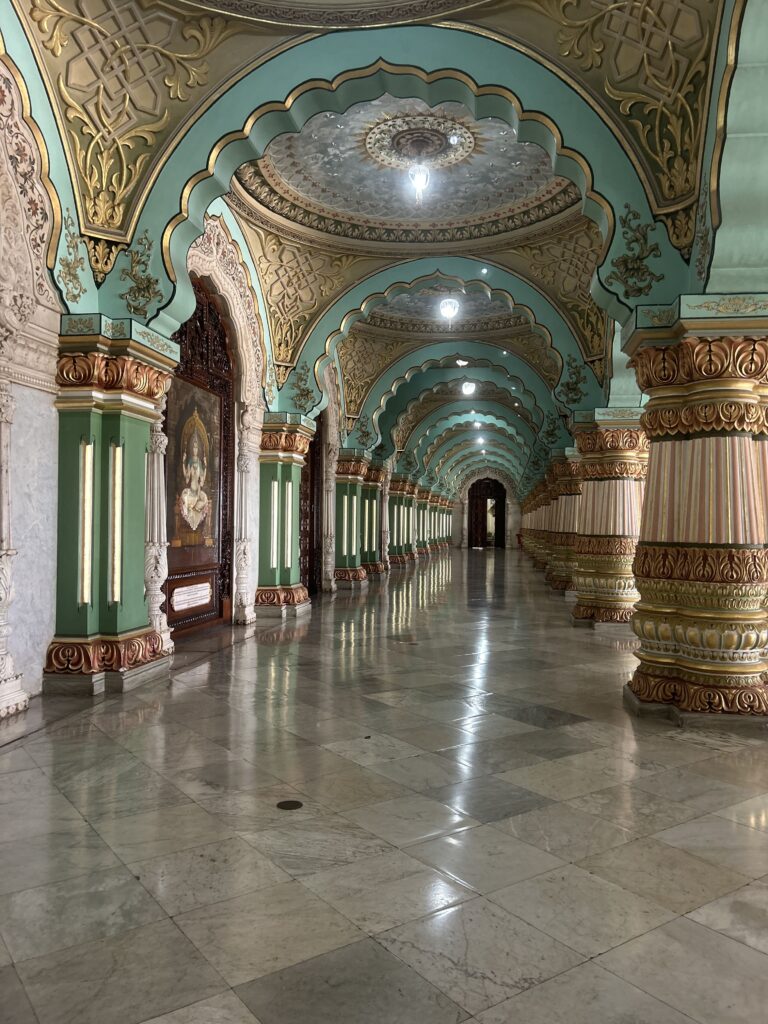
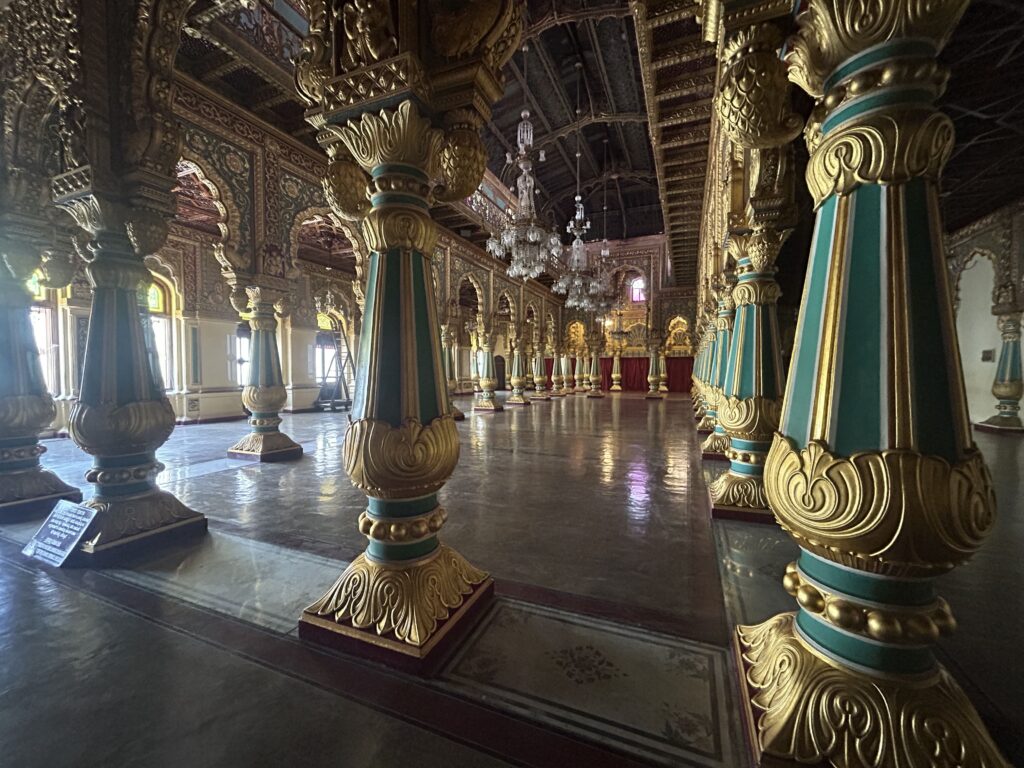
Mysore Palace doesn’t whisper history—it roars it. Its Indo-Saracenic architecture is not merely decorative—it’s defiant. The iron and woodwork, the Belgian glass, the ceilings painted in tales of war and worship—every inch of it declares, I was here before you came, and I will be here after you leave.
But without tourists, would this echo survive?
The answer might lie in numbers. Over 6 million visitors enter the palace gates every year. It’s not just their gasps of awe that matter—it’s their ticket money. This revenue funds not just the cleaning of chandeliers and polishing of tiles, but the restoration of delicate murals that time almost erased. That peacock mosaic above the entrance? It came close to disintegrating before restoration artists—paid with conservation funds earned through tourism—revived its faded feathers.
What no glossy brochure tells you is this: the palace has cracks. Not all are visible. Some run through the systems meant to preserve it. Bureaucratic gaps, inconsistent funding, climate pressures. But where governments pause, tourists, unknowingly, have become patrons.
In the Shade of the Chamundi Hills
The temples of Mysore do not shout. They breathe. They wait.
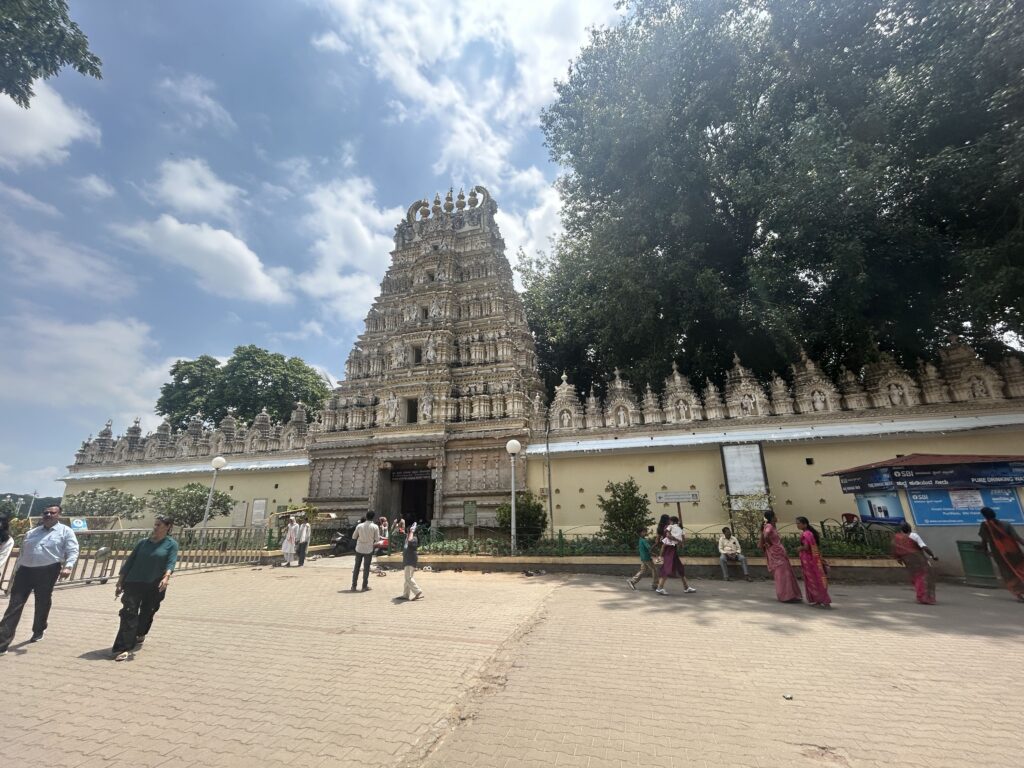
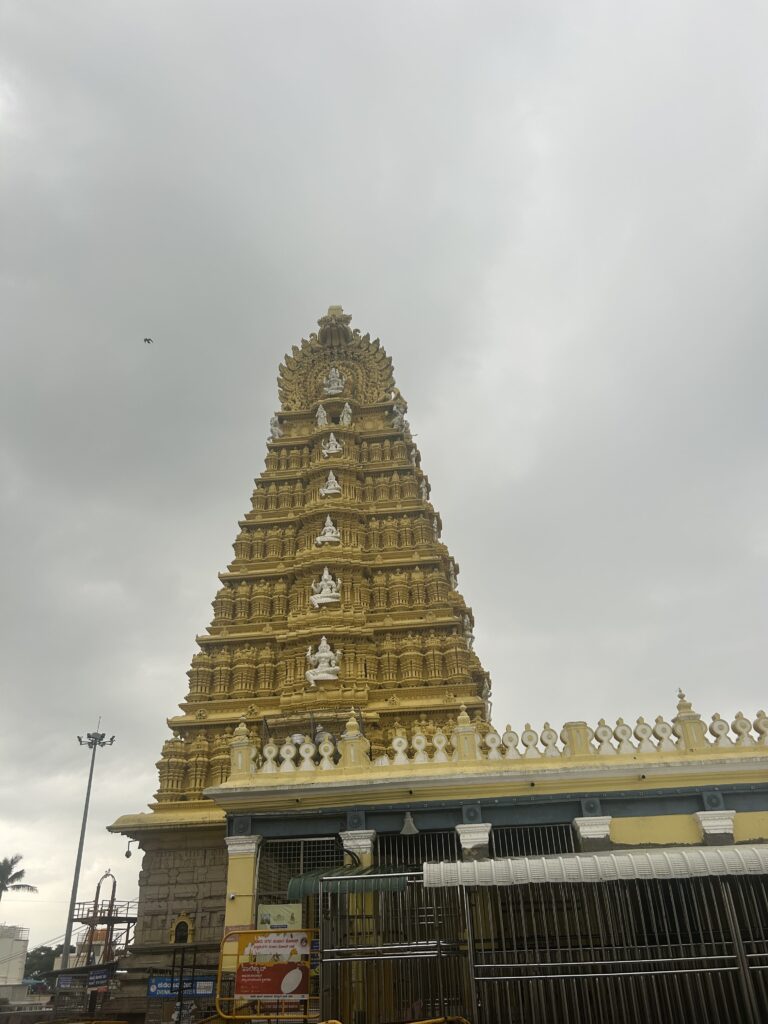
Climbing the 1,000 steps up to the Chamundeshwari Temple, there’s a rhythm—a kind of spiritual exhale the city performs. Pilgrims chant. Tourists pant. And somewhere between the devotional and the digital, stone idols worn by centuries of prayer look on, unmoved but not untouched.
Temples like this don’t charge grand entry fees. Their economy runs on faith, on offerings dropped in brass boxes, on the occasional donation from NRIs tracing their grandmother’s footsteps. But in recent years, tourists—armed with Instagram and itinerary—have begun to show interest not just in the blessings, but in the stories the walls tell.
With that interest comes responsibility.
One priest told me that a Japanese tourist once wept during the evening aarti. Not because he understood the language or the lore—but because he felt, in his words, “the kindness of stone.” That tourist later made a private contribution that funded the restoration of a damaged corner shrine. That’s the alchemy of tourism when it turns from transaction to transformation.
When the Sacred Becomes Spectacle
Of course, there are dangers. The line between preservation and exploitation is thin, and sometimes, smeared altogether.
I watched a newly married couple pose dramatically in front of the Kalyani tank near a 14th-century temple. Their photographer walked across a no-entry rope, stepping right over flower offerings placed by an elderly woman moments earlier. She said nothing, just picked up her basket and moved away.
That moment haunts me. Because tourism, for all its economic potential, has an unsettling power to flatten the sacred into backdrop.
Temples that once echoed with quiet prayer now echo with camera shutters. Priests turn into part-time tour guides. Language is simplified for brochures. Rituals are shortened for impatient queues. And what begins as cultural sharing threatens to become cultural erosion.
Still, this is not a reason to abandon tourism. It’s a reason to reimagine it.
Rewriting the Tourist’s Gaze
What if we stopped treating tourists as consumers and started treating them as temporary citizens? Not just visitors to Mysore, but custodians of its spirit for the time they’re here?
It’s already happening—quietly, organically.
I met a local heritage guide who takes tourists on a “Whispers of the Wall” walk. No microphones. No loudspeakers. Just him, a lantern, and his voice—telling stories of forgotten kings, temple cows, and the tree that grew through a palace window before it was gently relocated. His tours end not at a souvenir shop, but at a conservation board, where he invites visitors to leave behind not coins, but commitments—to write letters to local officials, to donate to temple trusts, to spread awareness.
In that quiet alley, illuminated by the yellow breath of a lantern, tourism becomes something else. It becomes care.
The City That Keeps Telling Its Story
Mysore is not frozen in time. It pulses with modernity—food trucks near ancient gateways, traffic signals near Ashokan pillars, electric lights strung like fairy tales across heritage buildings. And yet, beneath that rush is a slow breath of continuity.
Tourism, if done right, doesn’t disturb that rhythm. It listens to it. Enhances it.
There’s a restaurant run inside a 100-year-old home near the Jaganmohan Palace. The owners refused to knock down the wooden beams or repaint the smoky kitchen walls. “We just let people dine in the memory of the house,” they said. Visitors eat dosa and listen to old Carnatic vinyls playing in the background. Some leave money in a donation jar placed discreetly at the exit. The owners use that to fund local artisans whose crafts are fading from market memory.
So yes, tourism can preserve. Not by freezing culture in amber, but by helping it breathe in its own way.
A Final Offering
The question is not whether tourism can save heritage. It already is. The better question is: What kind of tourism are we encouraging?
Is it extractive? Fast, flashy, and forgetful?
Or is it immersive? Gentle, curious, and kind?
In Mysore, the answer lies in the hands of every person who walks its streets, who visits its temples, who pays the entry fee to a crumbling palace not out of obligation, but reverence. The answer lies in walking slower, asking deeper questions, and seeing not just what is in front of you—but what is behind it, beneath it, becoming it.
Because every stone here has a story. And sometimes, all it needs is a listener.
So if you ever find yourself in Mysore, don’t just visit. Belong.