


By Ayman Anika
At weddings, it slips in with the greetings. “Eto mota hoye gecho?” — You’ve put on weight.” At family lunches, it’s the dessert served with a side of warning: “Ar ekta mishti khabe na, no one will marry you if you keep eating like this.” At school reunions, it hides in the compliments: “Wow, you’ve lost weight, now you look so good.”
We grow up thinking these are harmless remarks, small talk even. But they are not. They are a lifetime of measuring bodies against scales no one agreed to hold.
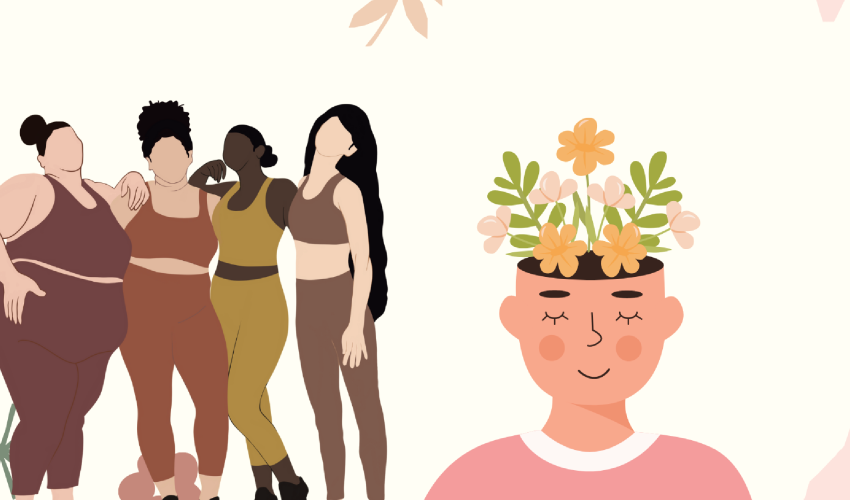
Body positivity has become a global buzzword. Hashtags, glossy campaigns, plus-sized mannequins in big-city malls. Yet here, in living rooms, tea stalls, classrooms, and on crowded rickshaw rides, the culture of policing bodies is still woven into casual speech. The question is: can body positivity take root in such a place without first unlearning how we talk to each other?
The Standard of “Good Looks”
Here, beauty is rarely just about beauty. It’s shorthand for fairness, slimness, and the kind of delicateness that looks “marriageable.” Girls are told not to get too dark in the sun. Boys who gain weight are mocked as mota bhai. The thin are told to “eat properly,” the fat are told to “eat less.” The body is rarely left alone.
And yet, if you look around, very few actually fit this narrow mould. The majority are somewhere in between, adjusting, camouflaging, tailoring their identities to fit into racks of ready-made clothes designed for someone else.
One young woman I spoke to laughed when I asked about her style. “Style? I just look for kurtis that will hide my arms,” said Samira Masood, a teacher. “For years, I thought buying clothes wasn’t about what I liked, but about what made me look less.”
Fashion That Excludes
Step into a local store, and the mannequins are still uniformly slim. Sizing options climb only so far before they stop. For plus-sized women, tailoring remains the default. The message is unspoken, but loud: the system isn’t for you; you must adapt to it.
Designer Irin Chakmahas been pushing back against this invisibility. “I just tried to make something that plus-sized women would look really good in,” she says of his collections. Her choice of cotton is deliberate: “It’s about comfort, especially for everyday wear. Anyone can wear anything—it depends on how you carry it.”
This is not just design—it’s quiet resistance. Clothing, after all, is not just fabric; it’s identity. And when a whole segment of society can’t find clothes that fit, what they really can’t find is recognition.
Shame Disguised as Care
One of the reasons body positivity struggles here is that criticism is packaged as affection. Aunties warn you not to eat too much biriyani for your own good. Cousins joke about your “double chin.” Parents tell children to slim down because “life will be harder otherwise.”
But repetition matters. Psychiatrist Dr. Helal Uddin Ahmed has warned that such comments, even when made lightly, can carve deep wounds. “Negative remarks about body shape, weight, or skin tone during childhood and adolescence can trigger long-lasting issues—low self-esteem, depression, eating disorders,” he explains.
We may call it advice, but often it’s shaming in disguise. And it can take years for people to separate their bodies from the criticism tied to it.
Confidence That Doesn’t Come in Sizes
For some, the act of wearing something bold—a sleeveless blouse, a bright sari, fitted jeans—feels almost political. It’s not about breaking fashion rules; it’s about breaking the habit of apologising.
“I wore red wide-leg pants to my cousin’s wedding,” says Laila Chowdhury, a photographer. “The whole night, I didn’t suck in my stomach once. That was new for me.”
These moments of ease may seem small. But for many, they are revolutions. Inclusive clothing is more than comfort—it’s permission to show up as yourself.
Social Media’s Double Edge
Online, things look brighter. Influencers post confidently about loving their curves, darker-skinned women wear lipstick that once “wasn’t for them,” and men proudly show off “dad bods.” Representation is growing, slowly.
But social media is also tricky. Alongside body positivity comes a new kind of pressure—the “fit body” ideal, polished through gym selfies, transformation reels, diet tips. Sometimes it simply replaces one narrow standard with another.
True body positivity, though, isn’t about trading thinness for muscularity. It’s about refusing to rank bodies at all.
Beyond Positivity: Towards Neutrality
For many who’ve lived under constant critique, “loving your body” feels too big a leap. This is where body neutrality offers an alternative. The idea is simple: you don’t have to adore your body every day—but you can respect it.
Respect means valuing what it does: carrying groceries through flooded streets, climbing four flights of stairs during power cuts, holding children, holding burdens. Bodies here endure a lot. They deserve more than scrutiny. They deserve care.
A Quiet Revolution
What would it mean if we stopped treating bodies like projects? If we stopped handing out unsolicited advice at every wedding, every Eid gathering, every family reunion?
It would mean mothers telling daughters they look radiant, not “fatter.” It would mean uncles asking nephews about their studies, not their stomachs. It would mean designers making clothes that are not “flattering,” but simply wearable, joyful, human.
As Samira puts it, “I’m not brave for wearing a sleeveless blouse. I’m just done sweating in shame.”
Perhaps that is what body positivity here will look like—not loud slogans, not campaigns, but quiet refusals. Refusals to shrink, to apologise, to wait until “someday.”
Because real body positivity is not about mirrors. It’s about freedom—the freedom to live in your body without it being anyone else’s business.