


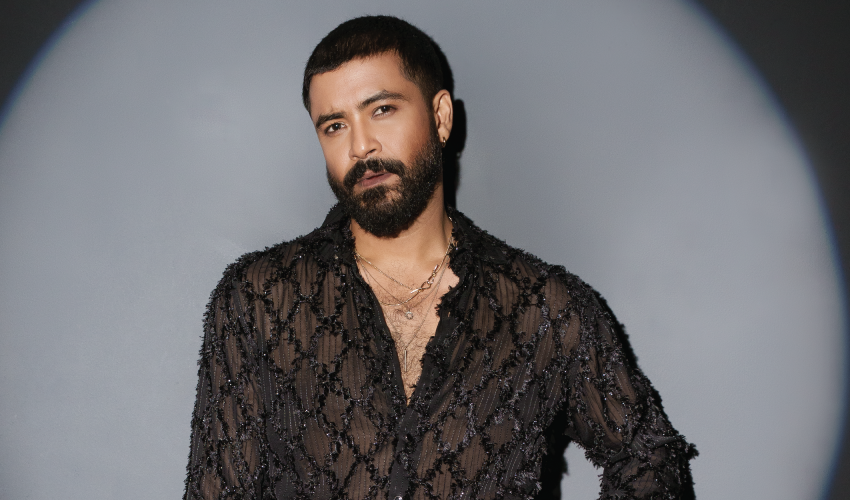
Inside the versatility of Sariful Razz
By Ayman Anika
You may see him as a loathed villain or a patriotic hero. One moment, he’s the brooding bad boy with a cigarette hanging off his lips; the next, he’s the wide-eyed, next-door romantic whose sincerity you can’t quite dismiss. Love him or question him – there’s no denying that Sariful Razz has a rare ability to slip into a wide spectrum of characters with an ease that often escapes even more seasoned actors.
In Poran, he made audiences uncomfortably conflicted, despising the character, yet unable to look away. In Damal, he embodied the spirit of a footballer and freedom fighter with grit and vulnerability, while Hawa allowed him to disappear into the rawness of coastal life, far from the city-boy persona.
Now, as he takes on a new kind of screen presence in Insaaf, starring alongside Tasnia Farin and Mosharraf Karim, Razz is once again shifting gears—this time into the pulse of a high-stakes action thriller.
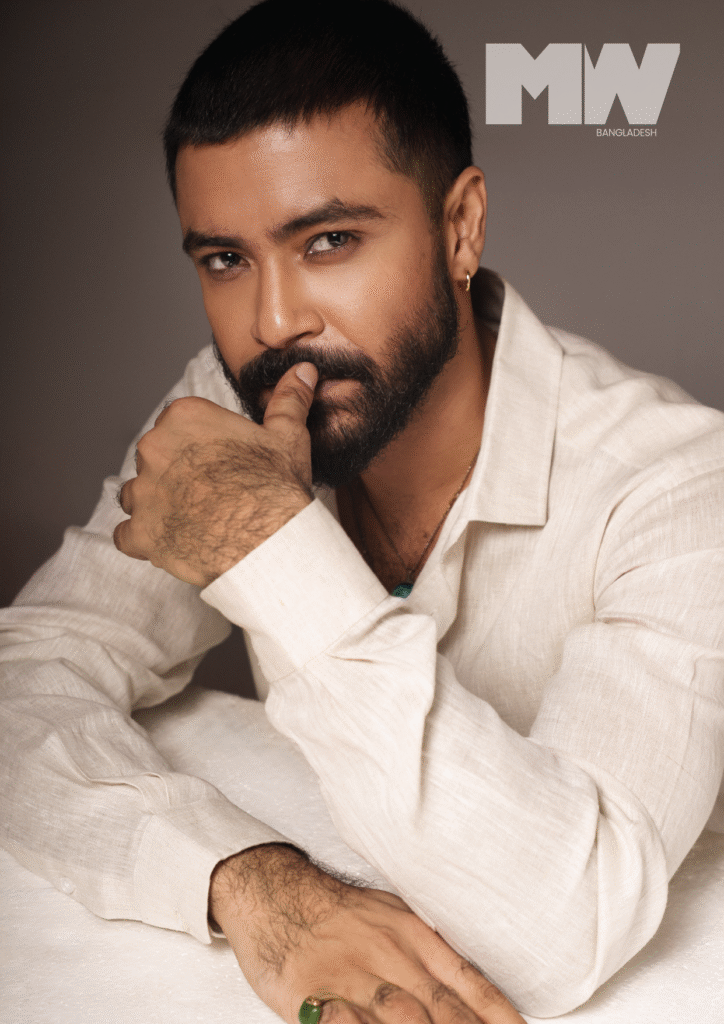
His journey hasn’t been paved with grand declarations or rehearsed stardom. It’s been quiet, calculated, and built on choosing stories that speak louder than hype. With MWB, Sariful Razz opens up about where it all began, the lessons he’s learned, and the stories he’s still waiting to tell.
You’ve been in the spotlight for several years now. Since your debut in Ice Cream (2016), how has your relationship with fame evolved? Do you now see it differently than when you first started?
You know, when you’re just starting out—like I did with Ice Cream back in 2016—everything feels new and uncertain. At that time, it was simply, “Okay, this is my first film,” and I didn’t think too much beyond that. I was just focused on doing the work. But looking back now, after nearly a decade in the industry, I see the journey quite differently.
Over the years, I’ve gone through a lot—personally, professionally, artistically—and all of that has shaped how I view fame today. In 2025, I feel like I’ve entered a new phase of my life and career. It’s strange to say, but it’s like I’ve been reborn in a way. This year feels fresh, like I’m starting from scratch—but with all the experience and learning from before.
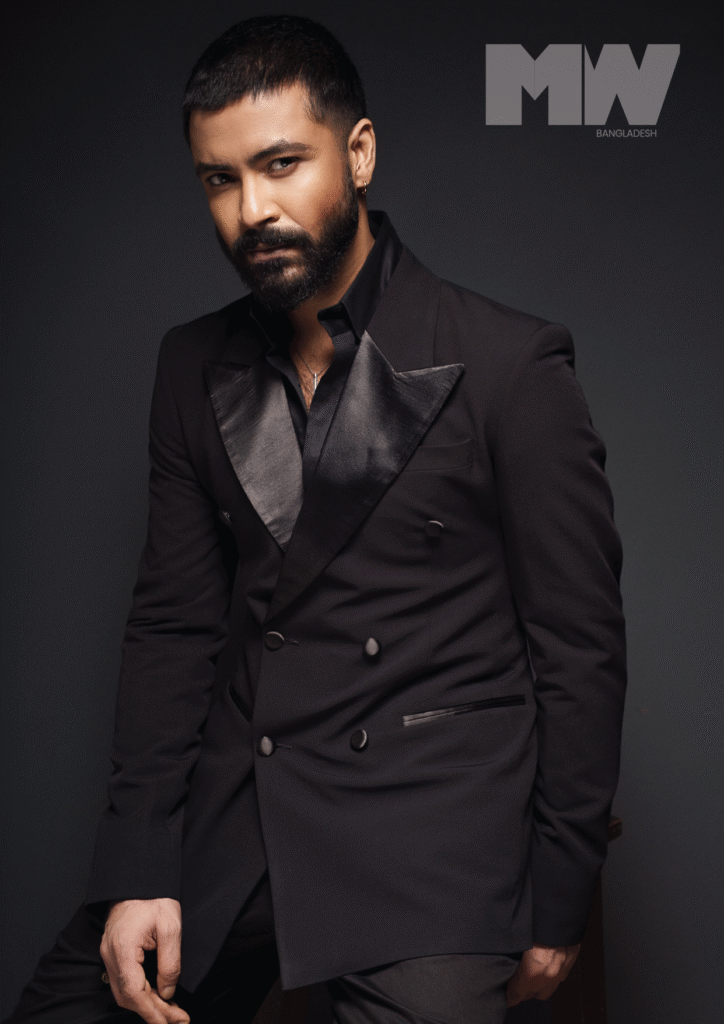
My journey from Ice Cream to now has been a long one. I started out in fashion and modeling, which is a very different world. Transitioning into cinema and doing one film after another helped me grow not just as an actor but also as a person. The industry has changed, the audience has changed, and so have I. But through it all, one thing has remained constant—I genuinely love cinema. I enjoy what I do, and that joy keeps me going.
I started out in fashion and modeling, which is a very different world. Transitioning into cinema helped me grow not just as an actor but also as a person.
Was acting always the end goal, or did it evolve out of your experience in modeling and commercials?
To be honest, acting wasn’t something I planned from the very beginning. It’s not as if I attended an acting school or received formal training in performance. I didn’t come into the industry with that kind of structured background. My journey actually began with modeling and doing TV commercials—that’s where I first got exposed to the camera and the rhythm of being on set.
But over time, as I kept working, I was fortunate enough to meet some truly incredible directors—people like Redoan Rony, Giasuddin Selim, Mejbaur Rahman Sumon, and many others. They’ve played a huge role in shaping my journey as an actor. I honestly see them as my teachers, even my bosses, because I’ve learned so much just by being on set with them. So, for me, acting wasn’t the original goal—but it became something I grew into, something I started loving more deeply with every project I took on.
Is there anyone in the industry you feel especially close to as a guide?
Yes, absolutely. If I had to name someone who truly feels like a mentor, it would be Redoan Rony. I started my acting journey with him, and even now, I see him as more than just a director—he’s like a guardian figure to me. He believed in me at a very early stage, and I’ve learned a great deal from him. Now that he’s the CEO of Chorki, it’s inspiring to see how far he’s come, too.
I’ve also had the opportunity to work with Raihan Rafi, and I really enjoyed both projects we collaborated on. Then there’s Mejbaur Rahman Sumon, another person I consider a mentor. His creative process, his command over storytelling—I’ve learned so much from just being on set with him.
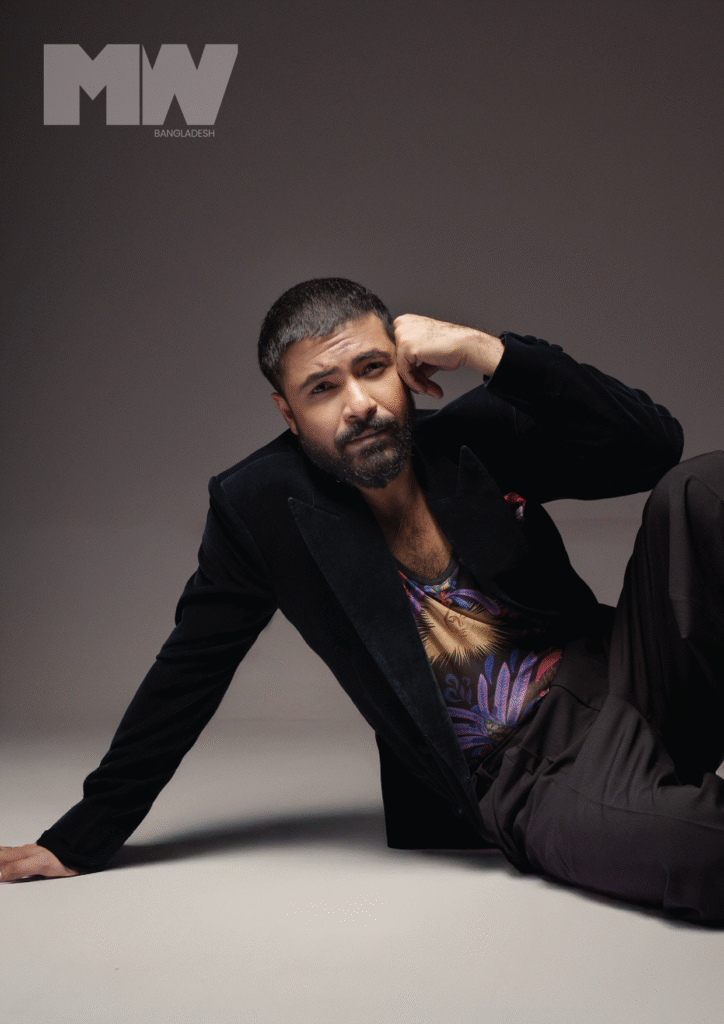
Over time, as I kept working, I was fortunate enough to meet some truly incredible directors—people like Redoan Rony, Raihan Rafi, Giasuddin Selim, Mejbaur Rahman Sumon, and many others.
And I must mention two very important people who were part of my journey even before I entered the film industry—Azra Mahmood and Bulbul Tumpa. They were by my side throughout my modeling career, not just as colleagues but as close friends and guides. Their encouragement was key to my transition into acting.
In fact, interestingly, when I had just done my first film, the entire fashion industry was still around me—I was very much part of that world. But one day, Azra Mahmood said something that changed everything: “You’ve been modeling for a long time. Okay, fine. It would be better if you make a switch—you should act.” And from that day forward, I left fashion completely and committed myself fully to film. That moment really marked a turning point in my life.
So yes, I’ve been fortunate to have many people who’ve mentored, supported, and guided me through this journey—and I’m deeply grateful for all of them.
From Poran to Hawa to Damal—you’ve played a wide range of characters. What makes you say “yes” to a script today?
For me, it always begins with the story. I’m drawn to films that are strongly story-driven—ones that carry meaning and leave something behind for the audience. It could be a social message, a reflection of real struggles, or simply a powerful emotion. If a script speaks to me on that level, I’m interested.
I also love representing our country through cinema, whether it’s through historical context, culture, or identity. Damal is a perfect example of that. It’s deeply rooted in our history and tied to 1971, which makes it incredibly special to me. In fact, all three—Poran, Hawa, and Damal—were important projects, each unique in their message and tone, and I feel proud to have been part of them.
And I have to say, working with directors like Raihan Rafi has been an enriching experience. His humor, vision, and ability to connect with audiences really resonate with me. It makes the whole process even more meaningful.
When you step into a role that’s far removed from your real-life personality, how do you prepare both emotionally and physically?
Honestly, it’s not easy, especially when the character is far from who I am in real life. In Poran, for example, I had to step into the mindset of someone quite dark, even villainous. That required a lot of emotional and mental preparation.
Since I’m someone who really values story-driven projects, once I commit to a character—whether it’s a sportsman, a local rebel, or something entirely different—I give it my all. I’m grateful that the directors and teams I work with usually give me the time and space I need to prepare. That freedom is incredibly important to me.
My preparation process varies depending on the role, but it always involves multiple layers. Sometimes it’s workshops, sometimes script reading sessions with co-actors, and often just spending time alone with the character, figuring out how they think, feel, and move. I also bring my own thoughts and vision to the role. That combination of direction, teamwork, technical prep, and my own emotional connection helps me embody the character fully.
Whether it’s Hawa, Poran, Damal, or Deyaler Desh, each role demands a minimum level of preparation. And that process is something I take very seriously. It’s where the real acting begins for me.
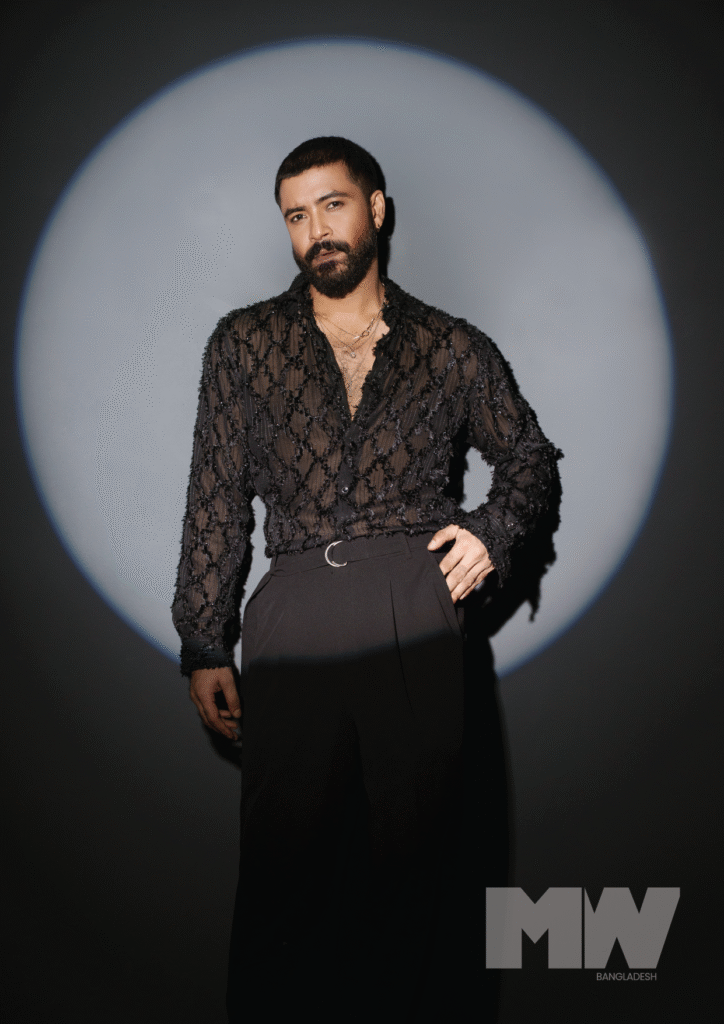
Once I commit to a character—whether it’s a sportsman, a local rebel, or something entirely different I give it my all.
Which film taught you the most, either about acting or about yourself?
There are a few special films that really pushed me, but if I had to choose, I’d say Hawa and Deyaler Desh were the most challenging—and the most rewarding. These two projects taught me a lot, not just about acting, but also about myself.
Coming from a background in fashion and modeling, stepping into characters that were completely different from who I am, like playing a rough-edged fisherman in Hawa—was a huge shift. It wasn’t just about learning lines or facing the camera. It was about transforming physically, emotionally, and mentally. I had to break myself down, let go of any comfort zones, and rebuild myself in the image of the character.
There was also a certain pressure to prove to the team, and maybe even to myself, that I could handle something raw, grounded, and far removed from the polished world of modeling. That transformation really triggered something in me—it made me more committed, more curious, and more serious as an actor.
So yes, Hawa holds a very special place in my heart. And Deyaler Desh too—it pushed me into new territory, and that’s where real growth happens.
There seems to be a new wave of storytelling emerging in Bangladeshi cinema. As someone in the middle of it, how do you see this shift?
Yes, I do think we’re experiencing a shift—a quiet but powerful transformation in Bangladeshi cinema. And it’s been a privilege to be part of this evolving phase.
When I first started in modeling, the industry was already in a state of transition. Things weren’t quite stable, but there was movement—people were trying new things, exploring new aesthetics. Then, when I stepped into film, I noticed something similar. The industry wasn’t exactly thriving at the time. We didn’t have that consistent momentum or support system to push good films forward. But what we did have—and still do—is a passionate group of storytellers who wanted to create something meaningful. That’s what drew me in.
I feel fortunate that the timing aligned in such a way that I could be part of this emerging wave. Films like Poran, Hawa, and Damal came at a time when audiences were ready—hungry even—for fresh narratives, different characters, and quality production. After the pandemic, people slowly started returning to cinemas, and the response was incredible. Poran was released during Eid, and Hawa followed shortly after. Even with major international blockbusters showing at the same time, we saw packed theaters for Bangladeshi films. That energy from the audience—it was electric. It reminded us that our stories do matter. People are willing to show up when we respect them with good content.
For a long time, I think there was a kind of hesitation—even among us actors—to say proudly that we worked in Bangla cinema. There were judgments, stereotypes, and an overall lack of appreciation for the medium. I’ll admit that when I first started acting, I was a bit unsure. But over the years, especially after seeing the response to our recent films, I feel proud to call myself an actor. Proud to be part of this new wave of Bangladeshi storytelling.
Of course, there’s still a lot of work to be done. We need stronger infrastructure, better funding, and a long-term vision to keep this momentum going. But I believe we’re headed in the right direction. I see filmmakers, writers, and actors taking more creative risks. I see audiences becoming more open and curious. That’s a very hopeful sign. And it motivates me to keep pushing myself—to be part of stories that entertain, move, and matter.
In “Palabe Kothay,” we see a different side of your on-screen presence—more abstract. What was it like collaborating with Sunidhi Nayak and Adnan Al Rajeev on this music video?
That was a very special experience for me. Honestly, I wasn’t planning to do a music video—I usually work in films. But this one was different. Sunidhi Nayak is not just a brilliant musician; she’s also a very close friend. And Adnan Al Rajeev—he’s more than a director to me; he’s a mentor, someone I deeply respect. When they approached me with the concept of Palabe Kothay, I was hesitant at first. I asked them, “Why a music video? Why now?”
But once they explained the purpose behind it—the intent, the vision—I was moved. The song is a tribute to Shayan Chowdhury Arnob, someone I grew up listening to. His music has been the soundtrack to many of my evenings and quiet moments. So, when I learned, this project was connected to him, it became more than just a music video—it became something personal.
And then there was the creative team. Sunidhi’s voice, her artistry, her emotional range—it’s rare. I honestly don’t know anyone in my circle as talented and grounded as she is. And Adnan bhai’s direction always brings out something subtle and layered. Together, they created a space where I could explore a different kind of performance—less narrative-driven, more visual, poetic, and interpretive.
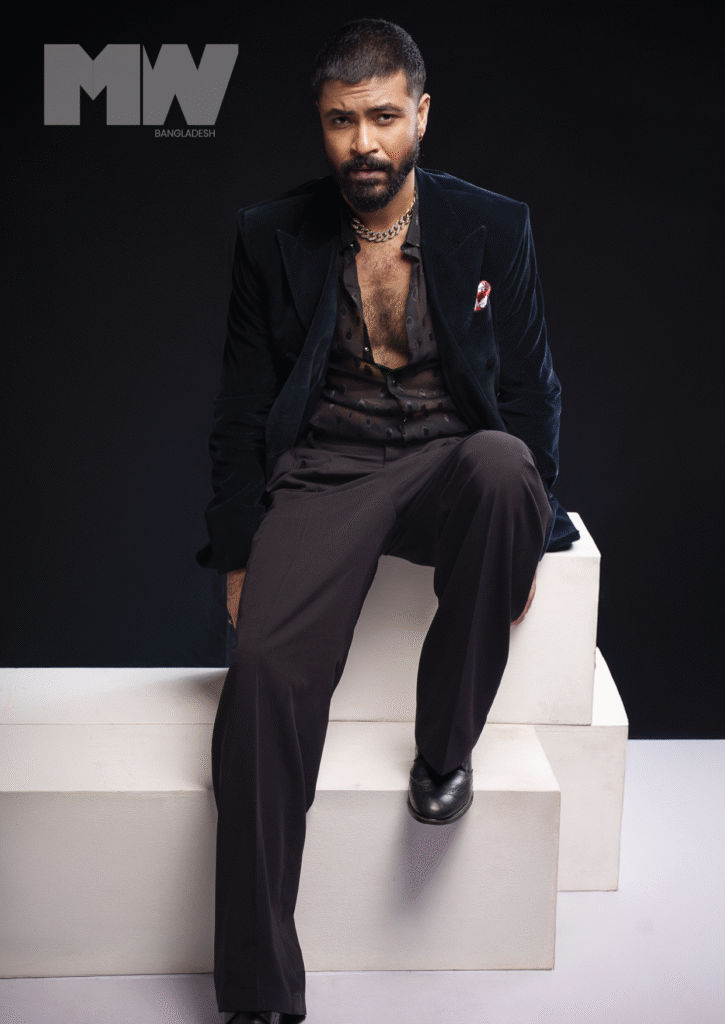
That’s the beauty of music videos. They give actors space to explore gestures, emotions, and energy in a more fluid way. You’re not bound by plot points or character arcs in the same way. You get to play with feeling, with rhythm, with abstract expression. And that’s what Palabe Kothay was for me—an artistic break from structure, and a collaboration born out of trust and shared love for music.
How do you think music videos allow actors to experiment in ways films sometimes don’t?
To be honest, I didn’t approach Palabe Kothay with that kind of technical mindset—like, “Oh, this will be a space to experiment as an actor.” That wasn’t my intention at all. For me, this particular project was very personal and emotionally driven. It wasn’t just another music video—it had depth, it had meaning.
What really drew me in was the relational aspect of the song—the emotional layers in the story. It explores human connection, longing, and vulnerability in a way that’s universal. Whether it’s about romantic partners, friendships, or any close bond, I felt people would be able to relate to it on a personal level. That’s what made me want to be a part of it.
So no, I didn’t do it thinking of it as a space for experimentation. I did it because I genuinely loved the project—the story, the mood, and most importantly, the music. Sunidhi’s voice carries so much feeling, and the way she sang this track really moved me. That’s why I said yes.
But in hindsight, yes—music videos do offer a different kind of space. There’s more fluidity, more room to express through mood, movement, and emotion without the structure of dialogue or plot. It becomes more about atmosphere and connection. And I think that’s where the power of this video lies—it connects without saying much.
You’ve worked with some of the most celebrated directors in recent years. What, in your view, makes a great actor-director collaboration?
For me, a great actor-director collaboration begins when I can fully align myself with the director’s vision. It’s about trust—when a director sees something in me and says, “Yes, Razz can carry this character,” that belief pushes me to give my absolute best. And it works both ways—I need to believe in the story they’re trying to tell.
I’m not someone who takes on projects just for the sake of it. I don’t enjoy repeating myself or sticking to one type of character or genre. I always want to break myself down, challenge myself, and compete with who I was in the last film. That’s why you’ll see me going from Poran to Hawa, from Damal to Deyaler Desh—each film is very different in tone, genre, and character. I consciously make that choice.
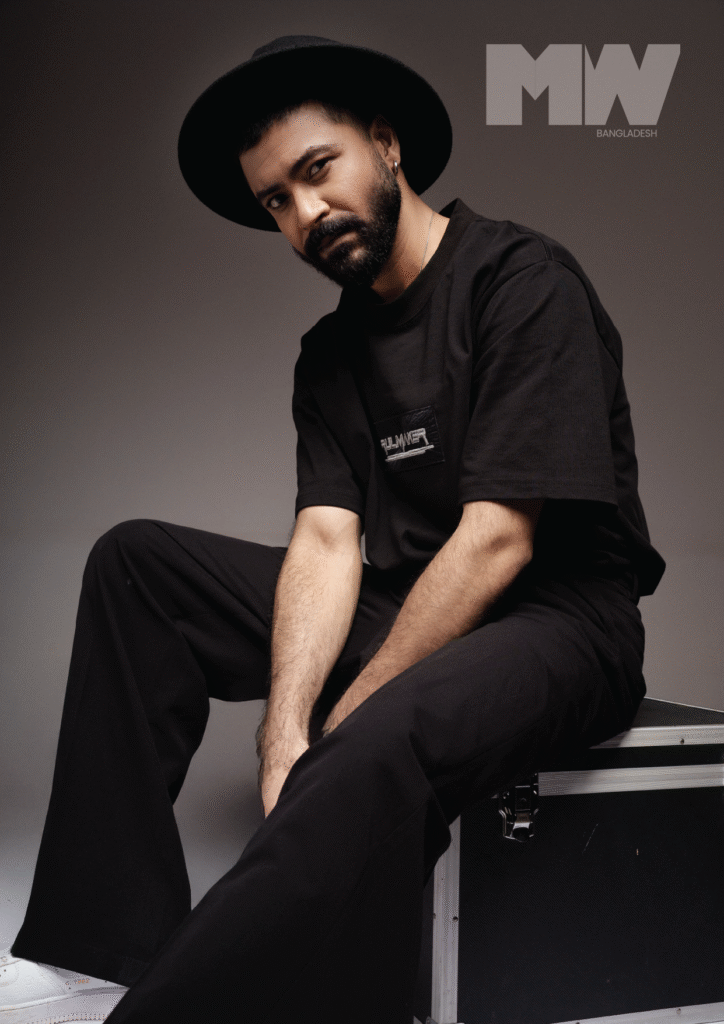
And when I bring that mindset to a project, the collaboration becomes stronger. Because the director is also pushing boundaries, and so am I. It creates this shared energy, a space where something meaningful can happen on screen. That’s when a collaboration truly becomes special.
Of course, it’s not just the director. My team, co-artists, and everyone around me contribute to that creative environment. But it starts with that connection—when the actor and director are on the same page, speaking the same artistic language. That’s what makes the difference.
Is there a historical or literary character you’d love to portray on screen someday?
To be honest, I don’t have a specific dream role or historical character in mind—at least not yet. I never entered acting with a long-term plan or a list of goals. In fact, I never imagined this would become my profession. So, everything that has happened so far has felt organic, unplanned, and beautifully unexpected.
That’s why I haven’t confined myself to a particular genre or style of character. I keep things open. I want to explore roles that feel meaningful and different, rather than chasing any one “dream” character. Maybe someday in the future, a historical or literary figure will resonate with me deeply, but I’m not there yet.
What I do know is that I’d love to be part of a project that represents Bangladesh on a global stage. Something that tells our story with depth, nuance, and cultural richness. A film that not only connects with local audiences but also allows international viewers to see and feel the essence of our country—that would be a dream project for me.
If a young actor asked you how to build a career with both depth and longevity in this industry, what would you tell them?
I can’t speak for everyone, because each journey is different. But I can speak from my own experience. I spent almost eight years in fashion and modeling before transitioning into film. In our industry, especially in Bangladesh, there’s often a perception that people from the fashion world might not be able to act—they’re seen as stiff, or too focused on appearance. I’ve faced that stereotype myself.
But I believe that mindset needs to change. We have so many talented, passionate individuals in the fashion and media space, and I think more of them should step into cinema. If they’re serious about the craft, there’s space here for them to grow and thrive.
As for advice, I didn’t come into acting with formal training. I didn’t go to acting school or have any academic background in it. But what I did have—and what I think is essential—is dedication, passion, and a willingness to learn. Acting isn’t just about delivering lines or looking good on screen. It’s a deeply emotional, often meditative journey. You need patience. You need to be open to breaking yourself down and rebuilding from scratch with every new role.
So, if someone wants to build a lasting career with meaning, I’d say this: come in with honesty. Respect the work. Be willing to grow. And remember that this isn’t just a profession—it’s a lifelong practice of observing, feeling, and evolving.
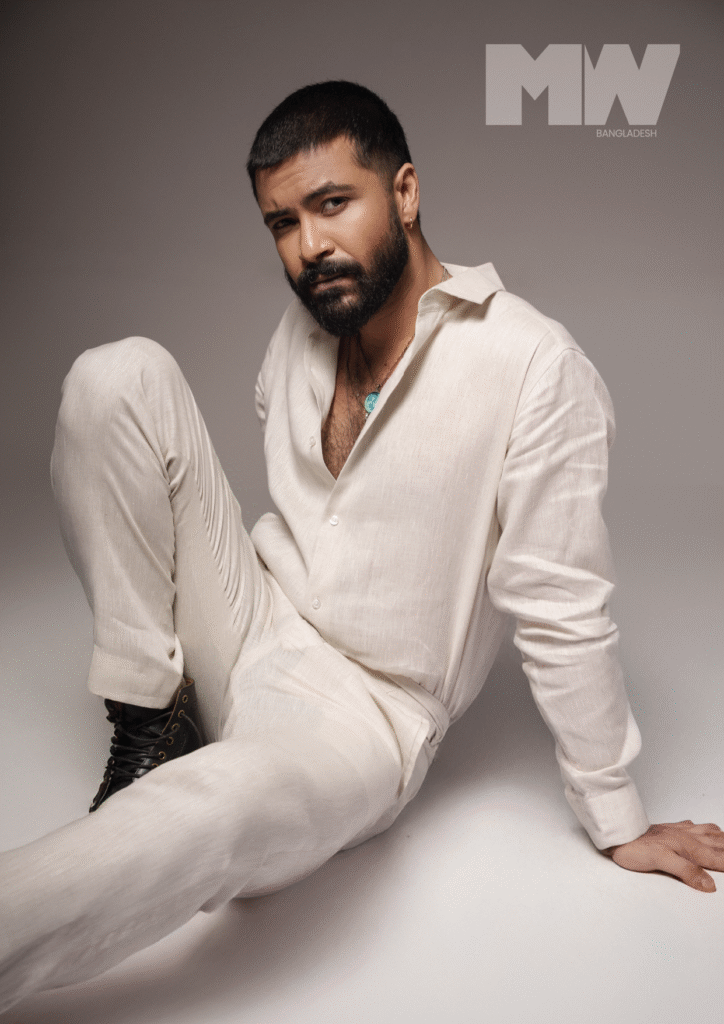
What helps you unwind these days?
For me, the best way to unwind is through travel. I absolutely love it—it’s something that really helps me reset both mentally and emotionally. I travel a lot, and whenever I get the chance, I try to escape the routine, whether it’s within the country or abroad.
Solo travel, in particular, has been a big part of my life. It gives me time to reflect, recharge, and reconnect with myself. At the same time, I also enjoy traveling with close friends—there’s something really grounding about being in nature or in unfamiliar places with people you trust.
I’m especially drawn to trekking. Being out in the open, climbing through unknown trails, breathing in fresh air—it all feels very freeing. Travel, for me, is more than just a break from work. It’s a way of living, and it plays a huge role in keeping me creatively and emotionally balanced.
Are there any upcoming projects you’re particularly excited about right now?
There are quite a few exciting projects in the pipeline. I just wrapped up a film recently, and I’m currently reviewing several new scripts. Some of them are really promising, and I might start shooting again very soon—but I’m still in the process of deciding which one to commit to next.
Apart from that, I’m already involved in a few ongoing film projects that I need to finish in the coming months. So yes, there’s a lot happening, but I’m taking my time to choose the right stories.
As for specific names, I’d love to share more, but since many things are still being finalized, I’d rather wait until everything is officially confirmed. But I can say this—I’m excited about what’s coming. I’m trying to stay thoughtful about the kind of work I take on next.
I didn’t come into acting with formal training. But what I did have—and what I think is essential—is dedication, passion, and a willingness to learn.
Fashion Direction & Styling: Mahmudul Hasan Mukul
Supervision by: Rafiqul Islam Raf
Photography: Adnan Rahman
Wardrobe: Rulmaker