


Skip the usual suspects and explore the picture-perfect countryside of the Green Spain route in the north from the comfort of this train-hotel
By Praachi Raniwala
“All is good?” enquiries Patricia, the senior coordinator at the Costa Verde Express that we are soon to board. We are currently at the 15th-century building of the Parador (Spain’s state-run hotels) in Santiago de Compostela, one of the oldest hotels in the country, to check-in and drop our bags before we begin our journey aboard the train-hotel.
Said hotel in question, Costa Verde Express, traverses through the landscapes of northern Spain between Santiago de Compostela and Bilbao (or vice versa). Green Spain, as the expanse is also dubbed, includes the autonomous regions of Galicia, Asturias, Cantabria and Basque country along the coastline of the Cantabrian Sea, of which this train covers the former three.
I arrive in Santiago de Compostela two days before the journey to explore this capital of the Galicia region. The culmination of the Camino de Santiago pilgrimage route, with its cathedral dating back to 1211, makes this an important pilgrim town. I can already tell that this part of the country is far removed from Spanish hotspots like Barcelona, Madrid, Marbella and Ibiza that visitors typically throng to. But at this verdant escape, what awaits is another side of the country that is a gem worth discovering.
Go Green
Our train awaits us in Ferrol, a sleepy shipping town just a short drive from Santiago de Compostela. Once aboard, the train hums to life and rumbles out of the station as the bubbly is popped for our champagne reception. Thus begins a five- night and six-day sojourn to soak in the beauteous vistas of this scenic belt—a symphony of mountainous villages, coastal hamlets and beach towns, all in close proximity to each other. It’s this rich diversity of landscape that is the real wealth of Green Spain, where every lush corner is true to its name.
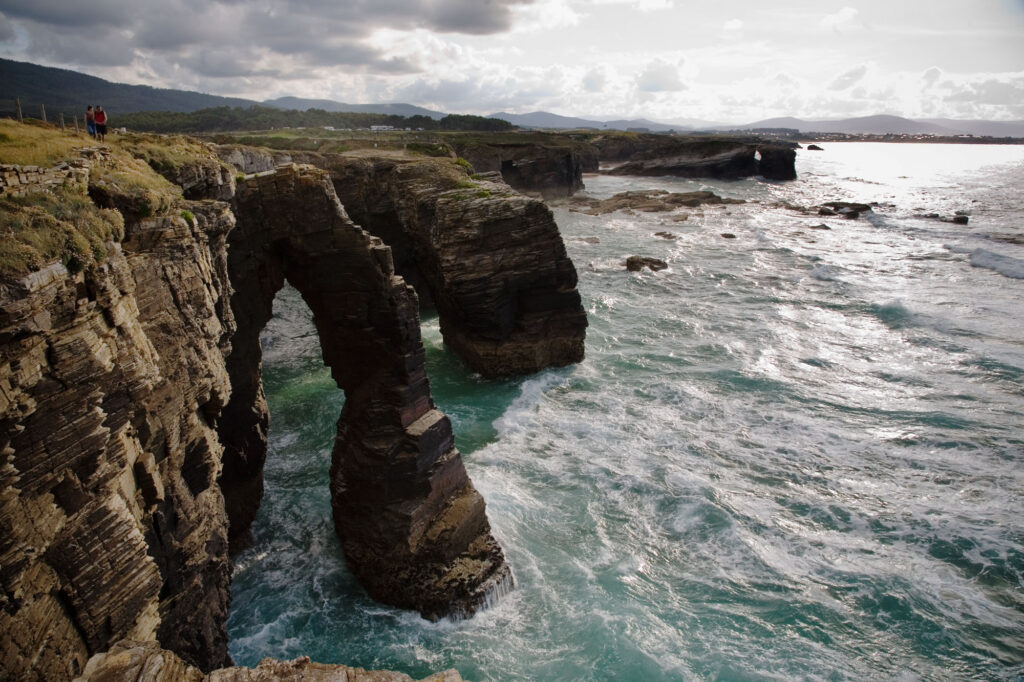
Every day, the train makes pit stops at important towns in each region to take in the sights. In Galicia, we visit the hillside village of Viveiro where locals love to summer; and Ribadeo which is home to Playa de las Catedrales (or Cathedral beach) one of the most popular spots in the region, named thus due its natural arches and caves.
In Asturias, we start at the fishing town of Luarca which is spectacularly peaceful. In Gijón, the largest coastal city in northern Spain, we spend some time at a local cider facility, one of the most important industries here. The capital town of Oviedo dates back to mediaeval times but has a more modern vibe today, dotted with sushi bars, coffee shops and local high street shopping. The sight of canoeists greet us in Ribadesella, which draws a big crowd for its famous canoeing competition on the first Sunday of every August. And then there is the tranquil Basílica de Santa María la Real de Covadonga in the Picos de Europa mountains, one of the emblematic spots in this region.
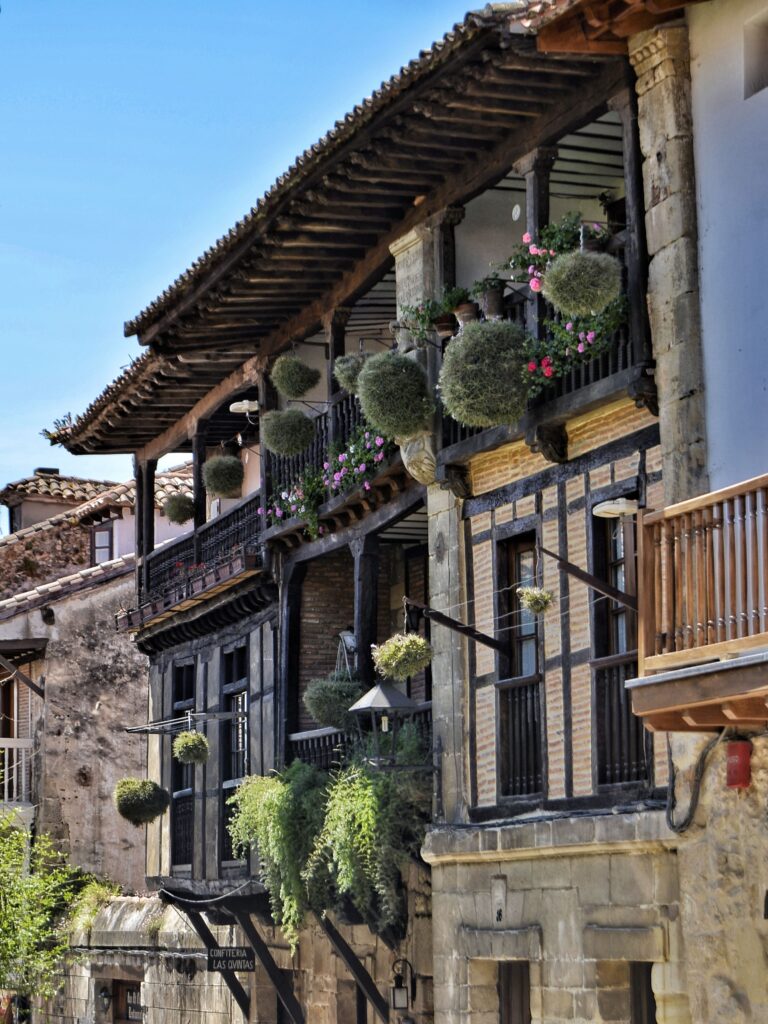
The Cantabria region is home to Museo Altamira—an uncanny recreation of caves from 1879 which are often referred to as the Sistine Chapel of prehistoric times. Nearby, is the postcard-perfect mediaeval town of Santillana del mar with its well-preserved architecture, quaint boutiques and al fresco cafes. The capital city of Santander, with the largest bay in northern Spain, has a young, buzzy energy today.
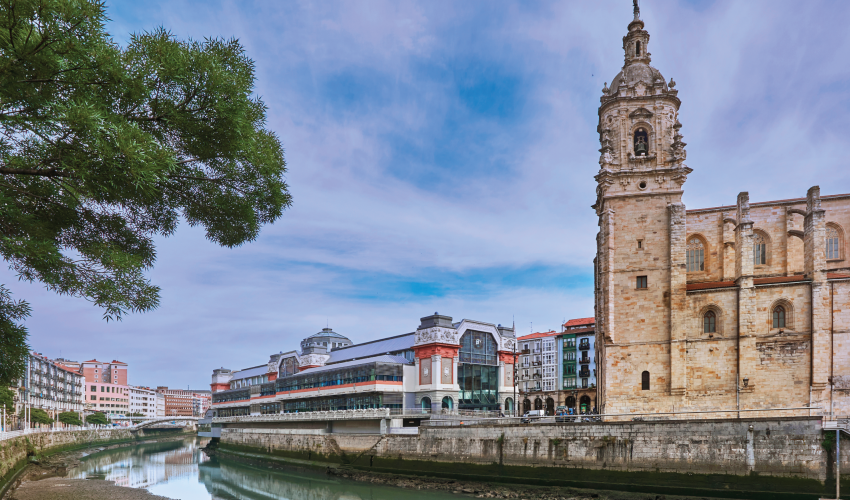
But back in the 20th century, it was the choicest spot for Spanish aristocracy to spend their summers in mansions overlooking the beach. The journey comes to a close in the industrial port city of Bilbao, the de facto capital of Basque country (you can sign up for a longer itinerary on a sister train that travels further across this region too). You may know the city for its Frank Gehry-designed Guggenheim Museum which lives up to the hype, as well as its cluster of Michelin-starred restaurants.
All Aboard
There is an old-world charm to travelling across the European countryside in a luxury train that still retains a certain vintage allure. It’s also a convenient way to cover these regions without having to micromanage a million logistical details yourself. The saloons of Costa Verde Express are steeped in railway heritage, with some of them being original 1923 Pullman cars, with relevant modern refurbishments.
The train has four lounges including the dining cars, a small library and a bar. The 23 double occupancy en-suite cabins are equipped with a small double bed fitted to the wall, mini bar, cupboard, safe deposit box, and luggage space under the bed—compact but sufficient if you use the limited space resourcefully. The train halts at a designated station overnight, so peaceful sleep shouldn’t be a concern. And you don’t need an alarm clock in the morning. A daily ritual sees a staff member walking across the carriages with a bell at 8am every day.
The Northerners love to eat and drink, as the team often reminds us, so meals—whether by the chef on-board or at restaurants in one of the towns (including Michelin-starred restaurant El Corral del Indianu housed in the oldest building in Arriondas)—are lingering affairs over wine pairings, local cheeses and desserts. Vegetarian courses can be aptly arranged and allergies accounted for should you make a mention of it during your booking.
Countryside Getaway
While the Costa Verde Express ensures you’re privy to charming towns and important local sites, you can just as easily spend your time staring out of your suite window, as oceans, waterfalls and grazing cows pass you by. And if you look out at just the perfectly serendipitous moment, you might even spot some horses majestically galloping in the countryside.
The opportunity to revel in the beauty of these far-out, untouched locations attracts travellers from around the world including Germany, Switzerland, France, Chile and USA. It is, after all, an immersive cultural experience beyond city hopping, trendy restaurants and shopping.
It’s a chance to step out of your cocoon and really ‘see’ the world. In this case, all is not just good, as Patricia would often ask us. It is, in fact, pretty damn great.
BEEN THERE, DONE THAT
Insider tips to hold you in good stead on your journey
• Pack light, and pack for comfort. The weather is unpredictable all year round, so prepare for all contingencies—be it rain, shine or cold.
• A light jacket, walking shoes, easy layers and sunscreen are musts.
• Google Translate will be your best friend in these remote regions where English is not as common. Or just brush up on your Spanish before you go.
• The itinerary can be busy and packs in a lot—so prepare to have your sightseeing hat on.
Getting there: Lufthansa operates flights to and from Santiago de Compostela and Bilbao from Mumbai with one layover. Or fly into Madrid or Barcelona, and take a train to the starting point.
Timelines: Costa Verde Express by Renfe runs from May to October, excluding August.
Cost: €8,000 for a single cabin and €9,000 for a double cabin in May, June, and September.
€6,400 for a single cabin and €7,200 for a double cabin in July and October.
(This includes accommodation, meals, relevant internal transfers and sightseeing)
Contact:https://trencostaverdeexpress.com/or trenesturisticosdelujo@renfe.es
Reproduced with permission from Mansworldindia.com