


A Chorus of Young Voices on Canvas
By MWB Desk
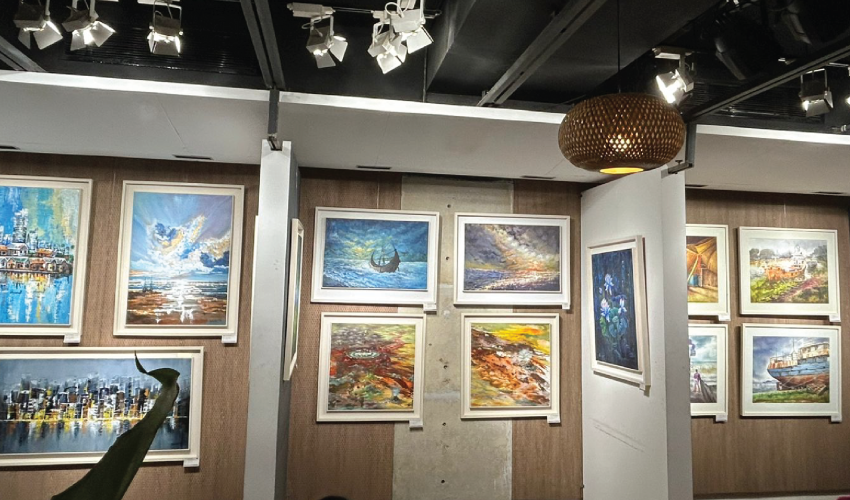
There are art exhibitions that feel like polished presentations—and then there are ones that feel like open-ended letters. The Lobelia Art Exhibition, held from October 4 to October 8 at Dhaka Gallery, fell squarely in the latter.
It wasn’t trying to impress with grandeur or shock with provocation. Instead, it offered something much rarer: sincerity.
The exhibition featured 45 works by twelve emerging Bangladeshi artists, each with distinct styles but connected by a shared urgency to communicate something real. Dreams, memories, local life, and internal landscapes converged in a space that became not just a gallery, but a map of minds in motion.
If the curatorial statement by Zia Biplob is anything to go by, the aim wasn’t simply to arrange paintings, but to carve out room for serious aesthetic consideration. His selection—drawn from over 80 submitted works—was guided not by uniformity but by diversity of vision. There were abstract explorations and narrative compositions, glimpses of ethnic identities, and gestures toward the working class. “Art curating is not new globally, but in Bangladesh, we’re only now beginning to treat it with the seriousness it deserves,” Biplob wrote—and the exhibition bore witness to that shift.
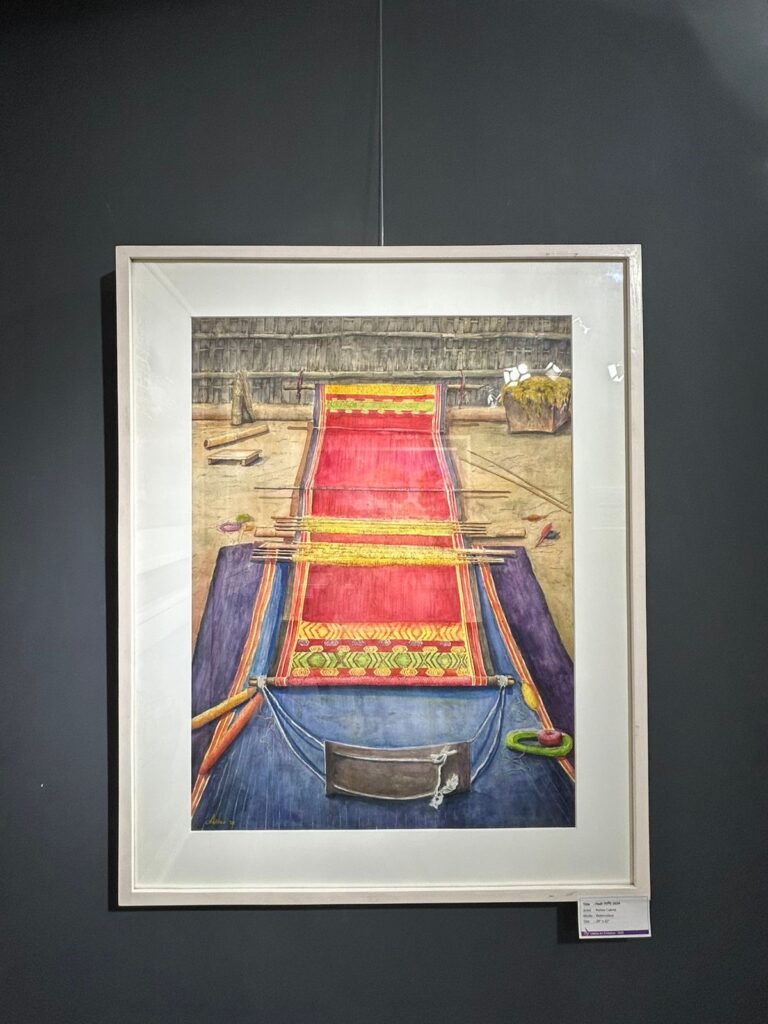
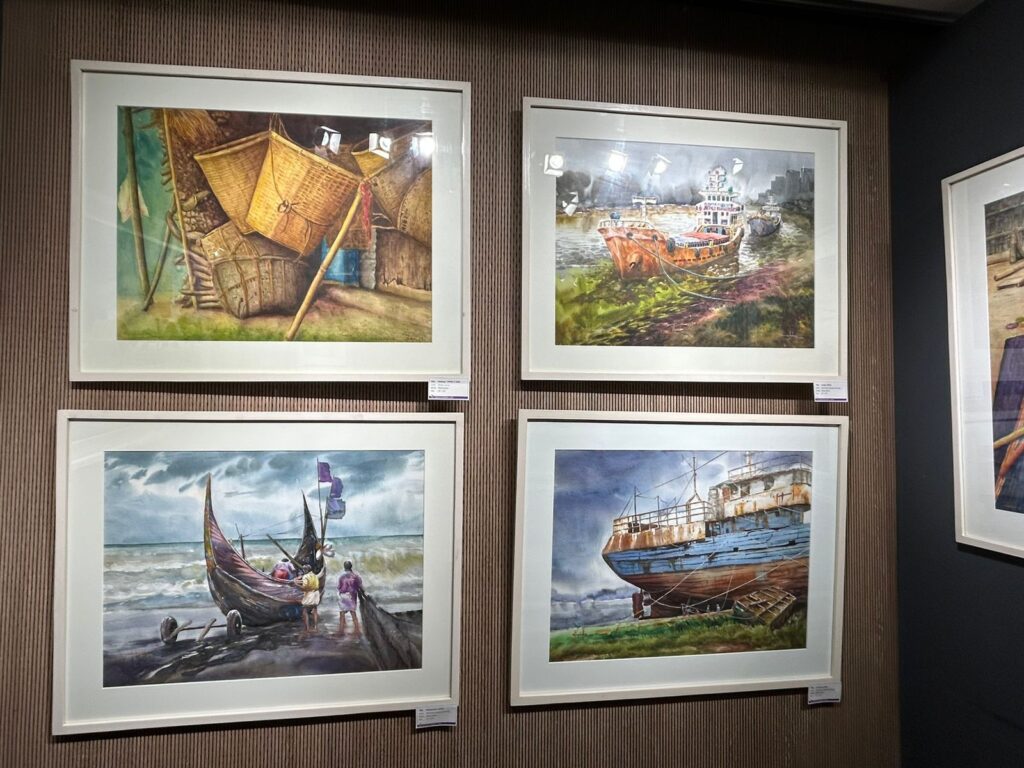
One could start with the watercolors of Aishee Chakma, where cultural memory and emotion overlap in transparent layers. In Horse of Old Dhaka or Rythm of Freedom, you sense both movement and stillness, as if the past is quietly watching from the wings. Her works don’t shout; they breathe.
Contrast that with Abdus Sobhan Shohag’s Struggle of Fishermen, a bold acrylic piece that doesn’t ask for permission before confronting the viewer. It’s as much a composition as it is a comment—a reminder that beauty, here, isn’t ornamental, but lived.
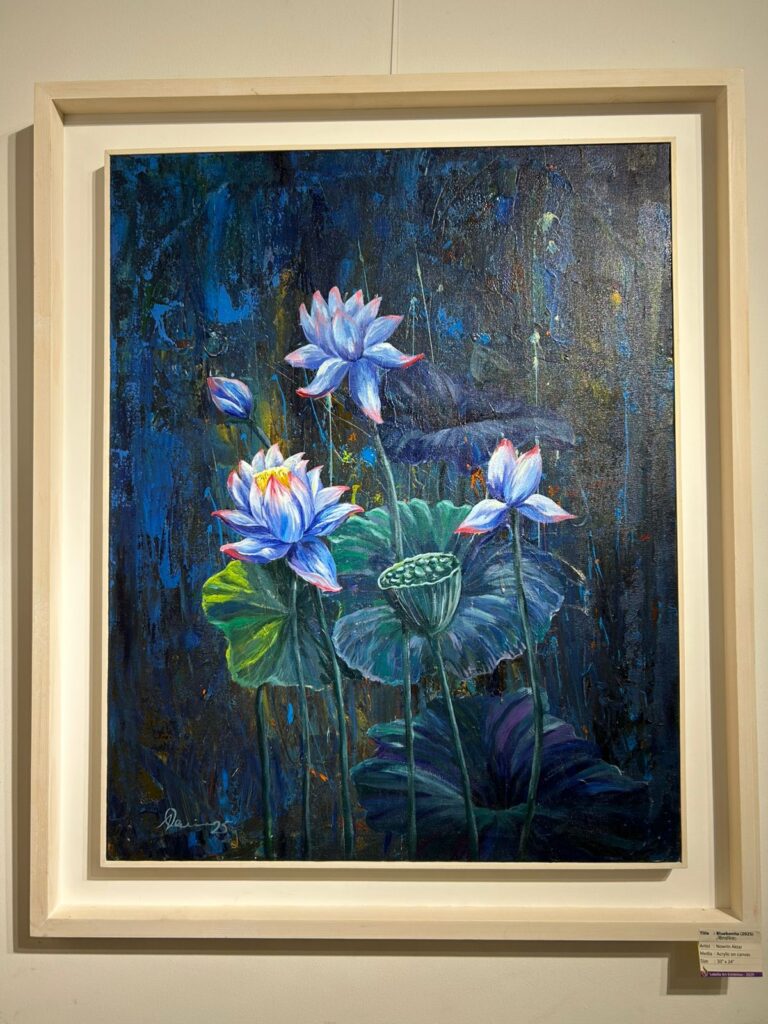
Nowrin Akter, another strong presence, seems to paint with a sensitivity that borders on confession. Her works—subtle yet emotionally charged—carry a sense of longing and slowness rarely seen in younger artists. Meanwhile, Orpita Bhowmik’s Strength of Motion and Golden Blossoms bridge the natural with the symbolic, balancing technical strength with lyrical restraint.
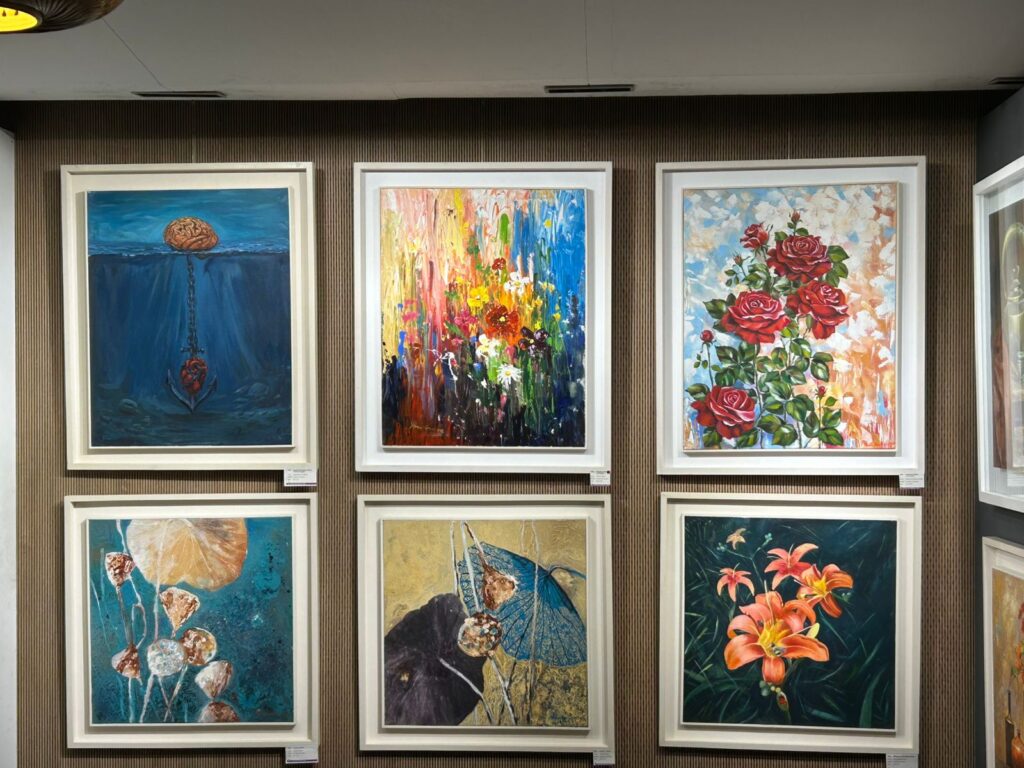
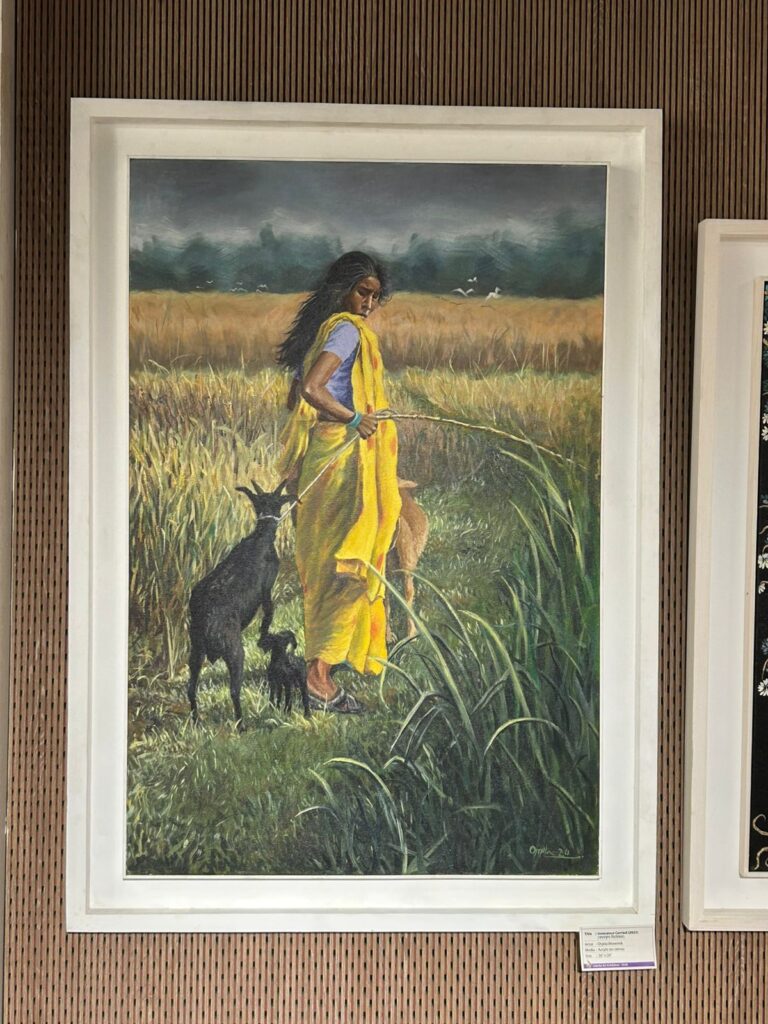
There was also a notable presence of artists from underrepresented regions and communities. Monti Chowdhury Nodi, whose Life Within the Trees and Shackled Emotions feel rooted in both folk traditions and feminist metaphors, navigates this tension with quiet force. Mrittika Biswas’s Avash series, meanwhile, uses abstraction to explore loss, decay, and cultural residue—without over-explaining any of it.
The exhibition could have easily collapsed into a collage of emerging voices trying to outdo one another. But it didn’t. Instead, there was a sense of care in how it was assembled. It was cohesive not because the works looked the same, but because they were in conversation. You could almost trace the emotional thread running between Md. Daud Haider Shaon’s crisp compositions and Lata Chakma’s more minimal, almost whispered etchings like Waiting or Mother & Child.
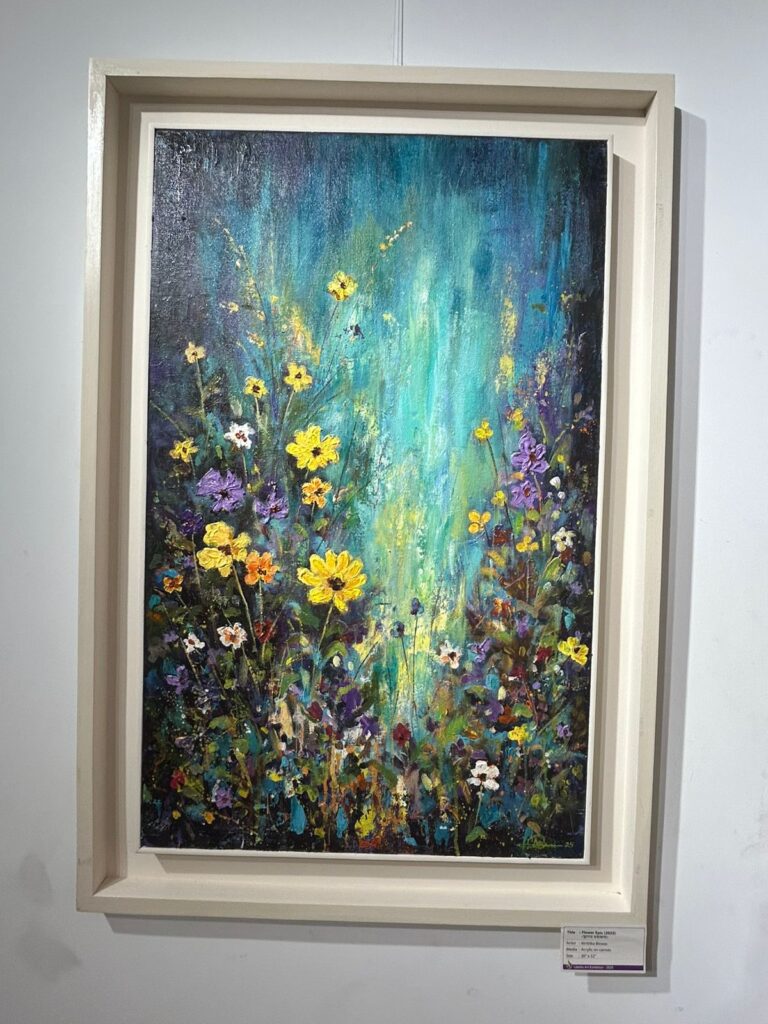
The presence of guest artist Zia Biplob served as a quiet anchor. Not in the sense of hierarchy—but as a reminder that curation, when done with intent, isn’t about showcasing art; it’s about scaffolding its impact.
What stood out the most, perhaps, was that this exhibition did not feel rushed. There was time in these works. Time spent in observation, time spent in trial and error, and time spent in hope. Organizer Benzir Ahmed Tito and co-organizer Eliza Chowdhury deserve credit not just for putting up a show, but for creating a platform where young artists were not only included but truly seen.
In a cultural landscape where creative experimentation often gets overshadowed by commercial viability or political noise, Lobelia Art Exhibition chose to take a gentler route: to nurture. And in doing so, it reminded viewers that emerging artists don’t need to scream to be heard. Sometimes, all they need is a room, a wall, and someone to look closely.
The exhibition ran from October 4 to October 8, 2025, at Dhaka Gallery, Banani.