


MWB Desk
As we slide into the latter half of 2025, Bangladeshi OTT platforms are no longer playing catch-up—they’re setting trends. And right at the forefront of this cultural renaissance is Chorki, curating bold, boundary-breaking content that’s both local and universal. If you’ve been overwhelmed by options or out of the loop, fear not. MW has handpicked five unmissable titles on Chorki—from family dramas that tug at the heartstrings to thrillers that grab you by the collar.
Settle in, adjust your volume, and prepare for a whirlwind ride through this year’s cinematic gems.
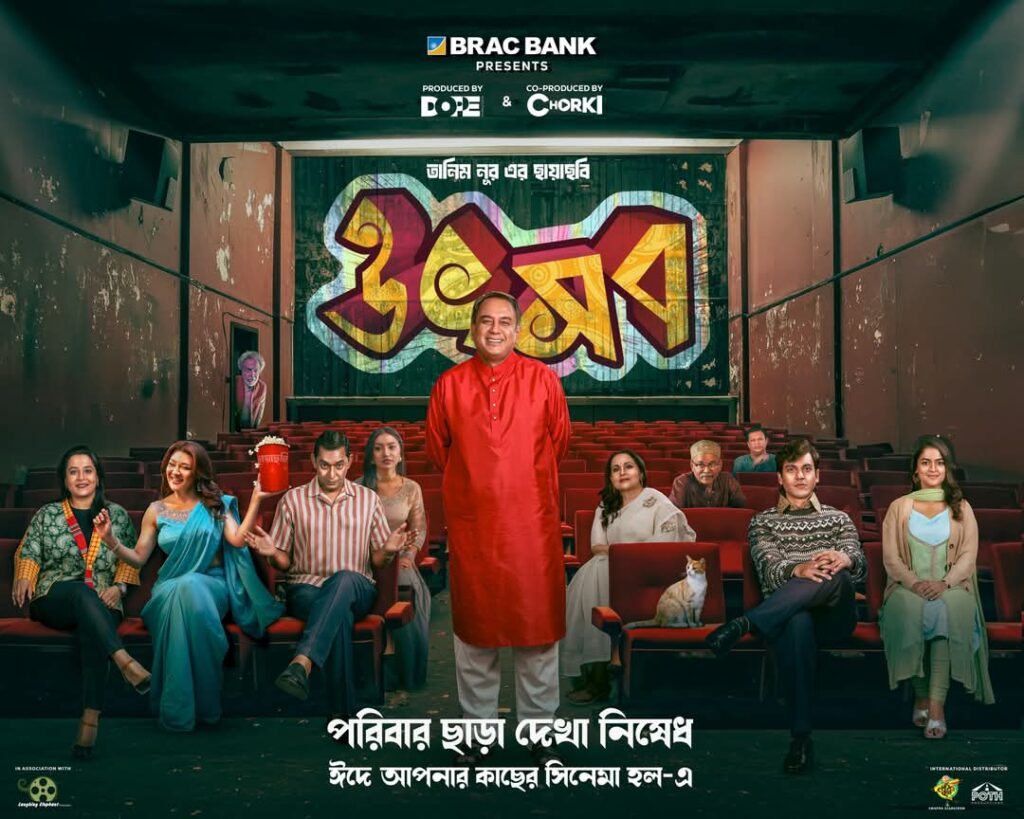
Photo Source: Official Poster
Utshob – The Ghosts of Eid’s Past
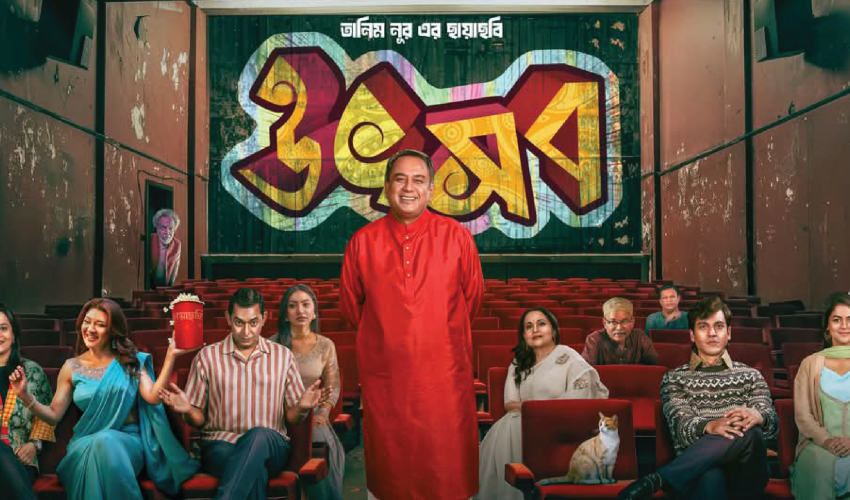
Imagine Charles Dickens’ A Christmas Carol, but reimagined with a Bangladeshi soul, set against the backdrop of Dhaka’s chaotic, colorful Eid rush. That’s Utshob—a heartfelt, genre-blending film that caught everyone off guard.
At its core, Utshob follows Jahangir, a jaded event planner whose cynicism about family, faith, and festivals is confronted—literally—by three ghosts who appear on Eid day. They are not just figments of memory, but powerful presences played by Bangladeshi acting royalty: Jaya Ahsan, Chanchal Chowdhury, Aupee Karim, and Zahid Hasan. Their performances shimmer with charm and sorrow, offering Jahangir a second chance to feel… well, anything.
The film found success not just on the small screen but at the box office too, crossing the Tk 5 crore mark and becoming a surprise hit abroad. Yet its greatest triumph lies in how it makes you reflect on the fragile, funny, and infuriating bonds we call family. Watching Utshob feels like sitting at the Eid dinner table with all your regrets—and finding peace in the chaos.
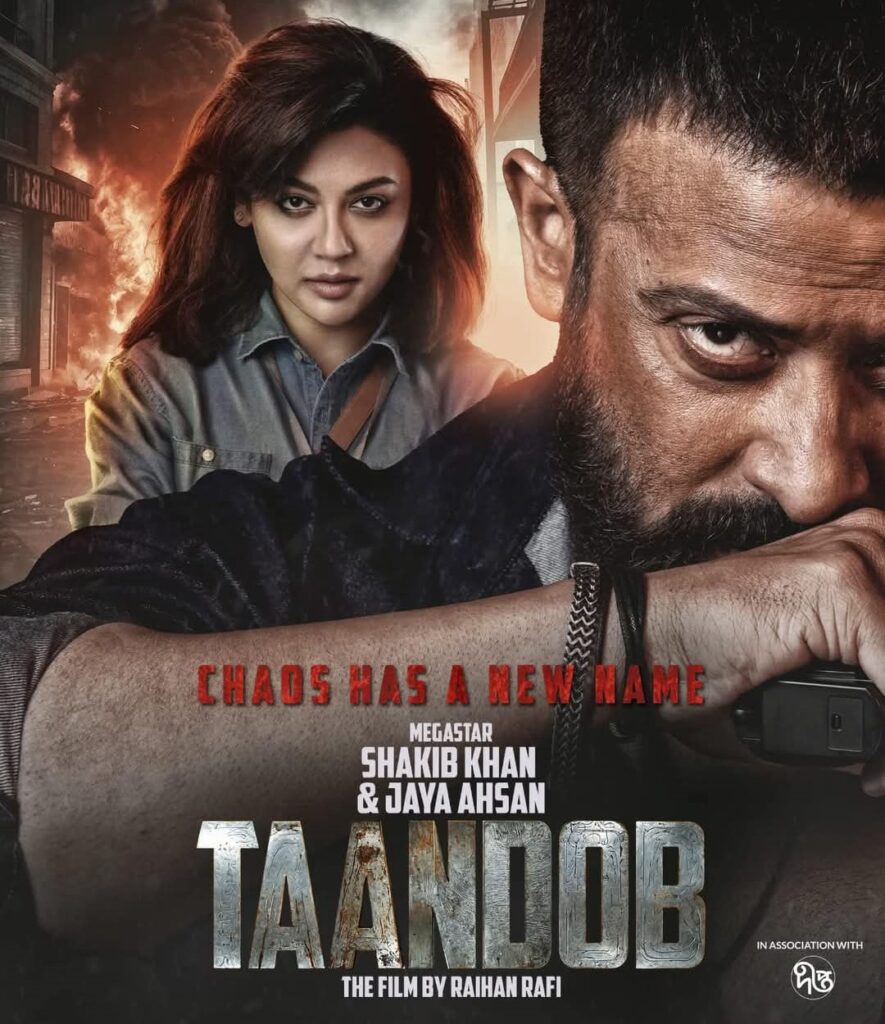
Photo Source: Official Poster
Taandob – Action, Politics, and Shakib Khan Unleashed
There’s no denying it: Taandob is a political thriller with serious bite—and a body count to match. Directed by Raihan Rafi and starring the ever-larger-than-life Shakib Khan, the film drops us into a hostage situation at a fictional news network, where truths unravel faster than bullets fly.
What sets Taandob apart from your run-of-the-mill action fare is its sharp political commentary. Beneath the shootouts and conspiracies lies a critique of media manipulation, fake news, and the cost of speaking out in an increasingly surveilled society. And it’s not just loud—it’s smart.
Audiences responded in kind. Within its first month, Taandob raked in more than Tk 30 crore, cementing its place in what fans are now calling the Raihan Rafi Cinematic Universe (RRCU). Yes, you read that right—Bangladesh officially has its own shared film universe, and this film is its tentpole.
If you like your adrenaline served with subtext, Taandob delivers a full-course meal.
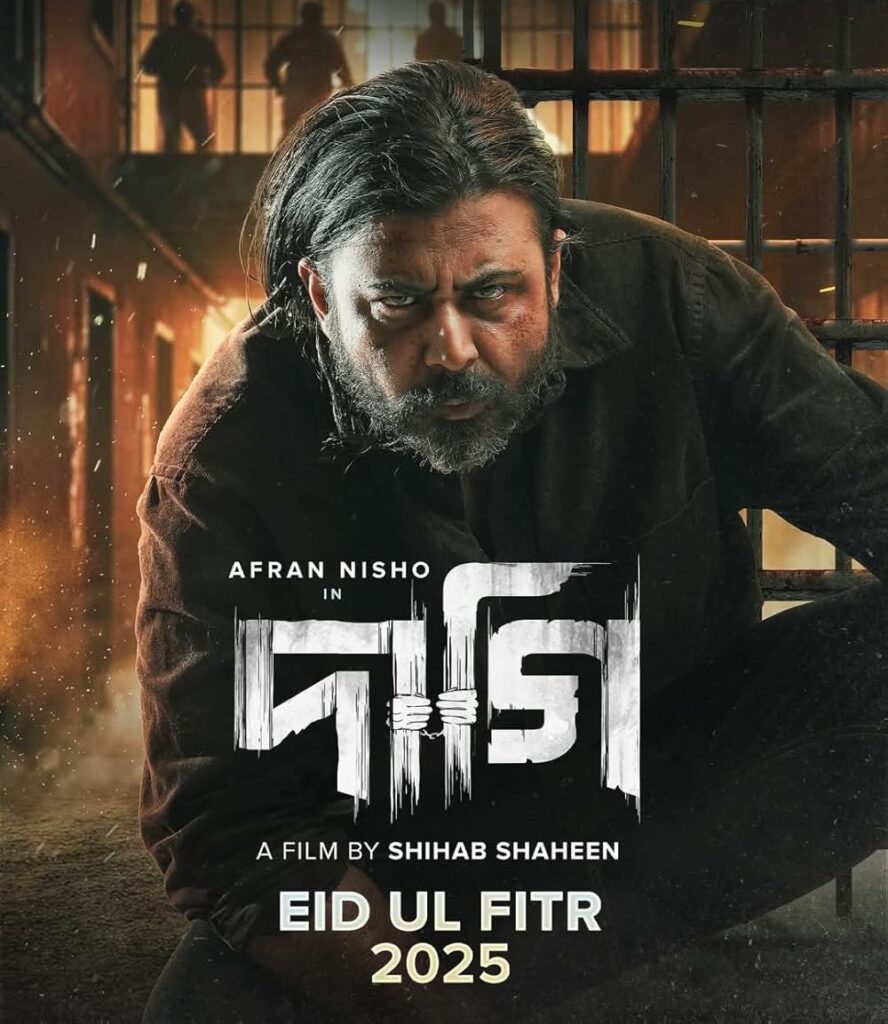
Photo Source: Official Poster
Daagi – When the Past Comes Knocking
If Taandob is about making noise, Daagi is about the silence between the gunshots. Afran Nisho stars in this introspective, gritty crime drama that pulls no punches emotionally. The story centers on Shahadat, a former smuggler freshly out of prison, trying to go straight. But the streets have long memories, and the ghosts of his former life come clawing back.
What makes Daagi unforgettable is its refusal to let you root for or against its characters too easily. Nisho’s portrayal of Shahadat is hauntingly ambiguous—he’s broken, but not defeated. And as his past unravels, so does his grasp on redemption.
Audiences and critics alike were floored. Within 29 days of release, the film reportedly grossed over Tk 75 crore—a staggering feat that speaks to both its narrative weight and commercial appeal. If Utshob is the heart and Taandob the muscle, Daagi is the soul of Chorki’s 2025 lineup.
The Eid Quartet – Four Films, One Phenomenon
Chorki pulled a bold move this Eid by unleashing four heavyweight films simultaneously: Borbaad, Daagi, Chokkor 302, and Jongli. While each stands tall on its own, together they created a cinematic frenzy that had fans streaming from rooftops.
Borbaad gave us Shakib Khan at his broodiest. Chokkor 302, led by Mosharraf Karim, delivered a tense psychological thriller laced with noir-like pacing. Jungli saw Siam Ahmed in full beast mode—a raw, rebellious youth fighting systems and sins alike. And yes, Daagi also featured in this quad-bomb drop, proving its replay value beyond the box office.
This was more than a content release; it was an event. With these four films, Chorki proved it’s no longer just an OTT platform—it’s a festival stage. For viewers, it offered something rare: choice. And in a country where film releases often feel like feast or famine, the Eid Quartet was a buffet we didn’t know we needed.
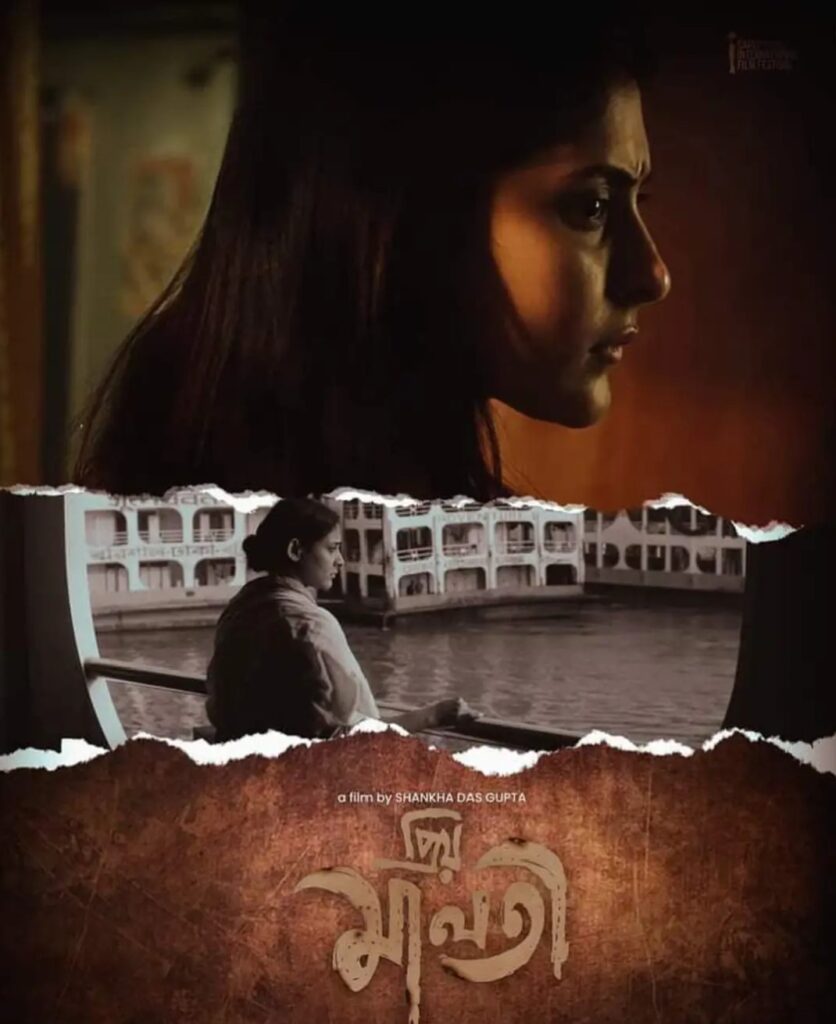
Photo Source: Official Poster
Priyo Maloti – A Whisper That Echoes
Rounding out our list is a quieter, more meditative offering—Priyo Maloti, released in late 2024 but still echoing through 2025’s viewership. Directed with exquisite restraint and powered by Mehazabien Chowdhury’s soul-stirring performance, the film follows a woman reeling from the sudden death of her husband in a building fire. But it’s not just grief that drives the narrative—it’s discovery.
What begins as mourning slowly morphs into mystery, as Maloti begins to uncover truths about her husband’s past, and her own place in a society that too often sidelines widows and women. The film walks the fine line between sorrow and strength, never tipping into melodrama.
Its impact was immediate. Priyo Maloti won the FIPRESCI Award at the 23rd Dhaka International Film Festival and resonated internationally. Watching it feels like listening to a sad song you didn’t know you remembered—until the chorus hits.
The Final Frame
Chorki’s 2025 slate isn’t just impressive—it’s transformative. These five films mark a turning point, not only in Bangladeshi cinema’s production quality and ambition but in its ability to tell stories that feel deeply personal and profoundly universal. Whether you’re in Dhaka, Toronto, or Sydney, these stories speak to home, heartbreak, and hope.
So if you’re only catching up on Chorki now, don’t just scroll. Choose one. Hit play. And let Bangladeshi cinema remind you: the stories we tell, and how we tell them, can change everything.