


By Ayman Anika
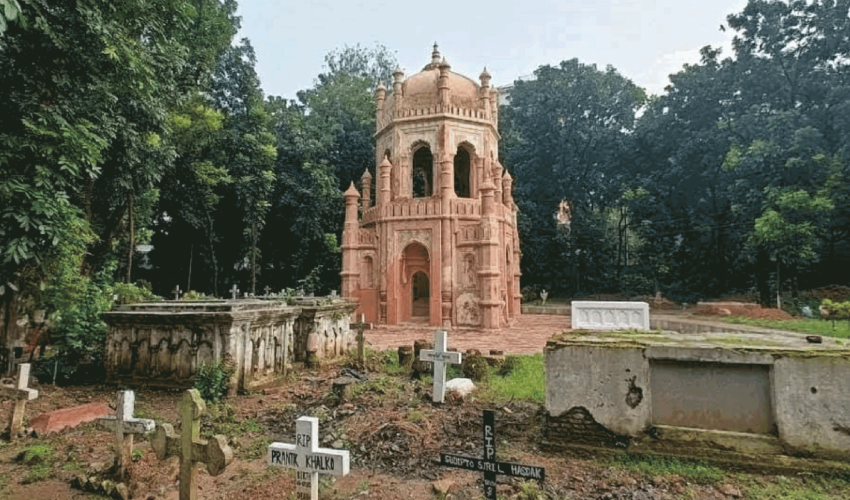
To walk through the Wari Christian Cemetery (also called Narinda Christian Cemetery) in Old Dhaka is to step across centuries. It is not just a place of rest for the dead, but a repository of stories — colonial, local, blurred, lost and found. Among its more enigmatic relics is the Tomb of “Columbo Sahib,” a mausoleum whose precise identity, origin, and meaning continue to puzzle historians. Recently, the tomb and its Moorish Gateway were restored, not only preserving the bricks and arches but also offering some hope of preserving Dhaka’s layered heritage.
A Cemetery of Echoes
The Christian Cemetery in Wari, Old Dhaka — also known as Narinda Cemetery — is one of the city’s oldest colonial relics. It is believed to date back to the 17th century, a time when Dhaka, then Jahangirnagar, thrived under Mughal rule and hummed with the footsteps of traders, missionaries, soldiers, and settlers from faraway lands. In its heyday, the cemetery was the final resting place for British officials, Armenian merchants, Bengali Christians, and Portuguese wanderers. Today, it resembles something between a forgotten garden and a half-remembered dream.
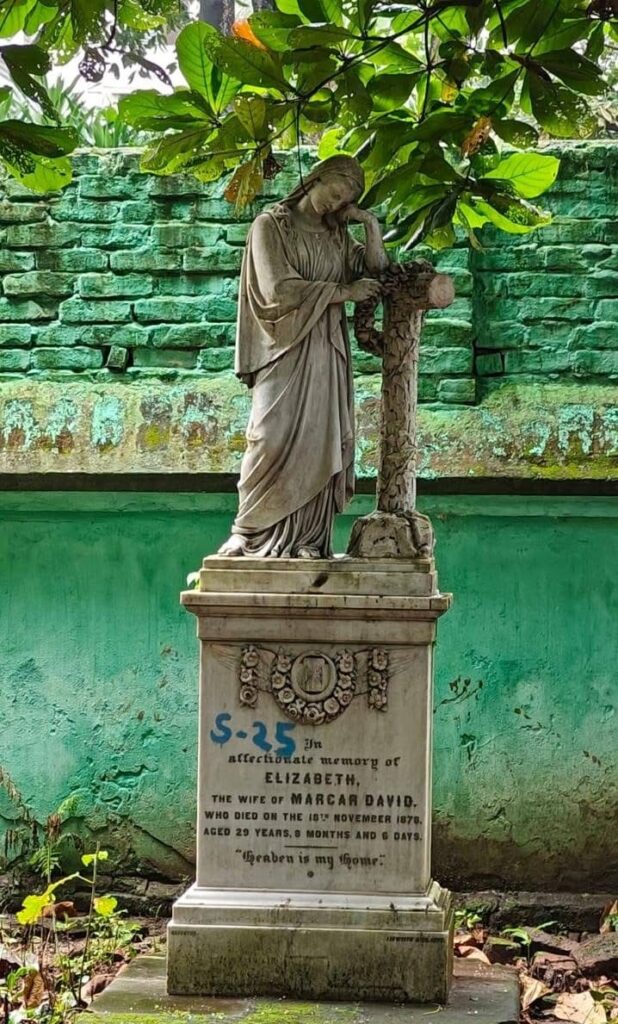
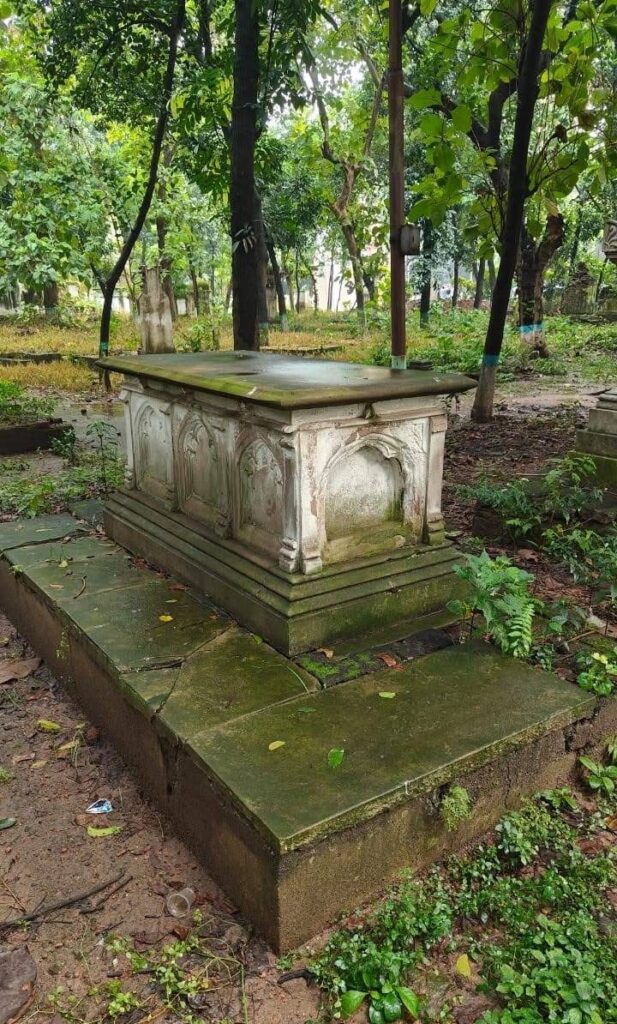
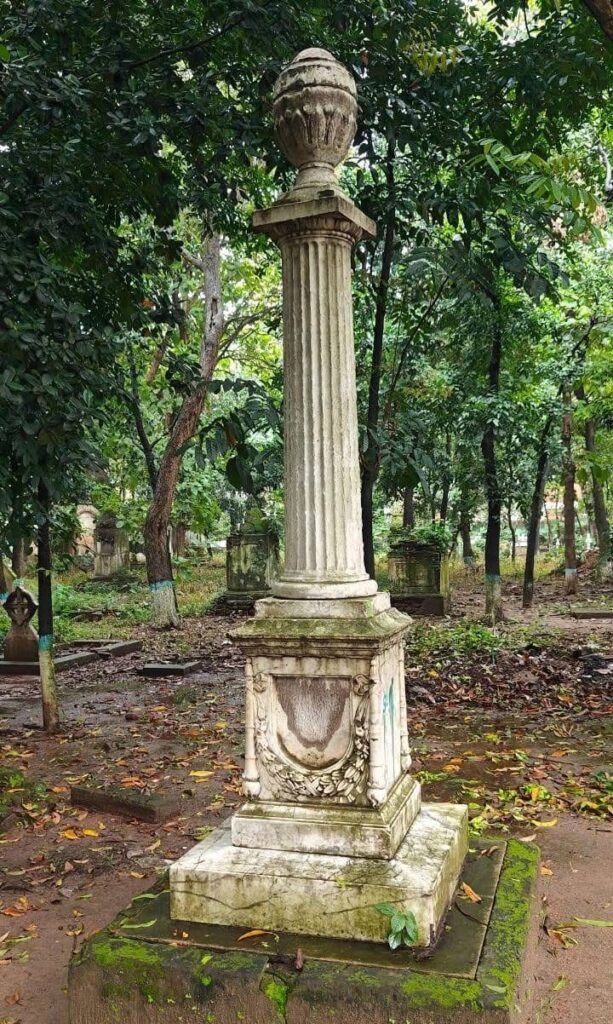
You can walk for hours in this place and never see the same style twice. Dome-topped mausoleums jostle with gothic obelisks, crumbling marble crosses lean into tropical vines, and chipped gravestones are etched with Latin, English, Portuguese, or no name at all. This cemetery does not preserve history neatly. It lets it bleed and decay and sometimes — astonishingly — revive.
Who Was Columbo Sahib?
It’s strange how a tomb can outlive its story.
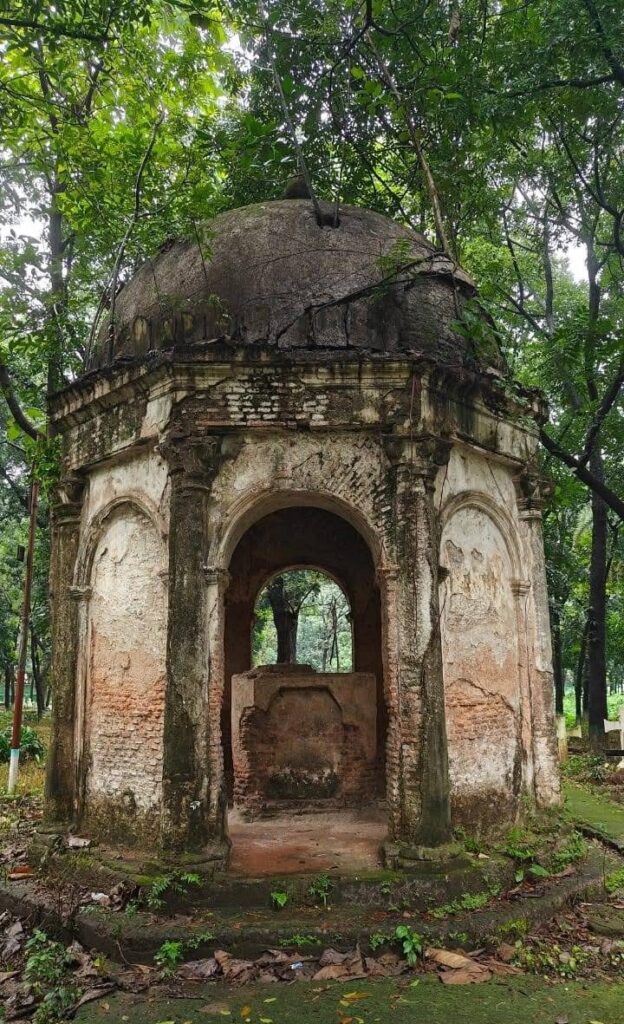
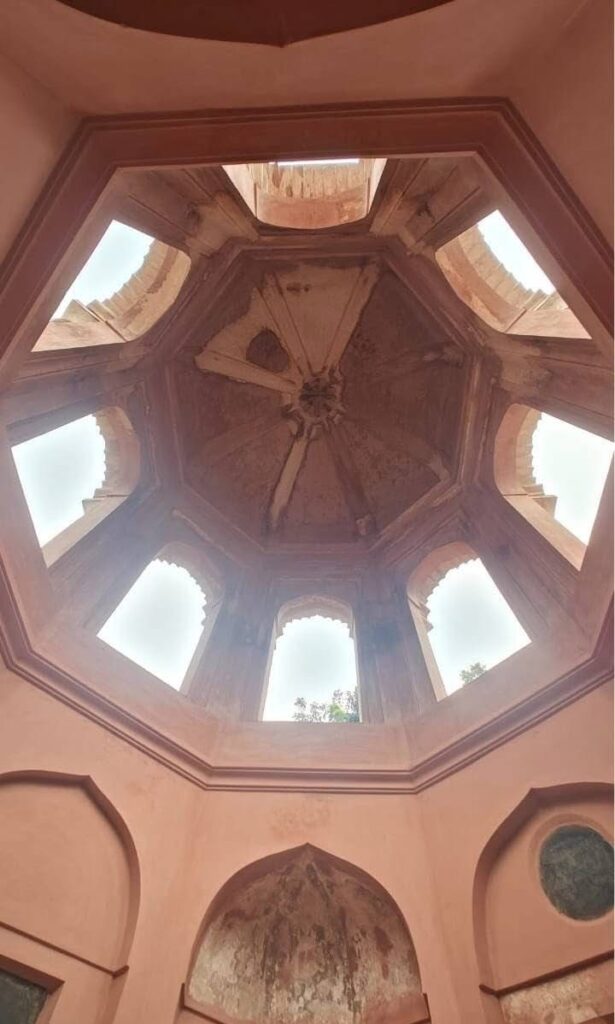
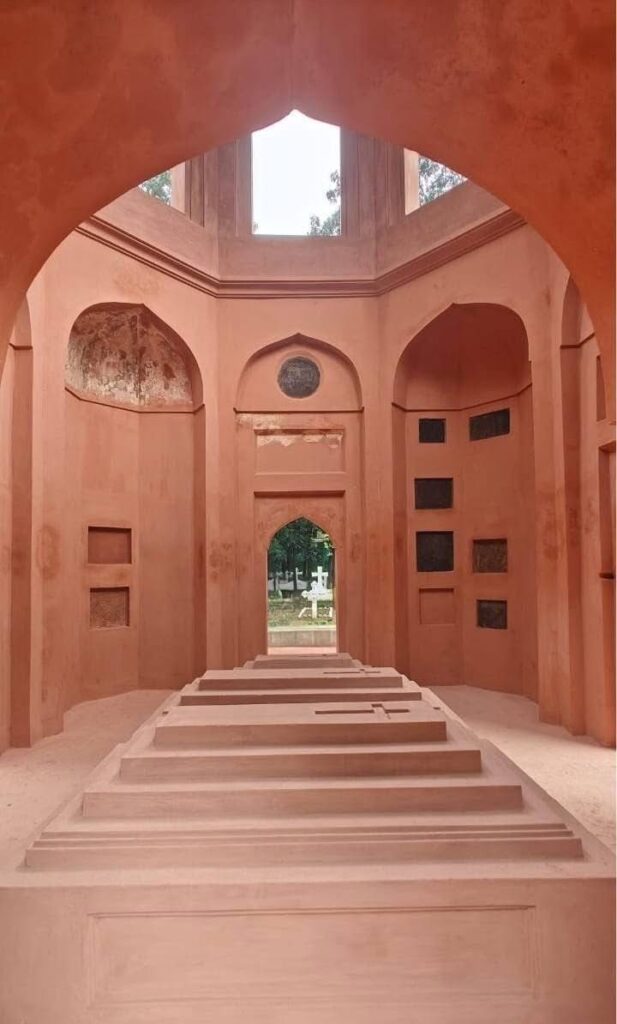
The so-called Tomb of Columbo is one of the most architecturally intriguing structures in the cemetery. Built atop a square base, the structure morphs into an octagonal chamber crowned by a modest dome. Eight windows, evenly spaced, let in light from all directions — a design element more commonly found in Sufi mausoleums than Christian graves. It is a tomb that wants to breathe. And yet, for decades, it seemed to be slowly suffocating under time and ignorance.
There’s no epitaph. No date. No engraving to say when the man lived or died. All that exists are fragments of memory, and the testimony of a 19th-century bishop.
When Reginald Heber, the Bishop of Calcutta, visited the cemetery around 1824, he asked about this peculiar tomb. The caretaker — or “beadle” — told him it belonged to “Columbo Sahib,” a “naukūr” or servant of the East India Company. Heber found that puzzling. “His name does not sound like an Englishman’s,” he wrote. And he was right. The name “Columbo” might suggest a Portuguese origin, or Italian, or even be a corruption of something entirely local.
What kind of servant has a mausoleum more lavish than most colonial officers?
What kind of anonymity carves itself so boldly in stone?
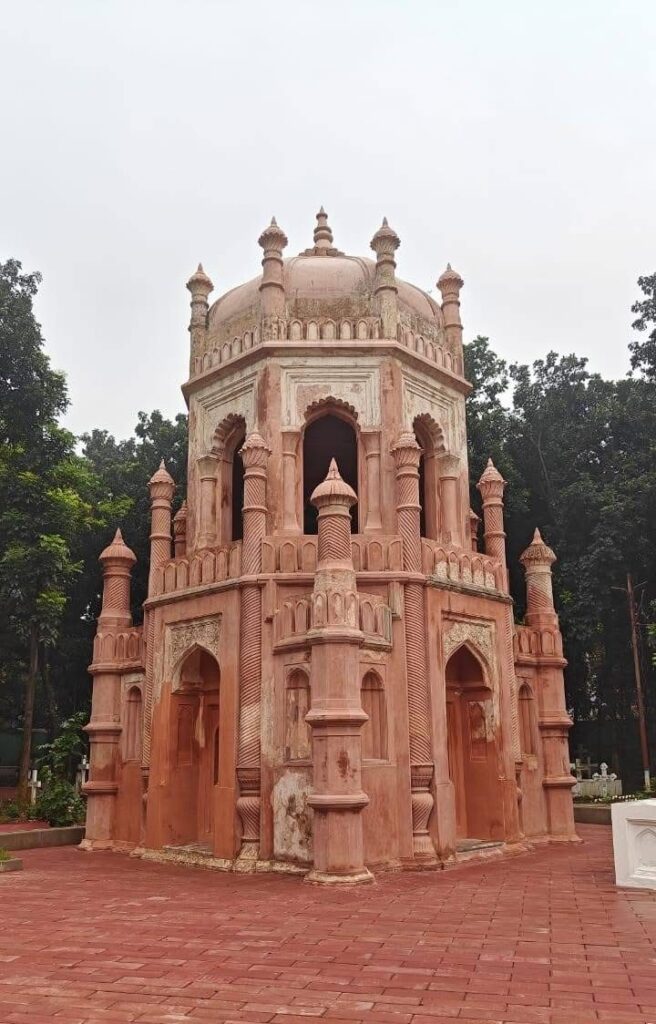
A Gateway into Contradictions
The other landmark within the cemetery is the Moorish Gateway — a beautiful but stylistically unusual structure that marks the main entrance. It resembles nothing else in Christian architecture in Dhaka. Instead, it looks like something from a mosque in Andalusia — horseshoe arches, intricate arabesques, a flourish of Islamic design applied to a Christian graveyard.
This incongruity is not an accident. It’s a testament to Dhaka’s layered identity, where faiths and empires collided, hybridized, and left traces. The gateway and Columbo’s tomb mirror each other — both defy neat categorization. Are they Christian or Islamic? European or Bengali? Historical or mythic?
For years, these structures crumbled in silence. Grass overtook the tiles. Thieves pried metal from doors. Local vendors crept into the cemetery’s edges, setting up stalls. The tomb was nearly claimed by a tree growing through its roof. Time, indifferent and relentless, was winning.
Resurrection, of a Kind
In 2025, a quiet revolution stirred in the cemetery. The Wari Christian Cemetery Board officially inaugurated the restored Tomb of Columbo and the Moorish Gateway with support from international partners, including the Commonwealth Heritage Forum and the British Association for Cemeteries in South Asia.
It was not just a matter of repair — it was a resurrection. The octagonal dome was restructured. The Moorish Gateway was returned to its original form, freshly painted but not whitewashed into oblivion. Crumbling carvings were preserved, not erased. Even the ghost of Columbo Sahib seemed to sit up a little taller.
At the inauguration, Archbishop Bejoy N. D’Cruze called the restoration “a vital act of memory.” British High Commissioner Sarah Catherine Cook remarked that preserving such sites “safeguards the stories of all those who contributed to the cultural and social fabric of Bangladesh.” These were not just ceremonial words. They acknowledged something deeper — that cemeteries, too, are a form of history writing.
The Politics of Forgetting
Restoring the tomb is one thing. Protecting it is another.
The cemetery remains vulnerable. Encroachments persist. Drug users seek shelter in forgotten corners. Young couples use it as a hideaway. Vendors inch closer to its periphery. Like much of Old Dhaka’s heritage, it lives in the tension between reverence and neglect.
And yet, there is hope in restoration — not of perfection, but of preservation. The very act of choosing to save Columbo’s tomb is a refusal to let mystery rot. It suggests that even unnamed lives, even half-told stories, are worth the trouble.
A Tomb, A Story, A City
What makes Columbo’s tomb so haunting is not its architecture, though that is beautiful. It is the absence at its core — the way it dares you to imagine, to remember someone who may never be remembered fully. Was he a European trader who found peace in Bengal? Was he a local Christian man given a name that history forgot? Was he even buried there?
In that sense, the tomb does what all great monuments do: it disturbs the certainty of time. It reminds us that identity is not always fixed. Cities do not grow in straight lines. That sometimes, the most enduring stories are the ones with missing pieces.
So if you ever find yourself walking past the chaos of Narinda into the shade of the Christian Cemetery, pause before the Tomb of Columbo. Look up at its dome. Step through the Moorish Gateway. Let yourself listen.
Not for facts. But for echoes.