

Expressing the shades of peace through an artist’s view
By Mahjabin Rahman
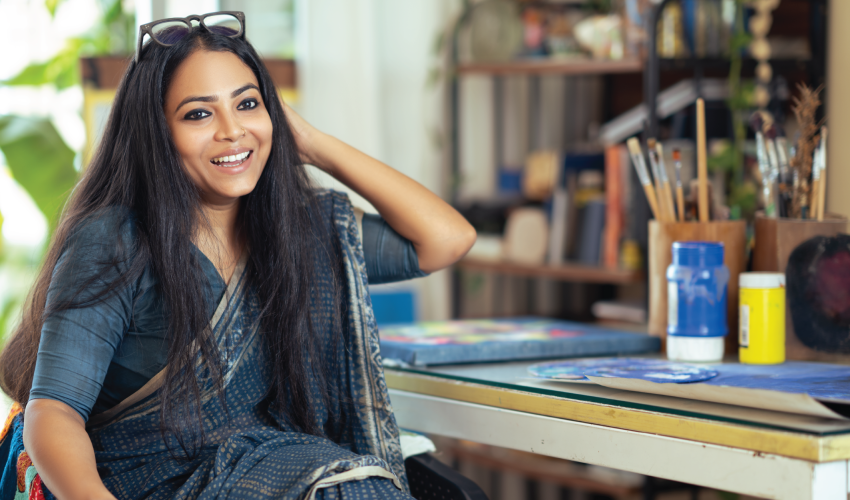
On an otherwise ordinary day, I stepped into the studio of Artist Suborna Morsheada. I was thinking ‘interview’ but she offered me an enlightening conversation that made the memory an extraordinary one.
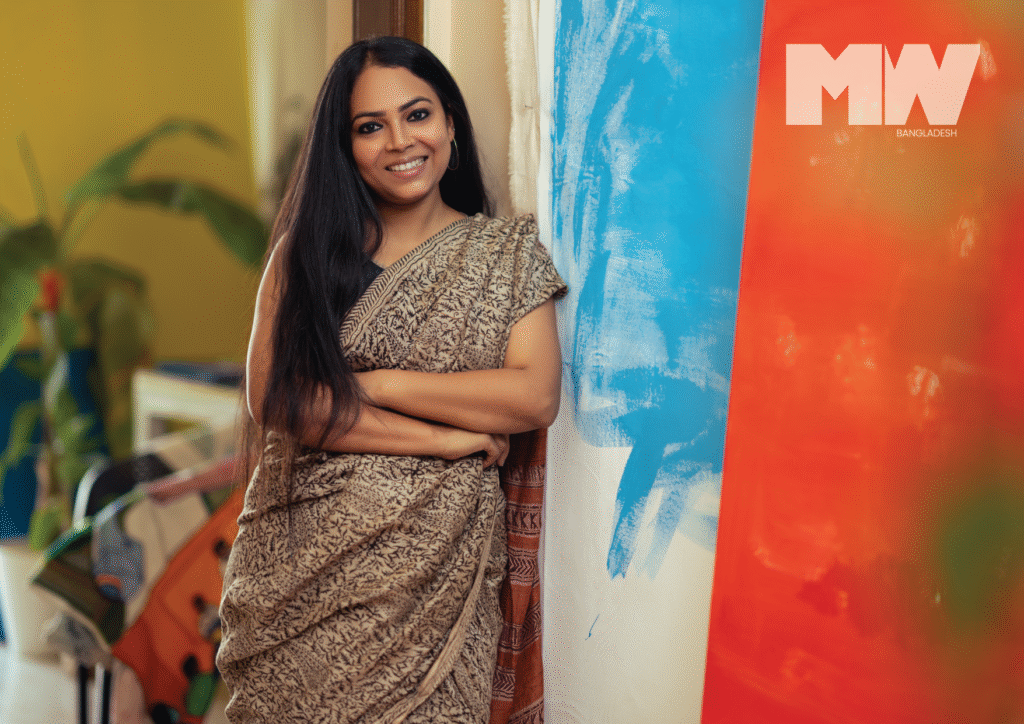
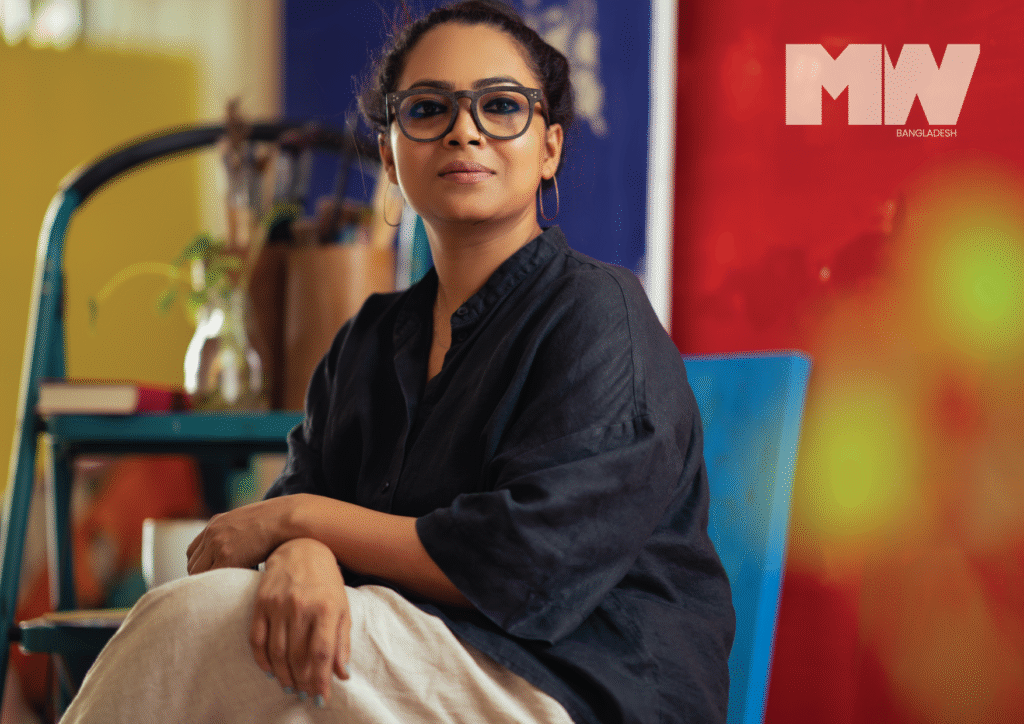
Suborna Morsheada is a very vibrant human being with bold kajal on her eyes, who sees the world in a different colour, whose art comes from the memories from her childhood. The scent of her dadi’s coconut hair oil and her mother’s saree are the things that inspire Suborna Morsheada to create her own art.
Trained in printmaking at the Faculty of Fine Arts, Dhaka University, she now works across woodcut, lithography, cyanotype, textiles, and mixed media, transforming intimate experiences into visual forms but her work is just not confined in her studio. She goes beyond borders and turns strangers into family and tells their story through her art. She went to Kashmir and lived with a family in Baramulla, creating Kashmir: Clouds in a Bottle, a reflection on borders, intimacy, and freedom.
When I was in her studio, she shared the From Home to Home (Ghar Theke Ghare) series. The first page outlined the story that inspired it, with the word Metamorphosis written prominently. This sparked my curiosity.
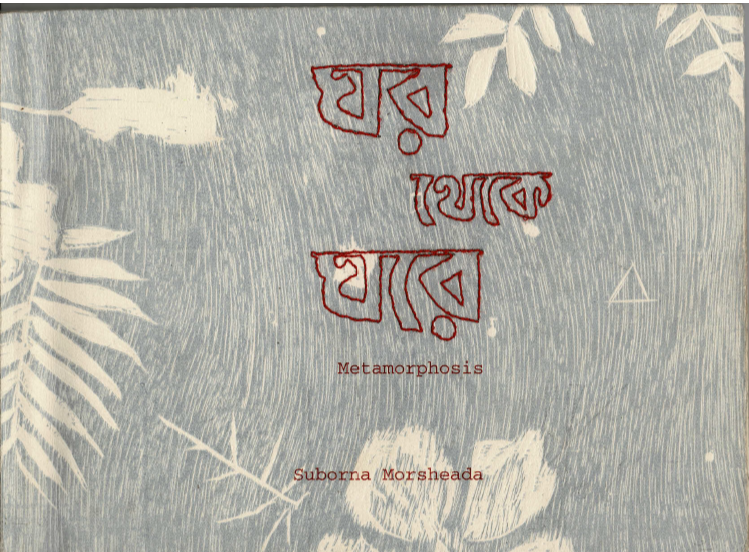
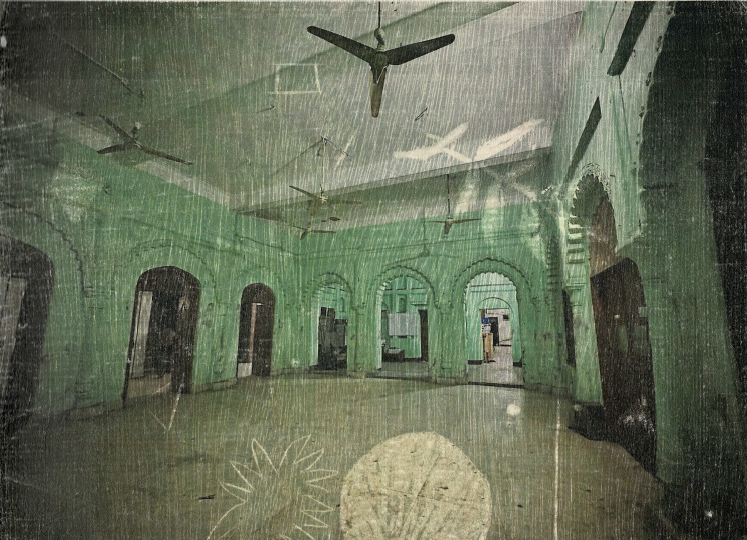
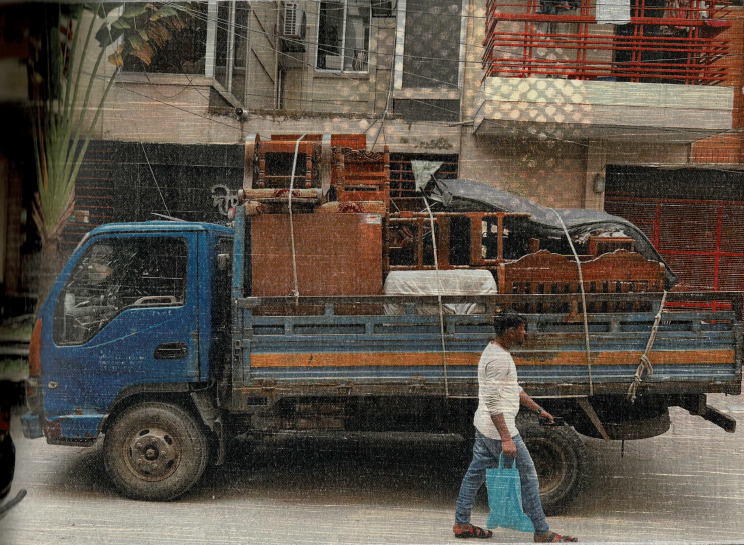
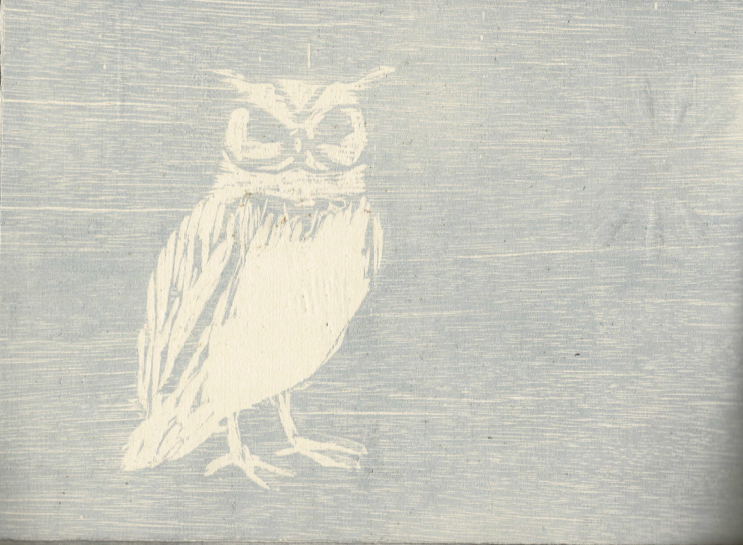
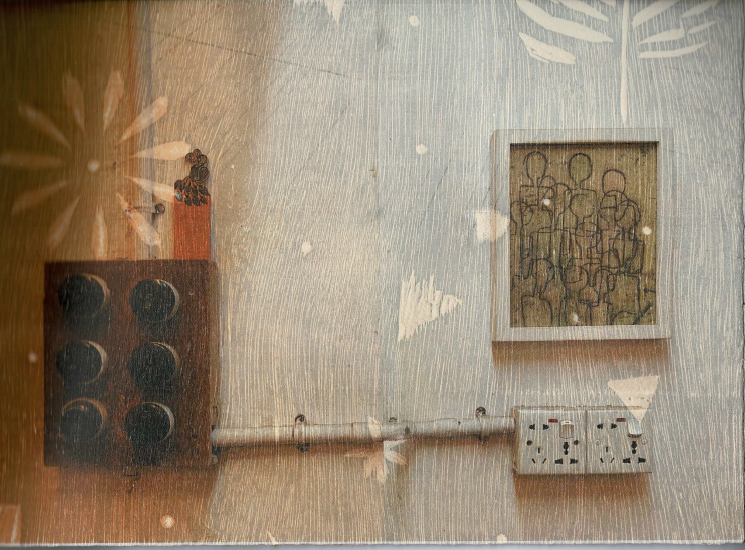
Why metamorphosis and then this title? Aren’t these two a bit contradictory?
She said no, they are not. According to her, sometimes when we move from one home to another, we leave a piece of ourselves behind and transform in the process. She explained that the “me” in a new home is never quite the same as the “me” in the previous one. When her family moved to a new home due to her father’s work, she felt an internal shift, a subtle transformation, and it was this feeling of becoming a slightly different person that she poured into the series.
The Phoenix of Renewal
In her recent project Against All Odds – The Karail Chronicles, she turned her focus to the lives and resilience of the Karail community in Dhaka. Among the works created for this project was an interesting piece of art which she named ‘The Phoenix of Renewal’ that was made with thrown away and broken things. The phoenix, a mythical bird that rises from its own ashes, became a fitting metaphor for the lives of the people she depicted. I wanted to know what she was thinking while she made that.
Suborna explained: we always talk about crises, but we often forget that nobody is above crisis. She wanted to tell the story of the Karail people and show their quiet resilience. Those who live in Karail have no windows in their small makeshift homes. They came to Dhaka in search of a better life but instead met the harsh reality.
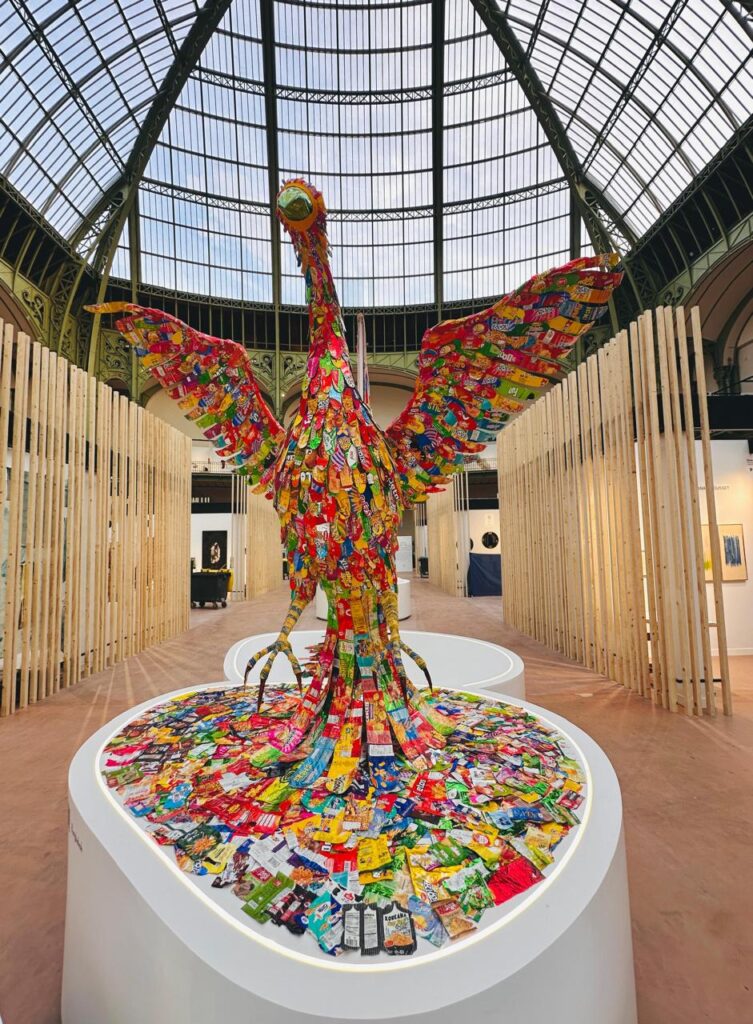
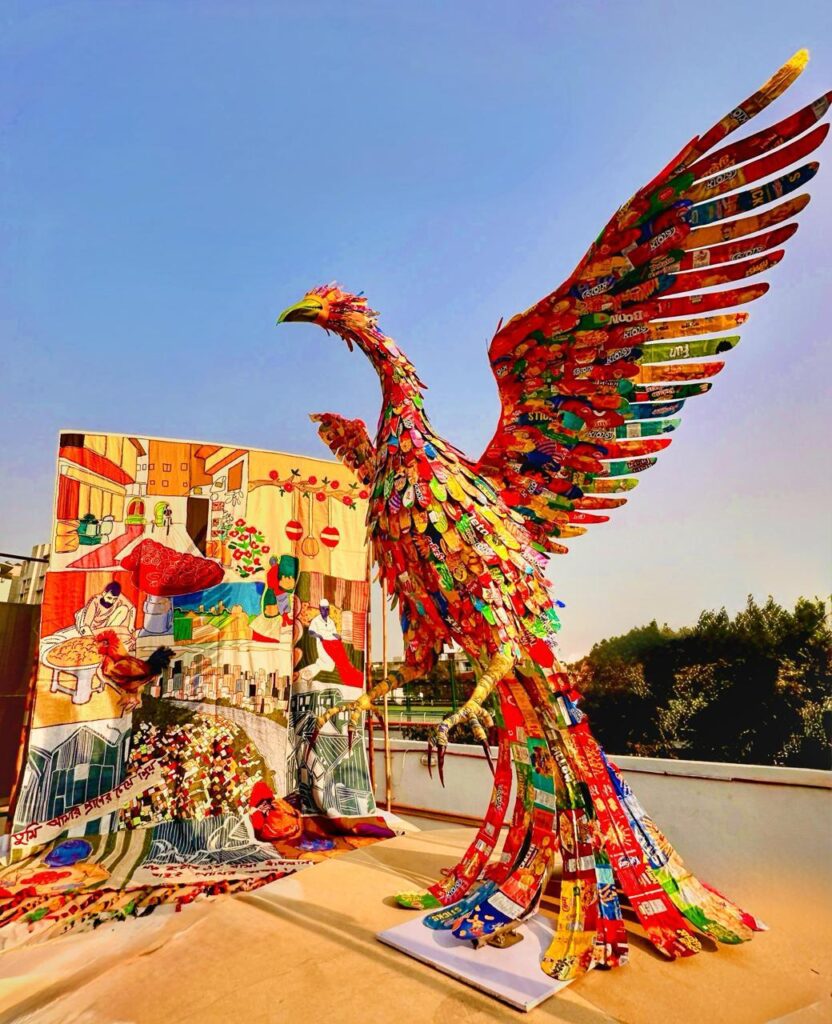
The women and children of Karail face the greatest hardships. This is not to say that men do not suffer, but the challenges are often different and more severe for women and children. Most women from Karail slum work as maids, facing the cruelty of the world every day. They often return home exhausted, sometimes physically or mentally abused, and the night feels unbearably long. Yet the next morning they rise again and face life as if nothing happened, that is a true phoenix spirit. These women burn but rise again from their own ashes and the children, with their brightest smiles even amid hardship, embody the myth of the phoenix in their own way. That was the thought behind The Phoenix of Renewal.
When Suborna was in Karail she asked the children from there to bring all the chips packets and gather up and that was the base for the Phoenix. She made them from the Karail trash so that is why it is the Phoenix of the Karail.
Since we were talking about The Phoenix of Renewal, Suborna talked about the kids who helped gather all the chip packets. When they realized that she had transformed their collected “trash” into something so magical, they could hardly believe it. Even though they hadn’t seen the piece in person because it was in Paris at the time, the excitement on their faces was unforgettable.
Peace in Process
I asked Suborna whether peace, for her, is found more in the finished artwork or in the act of creating it. She replied without hesitation: she likes the process. The main reason is that she thinks for an artist there is no reaching point, it’s an endless journey and if there comes a reaching point then that’s the end of the creativity. She believes It’s a never-ending process. She also said none of her work is a finished work; it will come in some different form at different times. She remembered an inspirational thought from Jibanananda’s poem and said
I actually don’t want to reach anywhere, I want to get tired and take rest somewhere and then start my journey again
This mindset of never-ending journey connects deeply to her view of healing. I asked whether she believes art has the power to heal collective trauma and offer renewal to society. She answered firmly: yes.
She even showed me pages from her personal diary filled with spontaneous drawings created when she felt restless. For her, sketching is an organic process of healing, unlike other coping methods that feel forced. During her third solo exhibition, she worked only with pencil and signing pen. That was a time of personal struggle, and art was the tool that helped her heal.
The Shape of Peace
When we turned back to the subject of peace, I asked how she herself defines it. Suborna said she finds peace in small, everyday things. For her, peace is comfort.
She likes to plant seeds, water them day after day, and watch them grow. That slow unfolding gives her peace. Growing up, her home was surrounded by mango trees, and that view brought her serenity. The color blue also gives her a sense of peace and it appears again and again across her work.
Above all, she said, her art itself is a source of peace. In the comfort of creating, in the small moments of process, she finds the calm that soothes her soul.
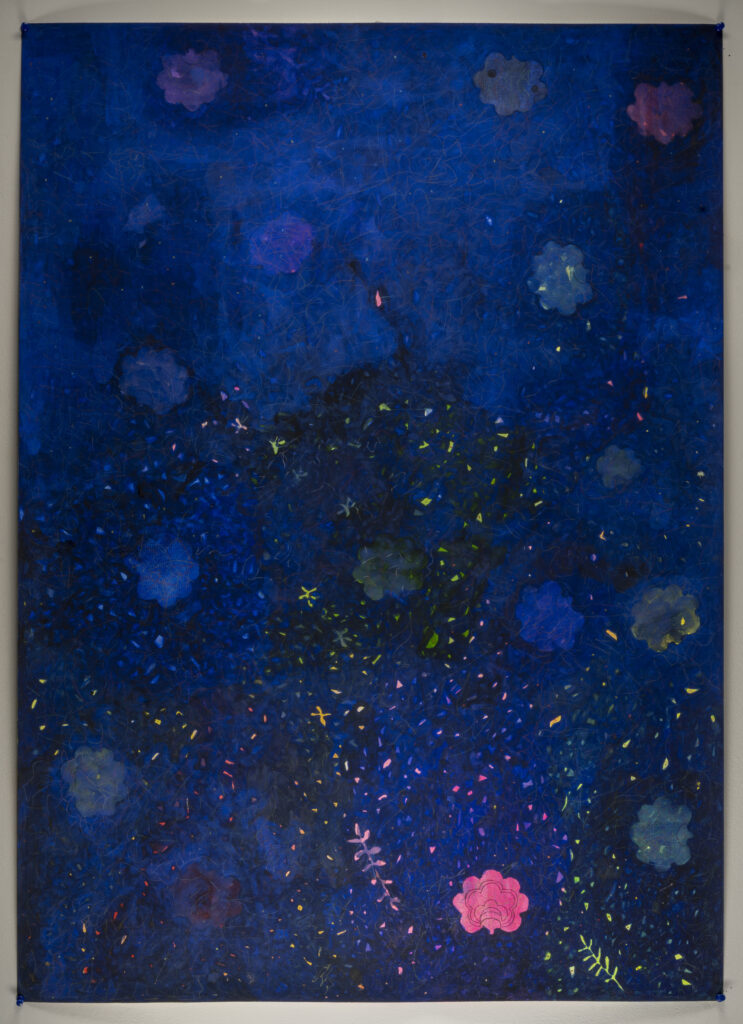
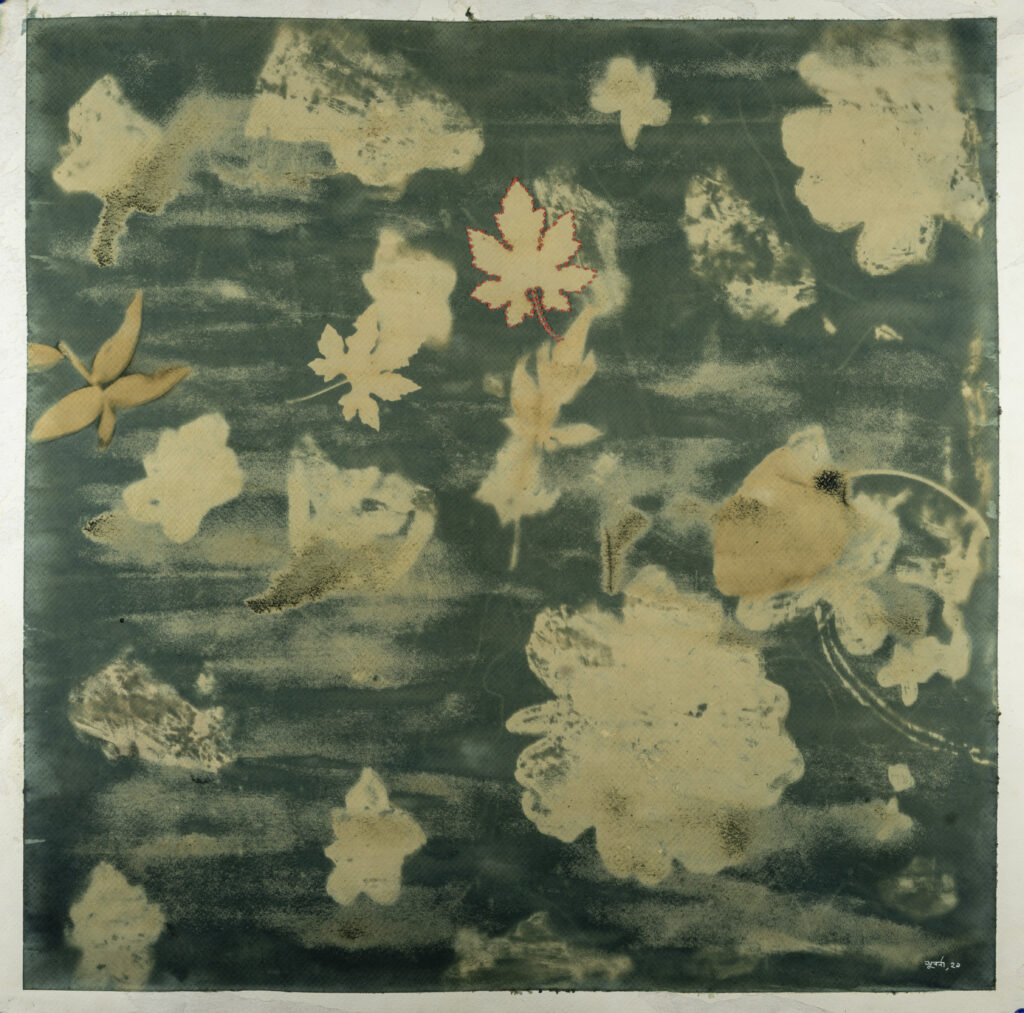
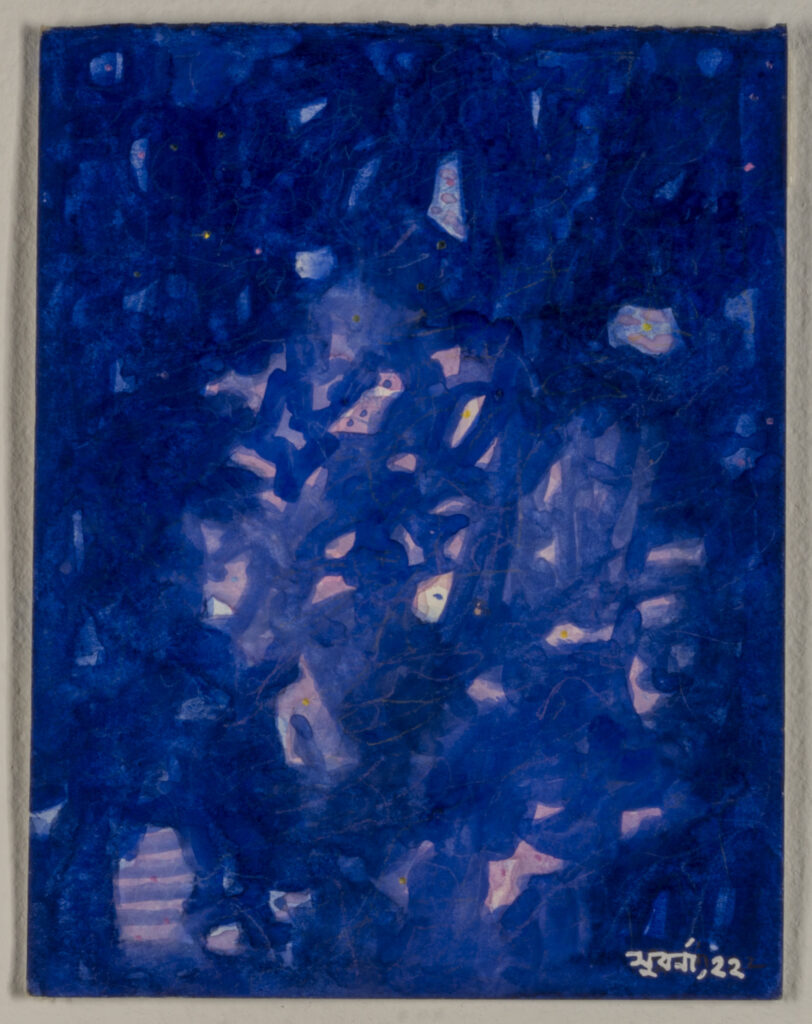
I then asked whether she believes peace, like art, is ultimately a matter of individual perception. Suborna clarified that peace is an experience, a process that must be lived. It can be found through art, through conversation, or in other small acts of presence. Just as with art, she emphasized, peace is something to be experienced, not just observed.
While we were discussing the very debatable topic of peace, Suborna mentioned that art itself is a source of peace. I asked her, if art is peace, what qualities should artists embody? and she answered that artists should be like trees. Like they should never be afraid of growth but their roots should go deeper as well.
Artists should be like trees. Like they should never be afraid of growth but their roots should go deeper as well
She also said that art tells the story of a time so it should never stop. Art should be created for the future generation to tell the story and that’s why she feels responsible as an artist and wants to tell a story through her art.
Talking to her, I realized how deeply she cares for this city. Even as one person, she wants to do right by it. As an artist, she sees herself as a tree, giving back to the city what she has received, much like a tree gives back oxygen in return for carbon dioxide.
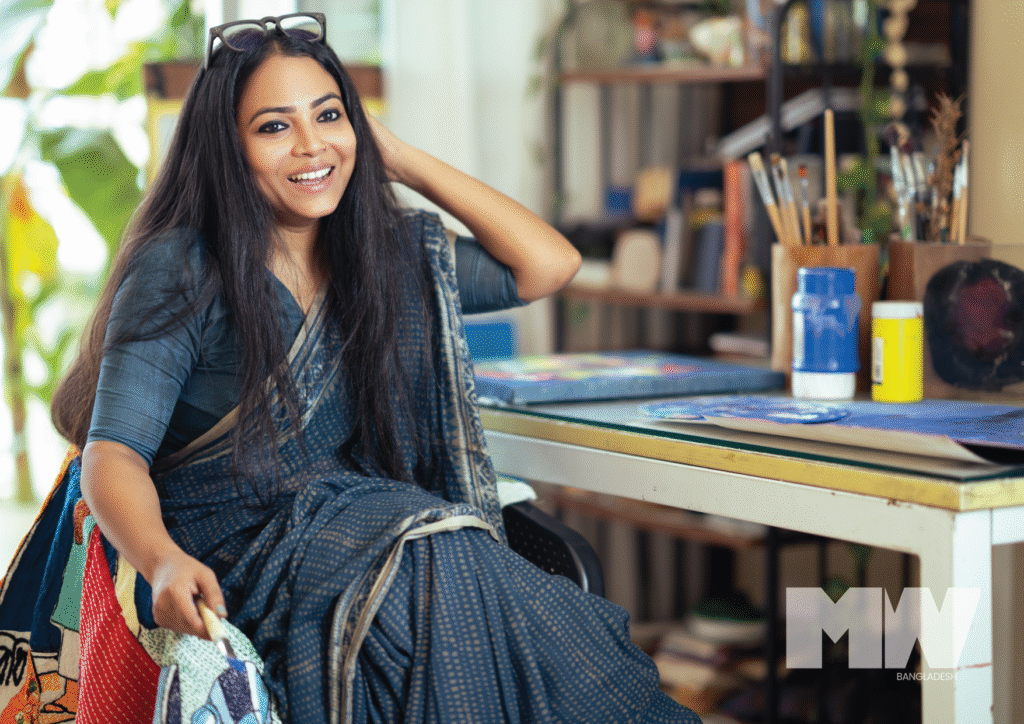
When she was showing me her recent work and also work from her early days, the shift in her style was vividly visible. In her early stage she used to experiment with colors and her art used to have romanticism in it and now gradually her work is more in gray scale and shades of blue are visible all around. Romanticism is replaced by realism.
In her work it shows how deeply she feels. Her work shows a deep connection to her family members.
In conversation, she mentioned that she prefers to look back more rather than to look forward because the past is what shaped her and that has an effect on her work and her perspective on life.
At the end of our conversation, I asked Suborna what she hopes for the future. She said she never plans the future. She just takes one step at a time and does what is right by her conscience, and focuses on creating art that both eases her mind and tells the story of the times.
Photographed by Sagor Himu