


By Neha Shamim
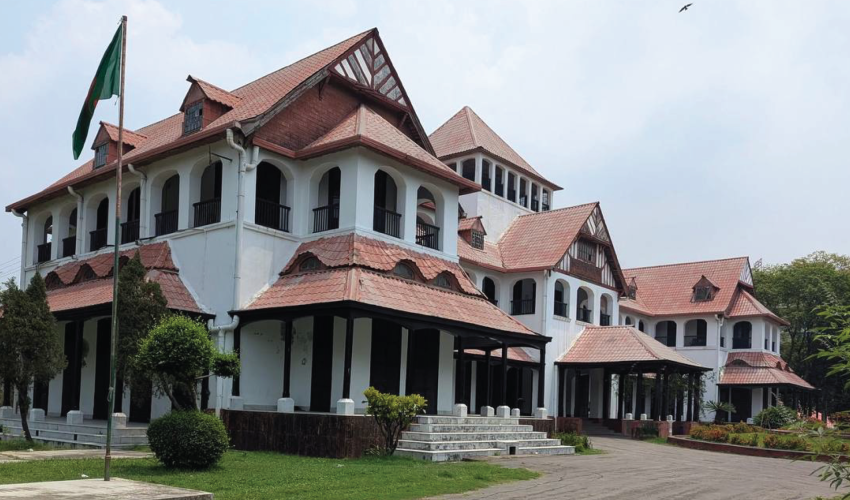
Nestled in the heart of bustling Chittagong, Bangladesh’s second-largest city, lies a building that has witnessed the rise and fall of power, the echo of independence, and the silent cry of history, the Chittagong Circuit House also known as Zia Memorial Museum is more than just bricks and walls, this former British-era Circuit House is a time capsule that preserves one of the most pivotal chapters in the country’s post-independence journey.
Located in the Kazir Dewri area on Shahid Saifuddin Khaled Road, the museum stands tall amidst leafy surroundings, making it an unmissable stop for history buffs, students, and curious travelers alike. The peaceful setting contrasts sharply with the intense moments that once unfolded inside.
The Building with a Hundred Stories
Originally built in 1913 by the British colonial administration, this elegant two-storey house served as a residence for high-ranking officers and dignitaries. Locally, it was known as Lath Saheber Kuthi, a nod to the British officials who once ruled from its halls.
But the house’s role shifted dramatically during the Bangladesh Liberation War in 1971, when it was taken over by the Pakistani Army. It became a dreaded interrogation center — rooms that now host display cases once held by detained Bengalis fighting for freedom.

What lends this site deep historical and emotional significance is the event that took place on the night of May 30, 1981. It was here that President Ziaur Rahman — the nation’s seventh president and a respected figure of the Liberation War — lost his life during an attempted military uprising. Today, the room where the incident occurred has been preserved with great care. The original furniture remains, and subtle traces from that night, including faint bullet marks, have been left untouched — quietly telling a story that shaped the course of Bangladesh’s political history.
In 1993, the government transformed the building into the Zia Memorial Museum to honor his legacy and leadership.
Inside the Museum: A Walk Through Time
Step through the arched wooden doors and you’ll find yourself immersed in a deeply personal and political journey through the life of President Ziaur Rahman. The museum’s seventeen galleries are carefully curated to tell his story — not just as a leader, but as a man who shaped and was shaped by a nation in turmoil. One of the most striking exhibits is his military uniform, neatly displayed alongside his work desk and the briefcase he carried on state missions. These personal items offer a glimpse into his disciplined life and sense of duty.

Among the most symbolic artifacts is the microphone used to broadcast the historic Declaration of Independence from Kalurghat Radio Station in 1971 — a piece of history that changed the fate of a nation. Other rooms showcase family photographs, original furniture from his residence, and presidential documents that track the evolution of his political career.
Perhaps the most haunting part of the museum is the preserved bedroom where Zia was assassinated. The original bed and furnishings remain untouched, and the bullet holes on the wall have been carefully preserved, standing as silent witnesses to that fateful night. Each room invites reflection — on the birth of Bangladesh, the sacrifices of its leaders, and the fragile nature of political power.

Visiting Hours & Tips
Though currently closed due to ongoing political and legal discussions about its future, the museum is typically open from morning to late afternoon on working days. It’s always wise to confirm timings with local authorities before planning your visit. While photography is restricted inside the building, the garden and exterior are perfect for peaceful exploration and scenic photographs.
History and Its Many Voices
In recent years, the Circuit House has become the center of national debate. Many have called for its renaming, proposing that it be rededicated as the Liberation War Memorial Museum, citing the building’s grim history during the 1971 conflict when it was used by the Pakistani military. These debates reflect a broader national conversation about identity, memory, and the politics of remembrance. For now, the museum remains a powerful symbol of an entire era in Bangladesh’s post-liberation history.

A visit to the museum also opens up opportunities to explore some of Chattogram’s most beloved spots. Just a short ride away lies Foy’s Lake, a tranquil reservoir perfect for picnics and boat rides, especially at sunset. For a taste of coastal life, head to Patenga Beach, where the waves of the Bay of Bengal meet the mouth of the Karnaphuli River. And for those eager to understand Bangladesh’s cultural diversity, the Ethnological Museum offers a fascinating window into the lives and traditions of the country’s many indigenous communities.
Whether you’re tracing the threads of Bangladesh’s military history, exploring the legacy of President Ziaur Rahman, or simply seeking a powerful cultural experience, the Chittagong Circuit House also called Zia Memorial Museum stands as a must-visit landmark. It’s not just a place to observe, it’s a place to feel the gravity of Bangladesh’s story.
Photo Source: Courtesy