

Farrukh Ahmed Rehan on acting, attention, and the art of holding back
By Ayman Anika
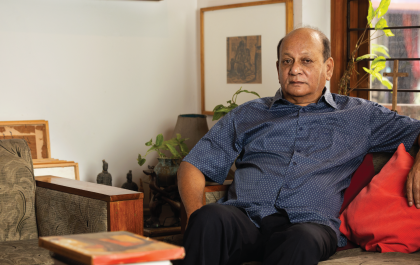
In an industry that moves fast and talks louder, Farrukh Ahmed Rehan’s approach is noticeably different—slower, more careful, and surprisingly effective.
His presence is quiet, deliberate – more like a page turning than a spotlight switching on. He’s not the type to flood his feed with updates, nor does he treat success as something to flaunt. But make no mistake – his rise in Bangladesh’s visual media scene has been steady, calculated, and quietly disruptive.
He began with modeling, transitioned into acting through Vicky Zahed’s Ararat, and soon found himself carrying lead roles in high-profile dramas like Jugol and Neel Shukh—the latter earning him praise for his restraint and emotional depth. But ask him about success, and he’ll pause, maybe even deflect. For Rehan, the work speaks first. He’s far more interested in craft than clout.
With MWB, the promising actor shares his future plans—not to conquer the screen, but to keep showing up, learning, and building a career on his own terms.
You grew up in Tangail. How did the environment there—social, cultural, or familial—influence the way you understand people and character today?
I grew up in Tangail. That’s where I completed both my school and college. My upbringing was split between two places—our home in the town and my grandparents’ village home. The distance between them was just 10 or 15 minutes, so I was constantly moving between the two. As long as my grandparents were alive, we maintained a strong connection with the village. Even now, I try to stay connected. So, in that sense, I had a bit of both worlds—rural and urban.
My childhood wasn’t isolated. I had a tight-knit circle of friends. We all went to school and college together, shared everyday routines. It was simple but meaningful. That grounding, I think, still influences how I carry myself today.
After college, I moved to Dhaka for university. I enrolled as a student first—that was my primary identity. I didn’t come to Dhaka thinking I would enter the media.
Modelling began around my third year of undergraduate studies. That’s when things began to shift.
Even though I didn’t originally plan to come into media, I now realize that those early experiences in Tangail shaped how I observe people, how I listen, and how I emotionally respond.
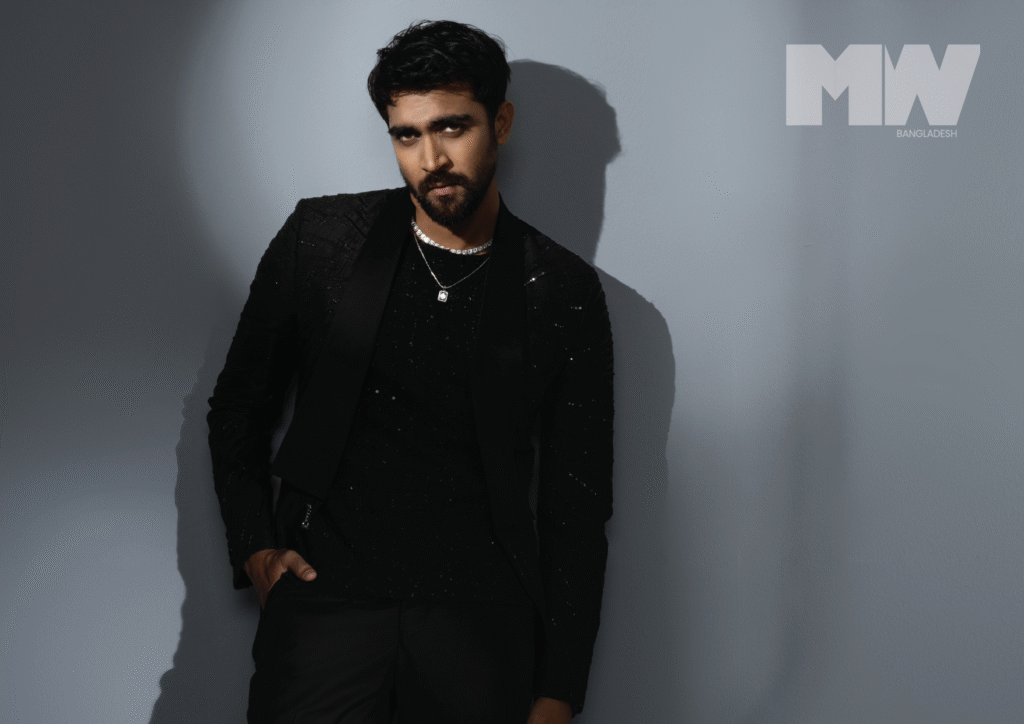
Modeling was my starting point—it was more about presence and visuals—but once I transitioned into acting, that’s when I could really draw from my background. When I play a character now, I often think of someone from my hometown. It helps ground the performance. Tangail gave me a lens to understand authenticity—not the kind that looks perfect on camera, but the kind that feels lived in.
Modeling was my starting point, but once I transitioned into acting, that’s when I could really draw from my background.
Modelling was your first public-facing role. In what ways did that work prepare—or fail to prepare—you for acting?
I spent almost five years in the fashion industry before I started acting, so that phase gave me a certain kind of exposure. Through modeling, I became familiar with the camera, the sets, the rhythm of production work. More importantly, it connected me to the world of TV commercials. That’s where I started to understand the broader media landscape—who directs, who produces, how content is made. I wouldn’t call it deep expertise, but it was definitely a form of shortcut learning. It helped me see the structure behind what we watch.
Then came this turning point. Out of nowhere, I got a call from Vicky Zahed’s team. They offered me a role in Ararat, which became my first OTT project. It was a negative character, which was a challenge—but I said yes. That experience changed everything. Alhamdulillah, the project did well, and after that, opportunities started coming more consistently.
So, while modeling didn’t directly prepare me for acting in terms of character depth or emotional work, it opened the doors and gave me a foundational understanding of the industry. The rest—I had to learn on the job.
What was your biggest early career struggle?
As for struggles, there were many. One of the main ones was navigating the transition from student life into modeling and, eventually, acting. I was also juggling work on the side to support myself.
But yes, I did what I had to do to manage life in the city. I don’t shy away from that now—it’s part of my journey.
Later, I pursued my MBA in Hospitality Management from Dhaka University. That’s the formal path. But the parallel track—the media work—was something that evolved step by step.
From the beginning of your career, did you have a mentor or guide in the industry—someone whose support or direction shaped you?
To be honest, I didn’t have any formal grooming or training when I started—neither in modeling nor in acting. I learned everything through observation and experience. In the early days, during ramp shows or photoshoots, I used to closely watch the senior models—how they carried themselves, how they used expressions, how they walked.
That’s where my learning came from. I never had a designated mentor, but I tried to absorb whatever I could from everyone around me.
Even now, I believe that every person you meet in this industry teaches you something. Everyone brings a different approach, a different temperament. I never fixated on anyone in particular. Instead, I tried to pick up the positives from each person—their discipline, technique, or way of handling pressure—and consciously left the negatives behind. That’s been my learning method from day one.
As for acting, I didn’t take any professional courses. I’ve always watched films since childhood. So, I’d try to observe performances, internalize them, and then practice on my own. It was a self-driven process, something that evolved naturally over time.
I’ve also always tried to stay humble with the people I work with. I’m not sure how successful I’ve been, but that’s always been my intention. And above all, I’ve focused on ensuring quality in my work. I’ve had a few principles or instincts that guided me from the beginning, and I’ve stuck to them without trying to force anything. Things just unfolded gradually, step by step.
I never had a designated mentor, but I tried to absorb whatever I could from everyone around me.
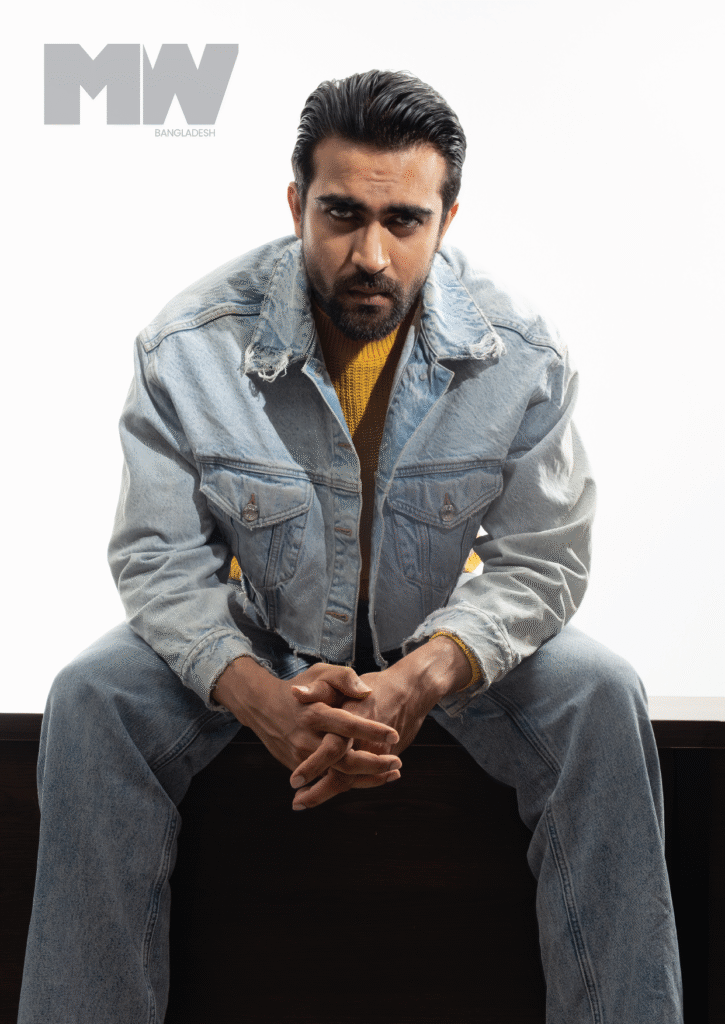
Jugol earned you critical attention and a Meril-Prothom Alo Award. How did that performance differ from your previous work, in process or intention?
Jugol was actually the second project I worked on, but it was the first time I played the lead in a full-length drama. Before that, I had done Ararat with Vicky Zahed, where I played a negative role. That project definitely put me on the map—it made people in the industry aware that I was acting and serious about it. It was a kind of breakthrough moment.
Then, very unexpectedly, I got a call from Mizanur Rahman Aryan bhai. He had this story in mind, and somehow, he thought I could be the right fit for it. That’s how Jugol happened—completely unplanned, but meaningful. I acted opposite Mehazabien, and the entire production team was incredibly supportive. I give full credit to Aryan bhai for the performance—he guided me through the process, especially since I had no prior experience doing a drama in that format.
What made Jugol different from my earlier work was not just the size of the role, but the emotional weight it carried. This wasn’t a flashy character—it was someone deeply human, with vulnerabilities and layers. I had to prepare differently for that. I had to slow down, listen more, and rely on emotional cues rather than just physical presence. Aryan bhai’s direction helped me unlock that part of the performance.
Winning the Meril-Prothom Alo Award as a newcomer was definitely an honor. But I see it as just the beginning. For me, true recognition will come the day I receive an award like “Best Actor.” That’s the level I want to reach. So, in a way, the award brought joy, but it also added a sense of responsibility. When the audience starts expecting more from you, you have to deliver better work each time. That’s what I’m focused on now—trying to go deeper, do better, and earn that next milestone the right way.
In Neel Shukh, your chemistry with Mehazabien Chowdhury was widely appreciated. What was your experience working on this film?
Neel Shukh was a very meaningful project for me—one that I had been waiting for. The story had been in the works since mid-2023, but due to some internal complications, it was postponed for a while. Still, I held onto it because I really believed in the story and the team behind it. I had already worked with Vicky Zahed bhai once before, but that was in a negative role and for a shorter screen presence. Neel Shukh was different—this time, I was a central character with much more responsibility. Naturally, I was very excited, but also quite nervous.
At the time, I had only worked on around seven or eight projects total, so getting cast in a lead role for high-profile OTT content like Neel Shukh felt almost surreal. I think the team at Binge, who had also distributed Ararat, saw something in me. Maybe that’s how this opportunity came about. Either way, I’m grateful.
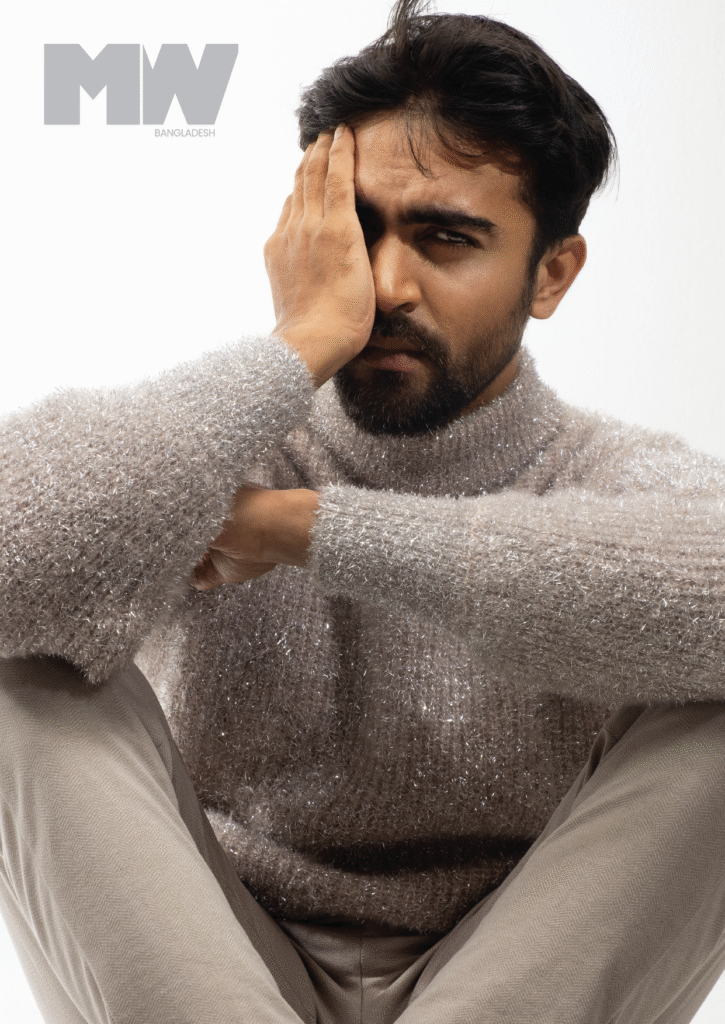
Filming Neel Shukh was intense. It required 9–10 consecutive days of shooting, which was a first for me. I took the responsibility seriously. I paid close attention to Vicky bhai’s directions, listened carefully to the team, and was constantly reflecting on how I could improve—whether it was in my performance, my timing, or my energy on set. If I had questions or doubts, I made sure to ask. I treated the work like a commitment, not just a role.
As for working with Mehazabien apa, it was a great experience. She was kind, professional, and easy to work with. As a co-actor, she made me feel comfortable and supported, which made a big difference in how the chemistry played out on screen. It just worked—nothing felt forced.
But I don’t take any of this lightly. Every time someone says they’re looking forward to my work, or that they expect something from me, it honestly makes me nervous. Because then the pressure increases. I start thinking: what if I can’t meet that expectation? That fear pushes me to try harder, to focus more. I haven’t reached where I want to yet. This is just the beginning.
Ultimately, I want to create content that resonates with people. Stories that feel contemporary, authentic, and well-organized. I’m still learning, still improving—but I’m committed to that process. And I hope the audience continues to connect with what we create.
What have you learned about yourself through the eyes of directors you’ve worked with, particularly Vicky Zahed?
Working with directors like Vicky Zahed has taught me, more than anything else, how much further I still have to go. If I’m being honest, I don’t think I’ve even reached the ‘H’ of hard work yet. That realization humbles me every time I step onto a set. Collaborating with acclaimed directors is both a privilege and a responsibility. I never want them to feel that working with me is a challenge in itself. So, my personal goal has always been to come prepared, to be as sharp and focused as I possibly can.
Right now, I’m doing mostly fiction projects and slowly getting more comfortable in front of the camera. I’ve done three recently—two have been released, one is still pending. With each one, I try to study myself. I observe where I’m falling short, what moments feel off, or where I could’ve gone deeper. That process of self-correction is ongoing. And the feedback from directors has been consistent: the more you stay in practice, the more familiar you become with the camera, the more naturally refinement will come.
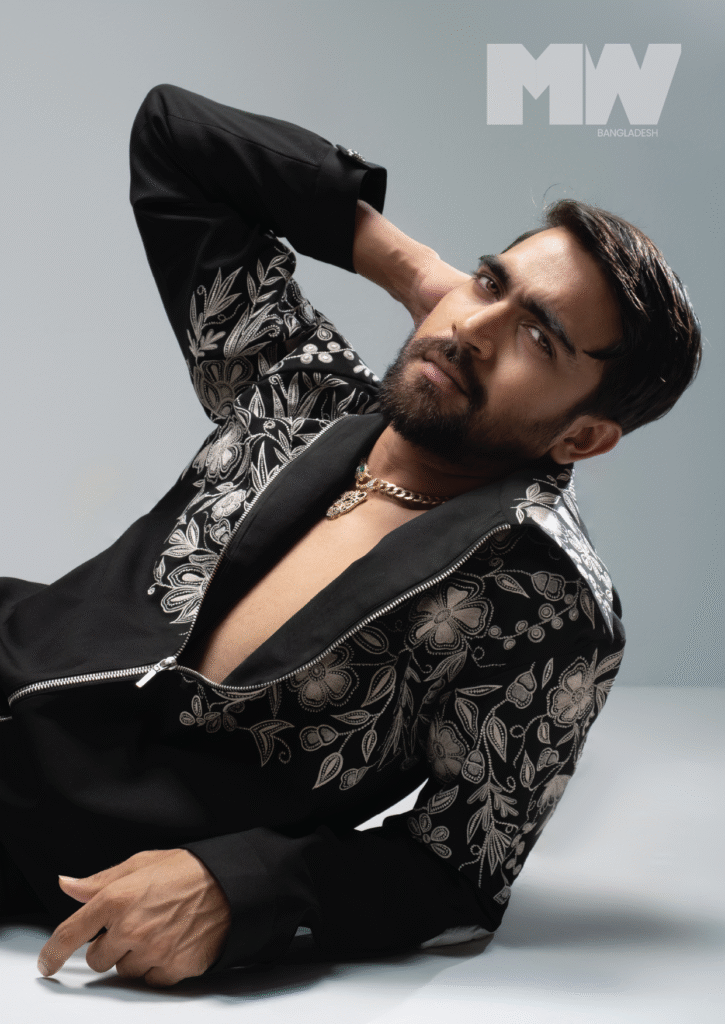
So, at this point, I’m taking things one project at a time. I’m not making big claims about what’s next. My focus is on learning—getting better, becoming more present, and evolving with each experience. And if something good happens from that, then that’s a bonus. But for now, it’s about doing the work and trusting the process.
As someone with a rapidly rising profile, how do you balance visibility with privacy?
In this line of work, privacy is hard to protect. Once you’re in the media, a lot of your life becomes public—sometimes even without your consent. In a way, we become public property. But despite that, I try to maintain boundaries wherever I can. For example, I don’t feel the need to share what I’m eating, where I’m going, or who I’m with. I prefer to keep those aspects of my life private—my family, my close friends, my daily routines. That space is sacred to me.
I live life on my own terms. I travel the way I want, move around freely, and try not to let external pressure define my behavior. That’s just who I am. Even now, as my work becomes more visible, I try to keep things simple. I go to shoots or meetings when I need to. I do what’s required. But beyond that, I don’t overexpose myself. I’m taking this career one step at a time, trying to stay grounded, without overthinking what fame is supposed to look like.
I’m not someone who’s suddenly going to change my lifestyle because people recognize me. If I feel like going out, I’ll go. If the crowd feels a bit overwhelming, I might wear a mask and move quietly. I’ve always been this way. I’m naturally a shy and introverted person. Even small interactions—like someone smiling at me from a distance or saying something nice—can make me feel a little awkward.
So yes, I prefer to stay a bit hidden. I’ve been like that since my days in the fashion industry. I’m just being myself, following a rhythm that feels natural to me. I believe not everything needs to be shared. Some things are better kept within—because once everything’s out there, you lose the ability to protect what matters most.
How do you decide which opportunities to say no to?
I’m still quite new to the industry, so making mistakes is part of the process—and I accept that. In fact, not making any mistakes at this stage would probably be unnatural. But I try to be mindful. When I receive a new proposal or opportunity, I evaluate whether the project has a good team behind it—things like the director’s vision, the strength of the story, the co-artists involved, and the technical crew like the DOP.
For someone like me who’s still learning, working with experienced and media-savvy co-artists really helps. If I miss something in my performance, a more seasoned co-actor might be able to point it out or guide me in real time. So I actively seek out projects where I know the environment will help me grow.
Right now, I’m keeping things limited by choice. I don’t want to take on too many projects at once or choose something I’m not ready for. I believe in building my foundation slowly and steadily. As I gain more understanding and experience, I’ll start to take on more diverse roles or bigger risks. But for now, I’m focusing on quality over quantity.
I’m still quite new to the industry, so making mistakes is part of the process, and I accept that.
What’s next for Farrukh Ahmed Rehan?
To be honest, I don’t like announcing future projects too early. Things in this industry change quickly. Sometimes a project comes together, and only a few days later do we finalize the cast or title. So, I prefer to speak about my work only after it’s completed.
Right now, one of my upcoming projects is coming up and it’s a single-episode drama. I’m looking forward to its release. Recently, one of my projects was released with Safa Kabir titled Shesh Theke Shuru.
These recent works are giving me a lot of insight. I’m reflecting on where I can improve—what worked, what didn’t, and what I need to focus on next. That reflection will shape how I approach future roles.
As of now, I’m in talks for three or four more projects. Nothing is finalised yet. Meetings are happening, and discussions are ongoing. What happens beyond that—I really don’t know yet. I’m just taking things step by step. And who knows, maybe sometime down the line, we’ll sit for another conversation and talk about what came after.
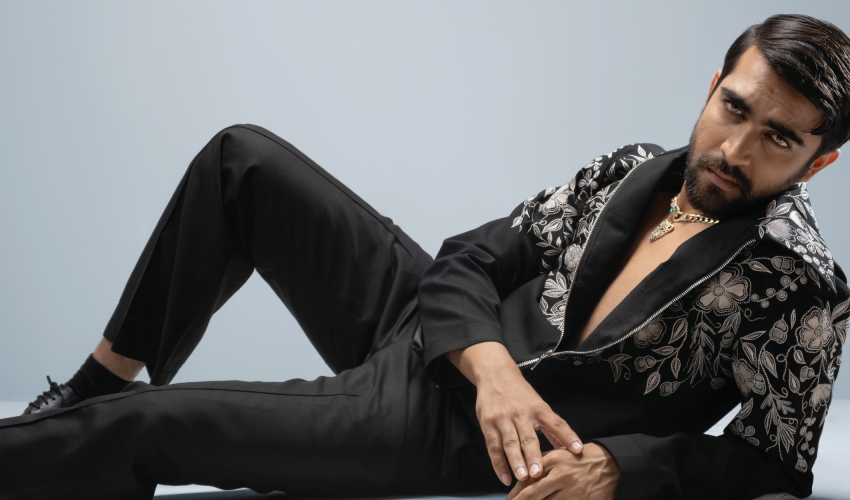
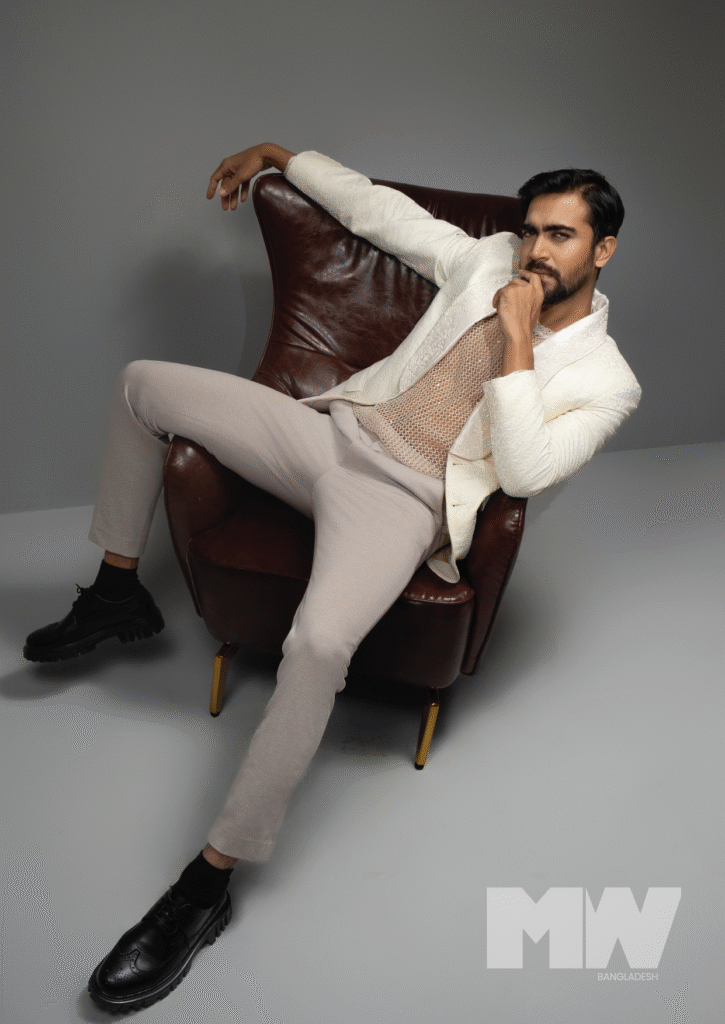
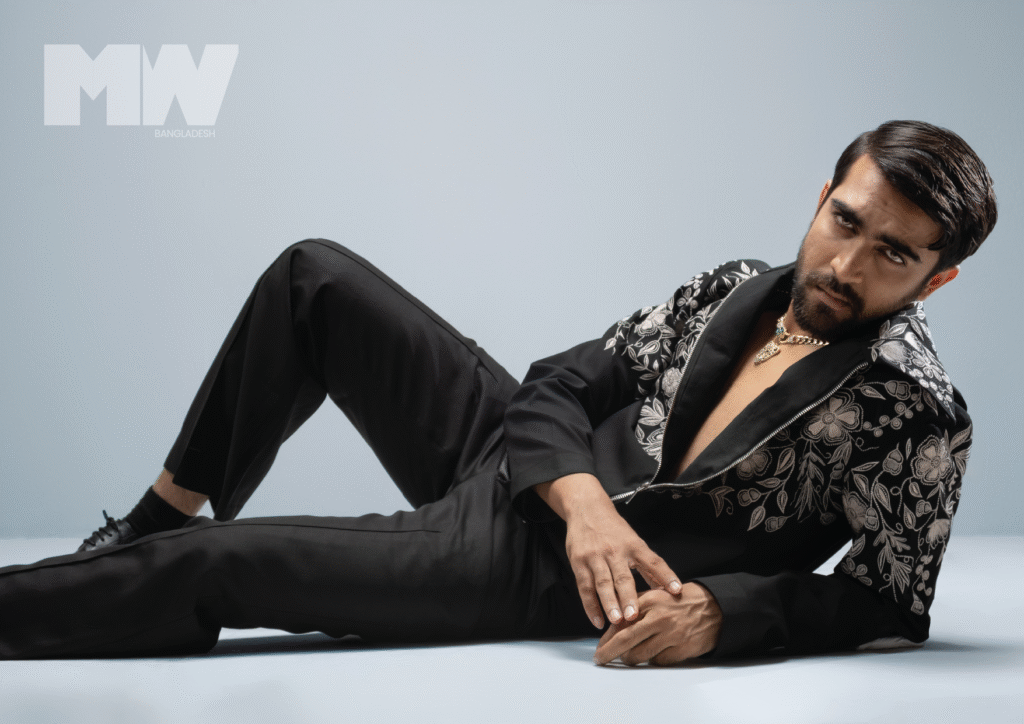
Fashion Direction & Styling: Mahmudul Hasan Mukul
Photographed By: Ishtiaque Ahmed
Make up & Hair : Sumon Rahat