


By Neha Shamim
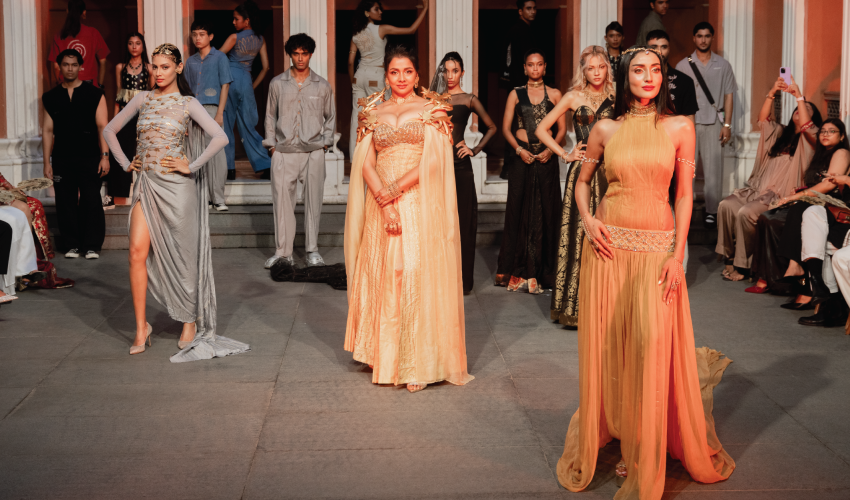
At the iconic Boro Sardar Bari in Sonargaon. Against the backdrop of one of Bengal’s most historic mansions, the evening unfolded as a bold statement of how fashion can hold memory in one hand and possibility in the other.
The collection, under the creative direction of Asad Sattar, reaffirmed Ami Dhaka’s vision of Heritage Futurism, a philosophy that refuses to separate the past from the future. Every look was built on Dhaka’s pulse: the noise, the nostalgia, the resilience, and the quiet beauty that lingers in between. Structured silhouettes sat beside flowing forms; intricate handwork paired with modern finishes. More than anything, the clothes carried the intimacy of human touch, whether through elaborate embroidery or the smallest stitch on a label. It was craftsmanship not as ornament, but as memory.
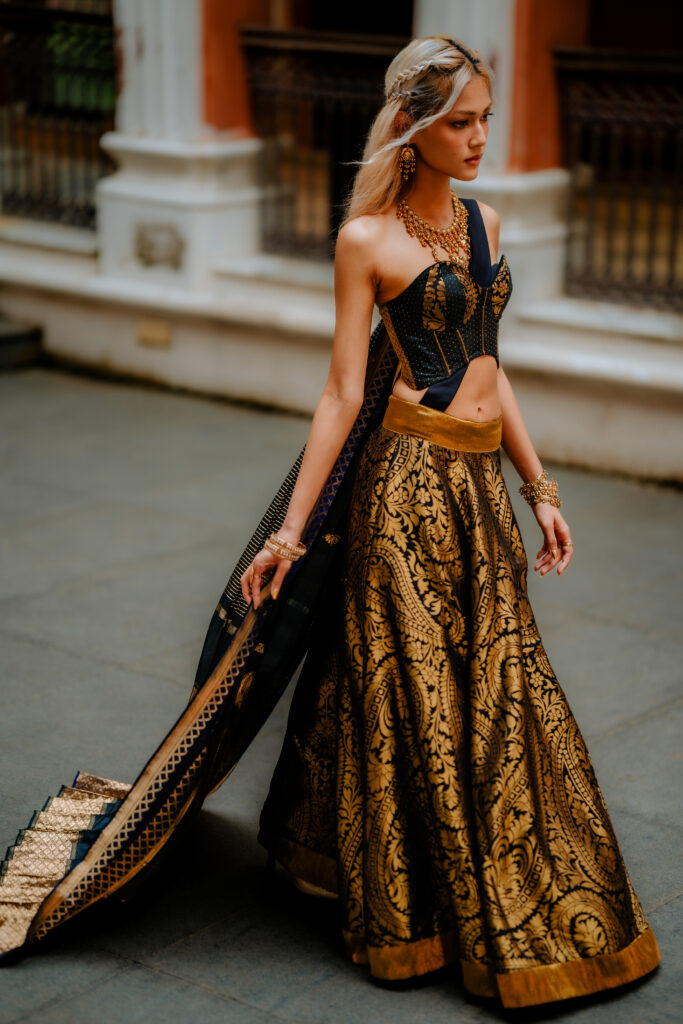
Storytelling formed the backbone of the show. Rather than a single through-line, the collection unfolded in five acts, each one echoing the voice of a great Bengali writer. Rebirth, inspired by Kazi Nazrul Islam’s Bidrohi, spoke of transformation. Call of the River, drawn from Tagore’s Sonar Tori, became an ode to the journeys rivers have carried for centuries. Heritage, borrowing from Jibanananda Das’s Smriti, translated the worn textures of the old city into contemporary wear. City of the Night, with Shamsur Rahman as its muse, vibrated with Dhaka’s restless after-hours. And finally, The Eternal Saree, drawing from Tagore and Jibanananda alike, celebrated the saree not as a garment but as continuity itself, black and gold woven into permanence.
The material story was just as layered. Muslin, khadi, silk, and katan were elevated with artisanal techniques: zardosi that shimmered under light, kantha that carried centuries of domestic artistry, Benarasi motifs reborn in new forms, and block prints alongside hand-forged jewellery. The persistent thread of black and gold tied it all together, colours that spoke of resilience, survival, and transformation.
The runway itself was alive with some of the country’s most celebrated faces. Tangia Methila, Runa Khan, Jessia Islam, Raaz Mania, Seyam Sobhan, and Azraf each lent their presence to the garments, shifting the narrative from static objects into living, moving poetry.
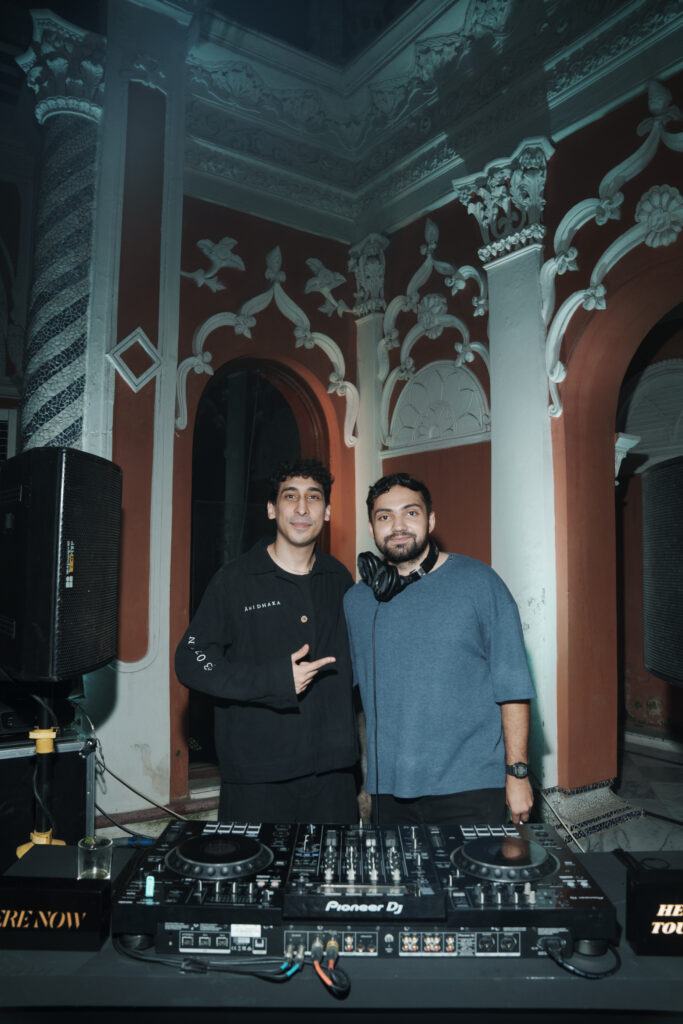
What set this showcase apart was the collaboration with Be Here Now, which expanded the collection into an experience. Through curated soundscapes, layered storytelling, and immersive staging, the audience was guided into a space where fashion was no longer just fabric on skin, but an emotional passport across eras and imaginations.
At Boro Sardar Bari, Ami Dhaka reminded us that fashion in Bangladesh is not only about style. It is about telling stories, of people, of cities, of heritage, and envisioning how those stories might carry into the future.
All information was provided by Management